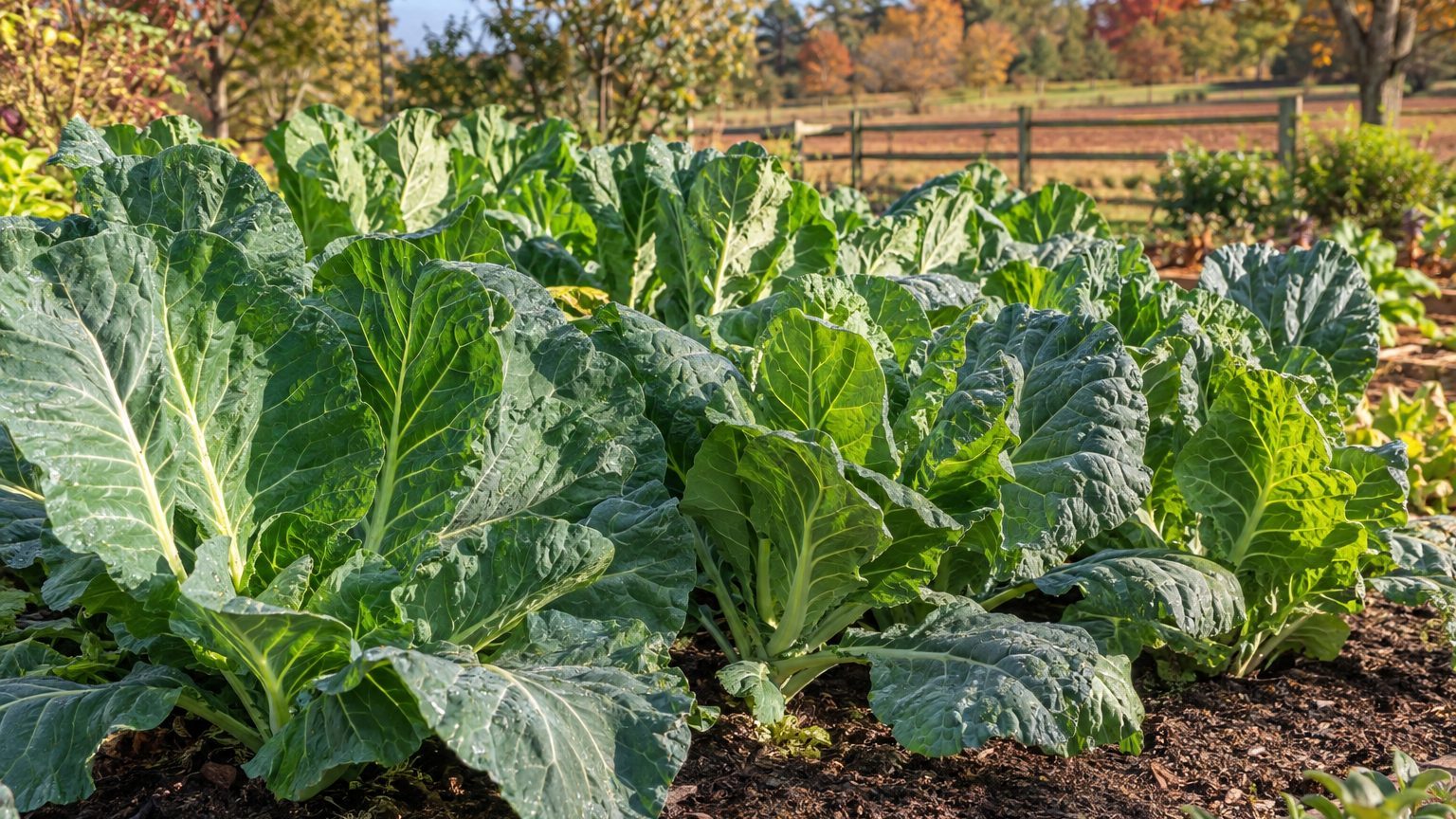

For most Virginia gardens, the best collard is a standard non-heading type, planted so it matures into fall and stands through the first frosts. Cold sweetens the leaves, so a light freeze helps rather than hurts. Fast-maturing types earn a spring slot, and heading collards suit only gardeners with a long, cool stretch. Where you garden in Virginia shifts every part of that answer.
The short answer for Virginia
Build your main crop around a standard non-heading collard, the open-leaf kind that Southern gardeners have grown for generations. Seed catalogs commonly list Georgia Southern and Vates in this group. Add a quick-maturing type if you want an early spring pick, and treat heading (cabbage-type) collards, such as Morris Heading, as a specialty for the longest cool season you can give them.
The frost numbers explain why. At the NAS Oceana station in Virginia Beach, NOAA’s 1991-2020 Climate Normals put the last spring frost at March 20 to April 3 and the first fall frost at November 10 to November 24. Those are not calendar promises. They mark the 30-70% probability band for a 32°F freeze, meaning a freeze is somewhere between a coin-flip-minus and a coin-flip-plus on those dates, and it can still arrive later in spring or earlier in fall.
Between the two bands lies well over seven months of mostly frost-free growing at the coast. Collards do not need all of it, and they tolerate a light freeze, so the fall harvest runs past the fall band. The coldest month at the Virginia Beach reference station has a mean daily minimum of 31.6°F. That is the average overnight low, not the record low, but it tells you winter at the coast rarely stops a collard plant outright.
| Type | Where it fits in Virginia | Trade-off |
|---|---|---|
| Standard non-heading collards | Main crop statewide, spring or fall | Slower than mustard or turnip greens, but the most forgiving |
| Fast-maturing collards | Spring planting and short seasons | Give up some size and late-season toughness |
| Heading (cabbage-type) collards | Long, cool fall and winter at the coast | Need time to form the head; a poor bet where freezes come early |
| Kale, mustard and turnip greens | Companions in the same fall window | Different flavor; mustard and turnip greens are quicker, so they suit succession sowings |
Two pages in this series go deeper. Growing Collards in Virginia covers care from transplant to harvest, and When to Plant Collards in Virginia turns the frost bands into sowing dates. This page does not carry Virginia variety trial results, so the type-by-type advice above comes from season length and cold, not from a head-to-head ranking of named cultivars.
What will not work here
Slow varieties planted late are the first casualty. A heading collard set out in the fall needs weeks to fill in, and the fall frost band of November 10 to November 24 belongs to the coast. Inland and in the mountains that band arrives sooner, and a plant still small when a hard freeze lands will not finish the job. If your season is short, skip the heading types and pick the fastest open-leaf collard you can find.
Treating the spring frost band as a finish line does not work either. The band closes on April 3, but that is a probability edge, not a guarantee. A freeze after that date is less likely, not impossible, and young transplants set out on a warm week in late March can be cut down. The safer habit is to harden seedlings off and keep a row cover within reach until March 20 to April 3 is well behind you.
Spring collards carry a different risk. Plants that are still small when hot weather arrives tend to bolt, sending up a flower stalk, and the leaves turn tough and bitter. This page has no summer temperature figure for Virginia, so it cannot say the week heat takes over. Gardeners in the state know it comes on quickly, though, and that is why fall is the better season for the main crop and spring is the bonus round.
Crowding is the third failure, and it is a humidity problem. Virginia summers and early falls are muggy, and leaves that touch and stay wet hold disease and give caterpillars cover. Spacing that looks generous on a seedling looks tight on a full plant. A good rule is to let the leaves of neighbors just touch at maturity and never overlap, so air can move through the row and the foliage dries after rain or dew.
The last mistake is carrying coastal expectations inland. The 31.6°F figure describes the mild end of the state. In the Blue Ridge and southwest Virginia, winters bite harder, spring comes weeks later and fall frost comes earlier. A row that overwinters at Virginia Beach may be flattened in the mountains, and a spring planting date borrowed from the coast can put seedlings out too early.
What changes across Virginia
Virginia is not one garden. The USDA Plant Hardiness Zone Map (2023, built on 1991-2020 normals) runs from 5a to 8b across the state, which is eight half-zone steps. That spread is wide, so there is no single best-variety answer. Note that the map uses one variable, the average annual extreme minimum temperature, so it says how cold the worst nights get, not how long your growing season runs.
The Oceana numbers on this page sit at the warm end of that range. Everything shifts as you move north and up. In the northern counties and at altitude, plant fall collards earlier so they size up before the first hard freeze. Choose faster maturing open-leaf types over heading ones. Expect the spring window to open weeks later than the coastal March 20 to April 3 band, and the fall window to close weeks sooner.
At the coast the shift runs the other way. Later fall planting still works, heading types become realistic, and harvests can stretch through winter because the coldest-month minimum hovers near freezing. The Piedmont sits between: cold enough that a heading collard is a gamble, warm enough that a standard non-heading variety planted at the right time will usually finish well before a serious freeze.
This page will not tell you which zone you are in, because a county line does not settle it and a hillside can differ from the valley below it. Look up your ZIP code on the USDA Plant Hardiness Zone Map, then use the shifts above: warmer than 8a means lean toward the coastal advice, colder than 6b means lean toward the mountain advice.
Where to check this for your own county
Virginia’s land-grant extension service is the place to settle the details. Start at Virginia Cooperative Extension (ext.vt.edu) and find your county or regional office. County offices see local frost pockets, soil types and pest pressure that a state-level page cannot.
Two documents matter. The first is the vegetable planting calendar for your area, which gives dated windows for collards and other greens. The second is any list of leafy green varieties trialled in your county or region. If a named collard has been grown and rated near you, that record is worth more than any type-level advice here. If nothing is posted online, call the county office or ask a local Master Gardener volunteer, who can often tell you what has done well in your neighborhood.
Be plain about the hierarchy. A county recommendation beats a state one, and this page is the state one. It rests on one coastal weather station and a statewide hardiness range, so a county calendar that disagrees with a date printed here should win. When you get there, ask for the vegetable planting calendar and the leafy greens variety list for your county and write down the fall planting window it gives.
Checking this against your own garden
Your own observations outrank every date above, and three of them cost nothing.
Start with soil warmth by feel. Push your fingers a few inches into the bed in the morning. Cold, clammy soil means seed will sit and rot; soil that feels neutral or warm means germination will be quick. In late summer a bed that feels hot and dries fast tells you it needs shade cloth or extra mulch for fall seedlings.
Next, watch the first true leaves on your seedlings. The rounded seed leaves come first, and the first ruffled, collard-shaped leaves follow. If those true leaves show up slowly compared with a neighbor’s bed, your spot is cooler, shadier or wetter than average. If they race ahead, you have a warm microclimate and may sow a little later.
Third, notice your first frost. Frost on the grass, a car windshield or the tops of your plants marks your real fall date, which may differ from the airport band by days or weeks. Low spots where cold air settles frost first; a bed against a south-facing wall frosts last. Write down the date of your first light frost each year, and after two or three seasons you will have a calendar tuned to your own yard.
Common questions
Will collards survive a Virginia winter?
Often, at the coast. The coldest-month mean daily minimum at the Virginia Beach reference station is 31.6°F, just under freezing on average. That is an average, not the coldest night, and mountain and southwest Virginia gardens see harder freezes, so mulch and row cover matter more there.
Do collards really taste better after frost?
Many gardeners say so. Cold nudges plants to convert starch to sugar, which softens the bitterness. That is one reason the fall crop is the better one, and why waiting for a light frost before the big harvest is common practice.
Should I plant collards in spring or fall?
Fall is the stronger choice for the main crop, since the plants mature as the weather cools. Spring planting works best with a fast-maturing type set out once the freeze risk has passed, and harvested before summer heat pushes the plants to bolt.
Are mustard, turnip greens or kale a better fit than collards?
They fill different roles. Mustard and turnip greens mature faster, so they suit succession sowings and shorter seasons. Kale is another cold-tolerant choice for the same fall window. Collards are the sturdy long-season option, and many Virginia gardeners grow a few of each.