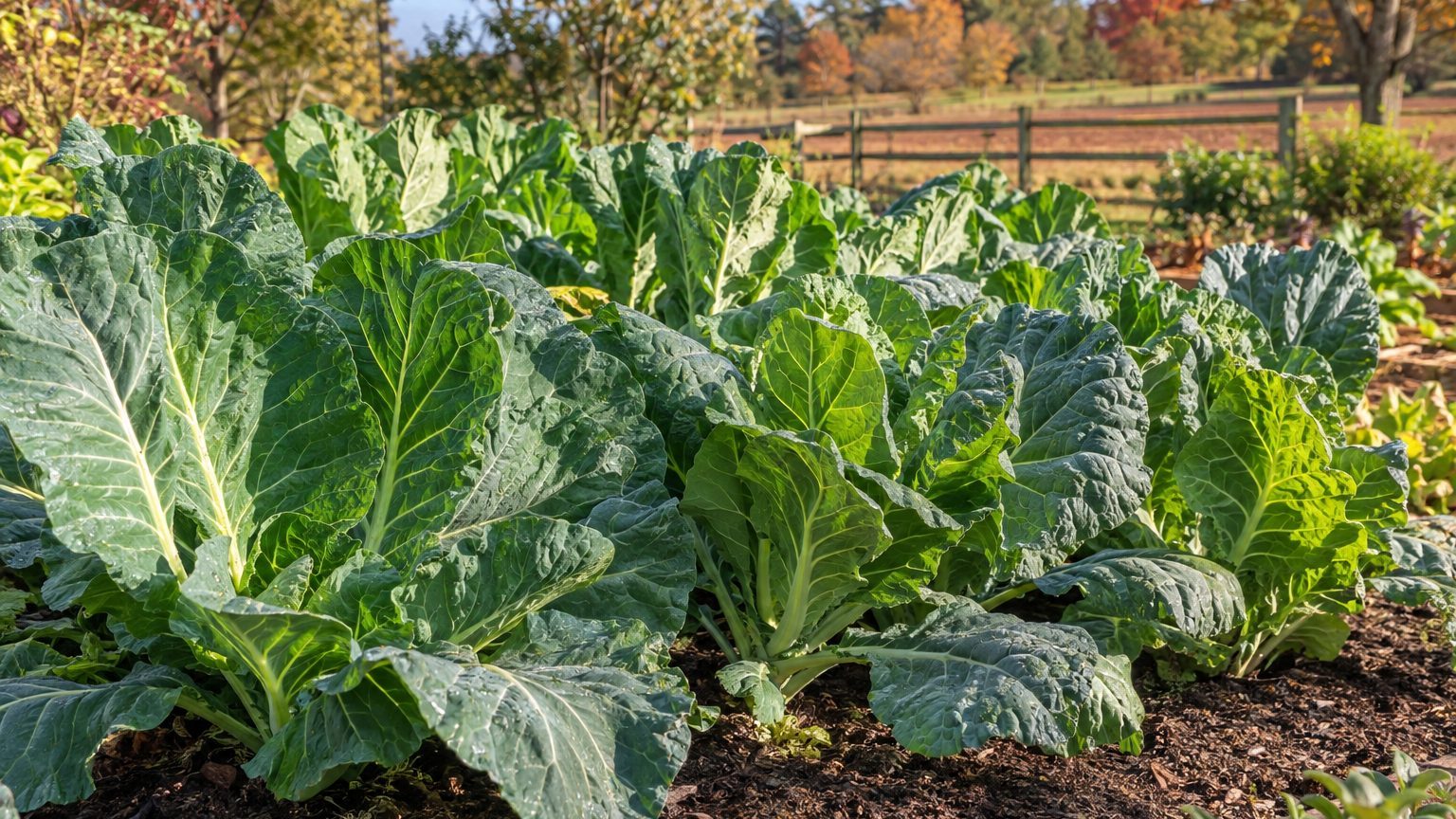

For most Washington gardeners west of the Cascades, the best collards are cold-tolerant, steady growers sown for a fall and winter harvest. Kale, mustard and other quick greens fill the gaps in spring. East of the mountains and at altitude the answer shifts, and the data behind this page does not cover those places. What follows sorts greens by type and season, then says where to get county-level advice.
The short answer for Washington
Pick sturdy, cold-tolerant collards, sow them from late spring into early summer, and harvest from fall through winter. Use kale and other fast greens for spring and early summer. That advice fits western Washington, where the Seattle reference station puts the last spring frost between February 27 and March 18.
Those dates are a probability, not a promise. They come from NOAA’s 1991-2020 Climate Normals and mark the band where a 32°F freeze is between 30 and 70 percent likely. The first fall frost lands in the same kind of band, November 13 to November 30. Between the later spring date and the earlier fall date sits close to eight months of frost-free growing, plenty for a crop that is not in a hurry.
A frost date is not a planting date, though. Cold, wet soil and low light hold spring crops back well past the last freeze, so a collard seedling set out in early March may sit there doing little. The larger payoff comes in fall, when cool nights sweeten the leaves and the plants keep producing while much of the country has quit. This page has no summer high-temperature figure for the state, so it does not build advice on heat. It also has no frost dates for eastern Washington, and the Seattle window should not be applied there.
Here is how the main types sort out for the western side of the state:
| Type | Best slot in western Washington | What to know |
|---|---|---|
| Traditional broad-leaf collards | Sown late spring to early summer, harvested fall and winter | Slow in cool soil, so give them a full season |
| Faster-maturing collards | Earlier transplants, harvested in summer | Compare days to maturity on the seed packet |
| Kale, flat or curly | Spring, fall and winter | The most forgiving green in a cool, wet climate |
| Mustard and turnip greens | Quick spring and fall crops | Fast to harvest, and they tend to bolt as days lengthen |
Treat the table as a starting point. The full crop guide is in Growing Collards in Washington, and timing details are in When to Plant Collards in Washington.
What will not work here
Sowing on the last frost date fails first. A Seattle-area gardener who reads “February 27 to March 18” and plants collards outdoors that week is working against low light and soil that stays cold and soggy. Seed rots or sits. Seedlings stall, turn pale and stretch. The date says the freeze risk is fading. It says nothing about whether roots will grow.
Winter is not the problem in the reference city. The mean daily minimum of the coldest month at the Seattle station is 37.1°F. That is an average of overnight lows, not a record low, but it shows that a typical western Washington winter night stays above freezing. Hardy greens like kale and well-chosen collards overwinter there without much fuss. The cold-season threat is wet, not frost.
Wet is also why close spacing backfires. Collards packed tightly to squeeze out more leaves stay damp long after rain, and dense, humid foliage is an invitation to slugs and leaf diseases. Crowding is a bigger risk in a maritime climate than a dry one, so err toward the wider spacing on the seed packet and pull the lowest leaves as you harvest to keep air moving.
The slowest collards can also fail if they go in late. A traditional broad-leaf type set out in midsummer after a slow start may not size up before the days shorten and light drops. Those types want a spring or early-summer start. If you are behind, switch to a faster type or to kale instead of hoping the slow one catches up.
Finally, copying the Seattle calendar across the state is the largest mistake of all. Eastern Washington, beyond the Cascades, is high desert with a far shorter season. Frost dates, soil warming and sowing windows there do not match the numbers on this page. A gardener in Spokane, Yakima or the Tri-Cities who follows a Seattle schedule could plant far too early, or miss the fall window entirely. This page does not have eastern frost data, and guessing would be worse than saying so.
What changes across Washington
Washington does not have one garden. The USDA Plant Hardiness Zone Map (2023, built on 1991-2020 normals) places the state in zones 4a to 9a, a spread of five full zones. There is no single answer for “the best collards in Washington,” and anyone offering one is flattening a large, varied state.
The zone system rests on one variable, the average annual extreme minimum temperature. That tells you whether a perennial survives the winter. It says less about how long your growing season runs or how fast spring soil warms, which is what matters for an annual crop like collards. A mountain valley and a Puget Sound suburb can share a season-length problem the zone number does not capture.
For a dated recommendation, this page uses the Seattle reference city and nothing else. Someone in the north of the state, in the mountains or at altitude should shift in three directions. Start transplants later in spring, expect the first fall frost earlier than November 13, and lean toward faster-maturing types over slow heirloom collards. Cold-hardy kale and other quick greens become a larger share of the plan as seasons shorten. In colder pockets, a row cover or a low tunnel can buy a few extra weeks at either end.
Do not take a zone from this page, or from a neighbor’s guess. Look up your own location on the USDA Plant Hardiness Zone Map by ZIP code, and treat the result as one input. Then compare it with what your local garden center and neighbors say about when things go in.
Where to check this for your own county
Your state’s land-grant extension service is the right place for local detail. For Washington that is Washington State University Extension, at https://extension.wsu.edu/. Its county offices work with growers and home gardeners in the conditions you actually have, and the advice is written for those conditions.
Look for two things. The first is a local planting calendar for your county, or the nearest one, with sowing and transplanting windows for cool-season greens. The second is any record of which varieties have been trialled in your area. Trials tell you what performed in your soil and climate, which a seed catalog cannot. If your county office runs a Master Gardener program, that is often the fastest way to reach someone who knows local conditions.
A county recommendation beats a state one. This page is the state one, and it leans on a single western Washington station because that is the data it has. It does not carry a WSU calendar or county trial results, so nothing here should override what your county office tells you. When the two disagree, go with your county’s calendar.
Once you have those local dates, the two pages linked above still help. Use Growing Collards in Washington for spacing, feeding and harvest habits, and When to Plant Collards in Washington for how to turn a local frost window into sowing dates.
Checking this against your own garden
Your own observations outrank every date on this page, including the frost windows. Three things are worth watching, and none needs equipment.
First, soil warmth by feel. Push your hand into the bed in spring. If the soil feels cold and clings in a wet clump, it is too early for seed. Soil that crumbles and feels merely cool is ready. Beds that warm sooner are usually sunnier, better drained or sheltered from wind, and that tells you where to sow first.
Second, the first flush of male flowers on trees. The dangling catkins on hazel and alder shed pollen early in the year in much of western Washington. Their timing shifts from year to year and from site to site, and when they arrive later than usual, your local spring is running behind. Compare it with your notes from last year rather than with a fixed date.
Third, the first true leaves on your seedlings. The first pair to appear are seed leaves. The true leaves that follow show the plant is actually growing. If they take weeks to appear, or the seedlings are pale and leggy, your spot has too little light or warmth. Move them closer to a window, or wait. Seedlings that put out true leaves quickly are telling you the bed and the timing suit them.
Keep a simple notebook and write the date each one shows up. After a season or two, your own record will show your microclimate better than any statewide figure.
Common questions
Can you grow collards in Washington?
Yes, especially west of the Cascades, where mild winters let sturdy collards keep producing into the cold months. East of the mountains the season is much shorter, so timing and type matter more. Check with your county extension office for local dates.
Are collards or kale better for western Washington?
Kale is the more forgiving choice in cool, wet conditions, and it handles spring and fall sowings well. Collards reward patience, since they are slower but sweeten in the fall. Many gardeners grow both and use kale to cover the gaps.
Does the Seattle frost window apply across the state?
No. The February 27 to March 18 last-frost window and November 13 to November 30 first-frost window come from a western Washington station. Eastern Washington is high desert with a far shorter season, and this page does not have frost dates for it.
Will collards survive a Washington winter?
In the Seattle reference city, the mean daily minimum of the coldest month is 37.1°F, so typical winter nights stay above freezing. Hardy greens generally overwinter there. Colder areas of the state are a different case, so check your local conditions.