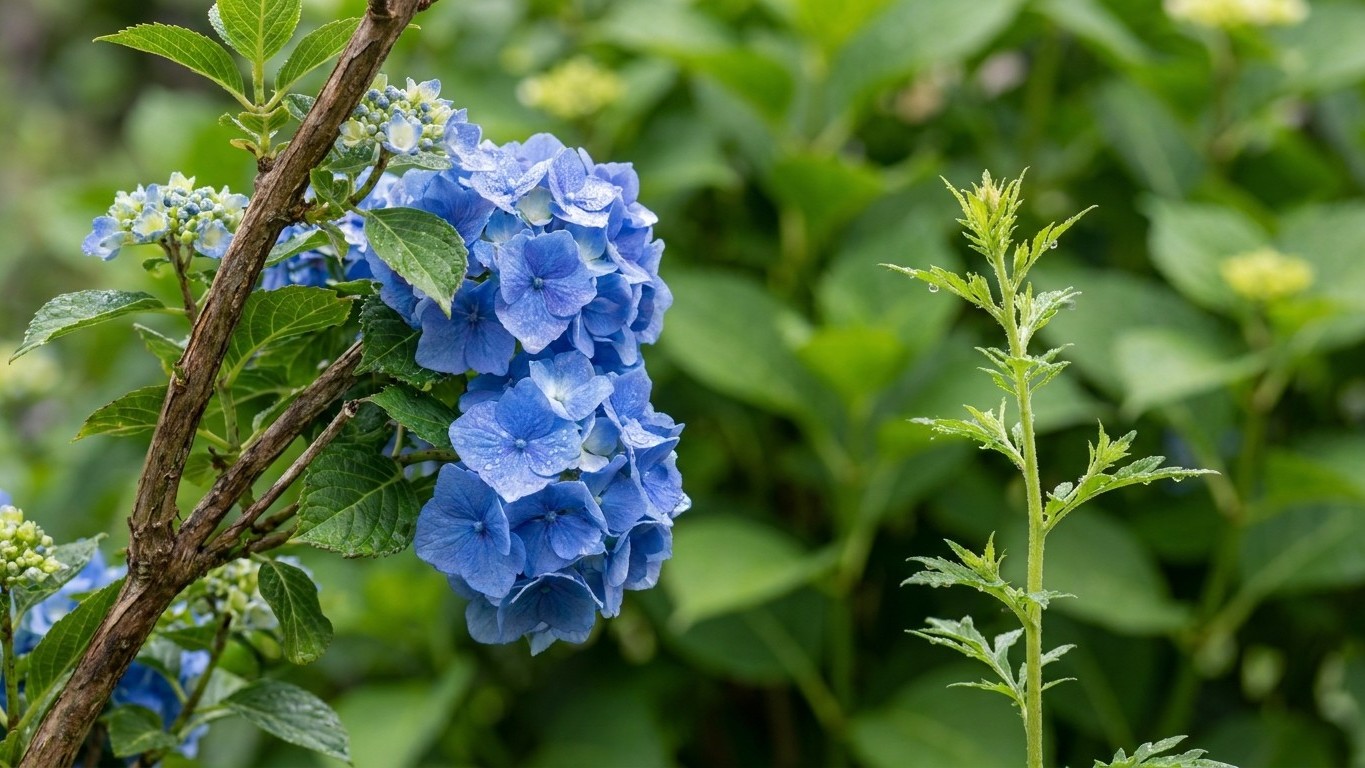

Plant container-grown hydrangeas in Iowa from mid-April through May, once the freeze window has passed, or in early fall if roots have several weeks before the ground locks up. The reference station here, the Sioux City airport, puts the last spring freeze between April 12 and April 24. Smooth and panicle hydrangeas are the dependable choices. Bigleaf types can work, but they need a sheltered spot and some patience.
When to plant Hydrangeas in Iowa

The frost dates and what they really mean
The frost numbers behind this guide come from NOAA NCEI 1991-2020 Climate Normals for the Sioux City airport station. They give a last spring freeze (32°F) between April 12 and April 24, and a first fall freeze between October 14 and October 25. Those ranges cover the 30 to 70 percent probability band, so a freeze after April 24 is still possible in some years.
One station is not the whole state. Sioux City sits in the west, and northern Iowa runs later in spring and earlier in fall. Iowa State Extension county figures (1950-2021) run about four days later in spring and ten days earlier in fall than this airport. Treat the airport dates as the optimistic end. Adding four days to the spring window gives roughly April 16 to April 28 as a more cautious planning range.
Hydrangeas are woody shrubs, so a light freeze will not kill a dormant plant in the ground. What a late freeze does damage is tender new growth and, on bigleaf types, flower buds that formed the previous season. So the frost date is a guide for when leaves have emerged, not a hard deadline for getting the shrub into the soil.
Seed, cuttings or nursery plants
Almost nobody grows hydrangeas from seed at home, and there is a reason. Seedlings do not come true from named varieties, and they can take several years to bloom. Nurseries sell container plants for a good reason. Cuttings are the other route: softwood cuttings taken in early summer can root in a few weeks, but they need a winter indoors or in a protected spot before going out the following spring.
Count-back for a nursery plant
For a container plant from a garden center, the arithmetic is short. Pick your planting day, then subtract. A plant that spent its life in a greenhouse or under a shade cloth needs a week or so of gradual exposure: a few hours of morning sun and wind, then longer days, then leaving it out overnight. With a target of April 28, begin that routine about April 18. A plant already sitting outside at the store needs less.
Fall is the second window. The airport station’s first freeze is October 14 to 25, and Extension’s county numbers point closer to early or mid-October. A fall planting still works for hardy panicle and smooth types if the shrub goes in early and gets watered until the ground freezes. Bigleaf types planted this late are a gamble, and spring is kinder to them.
Soil and site preparation
Start with light. Smooth hydrangeas and bigleaf types like morning sun and afternoon shade, which keeps leaves from scorching in July heat. Panicle hydrangeas tolerate more sun in Iowa, provided the soil stays evenly moist. Full shade produces leafy plants with few blooms, and full afternoon sun on a dry, south-facing wall will leave you hauling a hose all summer.
Drainage matters more than fertility. Dig a hole about a foot deep, fill it with water, let it drain, then fill it again. If the second fill is still standing after a few hours, the spot holds water and the roots will sit wet. Raise the bed by 6 to 8 inches with a mix of topsoil and compost, or pick another location. Hydrangeas want moisture, but not a swamp.
A handful of damp soil that stays in a ball and crumbles when poked is good loam. Sticky clay that shines when you rub it needs organic matter to open it up, and sand that will not hold together needs the same thing for the opposite reason. Iowa soils vary from county to county, so a lab test is the honest way to learn your pH and nutrient levels.
Timing the prep helps. Four to six weeks before planting, get the soil test done through your county extension office. If the result calls for lime or sulfur, those amendments work slowly and need that head start. Two to three weeks ahead, remove sod or weeds and work 2 to 3 inches of compost into the top 8 to 12 inches of the bed. On planting day, dig the hole twice as wide as the root ball and no deeper, and set the crown level with the surrounding soil.
Spacing comes from the mature size printed on the plant tag, not the size in the pot. Smooth hydrangeas generally want 3 to 4 feet between plants, while larger panicle types often need 5 to 8 feet. Crowding leads to poor air movement and more leaf disease. Finish with 2 to 3 inches of shredded bark or leaf mulch, kept a few inches back from the stems. Water in slowly until the root ball is soaked.
Varieties that suit Iowa
A short growing season and cold winters make one trait matter above all others. Does the plant bloom on old wood (last year’s stems) or new wood (this year’s growth)? Old-wood bloomers lose their flowers when winter kills the stems or a hard freeze nips the buds. New-wood bloomers just regrow and flower on schedule.
| Type | Blooms on | Cold reliability | Sun | Color |
|---|---|---|---|---|
| Smooth (Hydrangea arborescens) | New wood | Very dependable | Morning sun, afternoon shade | White to lime; pH does not change it |
| Panicle (Hydrangea paniculata) | New wood | Very dependable | Sun to part shade | White fading to pink with age, not pH |
| Bigleaf (Hydrangea macrophylla) | Old wood, and new wood on reblooming types | Variable; buds often lost in hard winters | Morning sun, afternoon shade | Blue, pink or purple depending on soil pH and aluminum |
| Oakleaf (Hydrangea quercifolia) | Old wood | Less certain in colder parts | Part shade | White fading to pink; strong fall foliage |
Among smooth hydrangeas, Annabelle is the long-standing widely sold variety, with big white snowball heads that flop after rain. Incrediball comes from the same species and was bred for sturdier stems that hold the flowers up better. Both cut back hard in late winter and still bloom that summer.
Among panicle hydrangeas, Limelight is the most widely planted, with lime-green flowers aging to cream and pink, and it makes a tall shrub. Bobo and Little Lime stay smaller, which suits foundation beds. Quick Fire opens early and turns rosy sooner.
Bigleaf gardeners in Iowa lean on the reblooming series, Endless Summer being the well-known one, because they set flowers on both old and new wood and give a second chance after a bad winter. They are not foolproof. Color follows chemistry. Soil that is acidic (roughly below pH 5.5) with available aluminum gives blue, and soil closer to neutral or alkaline (above about 6.5) tends toward pink. Panicle and smooth types will not change, so do not waste sulfur on them.
What to plant alongside
Hostas are the classic partner, and for a practical reason. Their broad leaves shade the soil around hydrangea roots, holding moisture and blocking weeds. They also share a preference for part shade and rich soil. Ferns, astilbe and coral bells (heuchera) work the same way at different heights, and their foliage fills the bare lower stems that hydrangeas tend to develop.
Spring bulbs solve a timing problem. Daffodils, alliums and early tulips bloom before hydrangeas leaf out, so the bed has color in April and May and then the shrubs hide the fading foliage. Daffodils have the added benefit that deer and rabbits generally leave them alone. Long-blooming perennials like coneflower or black-eyed Susan suit sunnier panicle hydrangeas, and both draw pollinators to the bed from July on.
What competes? Shallow-rooted trees, especially maples, drain water and nutrients from the top foot of soil where hydrangea roots live, and a shrub planted under one will sulk. Aggressive spreaders such as mint or running bamboo take over beds. Turf grass right up to the mulch ring competes for water too. Leave a bare, mulched circle rather than letting lawn creep in.
Marigolds are often said to repel Japanese beetles and other pests, but the evidence for that in a home flower bed is thin, so do not count on them as protection.
Watering, feeding and support
New plants drink more than people expect. For the first season, water deeply once or twice a week so the root ball and surrounding soil are soaked, aiming for about an inch of water per week from rain plus hose. Shallow daily sprinkling encourages surface roots that wilt at the first hot spell. A soaker hose or a slow trickle at the base for 20 to 30 minutes does more than a quick spray over the leaves, and it keeps foliage dry, which helps against leaf spot. Refresh mulch each spring, pulled a few inches from the stems.
Feeding needs restraint. One application of a balanced slow-release shrub fertilizer in spring, as new growth appears, is plenty for most plants in decent soil. Too much nitrogen gives lush leaves and few flowers, and it produces soft late growth that winter will kill. Skip feeding after midsummer. Compost around the base each spring is often enough on its own.
Support is a real issue with Annabelle-type smooth hydrangeas, because their stems bend under the weight of wet flower heads. A peony cage or a ring of stakes and twine set up in spring, when stems are about a foot tall, is far easier than propping them up after a July storm. Choosing a sturdier-stemmed variety avoids the problem. Panicle types rarely need help.
Pruning follows bloom wood. Smooth hydrangeas can be cut back to within 6 to 12 inches of the ground in late winter or early spring, or trimmed lightly for a taller framework. Panicle hydrangeas take a similar late-winter trim, removing about a third of the height to keep the shape. Bigleaf and oakleaf types bloom on old wood, so wait until after flowering and remove only dead stems and weak growth. Smooth hydrangeas also spread by suckers, and any extras can be dug out or divided in spring.
Common problems

A wilted hydrangea at 3 p.m. on a hot day is not necessarily a dying one. Large leaves lose water faster than roots can supply it, and the plant usually perks up by evening. If leaves are still limp the next morning, check the soil at 3 inches deep. Dry means water deeply. Wet and soggy means poor drainage or root rot, and the fix is to improve drainage or move the plant, not to pour on more water.
No flowers is the most common complaint, and the cause depends on the type. On bigleaf hydrangeas, it is usually winter damage to old-wood buds or pruning at the wrong time. Too much shade and too much nitrogen fertilizer are the other regular suspects. On smooth and panicle types, which bloom on new wood, look at light and feeding first, since winter rarely stops them.
Yellow leaves with dark green veins point to chlorosis, often iron that the plant cannot take up because the soil pH is too high. A soil test confirms it, and chelated iron or sulfur, applied as the test suggests, can help. Uniform yellowing of lower leaves often signals overwatering or wet feet instead.
Brown or tan spots on leaves, sometimes with purple edges, are typically fungal leaf spot, favored by wet weather and overhead watering. It looks ugly but rarely kills the shrub. Water at the base, thin crowded stems for airflow, and rake up and dispose of fallen leaves in fall. A white, powdery coating points to powdery mildew, common when humid nights follow warm days. The same steps help, and fungicide is rarely necessary in a home garden.
Crisp brown edges on leaves and flower heads usually mean scorch from sun, wind or dry soil. New shoots that blacken after a cold snap in April or May are frost damage, and the plant typically regrows from lower on the stem. Bigleaf types that bud early in a warm spring are the ones most likely to get caught.
Pests that actually show up in Iowa
Iowa State University Extension names Japanese beetle as the most destructive insect pest in the state’s landscapes and gardens. It was first found in Iowa in 1994. On hydrangeas, the first thing you see is leaves chewed into lace, with veins left behind, plus beetles clustered on the flowers. Adults are active from mid-June through July and peak by mid-July. The control that works best on a shrub is hand-picking in the cool morning, when beetles are sluggish, and dropping them into a bucket of soapy water. Skip pheromone traps, which can pull more beetles into your yard than they catch.
Common stalk borer is the one that catches gardeners off guard. Larvae move into larger stems in mid to late June, and what you see first is a shoot that suddenly wilts at the tip while the rest of the plant looks fine, sometimes with a small entry hole and sawdust-like frass on the stem. Cut the wilting stem below the damage and destroy it, larva included. Keeping weedy grass borders trimmed near the bed also cuts down on the places the pest lives.
Grasshoppers show up as ragged, chewed leaf margins, often on the outer leaves first. Ask your county office for local timing. Floating row cover or netting over a young shrub is the most reliable control on a home scale.
Harvest and end of season
Cut hydrangeas for a vase in the morning, once flowers are fully open and the petals feel a little firm instead of floppy. Strip the lower leaves, cut stems at an angle, and plunge them straight into water. Dipping the cut ends in hot water for a few seconds or using a splash of alum on the ends can help stems that wilt. To dry them, let heads on panicle and smooth types age on the plant until they feel papery, then hang them upside down in a dry, dim room.
Frost timing sets the end-of-season calendar. The airport station puts the first fall freeze between October 14 and October 25, and Iowa State Extension county figures run about ten days earlier, so gardeners inland or to the north should plan for early October. Stop deadheading and feeding well before then, and give the shrubs a deep watering before the ground freezes. Dry roots go into winter more stressed than moist ones.
Protect anything tender. After the ground cools, add a fresh layer of mulch 3 to 4 inches deep over the roots of new plantings. For bigleaf hydrangeas, a cage of chicken wire filled loosely with dry leaves around the stems helps shield old-wood buds. Do not cut back bigleaf or oakleaf types in fall. Panicle and smooth types can stand through winter with dried flower heads, which look nice in snow, and get trimmed in late winter. Potted hydrangeas do best in an unheated garage or shed, watered lightly now and then.
Local help
County-level frost dates, soil testing and pest identification are best handled through Iowa State University Extension, which has an office in every county. Bring a soil sample, or a photo or specimen of the insect, and ask about local timing. More state-specific advice is collected in our Iowa guides. Gardeners comparing regions can also read about Growing Hydrangeas in Rhode Island: Types, Colour and Winter and Growing Hydrangeas in Prince Edward Island: Types, Colour and Winter.
Common questions
Can hydrangeas survive Iowa winters?
Smooth and panicle hydrangeas are the dependable ones, since they bloom on new wood and regrow from the base even after hard winters. Bigleaf and oakleaf types often lose stems or buds and flower poorly after a rough winter. Check the plant tag for hardiness and your own USDA zone before buying.
When should I prune hydrangeas in Iowa?
It depends on the type. Smooth and panicle hydrangeas get pruned in late winter or early spring, before new growth starts. Bigleaf and oakleaf hydrangeas set buds on old wood, so prune them only right after flowering, removing dead stems and little else. Reblooming bigleaf varieties are more forgiving but still do best with light pruning.
How do I change hydrangea color to blue?
That only works on bigleaf hydrangeas. Blue needs acidic soil and available aluminum, and pink shows up in soil closer to neutral or alkaline. Test the soil first, because sulfur can take months to act. Panicle, smooth and oakleaf types will not shift color from soil changes.
Why is my hydrangea not blooming?
Look at the type first. A bigleaf that lost buds in winter or was pruned at the wrong time will skip a year. Too much shade and too much nitrogen fertilizer are the next suspects. A young plant may also need a season or two to settle in before flowering well.
Can I plant hydrangeas in fall in Iowa?
Yes, for hardy panicle and smooth types, if they go in with several weeks before the ground freezes. Water regularly until freeze-up and add a thick layer of mulch. Bigleaf types are safer planted in spring.