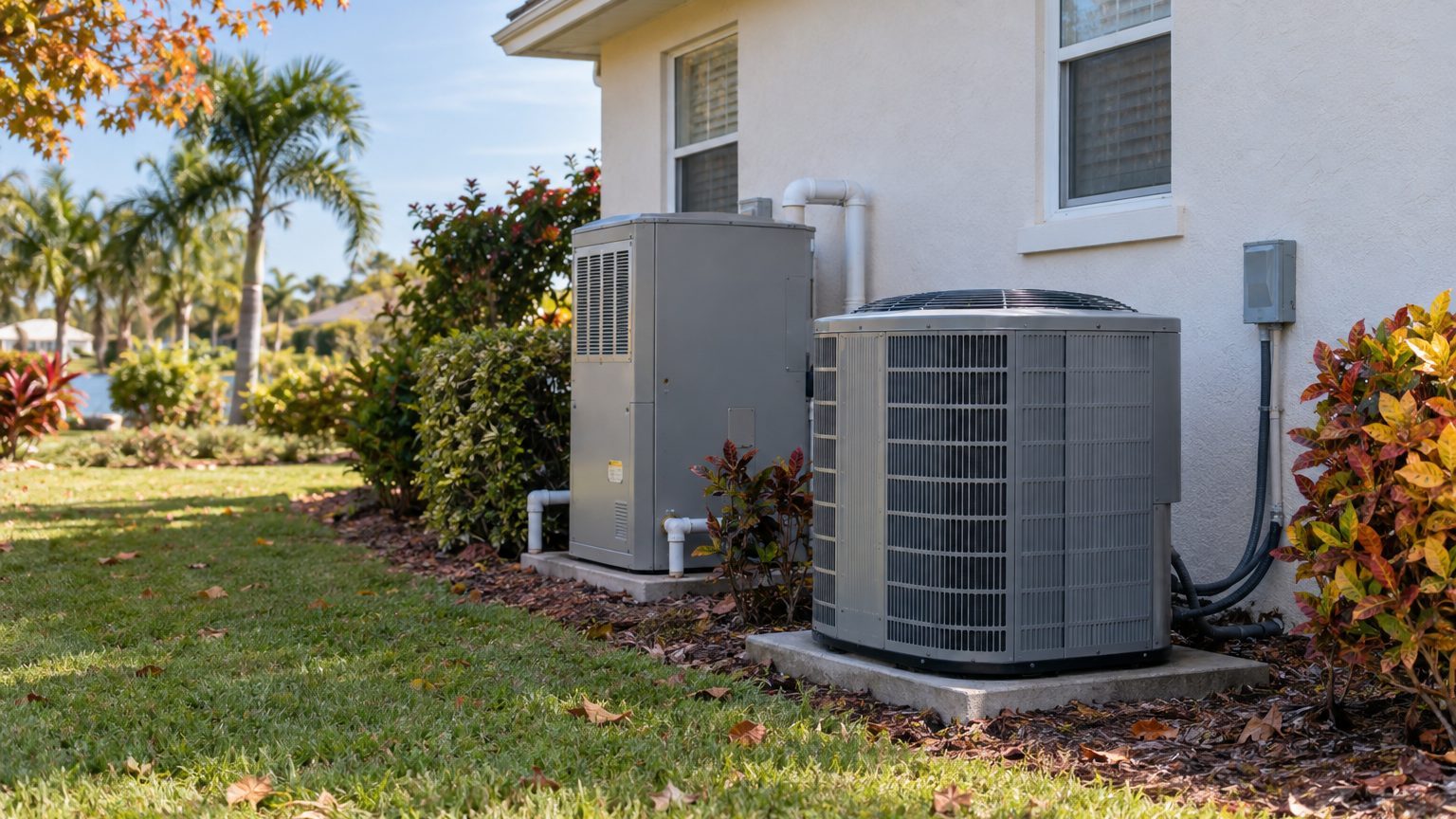

Gas, by a moderate margin. For the same amount of heat delivered, a natural gas furnace costs less to run in West Virginia than a heat pump, and both beat electric baseboard by a wide gap. Whether that margin decides anything depends on four things: whether the house has a gas line, how cold the county gets, whether it needs air conditioning, and what already sits in the basement.
The short answer for West Virginia
The numbers come from a calculation built on federal data: average residential prices from the U.S. Energy Information Administration (EIA), ENERGY STAR efficiency levels, and EIA’s standard energy conversions. At a 97% AFUE, a gas furnace delivers a million Btu of heat for $13.72. A heat pump at 8.1 HSPF2 (a seasonal COP of about 2.4) does it for $19.10. Electric baseboard, which converts every kilowatt-hour to heat at 100% efficiency, costs $45.34 for the same million Btu.
That puts the gas furnace $5.38 less per million Btu than the heat pump. The heat pump, in turn, comes in at less than half the cost of resistance heat. Three systems, three very different bills for identical comfort.
Read these figures for what they are. This is running cost on the same unit of heat, so it compares fuels, not houses. It is not a yearly bill, because that depends on square footage, insulation, air leaks and how warm you keep the thermostat. It is not the price of the equipment either, which belongs to a separate calculation involving installation, ductwork and any electrical upgrade.
If a gas line already serves the house, the furnace is the cheaper system to run; if it doesn’t, a heat pump beats baseboard heat by a wide margin. The rest of this article tests how far that holds once you factor in cold nights, air conditioning and the equipment already in place.
What each option costs to run in West Virginia
| System | Efficiency used | Cost per million Btu delivered |
|---|---|---|
| Electric resistance (baseboard) | 100% efficient | $45.34 |
| Heat pump | 8.1 HSPF2 (seasonal COP about 2.4) | $19.10 |
| Natural gas furnace | 97% AFUE | $13.72 |
Behind the table sits one electricity price: 15.47 cents per kWh, the average residential price year-to-date through July in Table 5.6.B of EIA’s Electric Power Monthly. The gas figure uses EIA’s average residential natural gas price, converted at about 1,037 Btu per cubic foot, with electricity converted at 3,412 Btu per kWh. Both are statewide averages. Utilities and rate plans differ, so treat them as a way to compare fuels, not as your bill. For an exact gas comparison, your local gas utility’s current rate is the number to plug in.
Efficiency matters as much as the fuel price because a unit of heat is what you’re buying, not a unit of fuel. A kilowatt-hour of electricity is the most expensive way to buy a Btu on this list, yet a heat pump moves heat from outdoor air instead of just making it, so it returns roughly 2.4 times the energy it draws over a season. Baseboard returns exactly 1. A gas furnace at 97% AFUE wastes only about 3% of its fuel up the flue, so even a pricier-per-Btu fuel would stay competitive with it. Cheap fuel with poor efficiency can cost more than pricey fuel used well.
The heat pump row uses 8.1 HSPF2, the ENERGY STAR minimum for ducted and single-package systems. ENERGY STAR asks 8.5 of non-ducted (ductless) systems for the same label, because they have no duct losses and start with an advantage. A better-rated unit would cost less to run than the table shows, so compare the same letter on every spec sheet, HSPF2 for heating and SEER2 for cooling, and never one against the other. For a closer look at the rating, see What HSPF2 Measures, and Why Ductless Asks for More.
How cold it gets, and what that does to a heat pump
Charleston, the NOAA station these climate figures come from, averages about 4,353 heating degree days a year (base 65°F). That number adds up, for every day, how far the mean temperature sat below 65°F. Twice the degree days means roughly twice the fuel for the same house, so it works as a yardstick between places. West Virginia’s reference figure describes a real heating season, but not a brutal one.
The coldest month tells the same story. The mean daily low in Charleston’s coldest month is 26.1°F. Typical nights in midwinter fall below freezing, yet they don’t sit in deep cold for weeks. Mild stretches often come between the hard ones.
The $19.10 heat pump figure is a seasonal average, and that is where the fine print lives. As outdoor temperatures drop, a heat pump’s efficiency drops with them, and on the coldest nights something has to help carry the load: electric resistance strips built into the air handler, or a furnace in a dual-fuel setup. Those backup hours are billed at the resistance rate, $45.34 per million Btu in the table, not at $19.10. The colder the winter, the more of the season they cover. How much depends on the house and the equipment, which is a question for the installer’s load calculation, not for a rule of thumb. For the mechanics, read How Cold Is Too Cold for a Heat Pump.
One caution on the data: Charleston is a single valley station. Mountain counties, with higher elevation and exposed ridgelines, can run far colder, and their heating seasons can run longer. If your home sits well above the Kanawha Valley, plan for the heat pump to lean on its backup more than Charleston’s numbers suggest, and ask any installer how the system handles the coldest nights.
What homes in West Virginia already heat with
According to EIA’s Residential Energy Consumption Survey (RECS) 2020 state tables, 54% of West Virginia homes heat mainly with a furnace and 20% with a central heat pump. By fuel, electricity leads at 45%, with natural gas at 43%. Those two fuels dominate, and the numbers are close enough that neither can be called the default.
For boilers (steam or hot-water), fuel oil or kerosene, and propane, the survey does not publish a figure: the estimates were suppressed as unreliable. That is not the same as zero. Some homes certainly heat that way, particularly in rural areas without gas service. These are state shares from a national survey, not a count of your county.
Equipment shares show what was installed, which tells you which fuel was cheap or available when houses were built. They are not a recommendation. They do change the comparison, though. A house without a gas line cannot choose the $13.72 option without a new service, so its real contest is heat pump against baseboard or propane, and the heat pump’s $19.10 against $45.34 is the number to watch. A house with a gas line and ducts is the one the table describes: the furnace is cheaper to run, and the heat pump has to win on other grounds.
Boiler houses are a separate case. Radiators and baseboard loops carry hot water, not air, so there are no ducts for a heat pump to use. Conversion usually means adding ductwork or going ductless, which is why Ductless or Central is the better starting point there. For a wider view of the state’s options, see Heating a Home in West Virginia. Before comparing running costs, check what your house already has: a gas line, ducts, or neither.
When the other choice wins
The cheaper-to-run system is gas, so “the other choice” here means the heat pump. It wins in several real situations.
- No gas service. Without a line at the street, the furnace’s $13.72 is a number you can’t use. Against baseboard at $45.34, the heat pump at $19.10 is the clear running-cost winner.
- You need cooling. Charleston averages about 1,162 cooling degree days a year, so air conditioning is a regular summer expense. A heat pump provides heating and cooling from one system, and ENERGY STAR sets a 15.2 SEER2 minimum for the cooling side. A gas furnace still needs a separate air conditioner.
- Dual-fuel setups. A heat pump paired with a furnace lets the heat pump work in milder weather and hands the coldest nights to gas. That fits colder hill counties well, though sizing and controls matter.
- The furnace is old but still working. Running cost is only one input. A system with years left may beat any replacement on total cost, so see Repairing a Furnace or Replacing It before deciding.
The reverse holds too. A well-kept, gas-fed furnace in a house with no cooling needs and no plan to change is hard to beat on running cost. Choose on what the house needs across all four seasons, not only on the winter fuel price.
Common questions
Is a heat pump cheaper than a gas furnace in West Virginia?
On running cost, no. The computed figures are $19.10 per million Btu for a heat pump at 8.1 HSPF2 and $13.72 for a gas furnace at 97% AFUE, so the furnace is $5.38 less. A heat pump can still be the better overall choice when you also need cooling or have no gas line.
Is this the amount I will pay each year?
No. The figures compare the cost of the same amount of delivered heat. Your annual bill depends on home size, insulation, air leakage, thermostat habits and your utility’s actual rates. Use the table to rank systems, not to predict a bill.
Does a heat pump work in West Virginia winters?
Yes, with a plan for the coldest nights. Charleston’s coldest month has a mean daily low of 26.1°F, and heat pump efficiency drops in deep cold. A backup, whether resistance strips or a furnace, carries those hours. Higher mountain counties can be colder than Charleston.
What if my home heats with a boiler or propane?
The federal survey does not publish a figure for boilers or propane in West Virginia, because the estimates were suppressed as unreliable. That means the data are missing, not that nobody uses them. Those homes face a different conversion: a boiler has no ducts, and propane prices are not part of the figures here.