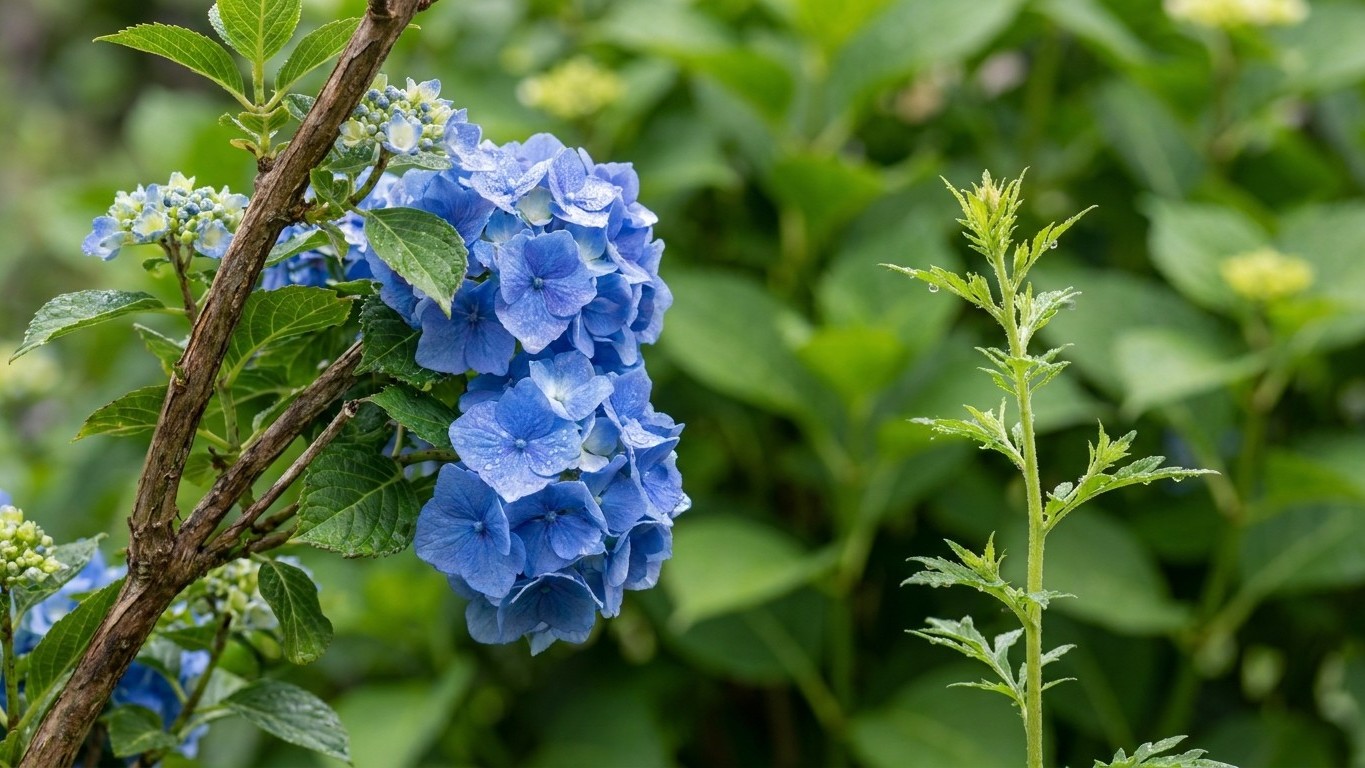

Plant Hydrangeas in Maryland in early fall or in spring after the last freeze, which at the Baltimore reference station falls between April 3 and April 16. Skip seed. Nursery plants and cuttings are the practical route. Choose the species by winter reliability, because panicle and smooth hydrangeas bloom on new wood and shrug off cold snaps that wipe out bigleaf buds. Flower color is only adjustable on bigleaf types, and soil pH does the adjusting.
When to plant Hydrangeas in Maryland

The frost numbers here come from NOAA’s 1991-2020 Climate Normals for the Baltimore reference station. They describe the 30-70% probability band for a 32°F freeze: April 3 to April 16 in spring, October 26 to November 5 in fall. Inside that band a freeze is roughly a coin flip in any given year. Those dates describe Baltimore, not the whole state. Western Maryland (Garrett and Allegany counties) is mountainous and runs weeks off Baltimore’s calendar, while the Eastern Shore is milder. Use the dates as a starting point and adjust for your elevation.
Fall is the better window
Count back from the fall band. A hydrangea needs roughly six weeks of workable weather to put out roots before cold shuts down growth (a rule of thumb from nursery practice, not a published threshold). Start from October 26, the early edge of the band, and six weeks lands you on September 14. So early September through the end of that month is the sweet spot, with early October still fine for container plants. Warm soil plus cooling air means the shrub spends its energy underground. It then meets its first Maryland July with a root system instead of a transplant’s sulk.
Spring planting and hardening off
Spring works too, but the margin is thinner. Do not set tender, leafed-out plants into the ground on April 3 just because the average says it is possible. Wait until at least the end of the band, April 16, and ideally a week past it. Bigleaf hydrangeas that leafed out under greenhouse lights burn at the first cold night. Keep a bedsheet or a row cover handy until the forecast looks settled.
Plants bought early at a garden center and held on a porch need hardening off. Give them seven to ten days of gradual outdoor exposure, starting with a few hours of shade and working up to full exposure. Count back from your planned planting date: to plant on April 20, begin hardening off on April 10.
What about seed?
Starting hydrangeas from seed indoors is possible but rarely worth it. Named varieties do not come true from seed, and seedlings can take years to bloom. Gardeners multiply these shrubs from cuttings instead. A rooted cutting spends its first winter in a pot, protected in a cold frame or unheated garage, and goes in the ground after April 16 the following spring. If you are buying, a one- or three-gallon nursery plant gives you flowers sooner than either route.
Soil and site preparation
Morning sun and afternoon shade suit most hydrangeas in Maryland’s hot, humid summers. Bigleaf and oakleaf types scorch and wilt on west-facing walls. Panicle hydrangeas handle six hours or more of direct sun, which makes them the pick for open yards. Dense all-day shade gives you leaves and few flowers, no matter the species.
Drainage matters more than fertility. Hydrangeas want steady moisture but rot in standing water. Dig a hole about a foot deep, fill it with water, and come back the next morning. If water is still sitting there, choose a different spot or build the bed up several inches. Heavy clay is common in many Maryland yards, and it can hold water in ways that sink a newly planted shrub in a wet spring.
Amendments go in weeks ahead, not on planting day. Spread an inch or two of compost over the bed in the fall before spring planting, or at least a month before a fall planting. Then get a soil test through your county extension office before touching pH. Lime and sulfur both work slowly, and guessing wastes a year. Roughly speaking, bigleaf flowers lean blue in acidic soil around pH 5.5 or lower and pink at 6.5 or higher, with purples in between. White types such as panicle and smooth hydrangeas ignore all of this.
To prepare the bed, loosen soil across an area two or three times the width of the root ball and keep the planting hole no deeper than the ball itself. Set the crown level with the surrounding grade, backfill with the native soil you dug out, and water in slowly. Finish with two to three inches of mulch, kept an inch or two off the stems.
Spacing depends on mature size. Smooth and compact bigleaf varieties need three to four feet between plants. Large panicle types need five to six, more if you plan to leave them unpruned. Crowding is the usual reason hydrangeas grow leggy and get mildew by August.
Varieties that suit Maryland
The traits that matter for hydrangeas here are which wood the flower buds form on, how much sun the plant tolerates, how it handles winter, and how stiff the stems are. Buds on old wood (last year’s stems) can freeze in a hard winter or get clipped by a late-spring cold snap, and the plant then skips blooming. Buds on new wood form after growth starts, so a bad winter costs you very little.
That distinction sorts the whole genus. For Western Maryland and other cold or exposed sites, lean toward new-wood bloomers. In the milder Baltimore-Washington corridor and on the Eastern Shore, bigleaf and oakleaf hydrangeas are more dependable, though they still lose buds in the occasional bad year.
| Variety | Type | Blooms on | Good for |
|---|---|---|---|
| Endless Summer | Bigleaf | Old and new wood | Reblooming, adjustable pink or blue color |
| Limelight | Panicle | New wood | Sunny sites, sturdy stems, late-summer cones |
| Little Lime | Panicle | New wood | Smaller yards, same toughness in a compact size |
| Annabelle | Smooth | New wood | Reliable white mopheads, cold tolerance (stems can flop) |
| Incrediball | Smooth | New wood | Annabelle look with stiffer stems |
| Snow Queen | Oakleaf | Old wood | Part shade, red fall foliage, peeling bark in winter |
Disease resistance deserves a look too. Bigleaf types are more prone to leaf spot and powdery mildew in humid summers, while oakleaf hydrangeas tend to shrug off both. Panicle types hold up well in heat. If you have a hot spot where nothing else stays alive, a panicle is the safest bet. For a quick comparison with nearby climates, Growing Hydrangeas in Delaware: Types, Colour and Winter covers a similar coastal-plain situation.
What to plant alongside
Good neighbors shade the roots and fill the bare ground. Hostas, ferns, astilbe, heuchera and Japanese forest grass all do that, cooling the soil and cutting down on weeds. They also tolerate the same moisture and partial shade, so one watering schedule works for the whole bed. Understory trees such as dogwood and redbud give the dappled afternoon shade that bigleaf and oakleaf hydrangeas prefer.
Pollinator draw is real but uneven. Panicle and lacecap flowers have small fertile florets that bees visit. Big mophead types are mostly sterile showy sepals with little to offer. If pollinators matter to you, plant coneflower, bee balm or native asters nearby rather than counting on the hydrangea alone.
Competition is the thing to avoid. Shallow-rooted trees such as maples take most of the moisture in the top foot of soil, and a hydrangea planted at the trunk will struggle every August. Turf is another rival. Lawn fertilizer and lime drifting onto the bed shifts both nutrients and pH, which can change bigleaf color and trigger yellow leaves. Keep a mulched ring between shrub and lawn.
Boxwood and viburnum are common in mixed Maryland beds. They share no diseases with hydrangeas, but they host pests of their own, covered in the pest section below. Vegetable beds are a separate matter: keep tomatoes, squash and potatoes out of the shrub border. Their pests and watering needs differ, and mixing them only complicates both.
One caution on folk pairings. The idea that marigolds or garlic planted at the base repel insects from hydrangeas has no solid evidence behind it. A diverse bed does tend to draw in predatory insects, which helps, but that is a general benefit, not a protection you can count on from one companion.
Watering, feeding and support
Water deeply and less often. Aim for about an inch of water per week from rain plus the hose during the first two summers, applied at the base in the morning rather than overhead in the evening. A slow soak soaks down to the root zone, and wet foliage overnight invites leaf spot. Bigleaf hydrangeas wilt on hot afternoons and often recover by evening, which is the plant’s response to heat and not necessarily a sign of thirst. Check the soil two inches down before reaching for the hose.
Mulch holds moisture and moderates soil temperature. Two to three inches of shredded bark or leaf mold does the work, kept a couple of inches from the stems so the crown stays dry. Refresh it each spring.
Feed lightly. One application of a balanced slow-release fertilizer in spring as new growth starts is plenty for most established plants. Heavy nitrogen buys you leaves at the expense of flowers. Do not fertilize in late summer, since it pushes tender growth that the first frost, between October 26 and November 5 at the reference station, will kill back.
Support is mostly a smooth-hydrangea problem. Annabelle’s huge flower heads get heavy and flop after summer rain. A peony ring set around the plant in spring, before the stems lengthen, keeps things upright with little effort. Stiffer-stemmed varieties such as Incrediball and most panicles do not need it.
Pruning follows the wood rule. Panicle and smooth types bloom on new wood, so cut them back in late winter before growth starts, and you can remove up to a third of the height without losing flowers. Bigleaf and oakleaf types bloom on old wood, so prune right after flowering and keep it to dead stems and spent heads. Cut them hard in late summer or fall and you remove next year’s buds. Suckers can be dug out in the dormant season if you want a tidy single clump, or left in place for a fuller shrub.
Common problems

The common problems come down to flowers that do not appear, leaves that go off, and stems that die back.
No flowers
This is the number one complaint. Check the cause in order: bigleaf buds killed by a hard winter or a late freeze, pruning at the wrong time, too much shade, or too much nitrogen. Fixes are straightforward. Pick a new-wood variety where winters are harsh, hold your pruners until after bloom on old-wood types, and cut back on lawn-style feeding.
Wilting and scorched leaves
Afternoon wilting that recovers by evening is a heat response. Wilting that persists into the morning means either dry soil or, less obviously, soggy soil and rotting roots. Brown, crispy leaf edges point to sun scorch or drought, especially on bigleaf in a west-facing bed. A thicker mulch layer and a deep soak fix the first; better drainage or a new site fixes the second.
Spots, mildew and yellowing
Brown or purple spots on leaves, often starting low on the plant, are usually fungal leaf spot, common in humid Maryland summers. Water at the base, thin the crowding, and pick off the worst leaves. White powder on foliage in late summer is powdery mildew, which looks bad but rarely kills the plant; better air circulation helps. Leaves that turn yellow while the veins stay green suggest high soil pH locking up iron, and a soil test confirms it.
Winter dieback
Bigleaf stems that look dead in April often are not. Scratch the bark with a fingernail; green underneath means life. Wait until buds swell in late spring before cutting anything, since dieback is most visible when new growth finally starts.
Pests that actually show up in Maryland
The University of Maryland Extension Home and Garden Information Center lists many insects for home gardens. Most of them are vegetable pests or target other shrubs. Hydrangeas are not a primary host for any of them, so damage tends to be cosmetic rather than fatal. Three show up often enough to matter, and pressure varies within the state, so take anything unusual to your county office for identification.
Spotted lanternfly
You see tiny black nymphs with white spots clustering on stems and leaf undersides, turning red as they mature. Eggs hatch from May and nymphs feed through July. A sticky residue and black sooty mold on leaves below them follow. The control that works is physical: knock the nymphs into soapy water or crush them, and scrape egg masses in winter.
Flea beetles
These emerge in May, and the first sign is a spray of tiny round holes, like shot, in young leaves. The beetles jump when you approach. Established shrubs tolerate it with no real harm. For new plantings, a floating row cover over the first few weeks of growth is the one control worth the effort.
Brown marmorated stink bug
Look for shield-shaped brown bugs and clusters of small eggs on leaf undersides. Eggs are laid from June to August, and adults head for shelter, often indoors, in fall. Hand-pick into soapy water during summer, and caulk gaps around windows and siding in early fall to keep them outside.
The rest of the list belongs elsewhere. Squash vine borer, squash bug, Colorado potato beetle and tomato hornworm are vegetable-bed problems, with July egg-laying peaks. Viburnum leaf beetle and box tree moth, first detected in Maryland in July 2025, attack viburnum and boxwood, respectively. If those shrubs share your border, check them regularly, but they are not hydrangea pests.
Cutting flowers and end of season care
“Harvest” for hydrangeas means cutting flowers. For fresh arrangements, cut in the morning when the heads are fully open, take 12 to 18 inches of stem, and plunge the ends in water right away. Mophead types wilt fast after cutting, so a quick dip of the cut ends in hot water sometimes helps.
For drying, wait. Heads should feel papery and have shifted toward antique shades of green, rose or burgundy, usually late summer into fall. Cutting too early gives you limp, collapsed flowers. Flowers do not improve once cut too early, so patience on the shrub pays off. Hang the stems upside down in a dark, dry spot or stand them in an inch of water and let it evaporate. Dried heads last a year or more away from direct light.
As frost approaches, stop feeding and cut back on pruning. The first freeze at the Baltimore reference station comes between October 26 and November 5, and Western Maryland and the Eastern Shore will differ. Leave spent flower heads on over winter, since they protect the buds just below and look good under snow. After the ground cools, add a few extra inches of mulch over the root zone. In colder parts of the state, wrap bigleaf hydrangeas in a wire cage filled with dry leaves. Potted hydrangeas can go into an unheated garage once the leaves drop. And if you want to add a shrub this season, count back from the October 26 date: mid-September is your last comfortable planting date.
Local help
University of Maryland Extension offers soil testing, pest identification and county-level planting guidance. Your county office can tell you how far your frost dates differ from the Baltimore reference station. More Maryland guides sit in this series, and the general How to Grow Hydrangeas: The Complete Guide covers the basics. For other regions, see Growing Hydrangeas in Missouri: Types, Colour and Winter and Growing Hydrangeas in Tennessee: Types, Colour and Winter.
Common questions
When is the best time to plant hydrangeas in Maryland?
Early fall, from September into early October, gives roots time to establish before the October 26 to November 5 frost band at the Baltimore reference station. Spring planting works after April 16, but summer heat comes quickly afterward.
Do hydrangeas need full sun in Maryland?
Most do better with morning sun and afternoon shade. Panicle hydrangeas tolerate full sun, while bigleaf and oakleaf types scorch in hot afternoon light.
How do I change my hydrangea’s color?
Only bigleaf types respond. Acidic soil, roughly pH 5.5 or lower, favors blue, and pH 6.5 or higher favors pink. Get a soil test first and adjust slowly. White varieties do not change.
Why won’t my hydrangea bloom?
The usual causes are winter-killed buds on old-wood types, pruning at the wrong time, too much shade, or too much nitrogen. Switch to a new-wood variety such as a panicle or smooth hydrangea if winters keep taking the buds.
Which hydrangeas handle Western Maryland winters best?
Smooth and panicle types, which bloom on new wood, are the safest picks in the mountains of Garrett and Allegany counties. Check with your county extension office for local conditions.