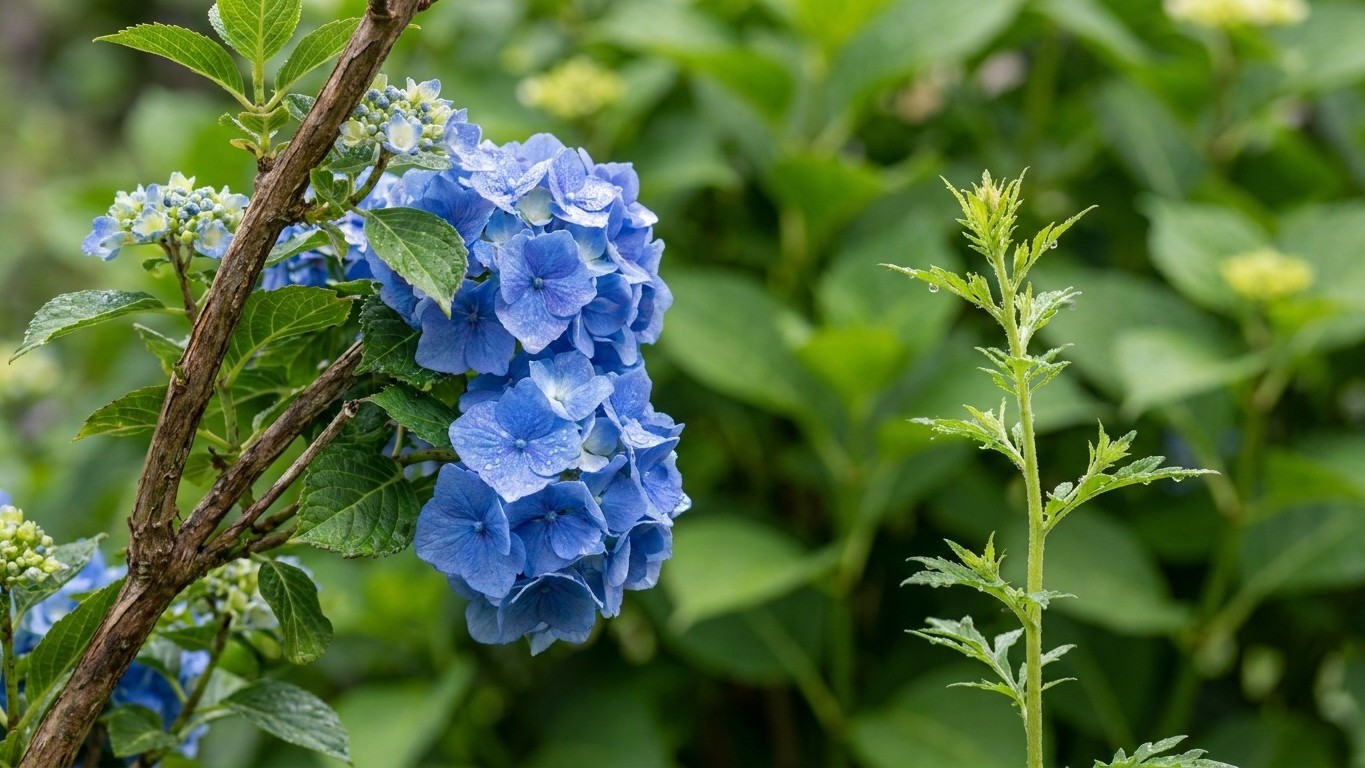

Protecting hydrangeas through a British Columbia winter is mostly a matter of timing, not heavy wrapping. At Vancouver International Airport, frost ends on average around March 18 and returns on average around November 10. Mulch the crown and finish pruning and feeding before the fall date. Hold off on uncovering until well after the spring one. Both dates are means, so frost lands on either side of them in roughly half of all years.
What this comes down to in British Columbia

At Vancouver International Airport, the average last spring frost is March 18 and the average first fall frost is November 10, according to Environment and Climate Change Canada’s climate normals. A mean is the midpoint of a spread, not a safe date. In one year out of two the frost falls later than that figure, and in the other half it falls earlier. Treat each date as the center of a window and leave a margin on both sides.
Why mild does not mean safe
The city sits in Canadian hardiness zone 9a, according to Natural Resources Canada’s plant hardiness site. That is the Canadian system, built on seven climate variables, and it does not convert to a USDA zone. Canadian normals also cover an earlier averaging period than the US figures, so don’t set the two side by side. What the zone does tell you is that a typical coastal winter will not kill an established hydrangea outright.
The trouble comes at the edges of the season. A long mild autumn keeps shrubs growing soft, leafy shoots. Then a cold snap arrives before the plant has hardened off. In late winter the reverse happens: a warm spell in February coaxes buds open, and a March frost scorches them. A hydrangea can lose a whole season of bloom this way and still leaf out fine by June, which makes the damage easy to blame on the wrong cause.
Where the damage actually shows up
Types that carry next summer’s flower buds on last year’s stems are the exposed ones. Frost kills the stem tips, and the buds go with them. Types that bloom on the current year’s growth shrug off the same weather, because the stems regrow before flowering. Which group your plants belong to decides how much protection is worth the effort, and Which Hydrangeas Survive a British Columbia Winter sorts them out.
Coastal winters bring a second threat that gardeners from colder places rarely consider: water. Saturated soil around the roots for weeks on end does its own harm, especially in containers and heavy clay. Good winter protection here is as much about drainage and airflow as insulation.
Working it out for your own garden
Start with the fall date and count backward. The mean first fall frost at the airport is November 10. If you want mulch down, pruning finished and pots moved at least two to four weeks ahead of that, the arithmetic puts your work window in mid-to-late October. That cushion matters because half of all years bring frost earlier than the mean. Wait for the date itself and you are betting on the better half of the odds.
The spring side runs the other direction. The mean last frost is March 18, and half of years run later. Add three to four weeks to that midpoint and you land in early-to-mid April as the range for pulling back mulch and removing any covers. Leaving protection in place a little longer costs you almost nothing. Removing it early can cost you the flowers.
Adjusting the numbers to your yard
The airport is flat, open ground near the Fraser River delta. Your yard almost certainly differs from it. A low corner where cold air pools will frost earlier in fall and later in spring. A south-facing wall with brick behind it may hold off frost by days or weeks. The reliable fix is to keep your own record: a cheap min-max thermometer placed near the shrub, and a note each year of the first and last frosts you actually see. After two or three seasons you have a local correction to the regional figure, which is worth more than any published average.
Reading what winter did
Don’t prune on a hunch in early spring. Wait until leaves begin to open, then cut back to the first living buds. To test a stem that looks dead, scratch a tiny patch of bark with a thumbnail: green underneath means alive, brown and dry means dead. Stems that are bare near the top but green lower down have simply lost their tips, and you can trim just that much. If you want to see how amendments or mulch type nudge bloom color as well, Why Hydrangeas Are Pink in British Columbia, and How to Turn Them Blue covers the soil side.
What changes across the state
British Columbia is not one climate, and the airport figure describes only one corner of it. The southwest coast, with the ocean moderating both extremes, is the mildest place hydrangeas grow in Canada. Move a short distance inland up the Fraser Valley and winters sharpen, with colder nights and more frequent outbreaks of cold air flowing out of the Interior.
The southern Interior, including the Okanagan, has hotter summers and a harder winter. Hydrangeas there often need real stem protection, and the late-winter swings between thaw and freeze can be as damaging as the cold itself. Farther east and north, in the Kootenays, the Cariboo and beyond, winters get longer and colder, and the safe period between frosts shrinks. Gardeners in northern and upland districts should expect their frost dates to run weeks behind the airport’s, both ways: later last frost in spring, earlier first frost in fall.
Elevation does similar work even inside one region. Hillside and mountain-edge properties on the North Shore or on Vancouver Island can sit well above the valley floor and see noticeably colder nights and more snow. East Vancouver Island and the Gulf Islands tend to be drier and milder in winter than the west coast, which is wetter and cloudier. Cold air drains downhill and collects in hollows, so a shrub in the bottom of a slope can fare worse than one fifty feet higher.
Treat the airport dates as a reference point, then decide whether your yard is likely to run earlier or later and by how much. The further you are from the coast and the higher your elevation, the more cushion you should build in.
The mistakes this state punishes

Pruning in fall is the classic one. On types that bloom from old wood, a tidy cutback in October removes next summer’s flower buds, and the shrub looks neat and blooms nothing. Wait until spring and cut only what is clearly dead.
Late fertilizing is the second. A feeding in September or October on a mild, damp coast pushes soft new growth just as the frost window opens. Stop feeding by midsummer or so and let the plant slow down on its own schedule.
Uncovering on the first warm day trips up plenty of people. Coastal Marches can feel like May, and with the mean last frost at March 18, half of years still bring a cold night after that. Keep mulch and covers at hand until the second week of April or later, depending on your yard.
Wrapping plants in plastic does more harm than bare stems. It traps moisture, invites rot and mold, and on a sunny winter day cooks the stems under it. Use breathable burlap or frost cloth, and leave the base open to air.
Piling mulch against the stems is another. A few inches of bark or leaf mulch spread around the crown insulates the roots, but mulch heaped on the stems holds moisture against them and rots the base. Leave a gap around the stems.
Finally, don’t leave containers where they sit all summer. Roots in a pot freeze harder than roots in the ground, and a pot full of rain gets waterlogged. Move pots against a house wall, raise them on feet so they drain, and tip them slightly so they cannot hold standing water.
Checking this against your county
A provincial or city figure is a starting point, not an instruction. British Columbia has no county system, so look to your regional district and local agricultural contacts for conditions in your area. The provincial agriculture and seafood pages from the Government of British Columbia are the place to begin. For the general growing basics that sit behind everything here, return to the guide to growing hydrangeas in British Columbia.
Common questions
Do hydrangeas in Vancouver need winter protection at all?
Established shrubs in the city usually come through with little more than a layer of mulch, since the reference city falls in Canadian hardiness zone 9a. The exceptions are young plants, potted ones and old-wood bloomers in colder pockets, where a cold snap can cost you the flowers.
When should I mulch my hydrangeas?
Count back from the mean first fall frost of November 10 at Vancouver International Airport. Finishing two to four weeks earlier, so mid-to-late October, leaves room for a cold year. Inland and upland gardens should go earlier still.
When can I take winter protection off?
Not on the mean last frost date of March 18, because half of years run later. Waiting until early-to-mid April, or later at higher elevations, is safer. Pull covers back gradually rather than all at once.
Is the Canadian hardiness zone the same as a USDA zone?
No. Natural Resources Canada builds its zones on seven climate variables, while the USDA uses one, and the two systems do not convert. Use the Canadian zone for Canadian plant tags and guides, and don’t compare it directly with US zones.