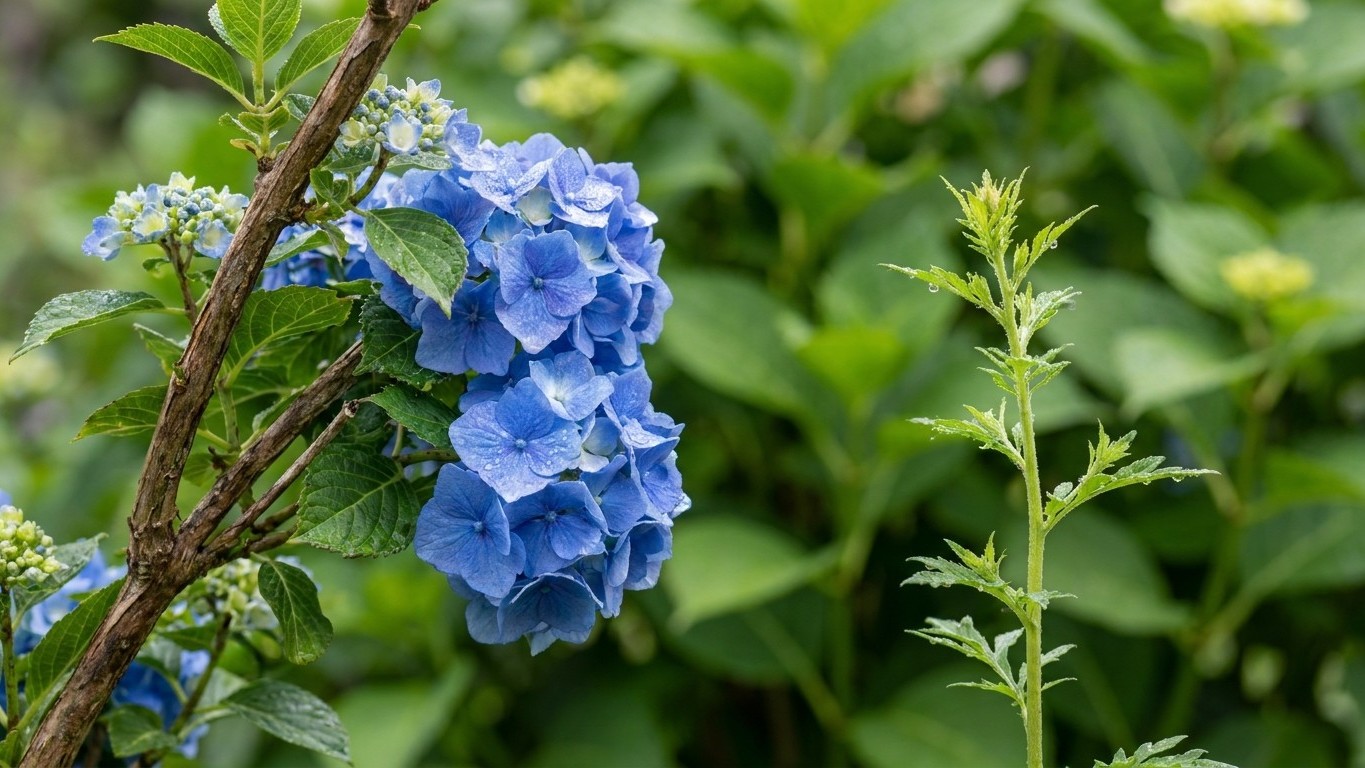

Set Hydrangeas out in Michigan after the last spring frost, which falls around April 30 in the Detroit area and early to mid May across most of the Lower Peninsula. Early September also works, because roots settle in before the first fall frost. The type you pick matters more than the date, though. Panicle and smooth hydrangeas bloom reliably after hard winters, while bigleaf types can lose their flower buds to cold.
When to plant Hydrangeas in Michigan

Detroit is the reference city here. MSU Extension’s frost-free dates put the last spring frost around April 30 in the Detroit area and early to mid May across most of the Lower Peninsula. Northern Michigan, the Upper Peninsula and higher ground run later. Don’t borrow Detroit’s date for a yard near Traverse City or Marquette.
Spring: counting back from the frost date
Hydrangeas are shrubs, and almost nobody grows them from seed. Seedlings vary from the parent and take years to flower. “Starting indoors” really means keeping a potted plant in a bright, cool spot until the weather settles. That might be a florist’s hydrangea or a cutting you rooted the previous summer.
The arithmetic is simple. Hardening off takes 7 to 10 days, so start that many days before your planting date. Aiming for April 30 near Detroit? Begin around April 20 to 23. Planning on May 10 in the central Lower Peninsula? Begin around May 1 to 3. Day one is an hour or two in open shade, out of wind. Add an hour or so each day, and move to morning sun by the end of the week.
On planting day, pick a cloudy afternoon. Dig a hole twice as wide as the root ball and no deeper, with the top of the root ball level with the soil. Water slowly, then mulch. Keep an old bedsheet handy. A late frost after leaf-out blackens new growth on bigleaf types. The plant usually survives, but you may lose that year’s flowers.
The fall window
MSU Extension’s Michigan garden calendar lists the first fall frost as October 6 to October 21 for zone 6a. Count back about six weeks, a rule of thumb rather than a published date, and you land between August 25 and September 9. Early September is the sweet spot. The soil is still warm, the air is cooler, and the plant spends its energy on roots instead of flowers. Later planting can work, but it needs steady watering and a thick mulch layer before winter.
Soil and site preparation
Morning sun and afternoon shade suit most hydrangeas in Michigan. Bigleaf and oakleaf types scorch in hot, direct afternoon light. Panicle hydrangeas handle full sun and bloom best with at least six hours of it. Deep shade gives you healthy leaves and few flowers.
Drainage decides more failures than fertility does. Dig a hole about a foot deep, fill it with water, and check the next day. If water is still standing after 24 hours, build a raised bed or choose another spot. Hydrangeas like moisture but rot in soggy ground. Clay and sand are both common on home lots, and both improve with compost. Clay holds water, and sand lets it run through.
Test the soil before you amend anything. A basic test through your extension office tells you pH and nutrient levels, and pH controls flower colour on bigleaf types (more on that below). Guessing can push you in the wrong direction. Here is a rough timeline for the weeks before planting:
- Four to six weeks out: send in the soil test and clear sod or weeds from the bed.
- Two to four weeks out: fork in a few inches of compost across the whole bed, not just the planting hole. Add lime or sulfur only if the test calls for it.
- Planting week: loosen the sides of the hole, set the plant, and mulch two to three inches deep, keeping mulch off the stems.
Spacing is where people cheat. A one-gallon shrub looks lonely, so they plant it 18 inches from the next one. Give each plant its mature width, which is often 3 to 5 feet for bigleaf and smooth types and wider for large panicles. Check the tag. Crowded plants stay damp and invite mildew.
Varieties that suit Michigan
Four traits matter when choosing a hydrangea. First is whether the plant flowers on new wood (this year’s growth) or old wood (last year’s stems). New-wood bloomers shrug off a brutal winter because the buds form after spring starts. Second is stem strength, since heavy blooms flop in rain. Third is sun tolerance, and fourth is resistance to powdery mildew and leaf spot.
| Variety | Type | Blooms on | Good for |
|---|---|---|---|
| Annabelle | Smooth | New wood | Dependable white blooms after cold winters; stems can flop |
| Incrediball | Smooth | New wood | Annabelle-style flowers on sturdier stems |
| Limelight | Panicle | New wood | Full sun, lime-to-pink blooms, upright habit |
| Quick Fire | Panicle | New wood | Earlier bloom, useful where summers feel short |
| Bobo | Panicle | New wood | Compact size for small beds and containers |
| Endless Summer | Bigleaf | Old and new wood | Blue or pink flowers with a second chance if winter kills old buds |
| Snow Queen | Oakleaf | Old wood | Shade tolerance and burgundy fall foliage; prune lightly |
For a first Michigan hydrangea, I’d pick a panicle or smooth type. They blank out far less often than traditional bigleaf plants. Reblooming bigleaf types such as Endless Summer narrow that gap, though a hard winter can still cost you the first flush.
Colour works differently depending on the species. White and green panicle and smooth hydrangeas stay put, and pH won’t change them. Bigleaf flowers turn blue where the soil is acidic (around pH 5.5 or lower), because aluminum is available to the roots. Above about pH 6.5 they lean pink. Anywhere in between, you get purple or a mix. Changing colour takes months of patient soil work, and growing the plant in a container is the easiest route.
What to plant alongside
Good partners share the same conditions: part shade, steady moisture, and rich soil. Hostas, ferns, astilbe, heuchera and hellebores all fit. Their leaves shade the soil, which keeps roots cooler and cuts down on weeds. Japanese forest grass adds texture without competing hard. In front of a leggy hydrangea, a low boxwood or ground cover hides bare lower stems.
Bulbs are underrated. Daffodils and early tulips bloom while hydrangeas are still leafing out, and the emerging foliage covers the dying bulb leaves. Late-summer pollinator plants such as coneflower or bee balm work in sunnier beds beside panicles, but they want drier feet than bigleaf types do.
Competition is the real problem. Shallow-rooted trees such as maples and birches drain moisture from the top foot of soil, and a hydrangea planted in that zone wilts every dry July. Turf grass pushed right up to the stems does the same thing. Black walnut is a sore point as well. Reports on hydrangea tolerance of its toxin are mixed, so keep a bed out from under the drip line.
One popular pairing deserves skepticism. Hostas and hydrangeas look great together, but both attract slugs, so you’re putting a shared food source side by side. Marigolds and similar plants are often said to repel pests from shrubs, and there is little solid evidence for that. Coffee grounds are said to turn flowers blue, yet they barely move soil pH. Test the soil instead.
Watering, feeding and support
Hydrangea means “water vessel,” and the name is earned. In the first season, soak the root zone deeply about once a week when rain falls short, rather than sprinkling daily. Water in the morning at the base, so leaves dry quickly. Established plants still wilt on hot afternoons. Check the soil, because a droop that recovers by evening is normal heat stress, while a droop in the morning means thirst.
Mulch is the cheapest insurance you can buy. Two to three inches of shredded bark or leaf mold keeps roots cool and slows evaporation. Pull it back from the stems so it doesn’t hold moisture against the bark. Top it up in spring.
Feeding is easy to overdo. One application of slow-release shrub fertilizer in spring is plenty for most plants. Too much nitrogen gives you lush leaves and few flowers, and stopping feeding by midsummer lets new growth harden before winter. Compost around the base each spring covers a lot.
Support helps the heavy-headed types. Annabelle-style flowers get soaked in July storms and bow to the ground. A peony ring set early in spring lets stems grow through it and stay upright. Better yet, choose a sturdier variety and skip the staking.
Pruning and suckers
Pruning depends on how a plant blooms. Panicle and smooth hydrangeas flower on new wood, so cut them back in late winter or very early spring, before growth starts. Bigleaf and oakleaf types bloom on old wood. Take out dead stems in spring once you can see which ones lack buds, and prune for shape right after flowering. Cutting them hard in March means no flowers that summer.
Suckers are shoots that pop up from the roots away from the main plant. Remove them if you want a tidy shrub, or dig and pot them as free plants.
Common problems

Most hydrangea problems show a clear symptom, and the symptom usually points to the cause.
No flowers. This is the number one complaint. On bigleaf types, the usual culprits are winter damage to old-wood buds, a spring frost after leaf-out, or pruning at the wrong time. Too much shade or too much nitrogen can also explain it. Panicle and smooth types skip the first three problems, so check light and fertilizer first.
Wilting. A plant that droops at 3 p.m. and perks up at dusk is just handling heat. A plant that stays limp in the morning needs water, or has soggy roots that can’t take it up. Push a finger into the soil to tell which.
Leaf spots. Small tan or purplish spots with darker edges point to a fungal leaf spot, common after wet weather. Water at the base, give plants room for air movement, and rake up fallen leaves in autumn. Most plants survive a spotty summer. A white, dusty coating means powdery mildew, which shows up in humid, shady spots with poor airflow.
Yellow leaves with green veins. This pattern, called chlorosis, signals trouble absorbing iron, often because the soil pH is high. A soil test confirms it. Lowering pH slowly with sulfur, along with a chelated iron product, can help.
Brown, crispy leaf edges. Sun scorch and dry soil are the usual causes. Fertilizer burn from a heavy hand is another. Move the plant if the site gets harsh afternoon sun, or increase mulch and watering.
Dead stems in spring. Scratch a stem with a fingernail. Green underneath means life. Wait until leaves emerge before cutting, because hydrangeas leaf out late and often look dead until mid May. For pest damage, see the next section.
Pests that actually show up in Michigan
MSU Extension’s bulletin on diseases and insects in Michigan cucurbits is cucurbit-focused, so only part of it applies here. The list is not exhaustive, and pressure varies by region. Take a damaged leaf to your county office for identification. Several named pests do damage hydrangeas, and the pest season runs from late April through September.
Asiatic garden beetle. You see ragged, notched leaf edges, but no culprit in daylight. The adults feed at night and appear toward the end of June. Go out after dark with a flashlight and knock them into a bucket of soapy water. That hand-picking is the control that works.
Slugs. Look for irregular holes in leaves and silvery trails across the soil or mulch. They are most troublesome in spring and fall. Iron phosphate bait scattered around the plant base is the dependable fix.
Cutworms. A newly planted hydrangea or rooted cutting is cut off at the soil line overnight. Nothing else looks wrong. A collar around the stem pressed an inch into the soil, such as a cardboard tube or a cut paper cup, stops them.
Flea beetles. Tiny shot holes pepper the leaves. The damage looks alarming but is mostly cosmetic on established shrubs. Weeding around the bed helps. Protect small transplants with a lightweight cover until they grow past the pinprick stage.
The rest of the list mostly skips hydrangeas. Squash vine borer, squash bug, striped and spotted cucumber beetles and seedcorn maggot target cucurbits and vegetable seedlings. Emerald ash borer kills ash trees. It matters to a hydrangea bed indirectly, because a dying ash overhead changes the shade and drops limbs onto shrubs below.
Cut flowers and end of season
Hydrangeas make good cut flowers. For fresh bouquets, cut in the morning, choose blooms that are fully open, and plunge the stems into water right away. For drying, wait until late summer, when the petals feel papery and the colours soften to antique greens, mauves and burgundy. Cut stems about a foot long and strip the leaves.
Hang bunches upside down in a dark, dry, airy spot. They are ready in two to three weeks. Another approach is standing stems in a vase with an inch of water and letting it evaporate. Dried heads last for months indoors if kept out of sunlight and humidity.
With the first fall frost expected between October 6 and October 21 in zone 6a, stop fertilizing well before then. Water deeply every week or so through autumn if rain is scarce. Leave spent flower heads on the plant, since they add some insulation and look handsome in snow.
Once leaves drop, mound shredded leaves or bark over the crown of bigleaf types. For extra protection, wrap a wire cylinder around the plant and fill it with leaves. Potted hydrangeas can go into an unheated garage, where they stay dormant and need only an occasional splash of water. Panicle and smooth types usually need only mulch.
Local help
Planting dates, soil pH and pest pressure differ across the state. Michigan State University Extension can connect you with your county office for local frost timing, soil testing and pest identification. For related guides, browse the Michigan guides, the full How to Grow Hydrangeas: The Complete Guide, or the neighboring-state pages for Growing Hydrangeas in Indiana: Types, Colour and Winter, Growing Hydrangeas in Massachusetts: Types, Colour and Winter and Growing Hydrangeas in Utah: Types, Colour and Winter.
Common questions
Can I plant hydrangeas in fall in Michigan?
Yes. Count back about six weeks from the first fall frost window (October 6 to October 21 in zone 6a) and aim for early September. Water regularly and mulch before the ground freezes.
Which hydrangea is the safest choice for cold winters?
Panicle and smooth types bloom on new wood, so winter damage rarely costs you flowers. Limelight, Quick Fire and Annabelle are widely available examples.
Why did my hydrangea leaf out but never bloom?
For bigleaf types, the usual causes are winter-killed buds, a late spring frost, or pruning in the wrong season. Too much shade or nitrogen can also be the reason.
Can I change my hydrangea’s colour?
Only bigleaf types respond. Acidic soil, around pH 5.5 or lower, favours blue, and soil above about pH 6.5 leans pink. White and green varieties don’t change.
Do I need to protect hydrangeas in winter?
Bigleaf types benefit from leaves or mulch mounded over the crown after they go dormant. Panicle and smooth hydrangeas usually do fine with a layer of mulch.