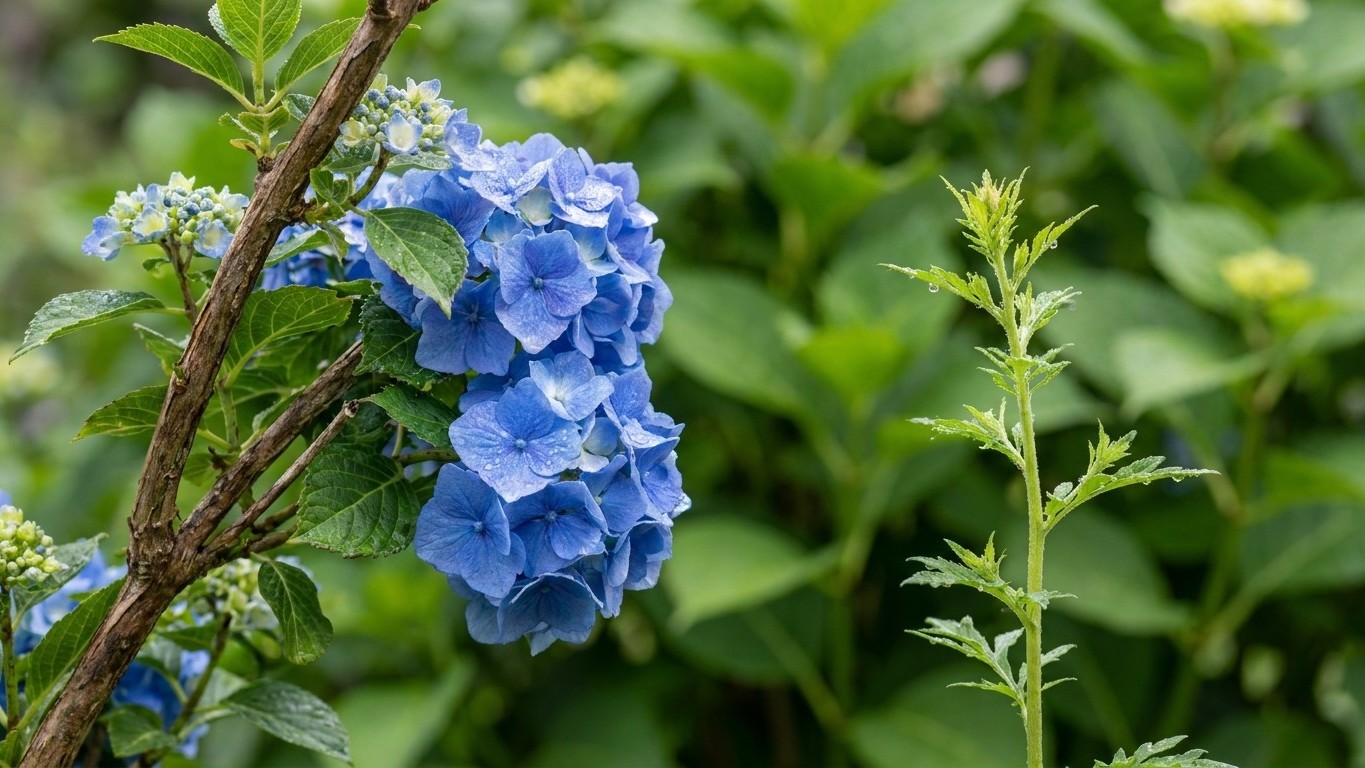

Across most of California, winter is not the hydrangea’s problem. Along the coast and in the south, no freeze arrives in an average year, so every common type gets through. The risk sits in Northern California, the Central Valley and the Sierra, where a hard freeze can kill the flower buds of some hydrangeas and barely touch others. Which group a plant belongs to, and whether it blooms on last year’s stems or this year’s, matters more than any cultivar’s reputation.
What this comes down to in California

In Los Angeles, no freeze occurs in an average year, according to NOAA NCEI climate normals. Daily records from NOAA show zero days at or below 32°F in 30 years, and the frost-free season is listed as 365 days. For the coast and the south, then, every hydrangea survives winter, and the real constraints are heat, drought and water restrictions. Northern California, the Central Valley and the Sierra do freeze, so the cultivars below run from the most vulnerable to cold to the toughest.
Nikko Blue
A classic bigleaf mophead, famous for blue flowers in acidic soil. It blooms on old wood, meaning stems that grew the previous year, so a freeze that kills the stems also kills the season’s flowers. Reliable on the mild coast, a gamble anywhere winters bite.
Endless Summer
Also a bigleaf, but sold as a rebloomer because it flowers on both old and new wood. If cold wrecks the old stems, new growth can still carry blooms later in the year. That makes it a safer pick than Nikko Blue in marginal spots, though it still leafs out early and can be burned by a late freeze.
Snow Queen
An oakleaf hydrangea with white cone-shaped flower clusters that age to pink and leaves that turn burgundy in fall. It blooms on old wood, yet oakleaf types are generally tougher against both cold and dry heat than bigleafs. A good middle option for gardeners who get frost but not extreme winters.
Quick Fire
A panicle hydrangea known for flowering earlier than most of its relatives. It blooms on new wood, so winter dieback costs it little. Panicles as a group are among the most freeze-tolerant hydrangeas sold in the state.
Limelight
The best-known panicle, with lime-green cones that blush pink as they age. Flower buds form on the current season’s growth, which is why a hard winter rarely cancels the show. In hot inland valleys, the trouble is summer water, not winter cold.
Annabelle
A smooth hydrangea with big white mophead flowers on new wood. It can be cut nearly to the ground in a cold climate and still bloom the same year. Its weakness is floppy stems under heavy flowers, not frost.
Incrediball
An Annabelle-type smooth hydrangea bred for sturdier stems. Like its parent, it blooms on new wood and shrugs off winter damage. Where freezes are real and you want a white mophead, it is among the safest choices.
Working it out for your own garden
Cultivar lists age quickly, but the method does not. Two questions sort almost any hydrangea at the nursery: where does it bloom, and how cold does the tag say it can go?
The first question is about wood. A plant that flowers on old wood carries next summer’s buds through the winter, exposed. A plant that flowers on new wood builds its flowers from scratch each spring, so a freeze can kill the stems without touching the display. That is also why wood type governs when you can prune safely, covered in When to Prune Hydrangeas in California.
| Cultivar | Type | Blooms on | What a hard freeze does |
|---|---|---|---|
| Nikko Blue | Bigleaf | Old wood | Can erase the year’s flowers |
| Endless Summer | Bigleaf | Old and new wood | Costs early flowers, later ones can follow |
| Snow Queen | Oakleaf | Old wood | Buds at risk in a severe winter |
| Quick Fire | Panicle | New wood | Little effect on flowering |
| Limelight | Panicle | New wood | Little effect on flowering |
| Annabelle | Smooth | New wood | Little effect on flowering |
| Incrediball | Smooth | New wood | Little effect on flowering |
The second question is about the zone. Look up your address on the USDA Plant Hardiness Zone Map. That system rests on a single variable, the average annual extreme minimum temperature, and California spans 5a to 11a. Then compare your zone with the coldest zone on the plant’s tag. Here is a hypothetical for the arithmetic: a garden mapped at zone 8 and a tag that stops at zone 6 on the cold end leaves two zones of margin, so the plant finishes the winter comfortably. Take the same tag into a garden mapped at zone 5, and it falls a zone short. The roots may survive, but exposed buds on an old-wood bloomer probably will not.
Apply it to two named plants. Limelight, a new-wood panicle, passes in nearly any freezing garden because even stem dieback leaves its flowering intact. Nikko Blue, an old-wood bigleaf, passes only where winter stays mild enough to protect its buds. Same garden, different answer, and the wood type explains why.
One limit: the zone says nothing about summer heat or water. A plant that clears your winter can still struggle in July, which is why the same tag needs a second look in the Central Valley. The broader basics live in the guide on growing hydrangeas in California.
What changes across the state
One reference point, Los Angeles, tells you that the coast is frost-free. The state’s zone range of 5a to 11a in the USDA system shows how wide the gap runs, from the Sierra’s cold ground to the warmest southern pockets.
Elevation is the biggest lever. Every step up into the Sierra and other mountain ranges brings colder winters, longer freezes and, often, snow that insulates the crowns. In those gardens, new-wood panicle and smooth types are the sensible choice, and old-wood bigleafs belong in a pot that can move to shelter.
Distance from the ocean matters nearly as much. The coast buffers temperatures, which is why Los Angeles never freezes in an average year. Move inland to the Central Valley and winter nights can drop below freezing on clear, still nights, while summers run far hotter. A hydrangea there faces a double test: a possible winter freeze and a punishing summer.
North and south also split the picture. Northern California generally sees more frost than the south, even near the coast, so a cultivar that thrives in San Diego without a thought may need a plan farther north. Desert areas of the south add a twist, since cold nights can still occur there even though days are hot.
The mistakes this state punishes

The first is treating Los Angeles as the whole state. A tag or a neighbor’s advice from the frost-free coast does not carry to a Sierra foothill yard, and the reverse is also true. Know your own zone before buying.
Second, planting an old-wood bigleaf where freezes happen and then being surprised by a flowerless summer. The plant is alive, the foliage looks fine, and the buds died in January. Where freezes occur, put a new-wood panicle or smooth type in the ground first and treat bigleafs as a bonus.
Third, pruning old-wood types in fall or winter. Cutting stems before spring removes the buds the plant already set, which no amount of mild weather undoes. Wait, and read the timing guide before you reach for the shears.
Fourth, the warm-spell trap. A stretch of unusually mild weather in late winter can coax early leaves, especially on bigleafs, and a later freeze burns that tender growth. In freeze-prone areas, hold off on fertilizer and heavy pruning until the danger has truly passed, and keep frost cloth handy. Details are in Protecting Hydrangeas Through a California Winter.
Fifth, over-protecting in frost-free places. Wrapping plants and heaping mulch against a freeze that never comes wastes effort. On the coast and in the south, the better investment is shade and water management.
Checking this against your county
A state-wide figure is a starting point, not an instruction. The Los Angeles numbers here describe one place, and California has many climates within a few hours’ drive. Your county’s local office of University of California Agriculture and Natural Resources can tell you which cultivars local gardeners keep alive and how your area’s freezes behave. For the growing basics, return to the state guide on Growing Hydrangeas in California, then use the extension office to refine the details for your yard.
Common questions
Do hydrangeas survive winter in Southern California?
Yes. In Los Angeles no freeze occurs in an average year, so winter cold does not threaten them. Heat, drought and water restrictions are the harder tests.
Which hydrangea type handles freezing weather best?
Panicle and smooth hydrangeas, such as Limelight, Quick Fire, Annabelle and Incrediball. They bloom on new wood, so even stem dieback usually leaves the flowers intact.
Why did my hydrangea leaf out but never bloom?
If it is an old-wood type such as Nikko Blue, a freeze may have killed the buds while leaving the plant alive. Wrong-season pruning can cause the same result.
Is my USDA zone enough to choose a hydrangea?
It is a good start, but it rests on one variable, the average annual extreme minimum temperature. It says nothing about summer heat or water, so check both before you buy.