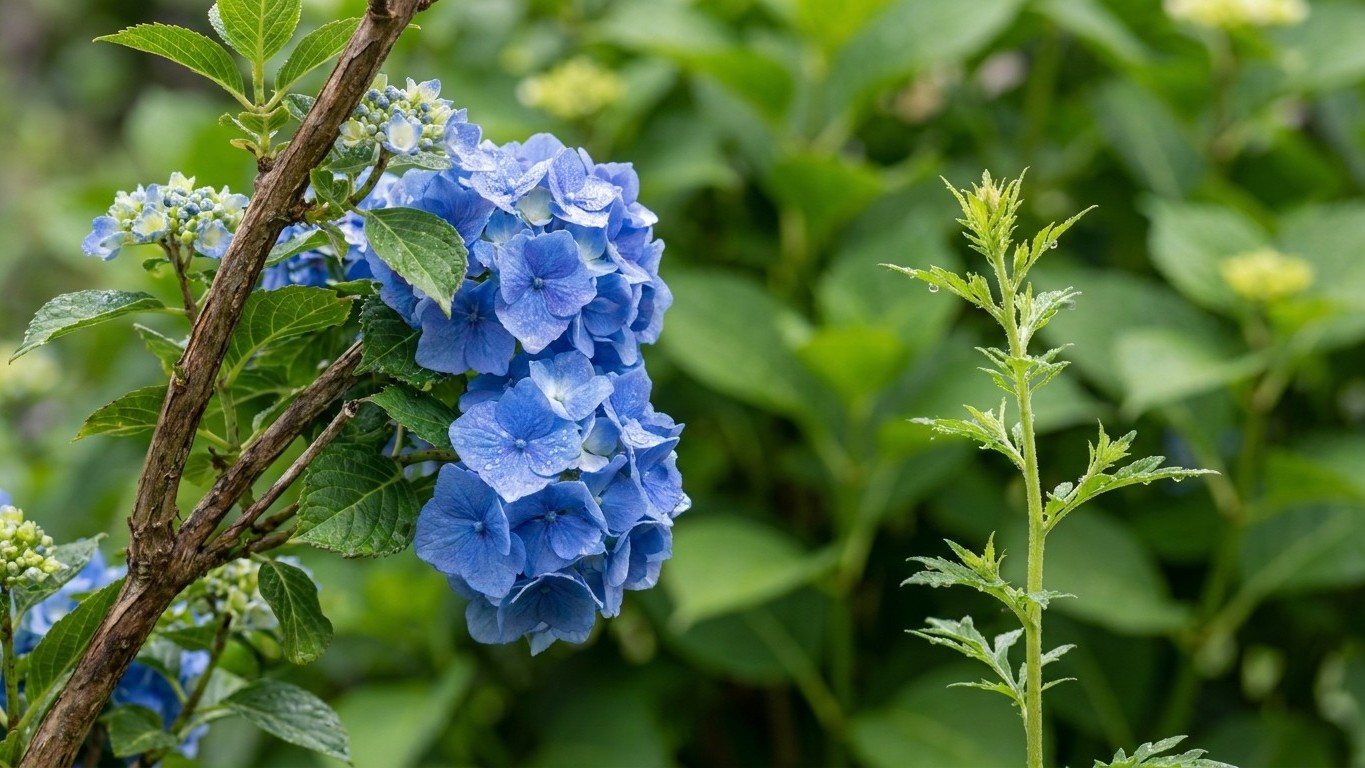

Prune California Hydrangeas by type, not by the calendar. Bigleaf, mountain and oakleaf hydrangeas get cut right after their flowers fade, usually in summer. Panicle and smooth hydrangeas wait until late winter, before new leaves open. Get that backwards and you trade next year’s flowers for a tidier shrub. Most of the state is mild enough that the usual northern worry, frost killing the buds, rarely drives the decision. The Sierra, the Central Valley and parts of Northern California are another story.
What this comes down to in California

In Los Angeles, the reference city for the frost numbers on this page, no freeze occurs in an average year, so there is no frost date to plan pruning around. NOAA NCEI climate normals and daily records show zero days at or below 32 F in 30 years, and the frost-free season is listed as 365 days.
That describes coastal and southern California, and only that. Northern California, the Central Valley and the Sierra do freeze, and a gardener in Sacramento or Truckee cannot borrow the Los Angeles calendar. The USDA hardiness system, which rates a single variable (the average annual extreme minimum temperature), runs from zone 5a to 11a across the state. That is a lot of different gardens under one name.
Old wood, new wood
With no frost date to lean on, the schedule comes from the plant’s own biology. Some hydrangeas set next year’s flower buds on stems that grew this year (old wood). Others make their flowers on stems that grow fresh in spring (new wood). Cut an old-wood plant in winter and you remove the buds themselves. Cut a new-wood plant in winter and you simply push out fresh stems that will carry flowers.
| Type | Flowers form on | Best time to prune in California |
|---|---|---|
| Bigleaf | Old wood (reblooming types also on new wood) | Right after the first flush fades, in summer |
| Mountain | Old wood | After flowering |
| Oakleaf | Old wood | After flowering, and only lightly |
| Panicle | New wood | Late winter, before new growth |
| Smooth | New wood | Late winter, before new growth |
What a frost-free winter changes
Mild winters blur the cues that northern gardeners rely on. Leaves can hang on well into winter, and the shrub never stands obviously bare. So go by the flowers. When the blooms on an old-wood type turn papery, the cutting window has opened.
Working it out for your own garden
A state average cannot tell you the date for your yard. Three steps can, and none of them needs a frost record.
Step one: find out what you have
Look at where last year’s flowers sat. If they rode on woody brown stems that already existed the season before, you have an old-wood plant. If they sat on green shoots that grew this spring, it flowers on new wood. A plant tag settles it, but nursery tags get lost. When you cannot tell, treat the shrub as old wood and prune only after it blooms. That mistake costs you nothing, while the opposite one costs you a year of flowers. Reblooming bigleafs flower on both kinds of stem, so they forgive errors, though they still do best with a light trim after the first flush.
Step two: place the cut on the calendar
Take a bigleaf on the Southern California coast. Its first flowers fade somewhere in a range running from early to midsummer, depending on the variety and how much shade it gets. The cutting window opens at the front of that range and closes around the end of summer, when the plant starts setting buds for next year. A window of a few weeks, not a single day. Snip each spent flower head back to the first pair of plump buds beneath it, and take out a few of the oldest, grayest stems at the base.
A panicle hydrangea runs the other way. Its window sits in late winter, a stretch of weeks before the first new leaves open. In a freezing garden, shift that stretch later, until the hardest cold has passed and buds begin to swell. In a frost-free one, you have more room.
Step three: test before you cut
Scratch a stem with a thumbnail. Green underneath means alive, brown and dry means dead. This matters most where freezes happen: leave the old stems standing through winter, then cut back to just above the first live buds once spring growth shows. In coastal Southern California, dead stems usually come from drought, heat or sunburn rather than cold, and the same scratch test applies.
What changes across the state
California stacks several climates on top of each other, and each one shifts the pruning calendar differently. Near the coast, fog and cool nights keep winters gentle, and old-wood hydrangeas can be pruned soon after they bloom without any worry about a freeze catching the regrowth. Move inland and summers get hot enough that the plant’s challenge is sun and water, not cold.
The Central Valley adds real winter freezes to those hot summers. A freeze there does little to a new-wood panicle hydrangea cut back in late winter. It can burn the soft shoots of an old-wood bigleaf that was pruned and pushed early. Northern California and the Sierra foothills sit further along that line, and at higher elevations the growing season gets short enough that spring frost can nip the tips of any hydrangea. Gardeners there generally wait longer in spring before cutting, and the old stems earn their keep by shielding the buds below. For the cold end of the range, Which Hydrangeas Survive a California Winter covers which types hold up.
One figure from this page is a true reference point, and it comes from Los Angeles. Everywhere else in the state, treat it as a direction rather than a number: colder and higher means later spring cutting, hotter and drier means lighter pruning in the heat, and the type-by-type rule holds in every case.
The mistakes this state punishes

The most common error is a winter cleanup on a bigleaf. Winter is when garden tidying feels natural, and in a mild climate the shrub may look scruffy enough to invite it. The cut removes next year’s buds, and the plant produces leaves and no flowers. Put the pruning shears away until the blooms fade.
Pruning in a warm spell comes next. A run of mild weeks in late winter tempts people to cut early and hard, and in the Central Valley and northern parts of the state, a later freeze can hit the tender regrowth. Where freezes are possible, wait for buds to swell and let the old stems protect them.
Heavy pruning in a heat wave is a third trap. Cutting a bigleaf back hard in midsummer heat exposes stems and new growth to scorching sun. Prune in the cooler part of the day, remove only the spent flowers and a few old stems, and leave the leafy canopy that shades the base.
A fourth: late-summer pruning of a bigleaf, after it has set buds for next year. The window really does close. A final one is treating a drought-stressed plant as a pruning problem. Under water restrictions, cutting more does not save water, and a shrub that is wilting needs its shade and mulch more than a haircut.
Checking this against your county
A state-wide figure is a starting point, not an instruction. Your county’s University of California Agriculture and Natural Resources office can tell you how local frost patterns, fog and summer heat should shift the timing above. The state guide on growing hydrangeas in California covers the rest of the care, from siting to watering.
Common questions
Can I prune hydrangeas in winter in Southern California?
Only the new-wood types, panicle and smooth. Bigleaf, mountain and oakleaf set their buds on old wood, so a winter cut removes the flowers. A mild winter does not change that.
What if I do not know which type I have?
Wait for it to bloom, then prune lightly afterward. If it flowers from old stems, you have an old-wood plant. If it flowers only from fresh green shoots, you can prune in late winter next year.
Does pruning change the flower color?
No. Color depends on soil chemistry and aluminum availability, not on where you cut. Why Hydrangeas Are Pink in California, and How to Turn Them Blue explains the cause.
When should I cut back a frost-damaged hydrangea?
In spring, after buds swell and new growth shows which stems survived. Scratch the bark, and cut dead wood back to just above the first live buds. Early cutting removes protection that the old stems still provide.