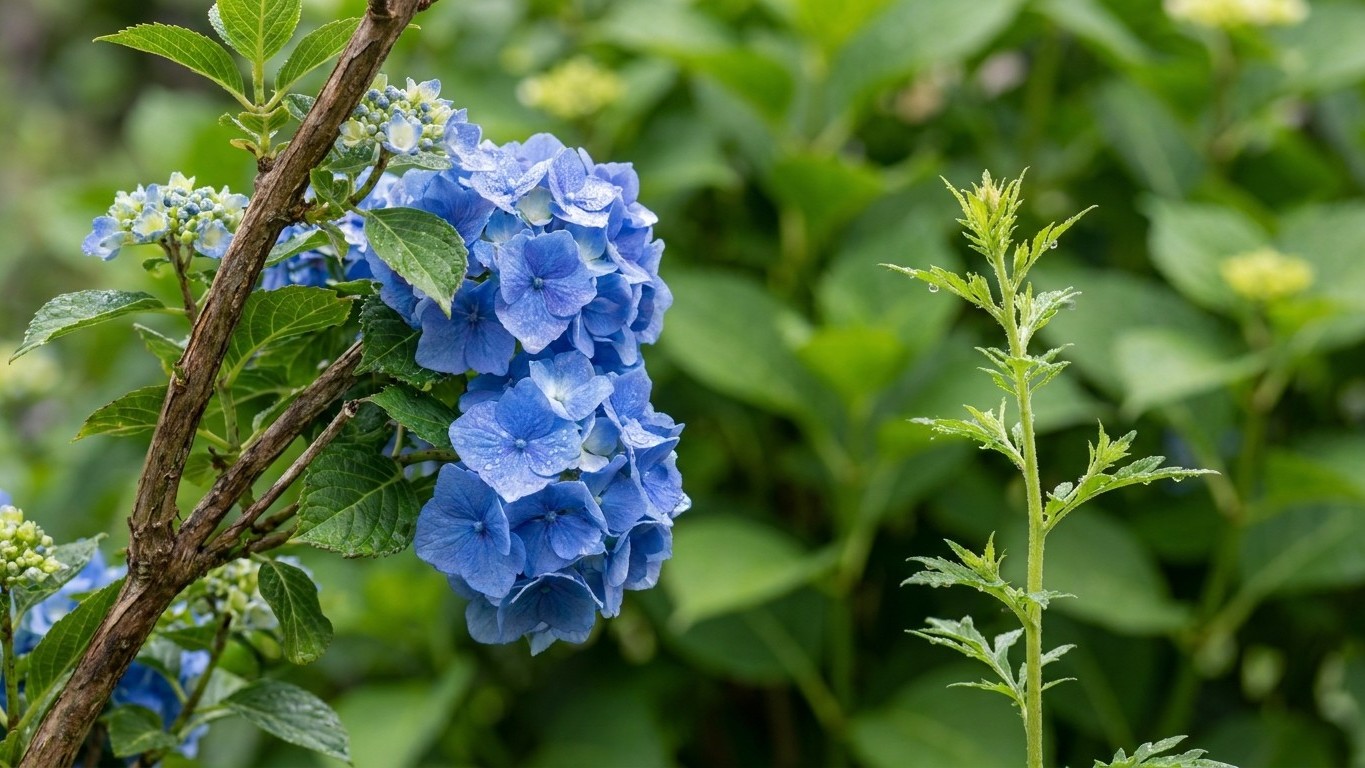

Hydrangeas can grow in Montana, but the species you pick matters more than anything else. Panicle and smooth hydrangeas bloom on new wood, so a hard winter or a late frost rarely costs you the flowers. Bigleaf types often lose their buds. Plant after the last spring frost (April 29 to May 10 in Billings, later in colder parts of the state), give them afternoon shade, and keep the soil evenly moist.
When to plant Hydrangeas in Montana

The reference city here is Billings. NOAA’s 1991-2020 Climate Normals (NCEI station data) put the last spring 32°F freeze between April 29 and May 10, using the 30 to 70 percent probability band. That is a middle-of-the-odds window, not a guarantee. Billings is also one of the milder valleys in the state. Northern Montana and higher-elevation towns run later, and mountain valleys can frost in any month. If you garden outside the Yellowstone Valley, push every date below back by one to three weeks and watch your own forecast.
Why seed is the wrong starting point
Sowing seed indoors in March doesn’t fit hydrangeas. Named cultivars don’t come true from seed, and seedlings take several seasons to flower. Nearly everyone starts with a container plant from a nursery. Home propagators use softwood cuttings in early summer, but those young plants then need a protected first winter, so the cutting route is a two-year project.
The count-back arithmetic for spring planting
Pick your planting day first. Using the far end of the Billings window, May 10, count back for hardening off. Plants from a greenhouse or a big-box store have been sheltered from wind and strong sun, and Montana has plenty of both. Give them seven to ten days of gradual exposure: a few hours in shade, then half a day, then full days outdoors with a bring-in on cold nights. Seven days before May 10 is May 3. Ten days before is April 30. So if you buy early, a plant that sits on the porch from the end of April is right on schedule. If you’re in a colder valley and your date is May 25, the same math gives May 15 to 18.
Fall planting is a second option
Fall works if roots get time to establish. The first fall frost in Billings falls between October 1 and October 14. Count back six weeks (a rule of thumb, not a published figure) from October 1 and you land on August 20. Plant by then and the roots can settle before the ground locks up. Anything planted later should be treated as a rescue job, with heavy mulch and a wind screen.
Soil and site preparation
Start with light. Most hydrangeas want morning sun and shade from the hottest afternoon hours. Panicle types tolerate more direct sun than the others, which matters in Montana, where high-elevation light is intense and summer afternoons can be dry and hot. A spot on the east side of a house or fence is hard to beat. Wind is the other site factor. Constant gusts dry out large leaves and snap stems, so a windbreak, even a simple fence or a row of evergreens, pays off.
The soil you want is loose, rich in organic matter, and drained well enough that water never stands. Hydrangeas like moisture but not soggy roots. Heavy clay needs compost worked into a wide area, not just the planting hole, because a pocket of amended soil in dense clay becomes a bathtub. Sandy or gravelly ground needs the same compost for the opposite reason: it holds water.
Timing is simple. Spread two to three inches of compost and fork it in during the fall before planting, or at least two to four weeks ahead in spring, so the bed has time to settle. That is also when to send a sample to your extension office. Soil pH controls bigleaf flower colour, and in much of the West soils run alkaline, which pushes bigleaf blooms toward pink. I won’t guess at your numbers, because they vary field to field. The test tells you.
On planting day, dig the hole as deep as the root ball and two to three times as wide. Set the crown level with the surrounding soil, backfill, and water slowly until the whole area is soaked. For spacing, read the tag for mature width and set shrubs about that far apart, a little closer for a hedge. Crowded plants shade each other, hold humidity in the leaves, and invite mildew.
Varieties that suit Montana
The trait that matters most is what wood the plant blooms on. Panicle hydrangeas (Hydrangea paniculata) and smooth hydrangeas (Hydrangea arborescens) flower on the current season’s growth. Even if a hard winter kills stems back to the ground, they regrow and bloom the same summer. Bigleaf hydrangeas (Hydrangea macrophylla), the blue and pink mopheads people picture, mostly flower on old wood. In a place where winter can kill exposed buds, that is a gamble. Reblooming bigleaf cultivars improve the odds because they also flower on new growth.
Second, cold hardiness varies by cultivar and the plant tag lists a zone. Check it against your local zone, and take the colder end if you garden in a frost pocket. Third, a short season favors early bloomers, because a plant that opens its flowers in late September can be hit by the first frost before it shows off.
| Variety | Type | Blooms on | Good for |
|---|---|---|---|
| Limelight | Panicle | New wood | Tall, sturdy shrub; lime-green blooms fading to white and pink |
| Quick Fire | Panicle | New wood | Earlier bloom than most panicles, useful where the season is short |
| Little Lime, Bobo | Compact panicle | New wood | Small yards, foundations, containers |
| Annabelle | Smooth | New wood | Big white mopheads in part shade; stems can flop |
| Incrediball | Smooth | New wood | Annabelle-style blooms on stiffer stems |
| Endless Summer | Bigleaf, reblooming | Old and new wood | Blue or pink colour where you can protect it from winter |
These are widely sold names that carry the traits above. None comes with an institutional endorsement from me, and availability changes by nursery. If you want colour change, only bigleaf types do it. White panicle and smooth types stay white, though panicle blooms age to pink as nights cool.
What to plant alongside
The best neighbors fill the shade at a hydrangea’s feet. Hostas, ferns, astilbe, and heuchera all like the same part-shade, moisture-retentive conditions, and their leaves cover soil that would otherwise bake and dry. That cover works like mulch, and it keeps weeds down. They also share the same watering schedule, which makes care simpler.
For pollinators, the picture is mixed. Panicle and smooth hydrangeas with plenty of small fertile flowers draw bees and other insects. Mophead types with mostly showy sterile florets offer less. If bees matter to you, pair a mophead with something that blooms at a different time, such as a late-summer perennial.
Competition is the real danger. Shallow-rooted trees like maples and birches pull water and nutrients from the top foot of soil, exactly where hydrangea roots live. Turf grass growing up to the trunk does the same on a smaller scale. Keep a mulched ring around each shrub. Dry-soil plants such as lavender make bad bedfellows, because their care needs conflict. Aggressive spreaders like mint will walk right through a bed.
A few claims deserve scepticism. Planting marigolds or alliums to confuse hydrangea pests is popular, but I know of no good evidence it does much. Crowding plants close for “pest confusion” can also backfire. Mildew-prone neighbors, phlox and bee balm among them, packed tightly beside a hydrangea trap humid air in the foliage. Space for airflow does more than clever pairings.
Watering, feeding and support
Water deeply and less often. For a new plant, soak the root zone slowly so water reaches the full depth of the root ball, then check with a finger two inches down. If it’s dry, water again. In a Montana summer that can mean twice a week during heat, and once a week once plants are established, depending on soil. Shallow daily sprinkling just trains roots to stay near the surface. Hydrangeas wilt on hot afternoons even with plenty of water, so judge by the soil, and by whether leaves have recovered by morning.
Mulch is cheap insurance. Spread two to three inches of shredded bark or compost over the root zone and keep it a few inches from the stems. It holds moisture, moderates soil temperature, and in a dry state it is probably the single best thing you can do for these shrubs.
Feeding should be light. One application of a balanced, slow-release fertilizer in spring as new shoots emerge is plenty for most plants. Heavy nitrogen produces lush leaves and weak stems, and late feeding keeps growth tender when frost arrives. Stop by midsummer.
Pruning depends on type. Cut panicle and smooth hydrangeas back in late winter or early spring before growth starts, removing dead wood and shortening stems by about a third for sturdier shape. Bigleaf types that bloom on old wood should be pruned only after leaf-out, when you can see what survived. Suckers appear at the base. Remove the ones you don’t want, or dig a few in spring to share.
Support matters mostly for Annabelle-type plants, whose big heads bend stems to the ground after rain. A peony ring or a loose cage set in spring, while stems are short, hides the support as the shrub grows. Setting it after the stems flop is a losing fight.
Common problems

No flowers is the complaint that sends most people looking for help. For bigleaf types in Montana, the usual cause is winter or spring frost killing flower buds, which formed the year before. Heavy pruning at the wrong time does the same. Too much shade, or too much nitrogen, can also keep a plant leafy and bloomless. Panicle and smooth types rarely have this problem unless they’re deeply shaded or cut back late.
Wilting in the afternoon, then recovering by evening, is normal heat stress and not a disease. Wilting that persists in the morning points to either dry soil or the opposite: roots sitting in standing water. Dig down and look before you reach for the hose.
Yellow leaves with green veins mean chlorosis, usually because alkaline soil locks up iron. A soil test confirms it, and an iron chelate or sulfur program, as the test suggests, addresses it. Yellowing across the entire leaf, including veins, more often means overwatering or poor drainage.
Brown, crispy leaf edges come from sun scorch, wind, or drought, and they show up in midsummer on plants that were fine in spring. More shade, mulch, and deeper watering fix it. Leaves do not recover, but new growth will be fine.
Powdery mildew appears as a white or gray dusting on leaves, especially in crowded plantings with humid, still air. Thin stems, improve spacing, and water at the base. Leaf spots, which are brown or purplish blotches, have the same remedies. Neither normally kills a plant.
Pests that actually show up in Montana
Montana State University Extension’s Urban IPM program publishes a short garden-pest list: brown marmorated stink bug, grasshoppers, miller moths, social wasps, and thrips. Five fact sheets, against ten or more in most states. That’s useful information in itself, because Montana’s cold winters and dry climate keep the list short. For anything outside it, the state extension service is where to take a photo or sample. The MSU fact sheet index covers all five.
Grasshoppers do the most visible damage. They overwinter as eggs, hatch mid-to-late spring, and adults live into late summer and early fall. What you see first is ragged, chewed leaf edges, then whole leaves stripped on young plants. The control that works best on a home scale is to reduce weedy, undisturbed ground near the bed where females lay eggs, and to shield small shrubs with netting through the hatch.
Thrips are tiny, and you’ll see their damage before the insects: silvery streaks and flecking on petals and leaves, with distorted flowers in bad cases. They tend to build up in warm, dry weather. A strong spray of water and removing spent or damaged blooms keeps populations down, and insecticidal soap is the fallback.
Brown marmorated stink bugs are shield-shaped, mottled brown insects that feed on plants and wander indoors as weather cools. On hydrangeas you may notice stippled or distorted tissue. Knock them into a bucket of soapy water, which beats any spray for a few shrubs.
Miller moths and social wasps are mostly nuisances here. Moths flutter around porch lights and rarely harm a shrub. Wasps visit blooms and hunt other insects, so leave nests alone unless they’re near a doorway.
Cutting, drying and end of season care
Hydrangeas are grown for their flowers, so the main picking job is cutting stems. For fresh bouquets, cut in the cool of the morning when blooms are fully open and sturdy, and plunge stems straight into water. For drying, wait until late summer or early fall, when the blooms feel papery and the colour has shifted to antique shades of green, rose, or tan. Cut with a foot or so of stem and strip the leaves.
Stand stems in an inch of water and let them dry slowly, or hang bunches upside down in a dark, dry, airy room. Either works for panicle and smooth hydrangeas. Once crisp, they store for months in a dry box or a vase without water.
Fall frost in Billings arrives between October 1 and October 14, and earlier in colder valleys. In the weeks before, stop feeding and hold off on pruning, since fresh cuts push tender growth. After the soil cools, add a few inches of mulch over the roots. Bigleaf types gain from a wire cage filled with leaves or straw around the shrub, which protects old-wood buds. Water deeply one last time before the ground freezes, because dry roots are more vulnerable to winter damage.
Local help
Frost dates, soil, and pests change from valley to valley in Montana. Montana State University Extension can connect you with your county office for local planting dates, soil testing, and identification of problems. For other Montana topics, browse the Montana guides.
Common questions
What is the safest time to plant hydrangeas in Montana?
After your last spring frost. In Billings that window runs April 29 to May 10, so planting around the end of it is the cautious choice. Colder or higher locations run later. Fall planting works too if shrubs are in the ground about six weeks before the first fall frost.
Can I grow bigleaf hydrangeas in Montana?
Yes, with caution. Reblooming types give the best odds, since they flower on new growth too. Plant them in a sheltered spot, mulch heavily, and protect the stems in fall. Panicle and smooth types are the more dependable choice.
Why aren’t my hydrangeas blooming?
Frost-killed buds on bigleaf types, pruning at the wrong time, too much shade, or too much nitrogen are the usual suspects. Identify your type first, because that tells you when to prune and what to expect.
Can I turn hydrangea flowers blue in Montana?
Only bigleaf types change colour, and blue needs acidic soil with aluminum available to the roots. Many western soils run alkaline, which pulls blooms toward pink. Test your soil before adding anything. White panicle and smooth hydrangeas won’t turn blue regardless.
Do hydrangeas need winter protection in Montana?
Panicle and smooth types usually don’t beyond a good mulch layer. Bigleaf types benefit from a leaf-filled cage and a sheltered site. For comparison, see how gardeners handle it in the mild, wet Growing Hydrangeas in Oregon: Types, Colour and Winter or the humid Growing Hydrangeas in West Virginia: Types, Colour and Winter, and see the full How to Grow Hydrangeas: The Complete Guide for the basics.