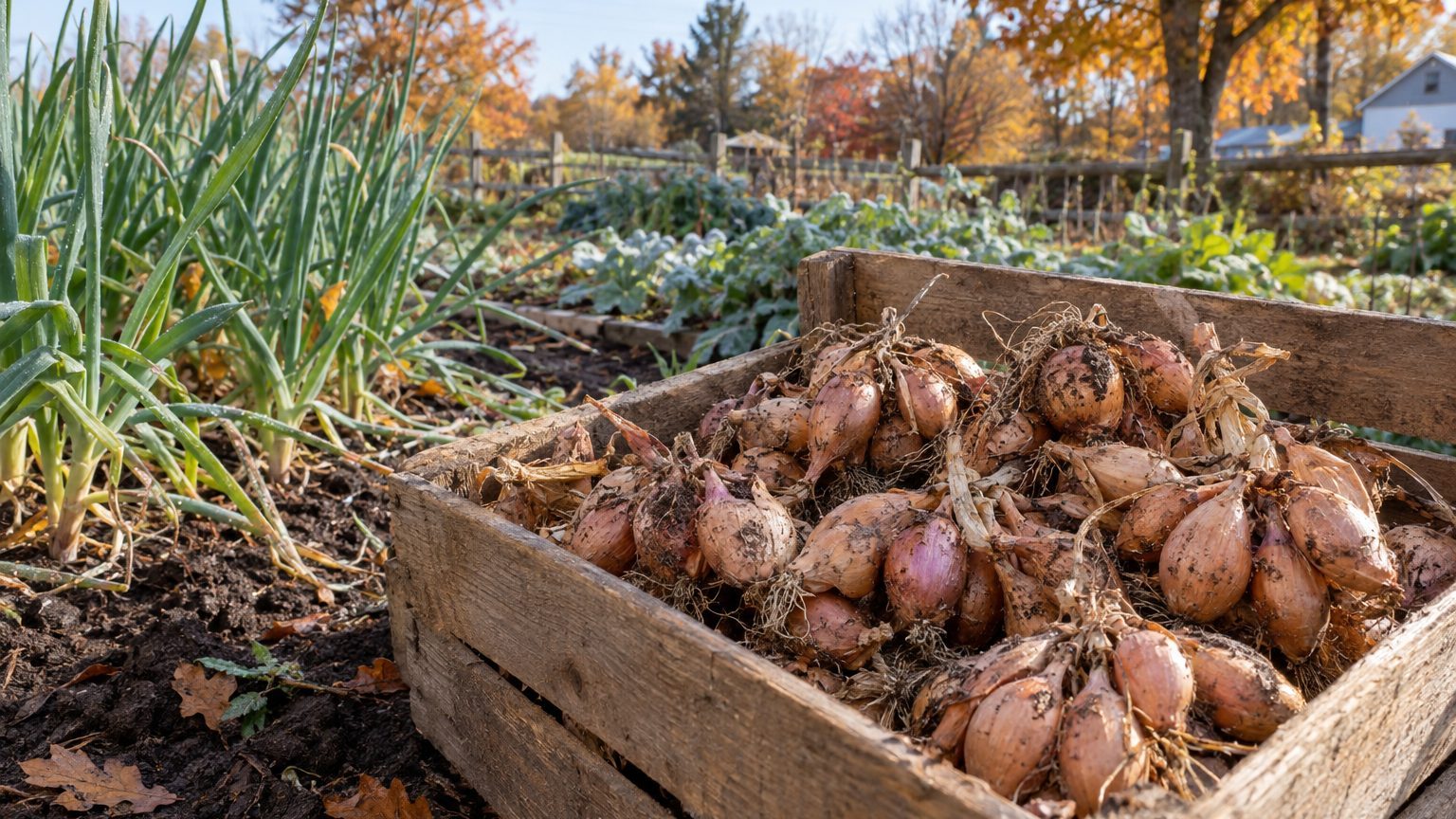

For most Connecticut gardens, the best shallots are multiplier types grown from bulbs (sometimes sold as sets) and planted in fall. Seed-grown shallots, started indoors and set out in spring, are a solid second choice. Named varieties matter less than type here, because the state’s climate rewards timing and drainage over any particular cultivar. This page sorts the types and flags what to avoid.
The short answer for Connecticut
Choose by type, then by planting season. Multiplier shallots, the classic kind where one bulb splits into a cluster of five to eight, suit Connecticut’s climate best when planted in fall and overwintered. Seed-grown shallots suit gardeners who want a bigger, single-bulb crop or want to skip the cost of buying bulbs every year. Spring-planted multipliers work too, with a smaller margin for error.
The numbers behind that call come from the Bridgeport station in NOAA’s 1991-2020 Climate Normals. The last spring freeze (32°F) falls between April 2 and April 12. That is a probability band, not a promise: those dates mark where the chance of a freeze at or below 32°F drops from 70 percent to 30 percent. The first fall freeze falls between October 28 and November 10, by the same measure. Bridgeport sits on Long Island Sound and is the mildest part of the state, so inland and northwest Connecticut freeze earlier in fall and later in spring.
The coldest month at Bridgeport averages a daily minimum of 24.4°F. That figure matters more than the frost dates for the fall-planting decision. It is cold enough to stop growth and firm up the soil, and mild enough that a mulched bulb with a good root start generally comes through. Shallots are not tender, and the winter itself is rarely what kills them.
The decision by type
| Type | When it goes in | Fit for Connecticut | Main risk |
|---|---|---|---|
| Multiplier bulbs, fall-planted | After the fall planting window opens, ahead of hard ground freeze | Best overall; roots in fall, early start in spring | Rot in wet soil, frost heaving |
| Multiplier bulbs, spring-planted | As soon as soil can be worked | Good; simple and forgiving | Later, smaller harvest if spring turns warm fast |
| Seed-grown, spring transplants | Started indoors, set out in spring | Good for single large bulbs and storage | Slow seedlings, weeding, humid-summer disease |
The exact dates for fall and spring planting are covered in When to Plant Shallots in Connecticut, and the broader growing picture is in Growing Shallots in Connecticut. This page sticks to what to buy.
What will not work here
Start with the calendar. Bridgeport’s span from an April freeze to a late-October or November freeze is generous by northern standards, but it is not the whole state. Inland towns and the northwest hills lose weeks at both ends. A seed-grown shallot started late, then set out into cold spring ground, can run out of season before it bulbs up and cures. The slowest, largest-bulbed seed types are the ones to avoid if your spring arrives late. Pick earlier-maturing selections, or switch to multiplier bulbs, which start with a head start already stored in the bulb.
Spring planting of multipliers fails in a different way. Shallots set bulbs in response to lengthening days and warming weather. Plant too late and the plant has few weeks of leaf growth before bulbing begins, so it bulbs small. In a Connecticut spring that swings from raw and wet to suddenly warm, gardeners who wait for perfect conditions often plant into a squeeze.
Close spacing is the next casualty. Connecticut summers run humid, with Sound-influenced air and frequent summer storms. Crowded shallots hold moisture in the leaf canopy, and that invites fungal trouble such as downy mildew and neck rot. The common advice to pack bulbs tightly to save space backfires here. Give each bulb room, keep foliage dry where possible, and avoid overhead watering late in the day.
Fall planting has its own trap, which is planting too early. If bulbs go in while the ground is still warm, they send up a tall flush of top growth that winter then burns back. The point of fall planting is root development, not leaf. Planting in the weeks before the first freeze, rather than in early October warmth, keeps the energy in the bulb. With the first fall freeze at Bridgeport falling between October 28 and November 10, and earlier inland, the window is narrower than it feels from a warm afternoon.
Poorly drained soil defeats everyone, though. Much of Connecticut sits on glacial till, with rocky, sometimes compacted ground and pockets of heavy clay. A fall-planted shallot sitting in wet soil through a freeze-thaw winter will rot or heave out of the ground. Raised beds or a ridge of soil solve most of it. Skip any variety claim that promises to overcome wet feet; none does.
What changes across Connecticut
The USDA Plant Hardiness Zone Map (2023, based on 1991-2020 normals) places Connecticut in zones 6a through 7b. That is a spread of several steps, and the USDA zone is built on one variable only: the average annual extreme minimum temperature. There is no single answer for the state. The coastline and the lower Connecticut River valley run toward the warm end. The northwest hills, with higher elevation and colder air pooling in valleys, run toward the cold end.
For shallots, the zone spread changes timing more than it changes survival. A reader in the northwest corner should plan on planting a bit earlier in fall, so roots establish before the ground locks up, and on a heavier winter mulch of straw or shredded leaves to blunt freeze-thaw cycles. In spring, that same reader should expect to wait longer for workable soil and should lean toward multiplier bulbs rather than seed-grown types, because a short spring leaves seedlings little time.
On the coast the picture flips. Bridgeport’s mild readings mean fall-planted bulbs can go in later and spring can start earlier. But coastal gardens often have sandy, fast-draining soil that dries out, and shallots have shallow roots. A reader there needs steadier moisture through bulb sizing, while still avoiding wet foliage.
Do not take your zone from this page. The USDA publishes an interactive map, and you can enter your ZIP code to see where your property falls. Hilltops, valley floors and sheltered south-facing slopes within a single town can behave differently from the ZIP-code average, which is why the last section here asks you to check your own ground.
Where to check this for your own county
The most useful next stop is UConn Extension, the state’s land-grant extension service. Its horticulture staff and Master Gardener program field exactly these questions, and they know which parts of each county run cold, wet or sandy.
When you get there, look for two things. The first is a local planting calendar for alliums, or for garlic and onions if shallots are not listed, since all three follow similar fall and spring rhythms. The second is any list of varieties trialled in your county or nearby, which tells you what has been grown, cured and stored under conditions like yours rather than in a catalog photo. If a trial exists for shallots specifically, it outranks everything on this page about named selections.
This page does not have a UConn shallot calendar to quote. The reference calendar in its source data is a lawn-care schedule from another state’s extension service, for a different plant entirely, and it would be wrong to borrow it. Treat the dates here as a starting frame, not a county instruction.
Say it plainly: a county recommendation beats a state one, and this page is the state one. The frost windows come from a single coastal station. A county agent who has watched what actually survived in Litchfield or Windham will beat any generalized guidance, including this one.
Checking this against your own garden
Your own observations outrank every date above. Three are worth tracking, and none needs equipment.
Soil warmth by feel. In spring, squeeze a handful from planting depth. If it crumbles and feels cool but not cold and sticky, it is workable. Compare beds: the one that reaches that state first is your warm microclimate, usually a south-facing, well-drained spot. In fall, the same test tells you when soil has cooled enough to plant without a top-growth flush.
The first green shoots. Note the date fall-planted shallots push through mulch in spring, and which part of the garden they appear in first. Shoots that show weeks apart between two beds measure your microclimate better than a zone map.
The first true leaves. If you start seed-grown shallots, the first true leaf, the one after the thin grass-like seed leaf, shows when seedlings are ready to harden off. Slow seedlings in a cold windowsill are a sign to choose multiplier bulbs next year.
Write the dates down for one season. By year two you will have a calendar no state page can match.
Common questions
Should I plant shallots in fall or spring in Connecticut?
Fall is usually the better bet for multiplier bulbs, since they root before winter and start early. Spring works if you missed the window or have wet ground. Details are in the planting calendar.
Can shallots survive a Connecticut winter?
Generally yes. The coldest month at Bridgeport averages a daily minimum of 24.4°F, and the state spans USDA zones 6a-7b. Mulch and good drainage matter more than the cold itself, especially inland.
Is it better to grow shallots from seed or from bulbs?
Bulbs are easier and more forgiving. Seed saves money and can give larger single bulbs, but needs earlier indoor starts and a spring long enough to finish the crop, which is tighter in the northwest hills.
Do I need a specific variety for Connecticut?
No single variety is the answer. Choose the type first, then check UConn Extension for anything trialled near you. For a wider overview, see Growing Shallots in Connecticut.