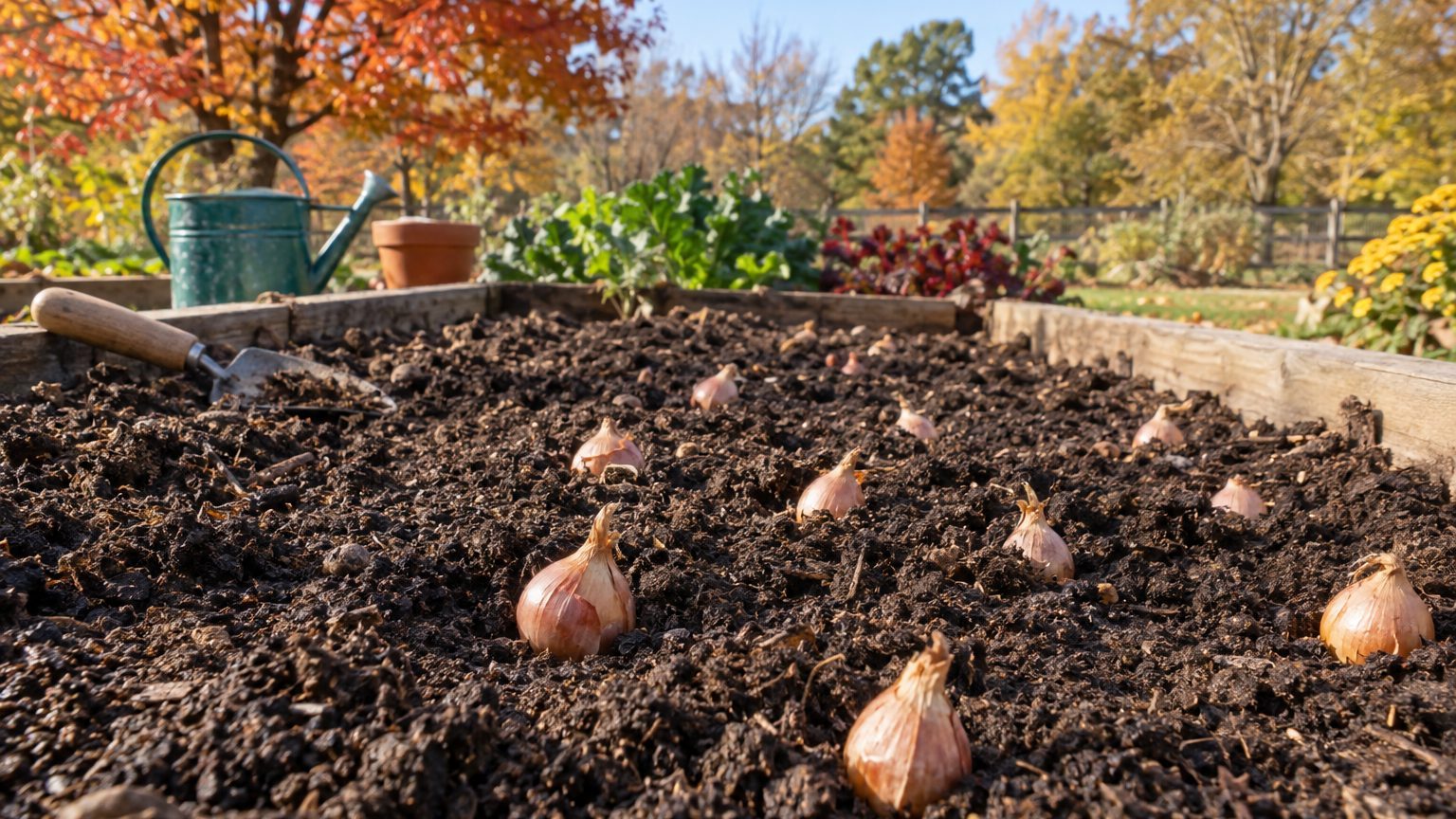

Plant shallots in Delaware in the weeks around the first fall freeze for the biggest bulbs, or as soon as the soil can be worked in late winter for a spring crop. The reference-city frost bands are April 3 to April 14 for the last spring freeze and October 26 to November 7 for the first fall freeze. Your own garden probably runs a week or two off those. What follows explains the dates, what goes wrong, and how to adjust.
The short answer for Delaware
Set shallots in the ground from late October into early November for a fall crop, or plant them the moment the soil is workable in late winter and early spring. Fall is the stronger choice in most years. Bulbs that root through the cool months have a head start before the long days of late spring tell the plant to stop making leaves and start swelling its bulb.
The dates behind that advice come from the NOAA NCEI 1991-2020 Climate Normals for the Wilmington airport station. The last spring freeze falls between April 3 and April 14. The first fall freeze falls between October 26 and November 7. Both are probabilities of a 32°F freeze, drawn from the 30 to 70 percent band. Inside those dates, the odds that the last spring freeze has passed (or the first fall freeze has arrived) sit somewhere between three in ten and seven in ten. They are not guarantees, and a freezing night can still land outside the window.
They are also airport figures. Suburban and rural gardens typically see the last spring frost later and the first fall frost earlier than a city airport does, often by one to two weeks, and more on higher ground. Treat the Wilmington numbers as a reference city, not a statewide promise.
| Planting | Anchor in the Wilmington figures | What it means |
|---|---|---|
| Fall | First fall freeze, October 26 to November 7 | Plant in the weeks around this band so roots form before the soil turns cold. Mulch lightly after planting. |
| Early spring | Last spring freeze, April 3 to April 14 | Plant when the soil is workable, which often comes well before this band. Shallots shrug off light frost. |
| Late spring | After the last-freeze band | Possible, but expect smaller bulbs and a rushed season. |
Winter cold is not the obstacle here. The mean daily minimum of the coldest month at the Wilmington reference station is 25.6°F, only about six degrees under freezing. Shallots are comfortable at that level, which is why the calendar is built around rooting and bulbing time rather than survival. Which type you plant matters as well, and The Best Shallots to Grow in Delaware covers that choice. For the full crop cycle, start with Growing Shallots in Delaware.
What will not work here
Waiting until May is the classic mistake. By then the April 3 to April 14 last-freeze band is behind you, soil is warming fast, and summer is close. A set planted in May has only a few cool weeks to build leaves, and leaf count largely decides bulb size. The result is a crop of small, tight shallots that looks like a disappointing multiplier onion.
Planting too early in fall fails in a quieter way. Delaware’s first freeze does not arrive until late October or early November, so September and early October soil is still warm. Sets planted then often throw up several inches of green top growth before winter. That growth is wasted energy and exposed to cold snaps. Waiting until the soil cools and the first-freeze band approaches keeps the energy underground, where it belongs.
Humid summers punish crowding. Shallots multiply into clumps, and a clump packed against its neighbors stays damp after every muggy morning and thunderstorm. That invites rot and foliar disease just as the bulbs are finishing. Spacing around 6 inches apart, rather than the tight rows that work in a drier climate, gives each clump air. The same humidity makes curing tricky: harvested bulbs left in a closed, damp shed will mold, while bulbs cured in shade with moving air will keep.
Wet feet kill more shallots here than cold does. Winter and early spring in Delaware are often rainy, and fall-planted sets sit in the ground for months. Heavier soils in the northern part of the state and low, poorly drained spots on the flat coastal plain can hold water around the bulbs. Raised beds or a mounded row solve most of it. A bed that stays soggy in March will rot shallots no matter how well you time the planting.
Finally, do not plant by the airport calendar alone. If your garden runs one to two weeks later in spring and earlier in fall than Wilmington, a date copied straight from this page may land too close to a hard freeze on one end or too close to heat on the other. Use the numbers as a starting point, not a deadline.
What changes across Delaware
Delaware’s hardiness zone is listed as 7a to 8a in the USDA system, which is built on one variable: the average annual extreme minimum temperature. That is a range, not a single zone, and it takes in the steps between. So there is no single answer for the whole state. A garden in the cooler north and a garden near the Atlantic coast can differ by a full zone or more in how cold the worst nights get.
Shallots will grow across that whole range, so the zone does not decide whether you can grow them. It shifts the edges of the calendar. A reader in the cooler north should lean toward the early end of the fall window and expect spring soil to be workable a little later. A reader nearer the bay or ocean may find the ground stays workable longer into fall, because water moderates the extremes. Treat that as a general tendency, not a rule, since a low, cold pocket can break it in either direction.
One limit on this page: the reference station sits in Wilmington, in the state’s northern corner. The page does not have station data for Dover or the southern counties, so it will not guess at them. For the lower two counties, the Wilmington dates are a rough guide at best.
To find out which zone applies where you live, look up your location on the USDA Plant Hardiness Zone Map, which lets you search by ZIP code. Do not rely on a neighbor’s guess or a plant tag. Also remember that the zone speaks only to winter minimums. It says nothing about how early your spring arrives or how hot and humid your summer gets, and those are what actually shape a shallot calendar.
Where to check this for your own county
Delaware has three counties, New Castle, Kent and Sussex, and they do not garden alike. The best next stop is University of Delaware Cooperative Extension, the state’s land-grant extension service. Its agents and Master Gardeners work with local soils, local weather and local pests every season.
Look for two things there. First, a local planting calendar for vegetables, ideally one that covers onions, garlic or other alliums, since shallots follow nearly the same schedule. Second, any list of varieties trialed or recommended in your county. A variety that performs in a northern New Castle County clay may behave differently in sandy Sussex County soil, and a trial result from nearby is worth more than any general description.
Extension offices can also help with soil testing, drainage problems and disease questions, which matter for a humid-summer crop like shallots. If you cannot find a shallot-specific page, ask for the onion or garlic guidance and apply it with the timing logic described above. Do not substitute a calendar from another state or another crop. A schedule written for a different climate, or for something unrelated like a lawn species, will not fit.
A county recommendation beats a state one, every time. This page is the state one. It uses a single airport station to give you a sensible starting range, and anyone with local trial data or years of records in your county has a better answer than these dates do.
Checking this against your own garden
Your own observations outrank every date above. Three are worth watching, and none needs equipment.
Soil warmth by feel. In late winter, grab a handful from the bed. If it crumbles instead of forming a wet clump and feels cool rather than icy, it is workable. A bed that reaches this point a week or two before the rest of the yard, usually a sunny, well-drained, south-facing one, is your early planting spot. A bed that stays cold and sticky is telling you about drainage and shade.
The first male flowers. Watch for catkins, the male flowers, loosening on hazel or alder, and for similar early blooms on trees near you. When they open each year tells you how early your site wakes up compared with the reference city. If they come late, your spring calendar probably sits later than the Wilmington band.
The first true leaves. Note when green shoots from last fall’s shallots, or from chives and other onions already in the ground, push through. If they appear well ahead or behind what you expected, you have your garden’s own offset from this page.
Write the dates down for two or three seasons. NOAA’s normals average thirty years of weather, and a few years of your own notes from one backyard can tell you more about it than they do.
Common questions
Can I plant shallots in spring in Delaware?
Yes. Plant as soon as the soil is workable, which often comes before the April 3 to April 14 last-freeze band at the Wilmington reference station. Shallots tolerate light frost. Spring plantings usually produce smaller bulbs than fall plantings, so plant early.
Is it too late to plant after November 7?
Not automatically. That date is the upper edge of a freeze-probability band, not a deadline for planting. Sets put in a little later may still root before deep cold, especially under light mulch. The later you go, the less root growth you get before winter.
How far apart and how deep should I plant shallots?
Space them about 6 inches apart, with the tip at or just below the soil surface. Wider spacing helps air move through the clumps in Delaware’s humid summers and lowers the chance of rot as bulbs mature.
Will a Delaware winter kill fall-planted shallots?
Cold alone rarely will. The mean daily minimum of the coldest month at the Wilmington reference station is 25.6°F, well within what shallots tolerate. Most winter losses come from waterlogged soil, so drainage matters more than extra protection.