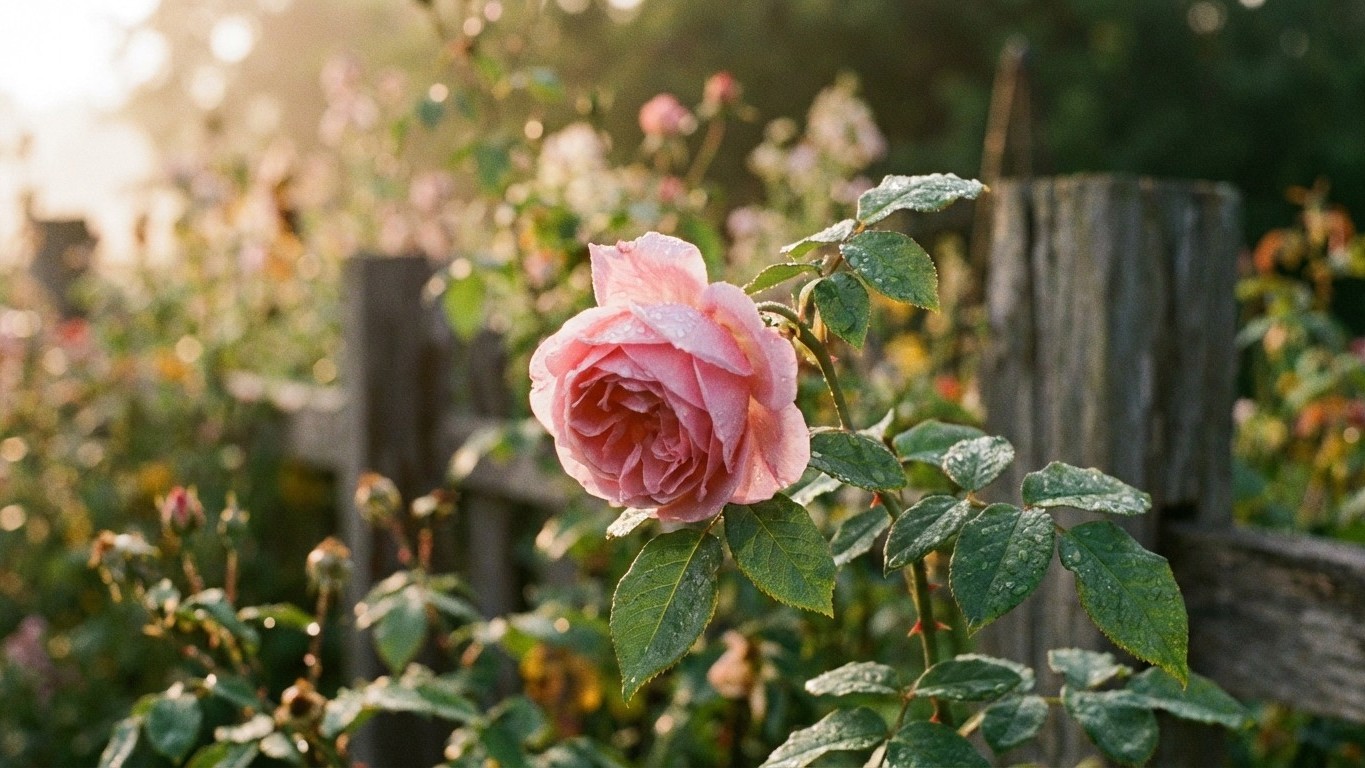

Plant roses in New Hampshire in spring, as soon as the soil is workable. At the Concord airport weather station, the last spring frost falls between April 16 and April 27, and hill towns and the North Country run later. Choose a repeat-blooming shrub rose bred for cold, give it six hours of direct sun, and plan for Japanese beetles in July. The general How to Grow Roses: The Complete Guide covers the basics. This page is the New Hampshire version.
When to plant Roses in New Hampshire

Concord is the reference city here. The NOAA NCEI U.S. Climate Normals for 1991-2020 put the last 32F freeze at the Concord airport station between April 16 and April 27. That is a 30-70% probability band, so a freeze after the later date still happens in some years. It is one station, not a state-wide guarantee. Suburban and rural gardens usually see their last spring frost one to two weeks later, which stretches the window to roughly April 23 through May 11. Northern towns and higher elevations run later again. Check your own county before you pencil in a date.
Nursery roses: bare-root and container
Bare-root roses arrive dormant in early spring and want to go in early, before leaves push. Plant them once the soil thaws and crumbles in your hand instead of smearing like clay. Dormant canes tolerate cold nights, so the frost date matters little for them. Soak the roots in a bucket of water for 12 to 24 hours first.
Potted roses already in leaf are another matter. Tender new growth burns in a freeze, so aim to plant on or just after your local last-frost date. Harden them off for 7 to 10 days, starting with a few hours of shade and shelter and adding sun and time each day. A greenhouse-grown rose set straight into a windy, full-sun bed will scorch. The count-back is simple. If your garden runs a week behind Concord and you want the rose in the ground on May 4, start hardening off on April 24.
Fall planting is a narrower bet. The Concord first-frost band is October 13 to October 26, and a container rose needs about six weeks to knit its roots in before the ground locks up. Counting back gives September 1 to September 14, earlier for colder sites. Miss that and you are better off waiting for spring.
Starting roses from seed
Seed is the slow road, and most gardeners skip it. Seed from hybrids won’t come true to the parent, and rose seed needs a long cold spell before it germinates, commonly 8 to 12 weeks in the refrigerator. Species roses such as rugosas are the exception, since their seedlings resemble the parent. Here is the arithmetic for a seed-grown plant set out on May 4. Subtract 10 days of hardening off and you get April 24. Subtract roughly 8 weeks of indoor growth under lights and you reach February 28. Subtract 8 to 12 weeks of chilling and the seed goes into the fridge between December 6 and January 3. Expect small plants that may take a summer or two to bloom.
Soil and site preparation
Six hours of direct sun is the floor, and morning sun is worth more than afternoon sun because it dries dew off the leaves early. Avoid low pockets where cold air settles on spring nights, and skip the corner walled in by a fence with no airflow. Stagnant, damp air is where fungal disease starts.
Drainage decides whether a rose lives. Dig a hole about a foot deep, fill it with water, and come back the next day. If water is still standing, build a raised bed or pick another spot. Stony, acidic soil is common in New Hampshire yards, but a soil test beats guessing, because roses do best at a pH around 6.0 to 6.5. Lime works slowly, which is why the testing comes first in the timeline below.
- 8 to 10 weeks before planting: send in a soil sample and add lime only if the results call for it.
- 4 weeks before: strip sod, loosen the bed 12 to 18 inches deep, and pull out stones.
- 2 weeks before: fold in 2 to 3 inches of compost. Skip fresh manure and strong fertilizer, which burn new roots.
- Planting day: dig a hole twice as wide as the root mass and no deeper than the roots need.
Spacing depends on the rose. Compact shrubs and hybrid teas want about 3 feet between plants. Big shrubs and rugosas need 4 to 6 feet. Climbers should sit about a foot from the wall or fence so air can move behind them. With a grafted rose in a cold-winter state, set the knobby graft union about 2 inches below the soil line, which protects it from winter swings.
Varieties that suit New Hampshire
The reference-city numbers leave about five to six months between the last spring frost and the first fall frost. Roses don’t count days to maturity the way vegetables do, so the traits that matter are different. The first is repeat bloom, which keeps flowers coming through that whole stretch. The second is blooming on new wood, so a cane that dies back in winter still produces flowers the same summer. Once-blooming types set buds on old canes, and a hard winter can erase a whole year of bloom. The third is genuine resistance to black spot and powdery mildew, and the fourth is cold tolerance without a fuss over winter wrapping.
| Variety | Type | Traits | Good for |
|---|---|---|---|
| Knock Out series | Shrub | Repeat bloom, disease resistant, flowers on new wood | Low-maintenance hedges and mass plantings |
| Carefree Beauty | Shrub | Repeat bloom, hardy, healthy foliage | Informal borders |
| Hansa | Rugosa | Very hardy, fragrant, large hips, tolerates sandy and salty soil | Seacoast yards, hedges, wildlife plantings |
| William Baffin | Explorer climber | Bred in Canada for cold winters, heavy bloom | Fences and trellises |
| Drift series | Groundcover | Compact, repeat bloom | Edging, slopes, containers |
| Peace | Hybrid tea | Large classic blooms, needs winter protection | Cutting beds you are willing to mound |
Hybrid teas, many English roses, and most floribundas can be grown here, but they usually need a heavy mound in winter and may die back to the graft. Rugosas and the Canadian Explorer and Parkland groups are the low-drama end of the spectrum. For a first rose, a repeat-blooming shrub on its own roots is the safest choice. If it freezes to the ground, whatever regrows is still the variety you bought, not the rootstock.
What to plant alongside
Ground-level plants do the most good. Hardy geraniums and catmint spill over the base of a rose, shade the soil, crowd out weeds, and draw bees through the weeks between flushes. Catmint is also tough enough to keep up with a shrub rose. Lady’s mantle and perennial salvia work the same way. Clematis threaded up a climbing rose is a classic pairing, as long as you leave a gap at the base so the two root systems aren’t fighting for the same spot.
Chives and garlic get recommended for “pest confusion,” and the evidence is thin. A ring of alliums may deter a few aphids, but nothing reliable shows it keeps Japanese beetles or rose chafers off the blooms. The same goes for marigolds. Plant them because they look good, not because they protect anything.
What to keep away matters more. Turf grass creeping up to the canes steals water and nutrients, so keep a mulched circle around each plant. Maple and birch roots near the bed will drain it dry. Mint and other runners overrun a rose bed in two seasons. Raspberries and other brambles share the rose family and some of the same pests, so a Japanese beetle outbreak in one often finds the other. Avoid planting anything that needs constant overhead watering next to roses, because wet foliage invites fungus.
Watering, feeding and support
Water and mulch
Roses want about an inch of water a week, rain included, delivered in a slow soak at the base. A deep drink once or twice a week pushes roots down, while a daily sprinkle keeps them shallow and leaves foliage wet. Push a finger 2 inches into the soil. If it’s dry, water. Do it in the morning so leaves dry before dark.
Mulch holds moisture and blocks weeds. Spread 2 to 3 inches of shredded bark or compost, and keep it an inch or two back from the canes, since piled mulch against the stem holds moisture where rot starts.
Feeding, support and pruning
Feed once when new leaves open, using a balanced granular rose fertilizer or slow-release product, and again after the first flush, around early July. Stop by mid-August. Counting back 6 to 8 weeks from the October 13 to October 26 first-frost band at Concord gives you roughly August 18 to September 1, and soft new growth pushed by late nitrogen is the first thing to freeze. Compost in spring does more good than another round of fertilizer in September.
Shrub roses rarely need stakes. Climbers do, and the trick is to tie canes sideways rather than straight up, which triggers flowering shoots along their length. Use soft ties that won’t girdle the stem as it thickens.
Prune in spring when buds swell, around the time forsythia blooms. Cut out dead canes (brown or black inside) back to white pith, then trim to an outward-facing bud. Prune once-bloomers right after flowering, not in spring. On grafted roses, shoots with different leaves from below the union are suckers, and you should pull them off at the base instead of snipping them.
Common problems

Black spot shows as dark, fringe-edged circles on leaves, which yellow and drop, starting low on the plant. Wet leaves and stagnant air drive it. Water at the base, rake fallen leaves in autumn, and thin crowded stems. A fungicide can slow it, but it is the airflow that prevents it.
Powdery mildew looks like a white dust on young leaves and buds, and it favors humid nights with dry days. It rarely kills a plant, though it distorts growth. Spacing and sun are the cure.
Canes that blacken over winter mean dieback. Cut back to green, white-centered wood. If new growth comes only from below the graft, you are now growing the rootstock, which usually has small, single, pale flowers and no resemblance to what you bought.
A rose that grows but won’t bloom is usually getting too much shade or too much nitrogen. It may also be a once-bloomer pruned in spring, which cut away that year’s buds.
Aphids cluster on soft new shoots and buds in spring. A hard spray of water knocks them off, and a few repeat sprays finish the job. Yellow leaves with green veins point to alkaline soil or soggy roots, and a soil test sorts out which.
None of these is singled out as dominant in New Hampshire. They turn up wherever summers are humid. The pests that the state’s extension service highlights are a separate list.
Pests that actually show up in New Hampshire
The UNH Cooperative Extension fact sheet on beetles on ornamental plants and its vegetable pest sheets name several insects. Striped cucumber beetle, squash vine borer, and lily leaf beetle attack cucurbits and lilies, so they aren’t a rose problem. Flea beetles (worst in spring and early summer) and brown marmorated stink bug are also on the list but usually rank behind the four below in a rose bed.
| Pest | What you see first | When | The control that works |
|---|---|---|---|
| Japanese beetle | Metallic green-and-copper beetles on blooms, leaves chewed to lace | Adults emerge late June to early July, most active mid-July through August | Hand-pick in the morning into soapy water |
| Rose chafer | Tan, long-legged beetles chewing buds and petals | Mid-to-late June | Hand-pick, or cover buds with fine mesh during the flush |
| Asiatic garden beetle | Ragged leaf edges with no culprit in daylight | Summer (ask your county office for local timing) | Go out after dark with a flashlight and knock them into soapy water |
| Tarnished plant bug | Buds that won’t open, deformed blooms, dead tips | Timing varies (ask your county office) | Keep weeds and debris away from the bed, and clip damaged buds |
Japanese beetles deserve the most attention. Those that arrive in July can strip a young plant’s leaves in days, and the damage spreads quickly because feeding beetles attract more beetles. Pheromone traps tend to pull in beetles from beyond your yard, which can make things worse near the roses. Cold morning hand-picking is dull but effective, because the beetles are sluggish and drop straight into a jar.
The rose chafer shows up earlier, in mid-to-late June, right as the first flush opens. It hits buds and petals rather than leaves, so a bloom that looks chewed in June is usually a chafer. Not sure what you have? Photograph the insect and send it to your county extension office for identification.
Harvest and end of season
Cut blooms in the morning when the bud is half open and the sepals are starting to drop. Make a 45-degree cut just above a leaf with five leaflets, which lets the plant branch and bloom again. Drop stems into a bucket of water immediately, strip the lower leaves, and keep them in a cool room. Tight buds open in a vase, but ones cut fully open fade in a day or two.
From late summer, let repeat bloomers set hips by easing off deadheading. Rugosa hips are the large ones, and the hips redden through fall. Skipping the late cuts also signals the plant to harden off before winter.
As the first frost approaches (October 13 to October 26 in the Concord reference, earlier in many rural gardens and at elevation), clear fallen leaves from the bed, since black spot spores overwinter in them. Skip hard pruning, but tie tall canes so wind doesn’t whip them loose. After several hard freezes, mound 10 to 12 inches of soil or compost over the base of tender and grafted roses. Skip foam rose cones, which trap heat on warm winter days. Wire mesh around the base stops voles from tunneling under mulch. Pull the mound away in spring as growth starts.
Local help
County-level frost dates, soil testing, and insect identification are all part of what UNH Cooperative Extension does for home gardeners. Contact your county office with a soil sample or a photo of the bug eating your roses. More state-specific pages are collected in the New Hampshire guides.
Common questions
Do roses need winter protection in New Hampshire?
Tender types such as hybrid teas do, usually a mound of soil or compost over the base after several hard freezes. Rugosas and Canadian Explorer roses generally need much less, and own-root plants are a safer bet because dieback won’t cost you the variety.
Can I plant roses in the fall?
Container roses can go in about six weeks before the ground freezes. At Concord that means September 1 to September 14, counting back from the October 13 to October 26 first-frost band, and earlier for colder gardens. Spring planting is the safer choice.
What is the easiest rose for a beginner?
Look for a repeat-blooming shrub rose on its own roots with real disease resistance. The Knock Out series, Carefree Beauty, and rugosas like Hansa carry those traits and are widely sold.
When should I prune roses?
Prune repeat bloomers in spring when buds begin to swell, removing dead canes first. Once-blooming roses are pruned right after they flower, because they set next year’s buds on old wood.
Do roses from colder or warmer states follow the same schedule?
No. Wisconsin and Alaska run on their own calendars, as Growing Roses in Wisconsin: Planting Dates, Varieties and Local Pests and Growing Roses in Alaska: Planting Dates, Varieties and Local Pests show. In each state, the local last-frost date and the local pest calendar set the plan.