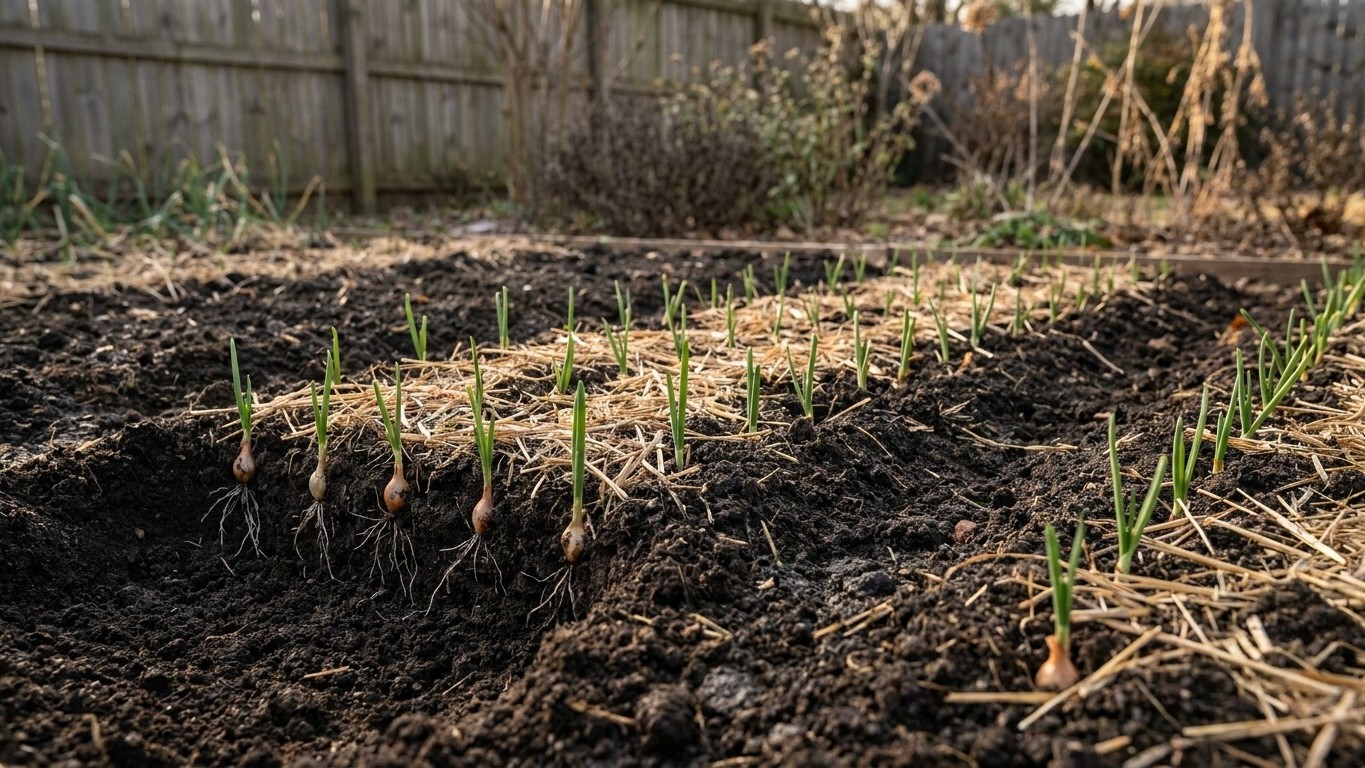

Garlic in Louisiana gets eaten from three directions: fungi and soil pests in the wet autumn, mites and nematodes that arrive hidden inside the seed cloves, and thrips once spring warms up. Few of these pests take a winter off. Mild weather lets them keep working long after a northern gardener’s problems would have frozen solid. Timing your defenses matters more than reaching for a spray.
The short answer for Louisiana
In south Louisiana, the first fall frost lands between December 17 and January 8, according to the NOAA NCEI 1991-2020 Climate Normals (the 30-70% probability band for a 32°F freeze). Garlic goes in during autumn, so it roots and puts on its first leaves weeks before that date, with soil pests, rot organisms and caterpillars still active around it.
That date is a midpoint, not a safe one. In one year out of two the frost arrives later. The same NOAA station records a 32°F freeze in only 86.8 percent of years, which means roughly one year in seven never freezes at all. The band itself spans about three weeks and straddles the New Year.
For pests, that changes the whole logic. A freeze is what resets a northern garden: it halts insects, slows fungi and gives the bed a rest. Here, you cannot count on it. The pest calendar hangs on your planting date and the weeks that follow, not on the frost date. Roughly, it runs like this:
| Stage of the crop | What is likely to be feeding | What you see |
|---|---|---|
| Planting and rooting (autumn) | Soil fungi, wireworms and grubs, slugs, digging animals | Cloves that rot, vanish or never sprout |
| Winter growth | Mites and stem and bulb nematodes already in the seed, armyworm-type caterpillars on warm spells | Twisted, stunted or yellowing leaves |
| Spring bulb swell | Thrips, rust, purple blotch | Silvery streaks, orange pustules, purple-ringed spots |
| Lifting (the following summer) | Rot organisms in the soil, bulb mites in cracked bulbs | Soft, split or discolored bulbs |
The brief version: the limiting factor on garlic here is heat and moisture, not cold, and the pests follow the same rule.
Working it out for your own garden
A state is not one climate, and Louisiana proves it. The numbers above describe one station in the south. A farm in the northern hill parishes and a backyard near the marsh will have very different pest calendars, even if both gardeners plant on the same weekend. You can redo the arithmetic for your own ground in a few steps.
Start from your planting date
Pick the planting date from the Louisiana planting calendar, then count forward instead of backward. Each stage of the crop (rooting, winter leaf growth, spring bulb swell, lifting the following summer) opens a different pest window. The earlier you plant, the longer the crop sits in warm, wet soil before any cold arrives, and the longer the soil-borne window stays open.
Next, compare your planting date with the frost band. If the band is December 17 to January 8, a clove planted well ahead of it has weeks of frost-free growth. Remember the odds, too: half of all years the frost comes after the midpoint, and one year in seven there is no freeze at all. In those years, treat winter as one long growing season for pests.
Adjust for your own ground
Three local factors move your numbers:
- Elevation. Higher ground in the north cools faster and freezes more reliably, which slows insects and mites.
- Big water. The Gulf coast and large lakes such as Lake Pontchartrain hold warmth into winter, so a freeze arrives later or skips a year.
- Soil and drainage. Heavy clay that stays wet after rain favors rot organisms and slugs no matter where the garden sits.
Then check your own record. A garden thermometer by the bed and a simple notebook (first leaf damage, first thrips, first rust) will tell you more than any regional chart after two seasons. Note what you saw and the planting date next to it. The pattern usually repeats.
The NOAA figures here are the ones this page can vouch for. No published pest-emergence dates are quoted in this article, because none are carried in the verified data, so rely on your own notes and your county agent for those.
What changes across Louisiana
North Louisiana (the Shreveport, Monroe and Ruston side of the state) freezes far more reliably than the south. Winters there interrupt insect and mite activity and give the soil a real break. Garlic planted in that zone behaves more like garlic in the Upper South, and gardeners comparing notes with colder places can see the extremes in the Maine planting calendar, where the problem is a frozen bed rather than a wet, warm one.
Central Louisiana and the Florida Parishes sit between the two. A freeze comes most years but is short, and a mild spell in January can wake thrips and caterpillars early. Wet clay soils across this belt make rot the bigger worry.
The south coast, including Acadiana, the New Orleans area and the marsh parishes, is where the NOAA numbers above apply most directly. Freezes are rare enough to skip one year in seven. Pests rarely go dormant, and humidity pushes rust and purple blotch earlier into spring.
Variety choice moves this too, because cloves bred for cold regions struggle in a mild winter, and a poorly adapted plant is a weaker plant that pests find first. The Louisiana varieties guide covers which types suit each part of the state. It is also worth reading the Maine varieties guide once, just to see what you should not plant here.
For the full picture of the crop in the state, see growing garlic in Louisiana.
The mistakes this climate punishes
Louisiana does not reward the textbook northern routine. These errors cost the most here.
Planting a hardneck. Hardnecks expect a long cold stretch to form a good bulb. A mild south Louisiana winter often delivers too little, and the result is a small, weak plant sitting for months among warm-season pests. Softnecks and adapted types do better.
Another trap is planting too early because the soil still feels like summer. Cloves in warm, wet ground rot before they root, and wireworms, grubs and fungi get first pick. Waiting for the soil to cool is cheap insurance.
Buying supermarket garlic as seed is a third error. Those bulbs are not grown or screened for planting, and they can carry nematodes, mites and rot organisms that then live in your bed for years. Buy clean seed garlic from a supplier, and discard any soft, discolored or shriveled cloves before planting.
Mulch causes trouble when it is heavy and stays wet. A thick layer of straw or leaves is useful against weeds, but in Louisiana’s rainy winters it also shelters slugs and holds moisture against the stems. A thin, loose layer that dries between rains works better. Loose mulch also attracts armadillos and other diggers hunting grubs, so check beds for fresh holes after rain.
Replanting the same bed year after year is the slow mistake. Onion-family crops share diseases, and rot organisms in the soil can persist. Rotating garlic to a new spot each season, away from onions and shallots, breaks that cycle.
Finally, leaving the crop in the ground too long once the leaves yellow invites trouble. Wet summer soil encourages splitting and rot, and mites move into cracked bulbs. Lift on time, as the foliage dies back, then cure the bulbs in shade with good airflow.
Checking this against your county
County-level frost figures and current pest alerts are not published in this article, so go to the LSU AgCenter, Louisiana’s land-grant extension service. Your parish office can tell you which pests are active locally this season, whether your soil needs testing for nematodes, and which seed sources they trust. Bring a photo of the damage or a sample leaf for an identification.
Common questions
Does a freeze kill garlic pests in south Louisiana?
Not reliably. A freeze occurs in 86.8 percent of years at the NOAA station cited above, so about one winter in seven has none, and the freezes that do come are often short. Do not plan around a cold snap to clean the bed.
Can I plant grocery-store garlic?
You can, but it is a gamble. Store bulbs are not screened as planting stock and may carry mites, nematodes or rot. Cloves from a seed supplier are a safer start, especially in a climate where pests do not get a winter break.
What is digging up my garlic cloves?
Armadillos, squirrels and other animals digging for grubs are common culprits in loose, mulched beds. Check for holes and replant disturbed cloves quickly. Fine wire mesh over the bed until the shoots are up keeps most diggers out.
When do thrips show up on garlic?
Typically in spring, as weather warms and the crop starts swelling its bulbs, which is why the table above places them there. Look for silvery streaks on the leaves. Your parish extension office can tell you when they are active in your area this year.