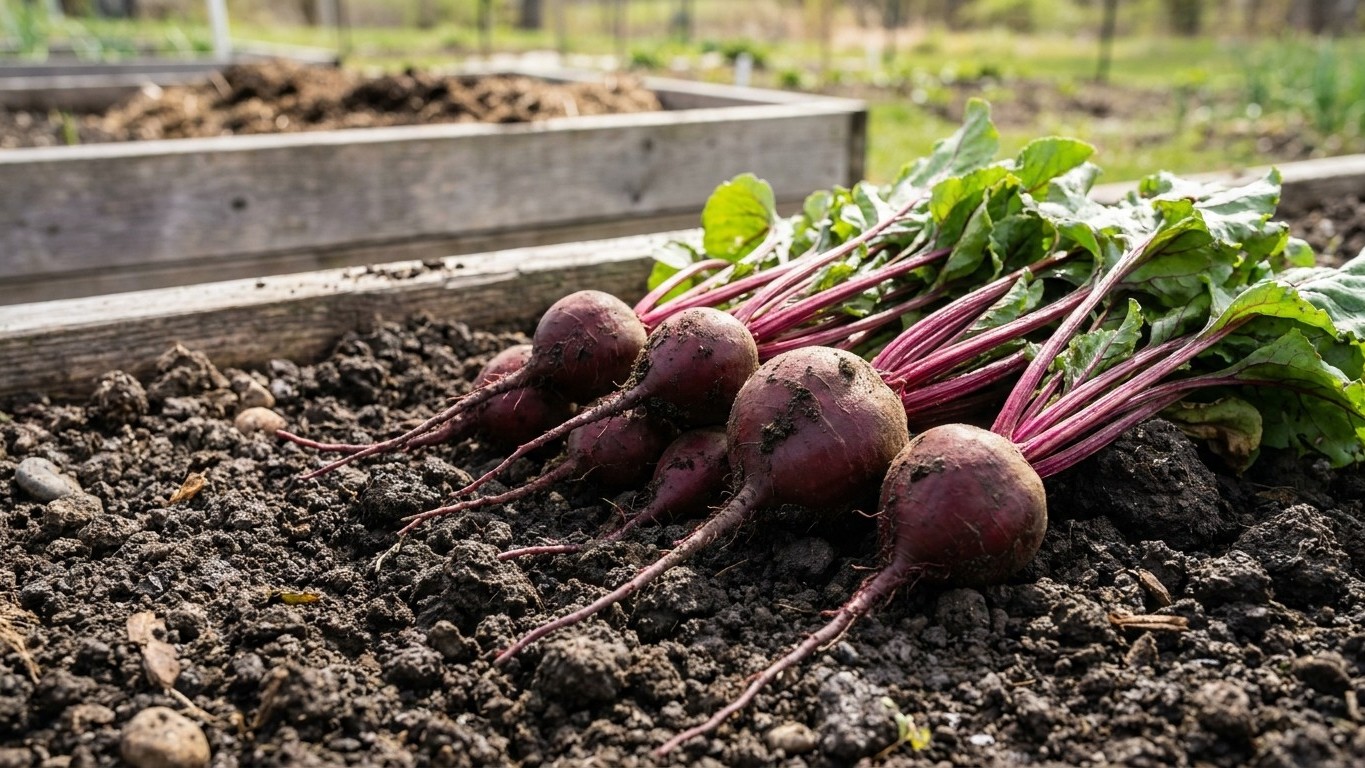

Pull beets about 60 to 80 days after seeding. On the Connecticut coast, a sowing made in mid to late March is ready between mid-May and mid-June, before the real heat. Take them out of the ground, cut the tops off, and store them at 33 to 36 F. Colder is worse here: at 32 to 34 F, USDA’s storage handbook records more black spot and rot than at slightly warmer temperatures. The rest of the page explains why.
The short answer
Connecticut’s state soil is the Windsor series, an Entisol, which is a very young soil with almost no profile development. USDA records the representative surface as 82 percent sand, 2 percent clay and 16 percent silt, with a surface pH of about 5.1 (strongly acid), and classes it as excessively drained. A state spans hundreds of soil series, so read these numbers as a starting point for what the region’s ground tends to do. They are not a diagnosis of your bed.
What that ground does to a beet
Utah State University Extension describes the beet’s ideal as deep, sandy, well-drained soil rich in organic matter. Windsor gets the sand right. Its drainage is the problem, because “excessively drained” means rain leaves the root zone fast and a dry week turns into thirst quickly. That matters for the first six weeks, when water stress is what pushes a young beet to flower early.
The organic matter figure needs care. USDA lists about 95.0 percent for the mapped surface, but that is a natural organic layer (forest litter or peat on the surface of the soil as mapped), not something a cultivated vegetable bed will have. In a garden, organic matter is whatever you add. Extension’s ceiling is no more than 1 inch of composted organic matter per 100 sq ft. The pH of 5.1 belongs to the mapped surface too. Your own pH needs a soil test, and Beet Soil in Connecticut: What the Root Will Meet covers what to do with the result.
Heat, and a number that is missing
Woodiness is a different failure from early flowering. Extension says heat above 85 F combined with water stress makes the root woody, and that is a problem of the later weeks, when the roots are sizing up. Bridgeport is the reference city for this site, and the number of days a year it passes 90 F is not published here, so I won’t put a figure on it. Every one of those days is also above the 85 F line, though. A bed that sheds water this fast, in the heat of a Connecticut summer, can easily end up with both conditions at once.
Bridgeport sits on Long Island Sound and is the mildest part of the state. Inland and northwest Connecticut freeze later in spring and earlier in fall, so the calendar below slides later the farther you are from the coast.
The six weeks that decide it here
NOAA NCEI climate normals for Bridgeport put the last spring frost between April 2 and April 12 (the 30 to 70 percent band of 32 F freeze probabilities). Sowing 2 to 3 weeks before that date means seed goes in from about March 12 to March 29. Beets are sown in place, so every day count on this page runs from seeding. A transplant doesn’t reset the clock.
Where the spring puts the risk
A Connecticut spring tends to swing. Cold snaps follow mild days, wet stretches follow dry ones, and nothing about it is steady. The facts held here carry no rainfall figures, so I won’t invent any. The risk is simpler than that. Extension ties early flowering to water stress in the first six weeks, and for a mid to late March sowing those weeks run from roughly late April to mid-May. On sandy, excessively drained ground, a dry spell in that window dries the bed out fast, and rain from the week before is gone by the weekend.
The practical answer is to treat that window as the one that needs attention. Check moisture a few inches down rather than judging by the surface. Water before the bed is dry, not after the seedlings sulk. Dry spells do their damage here, not freezes. A late frost mostly sets the sowing date and doesn’t decide the crop.
From seeding to the pull
Sixty to 80 days from seeding puts the pull between mid-May and mid-June on the coast. That timing keeps the roots out of the stretch where heat above 85 F and thirst can turn them woody. A beet pulled in early June can’t go woody in August. Inland sowings made later will pull later, and you should watch the weather for that stretch rather than the date.
Pests have their own calendar. What Eats Beet in Connecticut, and When lays out who shows up and when. The full growing picture is in Growing Beets in Connecticut.
What goes wrong here
- Bolting from early thirst. Water stress in the first six weeks causes premature flowering, and a bed that drains as fast as Windsor-type sand invites it. Water on a schedule through those weeks and keep the compost within Extension’s limit of 1 inch per 100 sq ft. A thick layer won’t fix the thirst and can cause other problems.
- Woody roots from late heat. This is a separate failure. It comes from heat above 85 F together with water stress, not from the early weeks. The remedy is timing: sow early enough to pull before the hot stretch, and keep water steady while the roots size up.
- Black spot and rot from over-chilling. The USDA handbook states that storage at 32 to 34 F produces more black spot and rot than slightly warmer storage. Aim for 33 to 36 F and 98 percent humidity for topped roots. Check the temperature with a thermometer. Don’t just assume the coldest spot is the best one.
- Beets left bunched with their leaves. Bunched beets keep only about 10 to 14 days, even at 32 F and above 98 percent humidity. Top them first and store the roots, not the whole plant.
- Small roots shriveling. Large roots keep much better because they lose water more slowly. Eat the small ones first and keep the big ones for storage.
- Cellars and pits that swing. Pit and cellar storage should not drop below 31 F or rise above 41 F. An unheated space that tracks a Connecticut cold snap can break the lower limit.
- Trusting the state soil as your soil. River bottoms, hill country and scraped or filled ground can all differ completely from Windsor. A soil test gives you your own pH and a sense of what your bed actually does with water.
The storage figures come from USDA Agricultural Handbook 66, in the chapter by F. Adamicki, The Commercial Storage of Fruits, Vegetables, and Florist and Nursery Stocks.
Common questions
How many days from seeding to harvest?
Plan on 60 to 80 days, counted from seeding. Beets are sown where they will grow, so no transplant date enters the count.
Is colder always better for storing beets?
No, and that runs against what most root crops want. USDA’s handbook records more black spot and rot at 32 to 34 F than at slightly warmer temperatures. The target for topped roots is 33 to 36 F at 98 percent humidity. Bunched beets keep about 10 to 14 days at 32 F and above 98 percent humidity, so top them first.
Should I leave beets in the ground to get bigger?
Size helps in storage, since large roots lose water more slowly. But heat above 85 F with water stress makes the root woody. If summer heat is coming, pulling on time protects quality better than waiting for size. Keep the water steady while the roots grow.
Does the Windsor soil describe my garden?
Probably not exactly. It is the soil USDA lists as representative of Connecticut, with 82 percent sand, 2 percent clay, 16 percent silt and a surface pH of about 5.1. The state spans hundreds of series, and your bed may be nothing like it. Use the Windsor figures to understand the region’s tendency toward fast drainage, and use a soil test for your own numbers.