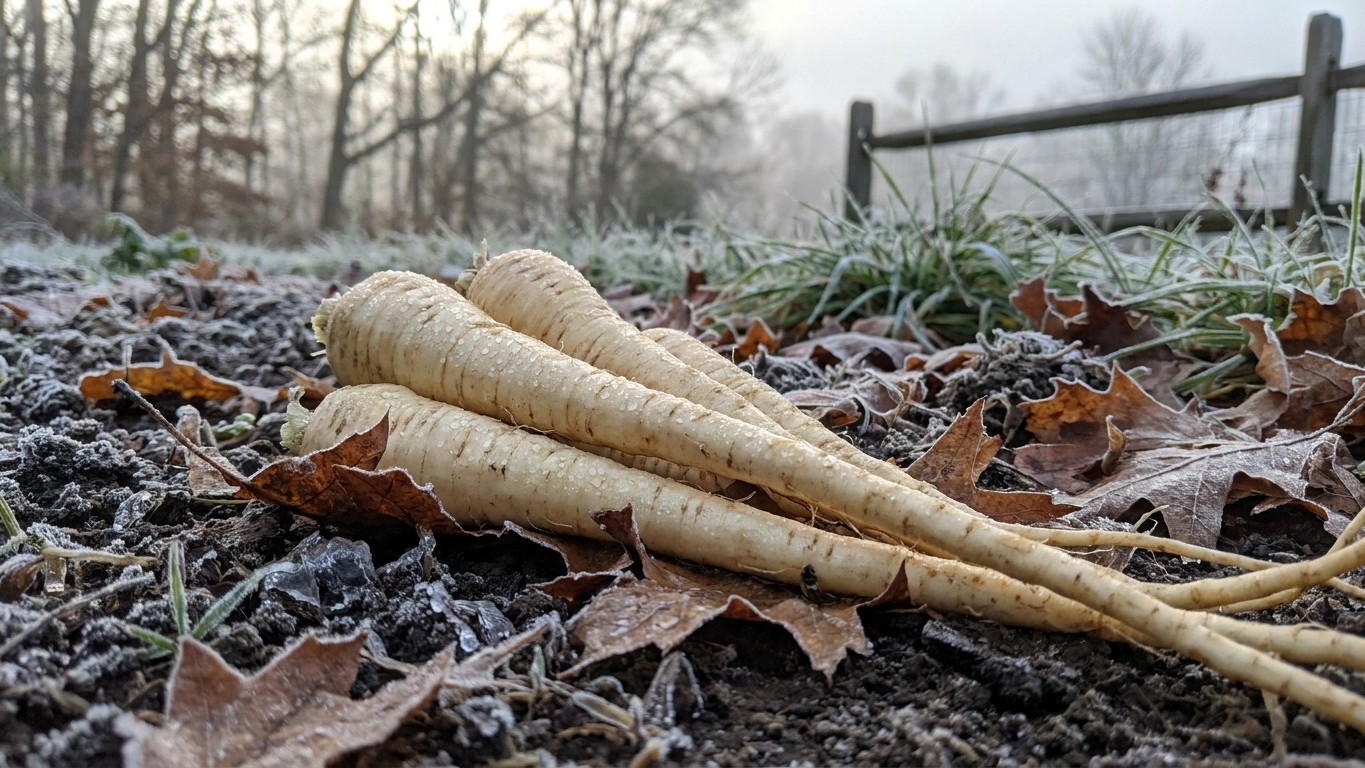

Lift parsnips in Connecticut after several weeks of frost, not the day they reach size. On the coast that points to December. Inland, where freezes arrive sooner, the window opens earlier. Roots left in the ground keep best of all. Pulled and stored, a parsnip can last four to six months, but only under conditions most kitchens cannot match, and a bowl of apples nearby can ruin the whole batch.
The short answer
Does Connecticut deliver several frosty weeks? It does, even at its mildest. The reference station for these numbers is Bridgeport, on Long Island Sound, the warmest part of the state. NOAA’s NCEI climate normals put the mean daily minimum of its coldest month at 24.4°F. That is a typical night about 7.6 degrees under freezing, and it is the coastal floor, not the state average. A parsnip grown here will sweeten, not just grow.
The frost dates agree. At that same station, freezing temperatures typically arrive between October 28 and November 10 and typically end between April 2 and April 12. That leaves a span of roughly five months in which a freeze is on the table. Parsnips need several frosty weeks to turn stored starch into sugar, and the calendar supplies them. The Will Parsnips Sweeten in Connecticut? page covers the chemistry in more depth. Notice what this reasoning rests on: nights actually dropping below freezing, week after week. A comfortable hardiness zone says nothing about that, and the two should not be swapped.
When to lift
The roots are technically mature 100 to 120 days after seeding, but mature and sweet are different things. Start counting frost weeks from the first real freeze. On the coast, with that first freeze landing between late October and early November, several weeks later puts you in early to mid December. Inland and in the northwest hills, freezes come sooner and linger longer, so the same count starts earlier. Lift a few roots as a test, taste one raw, and let the taste decide.
Ground that freezes solid is the practical limit. A thick layer of straw or shredded leaves over the row keeps the soil forkable, so you can dig through the cold months instead of racing the freeze. Loosen the soil beside the root with a fork and lever it up. Pulling by the foliage snaps the top off.
How long they keep
The USDA’s Agricultural Handbook 66 says parsnip roots can be stored 4 to 6 months at 32 to 34°F with 98 percent relative humidity. That is a long keeper by any standard. It also assumes those conditions are held steady, which almost no house manages. A home refrigerator is colder in some corners and drier in all of them, so treat the four to six months as a ceiling.
Cold is not the danger here. The handbook states that parsnips are not chilling sensitive. Ethylene is. Parsnips make almost none themselves, but even low levels from outside cause bitterness, likely through a buildup of a compound called xanthotoxin. Apples, pears and any ripening fruit give off ethylene, so keep parsnips away from them, even when the temperature is right. Top the roots after harvest, but do not trim into the crown.
Does the season fit?
The arithmetic is short, and it works. Parsnips are sown in place, straight into the bed, and the 100 to 120 days run from seeding. Here is how that plays out along the Connecticut coast, using the Bridgeport dates:
- Sow 2 to 3 weeks before the last frost. With the last freeze typically falling between April 2 and April 12, that points to roughly March 12 through March 29. Soil that is still frozen or soggy at that point pushes you later, which costs little, as the next steps show.
- Wait 14 to 21 days for germination. Parsnip seed is slow. Two to three weeks of bare soil is normal, not failure. Gardeners who dig up the row at day ten or re-sow too early end up with uneven stands. Mark the row so you remember where it is.
- Count 100 to 120 days from seeding. A mid-March sowing reaches the low end of that range around June 20. A late-March sowing reaches the high end around July 27. The roots can size up by early summer.
- Compare against the first fall freeze. The first freeze typically arrives between October 28 and November 10. Even the latest estimate above leaves about three months of margin. Sow as late as mid May and 120 days still ends around mid September, well ahead of the frost.
- Add the sweetening weeks. After maturity, the crop still needs several weeks of cold nights to sweeten. That is what pushes the lifting date into December. Those weeks are the real deadline, and the calendar leaves plenty of room for them.
So the season fits comfortably, even on a coastal sowing that slips a few weeks. These are my own calculations from the published ranges, not a published planting schedule. Inland, the last freeze falls later in spring and the first arrives sooner in fall, so the sowing window shifts later and the margin narrows. It still holds, but a late sowing there has less room for error. The main Growing Parsnips in Connecticut page covers sowing in more detail, and What Eats Parsnip in Connecticut, and When covers what chews on the foliage and roots during those long summer months.
What goes wrong here
Most Connecticut parsnip failures come from the ground and the handling, not the weather. Soil here varies widely, from sandy coastal plain to stony glacial till, and the soil name on a map is a starting point, not a diagnosis of your bed. Dig a test hole and see.
- Forked roots from heavy or stony ground. A root that meets a stone or compacted clay splits around it and grows into a fork. Parsnips do best in deep, sandy soil. Where the ground is heavy, double dig the bed to loosen it well below the planting depth, and pull out the stones as you go.
- Forked roots from overwatering. This is a separate cause with a separate fix. Constantly wet soil encourages shallow, branching roots even in good ground. Water deeply but less often, and let the top inch dry between waterings. Do not blame the soil if the bed is loose and stone-free but waterlogged.
- A season that runs out. A sowing pushed late, whether from a wet spring or a forgotten bed, may not reach the 100 to 120 days before hard cold sets in. Roots will be small and underdeveloped. Sow as early as the soil can be worked, and keep the seedlings weeded, since slow germination leaves them easy to smother.
- A winter stretch too mild to sweeten. The state averages say frost is reliable, but an unusually warm December can delay the sweetening. Do not lift on a date. Wait for several weeks of real freezing nights, and leave the roots in the ground under mulch until they have had them. The sweetness comes from frost exposure, so more cold nights mean sweeter roots.
- Bitter roots from storage. A parsnip stored near apples or other ripening fruit turns bitter, even at the right temperature. Keep them in their own bag or drawer. Cutting into the crown when topping also shortens storage life, so trim the leaves off above it and leave the crown intact.
Common questions
Can I lift parsnips in October?
You can, and they will be edible, but they will not be at their sweetest. On the coast the first freeze does not typically arrive until late October or early November, so an October dig misses the frost entirely. Wait for several weeks of cold nights first.
Can parsnips stay in the ground all winter in Connecticut?
Yes, and many gardeners prefer it. The roots are not chilling sensitive, and the ground acts as free cold storage. Mulch the row so you can still fork roots out during a hard freeze, and lift whatever remains in early spring before regrowth starts.
How long do parsnips keep after lifting?
Under ideal conditions, 4 to 6 months at 32 to 34°F and 98 percent humidity. A home refrigerator does not hold those numbers, so expect less. Keep them away from apples and other ripening fruit, which cause bitterness.
How long does it take parsnip seed to come up?
Germination takes 14 to 21 days. If the row looks bare at two weeks, wait before re-sowing. Digging up the seed bed too early is the most common way to lose a crop that was about to appear.