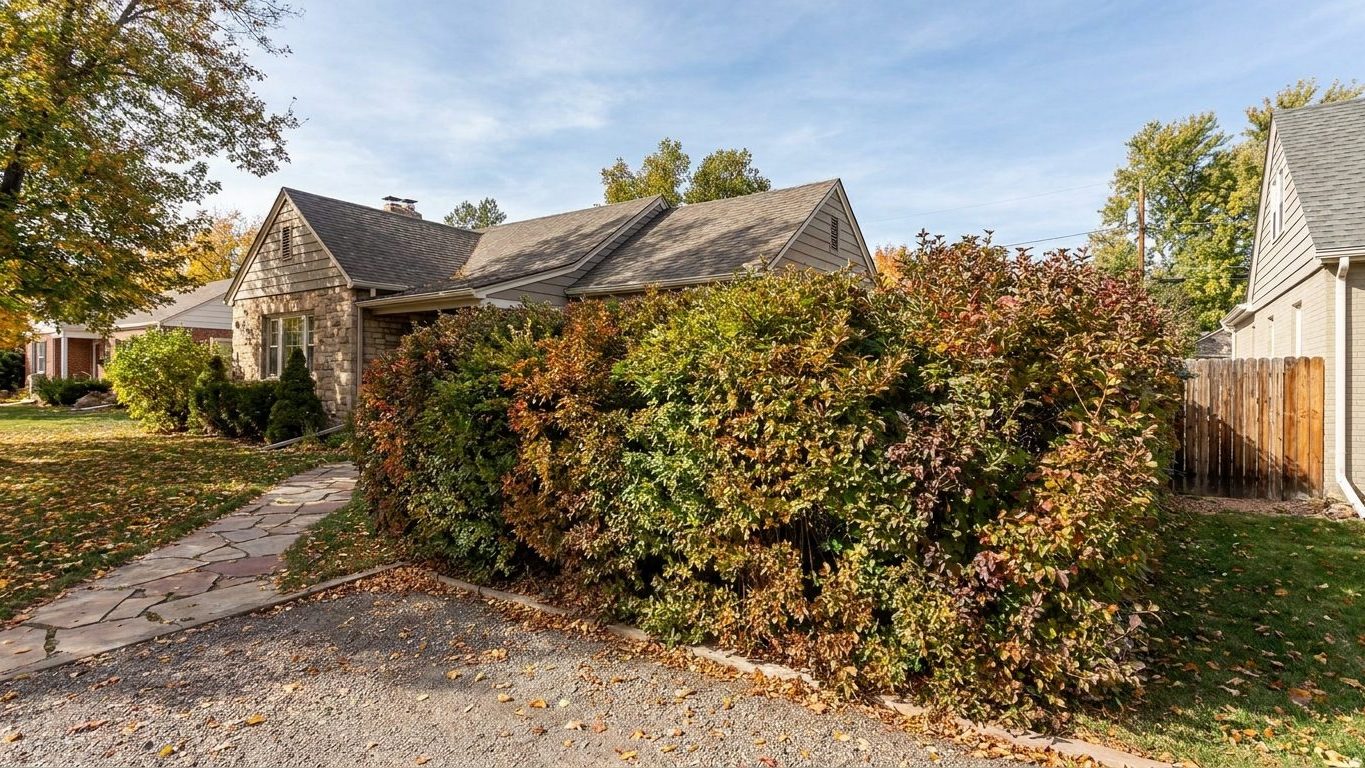

Missouri has no statewide hedge height limit. Your city or town sets the number that applies to your yard, and some places set none at all. Any figure quoted for “Missouri” is a guess dressed up as law. Below: why the answer sits at city hall, how to find your own rule in about twenty minutes, what the law generally says about branches crossing the line, and what to check before you plant.
There is no Missouri hedge height law
Why the number lives at city hall
Height limits for fences and plantings come from zoning, and zoning in Missouri is largely a local job. Every incorporated city, town and village can adopt its own ordinance. A city of several hundred thousand and a village of a few hundred each write their own, and nothing forces them to agree. The same eight-foot row of arborvitae can be perfectly legal on one side of a municipal boundary and a code violation on the other.
That is not a Missouri quirk. No state in the country sets a hedge height cap. Pages that print one number per state are usually averaging or copying, and a reader who trusts that number can end up trimming a hedge that never needed it, or leaving one that needed trimming. The same local-first logic applies in How High Can a Hedge Be in Iowa? What the Law Actually Says, How High Can a Hedge Be in Maryland? What the Law Actually Says and How High Can a Hedge Be in Wyoming? What the Law Actually Says.
No Missouri city is documented on this page, so you will not find a height figure here. That is deliberate. A number only means something when it comes with a city name and a link to that city’s code, and anything else would invite you to rely on a rule that may not be yours.
Hedge or fence: the word that changes everything
Plenty of codes regulate fences as structures, with a maximum height for the front yard and another for the back. A living hedge may fall under that same section, under a separate landscaping or screening section, or under nothing. Some ordinances exempt plant material from the fence rules altogether. Others fold it in the moment the plants are placed to serve as a barrier.
So the first job is reading which word your code uses. If it says “fence” and defines it as a structure of wood, metal or masonry, a row of boxwood may sit outside it. If it says “fence or hedge,” or defines a fence as any barrier “of any material,” the limit applies to your shrubs too. Do not assume either way.
The one rule that travels
One limit shows up almost everywhere, and it is stricter than the general height rule: the sight triangle. At a street corner, and often at a driveway mouth, nothing may block a driver’s view of cross traffic or of a child on the sidewalk. The restricted height in that zone is usually far lower than the ordinary fence limit, and it can apply even in towns with no hedge rule at all. If your hedge sits near a corner, treat it as the first thing to check. The exact dimensions are written in your local code, and this page does not carry them.
How to find the rule that actually applies to you
Start with your address, not your county. Your mailing city is not always your taxing or zoning jurisdiction. A house with a “Kirkwood” or “Springfield” mailing address can sit in an unincorporated area or in a neighboring municipality. The county assessor’s parcel map or the city’s own website will tell you which government holds authority over your lot.
Read the code online
Most American cities publish their municipal code online through one of three publishers. Search for your city’s name plus “municipal code” and you will almost certainly land on one of these:
- Municode (library.municode.com)
- American Legal Publishing (codelibrary.amlegal.com)
- eCode360
Some cities host their own code on the city website instead, but the three above cover the majority. Once you are inside, the rule you want is usually in the zoning chapter, under a heading such as “fences,” “walls and fences,” “accessory structures” or “landscaping and screening.” Less often it sits in a property maintenance or nuisance chapter, which is where overgrown vegetation rules tend to live.
Use the search box and try several words, because the drafters of your code chose just one of them:
- hedge
- fence
- shrub or shrubbery
- vegetation or plant material
- sight triangle, sight distance or visibility
Read the definitions section too. Definitions are where a code says whether a hedge counts as a fence, and they are the part people skip.
Then call a human
Codes can be written in a way that leaves a gardener unsure. A phone call settles it. The right office is usually the planning and zoning department, sometimes called community development or the building department. In a small town with no such department, the city clerk or village clerk can tell you who handles it. Ask three things: whether the code regulates hedges or only fences, what height applies in your zoning district for the front, side and rear yard, and what the sight-triangle rule is for your lot. Write down the name of the person and the date, and ask whether they can email you the section number.
Outside city limits, and inside an HOA
If you live in an unincorporated area, a county office may handle planning, or there may be no applicable zoning rule at all. Ask the county planning or building office rather than assuming. Then check for private rules. A homeowners association or recorded subdivision covenant can cap hedge height more tightly than the city does, and those restrictions are enforced by the association or neighbors, not by the city. Your closing documents or the county recorder’s office will have the covenants. The city saying “no limit” does not override them.
For more on how this plays out from state to state, our Hedges section keeps the other state guides together.
The branches that cross the line
Height is only half of hedge disputes. The other half is growth that leaves your neighbor’s yard and enters yours, or the other way around. This is where the law is less local and more shared, with one caution: what follows is a general principle found in many states, not a statement of Missouri’s rule.
In most states, a property owner may trim branches and roots that cross onto their land, up to the boundary line and no further, and generally at their own expense. The right is limited. You may cut what has crossed. You may not reach over to shape the neighbor’s whole hedge, and you may not kill or seriously damage the plant. A cut that leaves a tree lopsided, stressed or dying can turn a minor annoyance into a claim for damages against you.
This principle comes from court decisions, not from a neat statute you can look up. That is why it varies. Some courts treat a tree that is damaged by trimming differently from one that is merely inconvenient, and some jurisdictions treat a plant located exactly on the boundary as jointly owned. Where a particular Missouri court has landed on a given situation is a question for a lawyer, not a gardening website.
A practical order of operations
Before anyone picks up loppers, establish where the line is. A recorded survey or the corner pins on your lot answer that. Fence lines and old hedges are poor evidence of the boundary, and many disputes start with a neighbor who was sure the hedge sat on their side.
Then talk. A short, friendly conversation, followed by a note or text confirming what you agreed on, resolves most of these before they escalate. Offer to share the cost if the hedge is easier to trim as one job. If a neighbor refuses, keep photos with dates, keep trimming on your own side of the line, and avoid doing anything to the plant itself that you could not defend as ordinary pruning.
If the dispute is serious, say a hedge that is damaging a structure, blocking a drive or crossing a boundary you cannot establish, a local attorney who handles property matters is the right call. So is the city’s code enforcement office if you believe the hedge violates a local ordinance, since enforcement of a municipal rule is the city’s job and not yours.
What to check before you plant
Hedges are cheap to plant and expensive to remove. A mature row of privet, arborvitae or burning bush can be wrestled out only with a stump grinder or a long weekend, so the ten minutes of checking up front are worth more than anything you do afterward.
Work through these in order:
- Your code’s wording. Confirm whether it regulates hedges, fences or both, and note the height for your zoning district and yard position.
- The sight triangle. If your lot is on a corner or has a driveway near the street, learn the restricted zone before you pick a spot.
- Private covenants. Read the HOA or subdivision documents for plant, height or screening rules.
- Utility lines. Call 811 before digging so buried lines get marked. Overhead lines matter too, since a tall hedge near them becomes a maintenance problem for you.
- The property line. Locate it before you plant, not after.
Then think about the plant’s mature size, not the nursery pot. A shrub sold at two feet may reach well beyond that, and it will spread as it grows. Setting it back from the line leaves room to prune from your own side without leaning over the fence, and it keeps the branches from crossing the boundary in the first place. Many gardeners plant too close to the line and discover the problem only when the hedge is already established.
Ask the city for its answer in writing, or at least get the section number of the code in an email. If a neighbor complains later, a section number and a date are worth far more than your memory of a phone call.
Common questions
Is there a maximum hedge height in Missouri?
Not at the state level. Height limits come from municipal ordinances, so the answer depends on the city or town where your property sits, and in some places there is no limit on hedges at all.
Does a fence height limit apply to my hedge?
Only if your code says so. Many ordinances treat fences as structures and regulate living hedges separately, or not at all. Read the definitions in your local zoning chapter, or ask the planning and zoning department.
Can I trim my neighbor’s branches that hang over my yard?
In most states the general principle lets you cut growth back to the boundary line at your own expense, provided you do not kill or badly damage the plant. It comes from case law and varies, so for a dispute, speak with a Missouri attorney before cutting.
Which hedge rule can override the usual height limit?
The sight triangle. Near corners and driveways, towns commonly require a much lower height so drivers can see, and that limit can apply even where no general hedge rule exists. Your local code holds the exact dimensions.