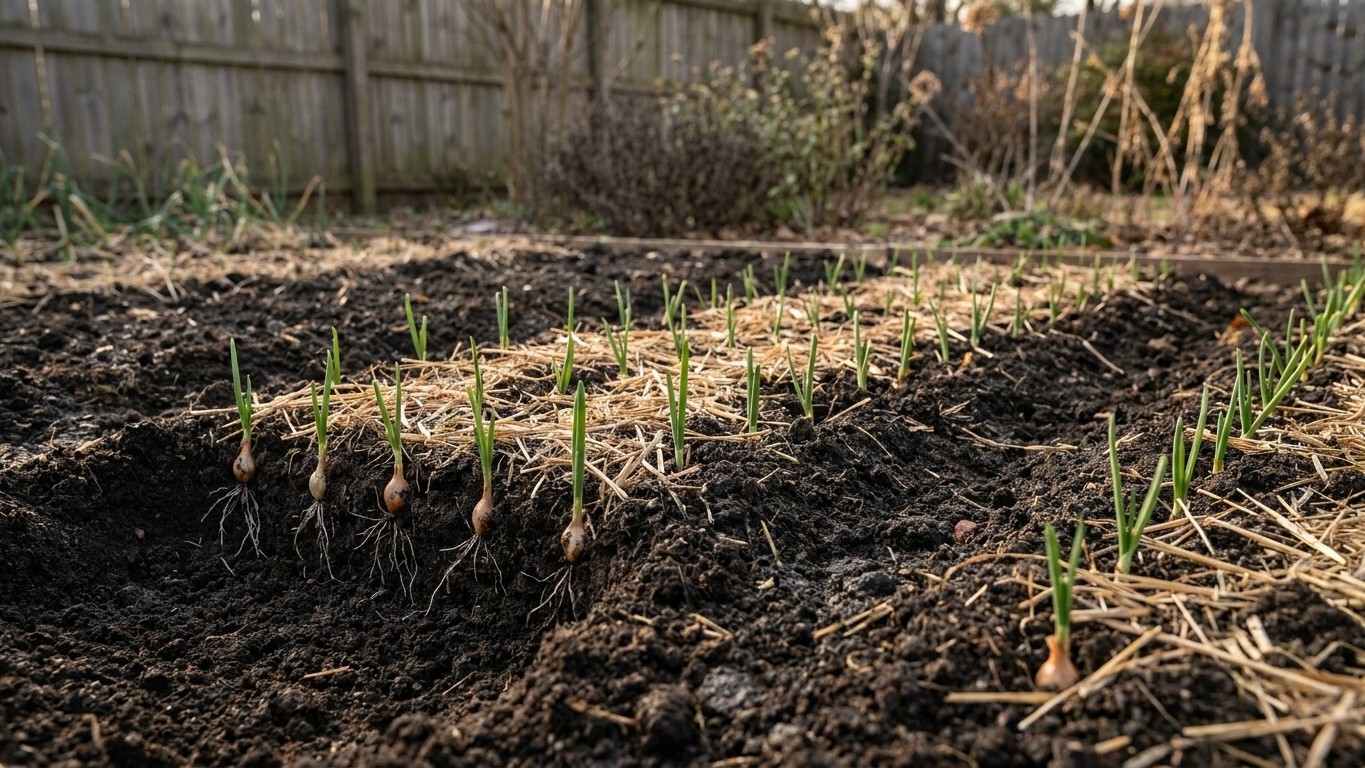

Slugs, root maggots, wireworms, voles and the occasional moose do most of the damage to garlic in Newfoundland and Labrador, and a microscopic worm called the stem and bulb nematode does the worst of it. Most of that feeding is tied to the calendar, to the weeks around planting in autumn and the cool, wet stretch before lifting the following summer. Here is how the timing works, and how to adjust it for your own ground.
The short answer for Newfoundland and Labrador
The anchor date is October 17. That is the average first fall frost at the St. John’s A station, according to Environment and Climate Change Canada’s Canadian Climate Normals for 1981-2010. It is a midpoint, not a safe date: in one year out of two, the first frost falls later than October 17, and in the other half it arrives earlier. Treat it as the middle of a window.
Garlic here goes in during autumn and comes out the following summer, so the pests that matter are the ones active on either side of the winter. Frost is the hinge. Before it, slugs and wireworms are still feeding, and the cloves are putting down roots in soil that is cold but not yet frozen. After it, the threat shifts to voles and mice that shelter under mulch and snow. When spring warms the soil, root maggots and nematodes take over.
The frost date shifts all of this, because pests follow soil temperature, not the printed calendar. A mild, wet October on the Avalon keeps slugs active for weeks past the average frost. A harsh early freeze on the Northern Peninsula shuts them down sooner. Pest-specific dates for the province are not published here, so the sensible approach is to use the frost date as a reference point and watch what your own soil is doing.
One caution on the numbers. Canadian normals cover 1981-2010, while the US figures on this site cover 1991-2020, so a comparison with New Hampshire is not strictly like for like. If you are curious about a colder-winter neighbor to the south, When to Plant Garlic in New Hampshire: Counting Back From the First Frost uses a different period and a different station.
Working it out for your own garden
A province is not one climate. St. John’s A sits on the Avalon Peninsula, exposed to the Atlantic, with fog and a long cool spring. A garden 150 miles inland, or 500 feet higher, or on the shore of a big lake, runs on a different clock. Elevation, a large body of water and the coast can each move a frost date by two weeks either way. The arithmetic is simple enough to redo for your own district.
Step one: find your local frost date
Start with October 17 as the reference and ask whether your garden is likely to freeze earlier or later than the airport at St. John’s. Low pockets where cold air pools, hillsides above the fog line and sites far from the ocean usually freeze sooner. Gardens right on the coast often get a few extra days because the water holds its summer heat. Shift October 17 by up to two weeks in the right direction, and write that down as your own midpoint. If a neighbor with a long-running vegetable patch can tell you when their squash vines blackened in recent years, that beats any regional average.
Step two: count back for planting, forward for pests
With your midpoint in hand, work backward to set the planting date, which is covered in detail in When to Plant Garlic in Newfoundland and Labrador: Counting Back From the First Frost. The goal is cloves that have rooted but not sprouted much top growth before the ground freezes. Planting earlier than that gives slugs and wireworms more time to find the cloves. Planting later leaves cloves with weak roots that frost can push out of the soil.
Then work forward. After the first hard freeze, put mulch down. Mulch laid in warm September weather becomes housing for voles and mice, which tunnel through it and eat the cloves. Wait until the ground is cold, then cover. In spring, pull the mulch back as the soil thaws so the beds dry out and warm up, which discourages slugs and gives you a clear view of any damage.
Because the frost date is a midpoint, build in slack. If your own average is October 17, plan for the half of years when frost comes early and the half when it comes late. A planting date that works only in an average year works only half the time.
What changes across Newfoundland and Labrador
Start with the Avalon Peninsula, where the St. John’s A normals come from. The frost is later than many inland sites because the ocean moderates it, but the trade-off is cool, foggy, damp weather. That suits slugs very well. Gardeners on the Avalon should expect the heaviest slug pressure in the fall and spring, and should keep mulch thin and beds tidy.
Move north and the clock runs faster toward winter. The Northern Peninsula and the Labrador coast sit well to the north of St. John’s, with shorter growing seasons, and their first frost comes weeks ahead of the Avalon figure. Labrador’s interior is colder again and has its own, much shorter calendar. In those districts, the pests are different too. Slugs are less of a problem in the cold, while voles, mice and moose are more of a concern. Snow cover lasts longer, which gives rodents months of protected feeding.
Inland and western Newfoundland is a different story. Valleys away from the Atlantic, such as the Humber and Codroy areas on the west side, can be warmer through summer, but they can also freeze earlier in autumn once clear nights arrive. Upland barrens and higher ground run colder than the valleys beside them, so a garden at the top of a road can lag the one in the hollow by a week or more.
Moose deserve a mention here. They are common across the island and will browse garlic tops, especially in spring when green growth is scarce. A fence tall enough to discourage them matters more in rural districts than anywhere else on the island. Variety choice matters too, and Garlic Varieties That Suit Newfoundland and Labrador Winters covers which types handle the cold best. For a broader orientation, Growing Garlic in Newfoundland and Labrador is the parent guide.
The mistakes this climate punishes
Cold, wet and slow: that is the combination that sets the rules here. The errors that cost the most are the ones that give pests and rot a long, damp runway.
- Mulching too early. Straw or leaves laid on warm soil invite voles and mice to move in for the winter. Wait for a hard freeze.
- Planting in ground that stays soggy. Heavy, poorly drained soil keeps cloves wet through a cool spring, which helps slugs and rot and slows growth.
- Planting garlic where onions, leeks or garlic grew recently. Stem and bulb nematodes and root maggots build up in the soil of related crops.
- Using cloves from a bulb that looks swollen, soft or distorted. Nematodes travel in seed stock, and once they are in a bed they are very hard to remove.
- Turning a lawn into a bed and planting the same autumn. Wireworms live in sod, and a first-year bed carved out of turf is where they do the most harm.
The timing mistakes matter just as much. Planting too late is the classic error in a short season: the cloves never root before the ground freezes, and frost heaving can lift them out over the winter. Planting too early is nearly as bad, because top growth emerges and then gets hit by cold or eaten by slugs. Because the average frost date is only the middle of the range, early-freeze years will catch gardeners who planted at the last moment.
A last point on hardiness. Choosing a hardneck type for this cold is sensible, but it will not save cloves that are planted shallow in bare, unprotected soil. Plant at a decent depth and mulch after the freeze, and the plant has a fair chance against both weather and animals.
Checking this against your county
Newfoundland and Labrador does not use counties, so the useful level of detail is your own town or district. The provincial Department of Fisheries, Forestry and Agriculture is the right place to ask about local conditions, reported pests and any plant-health advisories that affect alliums. Ask specifically whether the allium leaf miner or stem and bulb nematode has been reported near you, since that changes how careful you need to be with seed garlic.
Common questions
What is the biggest garlic pest in Newfoundland and Labrador?
Slugs are the most common problem on the damp Avalon, and the stem and bulb nematode is the most damaging because it cannot be treated once it is in the soil. Voles and moose matter more in rural and northern districts. There is no published ranking in the facts used for this page, so check with the provincial agriculture department for local reports.
Is October 17 a safe planting date?
No. It is the average first fall frost at the St. John’s A station, from Canadian Climate Normals for 1981-2010. In one year out of two, frost arrives later than that, and in the other half it arrives earlier. Adjust for your elevation, distance from the coast and nearby lakes, which can shift it by two weeks either way.
When should I put mulch on to keep voles out?
After the ground has frozen, not before. Mulch laid on warm autumn soil gives rodents a sheltered place to nest next to the cloves. Pull it back in spring as the soil thaws so the bed dries and warms.
Can I reuse my own garlic as seed every year?
Yes, as long as the bulbs are firm and healthy. Discard anything soft, swollen or misshapen, because nematodes travel in seed cloves. Rotate to a bed where onions, leeks and garlic have not grown recently.