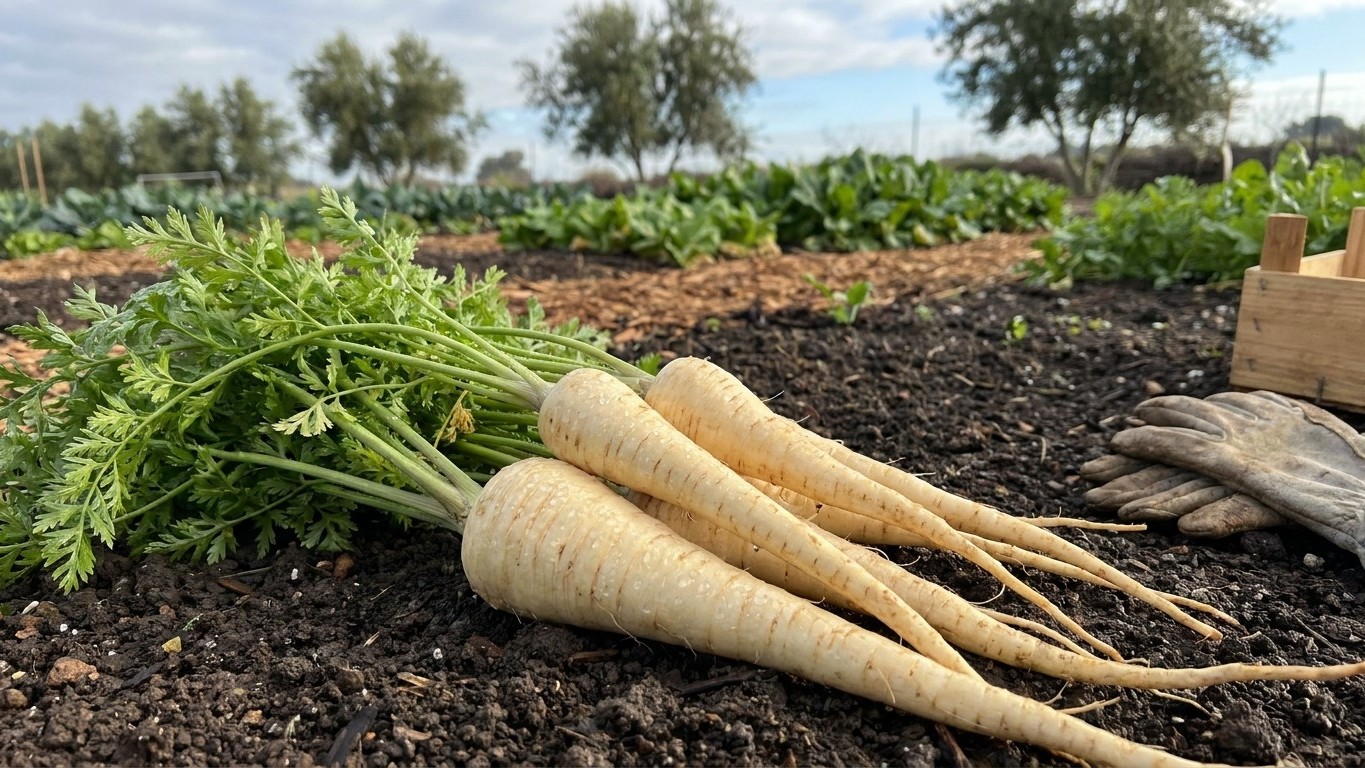

Dig parsnips after several weeks of frost, not on the day the first one hits. At the Newark reference station that points to December and later, since the first fall frost arrives between November 4 and November 16. Roots can wait in the ground whenever the soil is workable. Once lifted, they keep four to six months, but only in cold, very humid storage and well away from apples. Our Growing Parsnips in New Jersey guide covers the full season.
The short answer
Does New Jersey deliver several frosty weeks? At the Newark reference station, yes. The mean daily minimum of the coldest month is 25.5°F, according to NOAA NCEI climate normals. That is an average of the overnight lows, not a record cold snap, so a typical night in the depths of winter sits well below freezing. A parsnip sown in spring and left in the ground will do more than grow here. It will sweeten.
The frost window backs that up. NOAA’s freeze-probability figures for the airport station put the first fall frost between November 4 and November 16, and the last spring frost between March 29 and April 6. Between those two dates sits a stretch of more than four months in which freezing nights are normal. The sweetening itself is simple chemistry: Utah State University Extension notes that parsnips taste best after several weeks of cool, frosty weather, which converts stored starch to sugar. The trigger is frost exposure. A comfortable hardiness zone does not guarantee it, which is why the weather data matters more than the zone map. We go deeper on the mechanism in Will Parsnips Sweeten in New Jersey?
So when do you lift? Start several weeks after the first frost, which at the reference station means December. Those dates come from an airport weather station. Suburban and rural gardens usually see the first fall frost one to two weeks earlier, and the last spring frost one to two weeks later, so check the figures for your own county before you plan around them. From there, dig as you need them whenever the ground isn’t frozen solid. A thick layer of straw or shredded leaves laid over the row in late fall keeps the soil forkable in January. Pull the last of the crop before the tops start pushing new growth in spring.
Storage is where good parsnips go wrong in kitchens. USDA Agricultural Handbook 66 says roots can be stored four to six months at 32 to 34°F with 98 percent relative humidity. That is a long keeper by any standard. It also assumes those conditions hold steady, and almost no house manages that. Parsnips are not chilling sensitive, so cold is not the danger. The danger is ethylene. The roots produce very little of it, but the handbook reports that even low levels in cold storage cause bitterness. A parsnip stored beside apples or any ripening fruit turns bitter even at the right temperature. Keep them in a separate bin or drawer. Top the roots after digging, but do not trim into the crown. The full text is in the USDA handbook.
Does the season fit?
It fits comfortably, with room to spare. Parsnips are sown in place and need 100 to 120 days from seeding, and the best sowing falls two to three weeks before the last spring frost. The arithmetic runs like this for the Newark reference figures:
- Start with the last spring frost, March 29 to April 6. Counting back two to three weeks puts the sowing between about March 8 and March 23.
- Count forward 100 days from the early end. March 8 plus 100 days lands on June 16.
- Count forward 120 days from the late end. March 23 plus 120 days lands on July 21. Roots are full size somewhere between mid-June and late July.
- Compare that with the first fall frost, November 4 to November 16. From July 21 to November 4 is 106 days. From June 16 to November 16 is 153 days. Even the tightest pairing leaves more than three months before the first frost.
- Adjust for your county. If your garden sees the last spring frost a week or two later and the first fall frost a week or two earlier, the cushion shrinks by as much as four weeks. It is still more than two months.
One catch sits inside the first step. Germination takes 14 to 21 days, and the 100 to 120 days run from seeding, not from the day green shoots show. Those three weeks of bare soil are normal. Gardeners who dig into an empty row at day ten and re-sow lose the head start.
The other point is that the seasonal arithmetic and the sweetening are two separate questions. A root that reaches full size in July is mature but not yet sweet, because it has not met a frost. That is the reason to leave it in the ground through fall rather than lift it the moment it looks ready. For the creatures that go after roots while they wait, see What Eats Parsnip in New Jersey, and When.
What goes wrong here
Most parsnip failures in New Jersey trace back to a short list. Soil varies by county and even by bed, and the state soil is a starting point, not a diagnosis, so dig a spade-deep test hole before you commit a row.
- Forked roots from heavy or stony ground. Utah State University Extension calls for deep sandy soil, and says heavy soil must be double dug. A taproot that meets clay, a stone or a hard layer splits into legs. The remedy is to loosen the bed deeply before sowing, double digging if it is heavy, and to pick out stones down to the full depth of the root.
- Forked roots from overwatering. This is a separate cause, and it can happen in perfectly good soil. A bed kept constantly soggy encourages branching and rot. Water evenly and let the soil drain between rains and waterings instead of keeping it wet all the time.
- A season that runs out. A sowing made well after the last frost shrinks the cushion described above, and a crop that is behind has less time to size up before winter. Sow in the March window and count the 100 to 120 days from seeding. Wait out the 14 to 21 days of germination before you decide anything failed.
- A winter too mild to sweeten. At the reference station the coldest month averages a low of 25.5°F, so this is unlikely in most of the state. It can still happen in a sheltered corner, or under a heavy cover that keeps frost off the soil. Leave the row open to the weather until the frost has done its work. A root that never gets that exposure grows fine and tastes plain.
- Bitter roots from storage. Ethylene from nearby apples or ripening fruit causes bitterness even at the correct temperature. Store parsnips on their own, topped but not trimmed into the crown.
Common questions
Can parsnips stay in the ground all winter in New Jersey?
Yes, as long as you can get a fork into the soil. Frosty weather is what sweetens them, so the ground is the best place for them until you want to eat them. Mulch the row in late fall so a hard freeze doesn’t lock the roots in, and lift whatever remains before spring growth begins.
How long do parsnips keep after lifting?
USDA Agricultural Handbook 66 gives four to six months at 32 to 34°F and 98 percent relative humidity. A typical house falls short of those conditions, so expect less. Keep roots away from apples and other ripening fruit, because ethylene turns them bitter, and top them without cutting into the crown.
How many days from seed to harvest?
Parsnips need 100 to 120 days from seeding. Germination alone takes 14 to 21 days, and the clock starts at sowing. A sowing two to three weeks before the last spring frost, which means roughly mid to late March at the reference station, finishes growing by summer and then waits for frost.
Do I have to wait for frost before digging?
You can dig earlier, and the root will be edible, but it will taste starchy rather than sweet. Utah State University Extension says the flavor is best after several weeks of cool, frosty weather. The dates here come from the Newark airport station, so a garden in the hills or the rural counties may reach that point earlier in the fall than the figures suggest.