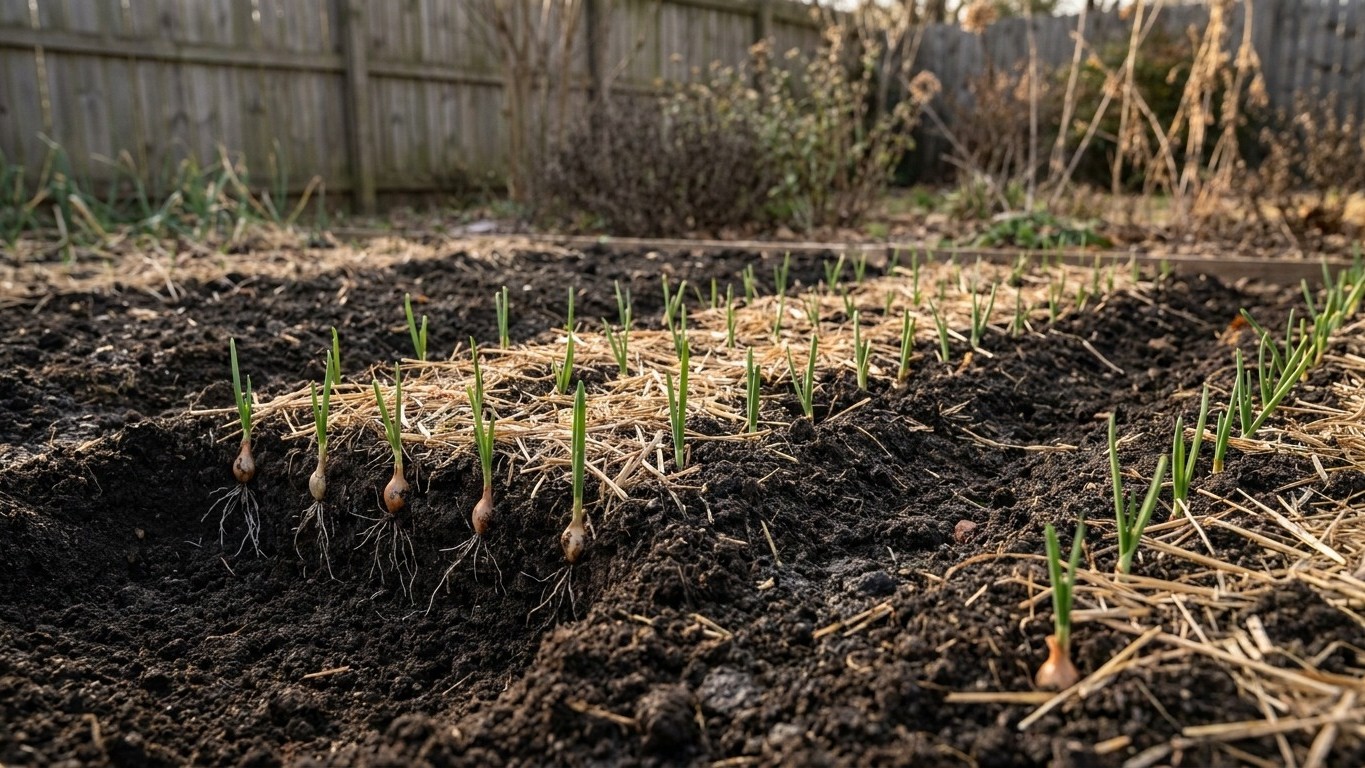

Garlic in Ohio gets eaten in two waves. The first comes right after fall planting, when voles, mice and squirrels go after cloves and wireworms work the soil. The second starts at the spring thaw, when thrips, onion maggots and leaf-mining flies arrive and stay until the bulbs are lifted the following summer. Stem and bulb nematodes, the worst of the lot, often arrive inside the seed garlic itself. Which wave hurts you depends on when you plant, where in the state you garden, and what grew in that bed before.
The short answer for Ohio
Everything hangs on the first fall frost, which the Ohio State University Extension Ohio Gardening Calendar puts at October 5 to October 15 for zone 6a. That date is a midpoint, not a safe date. In one year out of two, the frost falls later, so a garden that plants “right after frost” some years is planting into a warm, pest-active soil.
Garlic goes in after that frost, roots through the fall, sits out the winter, and is lifted the following summer. Each stage of that cycle has its own eaters:
- Planting to hard ground freeze: squirrels and chipmunks digging up cloves, mice and voles tunneling to them, wireworms chewing into cloves in the soil.
- Winter: voles working under mulch and snow cover, where nobody sees them.
- Spring regrowth: onion thrips scraping leaves, onion maggots in cool, damp weather, and allium leafminer where it has spread, which is a pest to ask your county office about.
- Late spring to lifting: thrips damage as bulbs size up, plus nematode symptoms (twisted, swollen, yellowing growth) that become obvious just before harvest.
The calendar is only half of it. Pests answer to soil and air temperature, not to dates. A warm October keeps rodents and wireworms active for extra weeks, and a cool, wet April stretches the window for onion maggots. Thrips go the other way: hot, dry weather favors them, which is why a dry early summer can do more harm than a wet one.
Working it out for your own garden
Ohio is not one climate, and the pest dates move with the frost date. You can redo the arithmetic for your own yard in a few minutes.
Fix your frost date, then adjust it
Start with the zone 6a window of October 5 to October 15. Elevation, Lake Erie and the Ohio River corridor can move that by about two weeks either way, so the real range for the state runs from roughly September 21 to October 29. Your own backyard sits somewhere in that spread. Pick the date that matches your area (the next section sorts the regions), then plan for the late half of it, because the midpoint is beaten in half of all years.
Planting comes after that date. The full counting-back method, with lead times and the rooting window, is in When to Plant Garlic in Ohio: Counting Back From the First Frost. What matters here is the link to pests: a clove that has had time to root is anchored and much harder for a squirrel to flip out, while a clove planted late just sits loose in disturbed soil, advertising itself.
Lay the pest calendar over it
Fall pests count forward from planting day. Spring pests count from the thaw, which has nothing to do with your frost date, so you scout by what the garden is doing rather than by the page on the wall. When shoots push up in late winter and early spring, walk the bed weekly. Look for leaves with tiny rows of white dots, which can signal leafminer egg-laying, silvery scraping streaks from thrips, and plants that wilt or pull up with no roots because maggots got there first.
Nematodes need a separate habit. They persist in soil and plant debris, and they hitch a ride on infested cloves. Buy seed garlic from a source that sells clean stock, and think hard before replanting from a bed that showed distorted, swollen growth. Varieties differ in what they can tolerate and how they handle a cold Ohio winter, which is covered in Garlic Varieties That Suit Ohio Winters.
For the broader picture of the crop from clove to cured bulb, see Growing Garlic in Ohio.
What changes across Ohio
The state runs about two weeks ahead or behind depending on where you stand, and the cause is different in each region. Here is how the pieces break down.
| Area | What moves the dates | What it means for pests |
|---|---|---|
| Lake Erie shore (Toledo to Ashtabula) | The lake holds heat into fall, so frost comes later; spring warms slowly | Rodents and wireworms stay active longer after planting; spring pests start later |
| Northeast snowbelt (Geauga and Ashtabula counties) | Higher ground and lake-effect snow | Deep snow cover insulates the soil, which shelters voles all winter |
| Northwest Ohio (former Black Swamp) | Flat land, heavy clay, slow drainage | Cold, wet springs favor onion maggots and rot |
| Muck-soil onion country (Willard, Hartville) | Dark, organic soil, intensive onion farming | Onion pests and nematodes can build up in the area, so be careful about rotation |
| Appalachian southeast | Hills, elevation and valley frost pockets | Valley floors frost first; wooded edges bring voles and mice close to beds |
| Ohio River valley and southwest | Lower elevation, warmer air, later frost | Longest fall pest season; spring pests wake earliest |
The pattern is simple enough. Anywhere the lake or the river keeps the fall mild, expect more fall animal damage. Anywhere snow stays on the ground, expect voles under the cover. And on onion-heavy muck soils, think about what your neighbors grow, because their crop is the reservoir for the bugs that visit yours.
The mistakes this climate punishes
Ohio winters are cold enough to heave shallow cloves out of the ground and wet enough to keep soil pests alive in spring. Most losses trace back to a few repeat errors.
Planting too early is the first. A clove put in while the soil is still warm sends up top growth before winter, and that green tissue is tender and easy to knock back. Warm soil also keeps wireworms and rodents interested. Since frost is a midpoint, a warm fall often delays the right moment, so wait for the frost rather than the calendar.
Planting too shallow is the second. Freeze and thaw cycles lift shallow cloves and leave them exposed, which makes them easy pickings for squirrels. Go deeper than feels necessary, and firm the soil down.
Planting too late is the third. Cloves that go in after the soil is nearly frozen never root, and an unrooted clove is both a pest magnet and a poor winter survivor.
Loose, heavy mulch laid right against the cloves invites voles, which love the cover. Mulch the bed after the ground cools, keep it from piling thick around the shoots, and pull it back in spring so the soil can warm and dry.
Replanting garlic or onions into the same ground, year after year, is the mistake that does the most lasting damage. Nematodes and soil diseases persist, so rotate the bed away from all alliums for several years. Saving seed from a bulb with swollen, distorted growth carries the problem forward with you.
Oklahoma gardeners face nearly the opposite problem, a mild winter that punishes the wrong variety, as laid out in When to Plant Garlic in Oklahoma: Counting Back From the First Frost and Garlic Varieties That Suit Oklahoma Winters. In Ohio the cold itself is what you plant against.
Checking this against your county
County-level pest reports, frost dates and soil advice come from Ohio State University Extension, which has an office in every county. Call or visit with a leaf or a bulb in a bag if something looks wrong. Extension staff can confirm nematodes or leafminer and tell you whether either has been seen near you this year.
Common questions
Do deer eat garlic in Ohio?
Rarely. Garlic’s smell puts most deer off, though a hungry animal will sometimes trample or nibble young shoots. Rodents and squirrels do more damage, especially to freshly planted cloves.
When should I first look for pests?
Check the bed in the weeks after planting for dug-up cloves, then again each week once shoots emerge in spring. Spring regrowth is when thrips, maggots and leafminer damage first shows.
Can I replant cloves from bulbs that had nematodes?
No. Nematodes travel in the cloves and linger in the soil. Start with clean seed garlic and a bed that has been out of alliums for several years.
Does straw mulch attract voles?
A thick, loose layer can give voles cover through winter. Apply mulch after the ground has cooled, keep it from piling around shoots, and pull it back in spring.