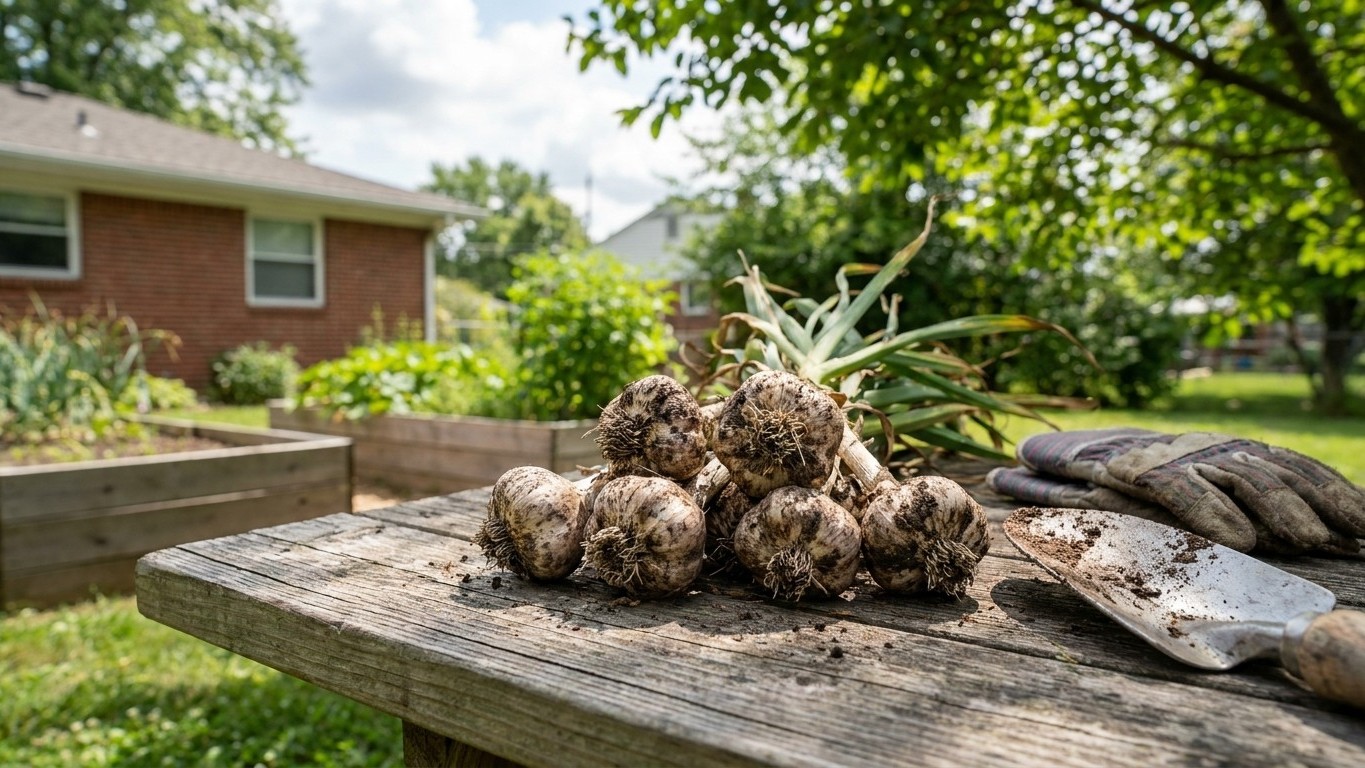

Columbus soil doesn’t forgive a garlic clove planted on the softneck timeline that works further south. Mid-September to late September is the window here, tied to a first frost that historically lands anywhere from October 5 to October 15 — never a fixed date, just a coin flip most years. Ohio’s winters also rack up nearly 22 weeks below 40°F, far more cold than a clove needs to split into cloves at all, which is exactly why hardneck varieties, not softneck, are the safer bet.
The short answer for Ohio

Garlic goes into Ohio ground mid September to late September, a window Ohio State University Extension anchors to a first fall frost of October 5 to October 15 for the Columbus area. That frost date is a midpoint pulled from long-term averages, not a promise. In roughly half of the years on record the first hard freeze lands after October 15, and in the other half it lands before October 5. Plant on the early side of the window if you garden on low ground that collects cold air, and lean later if your soil holds onto fall warmth longer than most. The goal either way is roots down and settled before the ground freezes solid, not green top growth. Every cultivar here follows the same annual cycle: planted this autumn, lifted as a cured bulb the following summer.
Ohio supplies enough winter cold to make that worthwhile. Measured cold hours here run to 21.8 weeks below 40°F over the year, according to University of Georgia Extension research on garlic’s chilling needs (bulletin C854), well past the six to eight weeks a clove needs underground to split into a full Bulb Instead of staying round. That’s the deciding factor for variety choice: hardneck garlic is the safer bet across Ohio, because cultivars like German Red and Chesnok Red need a real winter to size up, and Ohio gives them one every year without fail. Softneck types such as Inchelium Red and Lorz Italian still grow well here and store longer in a mesh bag, so keep a few in the mix if pantry life matters to you.
The full lineup, by type
Every cultivar below is set out in the same mid September to late September window for the Columbus area, calculated back from OSU Extension’s frost date above. Adjust a few days earlier or later for your own county using the arithmetic in the next section.
| Variety | Neck type | Set out (Columbus-anchored) |
|---|---|---|
| Early Red Italian | Softneck | Mid to late September |
| Inchelium Red | Softneck | Mid to late September |
| Italian Late | Softneck | Mid to late September |
| Lorz Italian | Softneck | Mid to late September |
| Bavarian Purple | Hardneck | Mid to late September |
| Blue Music | Hardneck | Mid to late September |
| Chesnok Red | Hardneck | Mid to late September |
| Duganski | Hardneck | Mid to late September |
| Fall Festival | Hardneck | Mid to late September |
| Georgian Crystal | Hardneck | Mid to late September |
| Georgian Fire | Hardneck | Mid to late September |
| German Red | Hardneck | Mid to late September |
| German White | Hardneck | Mid to late September |
| Ivan | Hardneck | Mid to late September |
Working it out for your own garden
The math behind that September window is simple once you see it laid out. Start from OSU Extension’s Columbus-anchored first frost, October 5 to October 15, and count back three to four weeks so the clove has time to grow roots before the soil turns cold and stays that way. Land in that gap and you get mid September to late September, which is why every cultivar in the table above shares the same window. If you garden somewhere else in Ohio, the same logic still applies: find your own area’s typical first frost, subtract the same three to four weeks, and set your date range from there. For the fuller week-by-week version of this count-back, see When to Plant Garlic in Ohio: Counting Back From the First Frost.
Remember that any frost date pulled from long-term averages is a midpoint, never a safe date. Half of the years on record run colder and earlier than that average, half run milder and later. Build in a few days of slack on the early edge of your window rather than pushing to the very last date, especially if you’re planting a full bed by hand and the weather turns before you finish. If you haven’t prepped the bed yet or separated cloves for planting, the basics live on Growing Garlic in Ohio. The date math here assumes that groundwork is already done.
Why the window shifts near hills, lakes and valleys
Elevation, a large lake, and a river valley all change how fast the ground cools in fall, sometimes by a week or more in either direction. Higher ground loses heat faster once the sun angle drops, so a hilltop garden can see its first real cold snap earlier than a valley floor a few miles away. A large lake does the opposite: it holds summer heat and releases it slowly, so land close to the shoreline often stays frost-free longer into the season than inland spots at the same latitude. A low creek bottom that collects cold air overnight can frost before the surrounding higher ground does, even though it runs warmer there in July. None of this shows up in a single reference date. It’s why OSU Extension’s Columbus figure is a starting point for the whole state, not a fixed rule, and why the safest move is to track your own first frost over a few seasons rather than borrow one city’s number outright.
What changes across Ohio
Ohio’s climate isn’t one thing. The Columbus figures describe central Ohio, and a single reference station, however carefully kept, can’t describe a state this size on its own. Northeast Ohio, especially ground close to Lake Erie’s snowbelt counties, tends to hold onto fall warmth longer than the Columbus average suggests, because the open water moderates air temperature well into autumn. Move south and east into the Appalachian foothills of southeast Ohio, and the higher, hillier ground tends to cool off earlier than central Ohio does, sometimes catching a hard frost before the flatter cropland to the west. The Ohio River valley in the state’s southern tier sits lower and often runs a touch milder than inland areas at a similar latitude, the way most river valleys do.
None of these shifts are large enough to change which cultivars will grow. Every variety in the table above is hardy across the whole state, since Ohio’s cold season clears the six-to-eight-week chilling requirement everywhere from the Lake Erie shore to the Ohio River, not just at the Columbus reference point. What the regional differences change is timing, not variety choice. A grower on the Lake Erie shore might comfortably plant toward the back half of the window, while someone farming the hill country of southeast Ohio may want to lean toward the early side of it, since that ground can start locking up sooner than central Ohio’s does. Treat the Columbus dates as the middle of the state’s range, not the edge of it.
The mistakes this climate punishes
Planting too shallow is the big one. A clove set only an inch down can heave out of loosened fall soil during a freeze-thaw cycle, especially on clay ground that swells and contracts through a wet Ohio winter. Planting too late does similar damage, because a clove that hasn’t grown real roots before the ground locks up sits exposed to that same heaving all winter long.
A mulch layer of straw or shredded leaves, put down the same day you plant, solves most of the heaving problem and buffers the soil against the swings a bare bed goes through under an Ohio winter. Skipping mulch because the ten-day forecast looks mild is a common trap. An Ohio frost date is only a midpoint, and a mild stretch in October can flip to a hard freeze within days, especially inland.
Seed stock and disease risk
The other mistake is treating seed stock casually. White rot, caused by the fungus Sclerotium cepivorum, and Fusarium basal rot, caused by Fusarium oxysporum f. sp. cepae, both spread through infected cloves rather than appearing out of nowhere, and Ohio’s fall and spring air temperatures sit within the range these pathogens are documented to favor, according to the University of California’s IPM Pest Management Guidelines for onion and garlic (UC ANR Publication 3453). Those published ranges describe soil temperature, not air. Soil lags behind air and swings less through the day, so a mean monthly air reading inside the range is a caution, not a diagnosis. It also doesn’t mean the reverse is safe: a month outside the range lowers the odds of disease activity, it doesn’t rule it out, and infected planting stock can bring either fungus into a garden regardless of the weather that season. Buy cloves from a supplier who tests for these diseases, and never replant a bulb that showed soft, discolored or rotted cloves at last summer’s harvest.
- Setting cloves too shallow, so freeze-thaw heaving pulls them loose over winter
- Planting past the late-September edge of the window without extra mulch to compensate
- Skipping straw or leaf mulch because the short-term forecast looks mild
- Replanting cloves from a bulb that showed rot or discoloration at last summer’s harvest
Checking this against your county
Every date here is anchored to Columbus. If you garden in Toledo, Youngstown, Dayton, or anywhere else in Ohio, your own first frost can run a week or more earlier or later than the Columbus figure OSU Extension publishes, and that shift changes your planting window by the same amount. Check your county’s extension office before you commit to a date, since local agents often track frost records specific to their service area rather than relying on a single statewide figure. Ohio State University Extension’s full directory of county offices is available at extension.osu.edu, and it’s worth the five minutes it takes to find the office covering your address.
Common questions
Can I plant garlic in spring instead of fall in Ohio?
You can, but you’ll get smaller, undivided bulbs because the clove skips most of its cold requirement. Garlic in Ohio is meant to go in during autumn and get lifted as a cured bulb the following summer, and that fall-to-summer cycle is what gives hardneck varieties the six to eight weeks of cold they need to split properly.
What if I miss the late-September planting window?
You can still plant into October ahead of the OSU Extension frost window for your area, but a later start gives the clove less time to root before the ground locks up, which raises the risk of frost heave. Compensate with a heavier mulch layer, put down the day you plant, not weeks later.
Is it fine to plant garlic from the grocery store here?
It’s risky. Most grocery store garlic is chemically treated to stop sprouting, and it usually has no history of disease testing, so you can’t rule out white rot or Fusarium basal rot in the stock. Buy from a supplier that sells specifically for planting and can speak to how the seed stock was screened.
Do I need to mulch every winter, even a mild one?
Yes. The frost date used to plan planting is a long-term average, not a forecast for any single year, so even a mild winter overall can still deliver sharp freeze-thaw swings that heave shallow cloves. Mulch protects against that regardless of how the season shapes up as a whole.