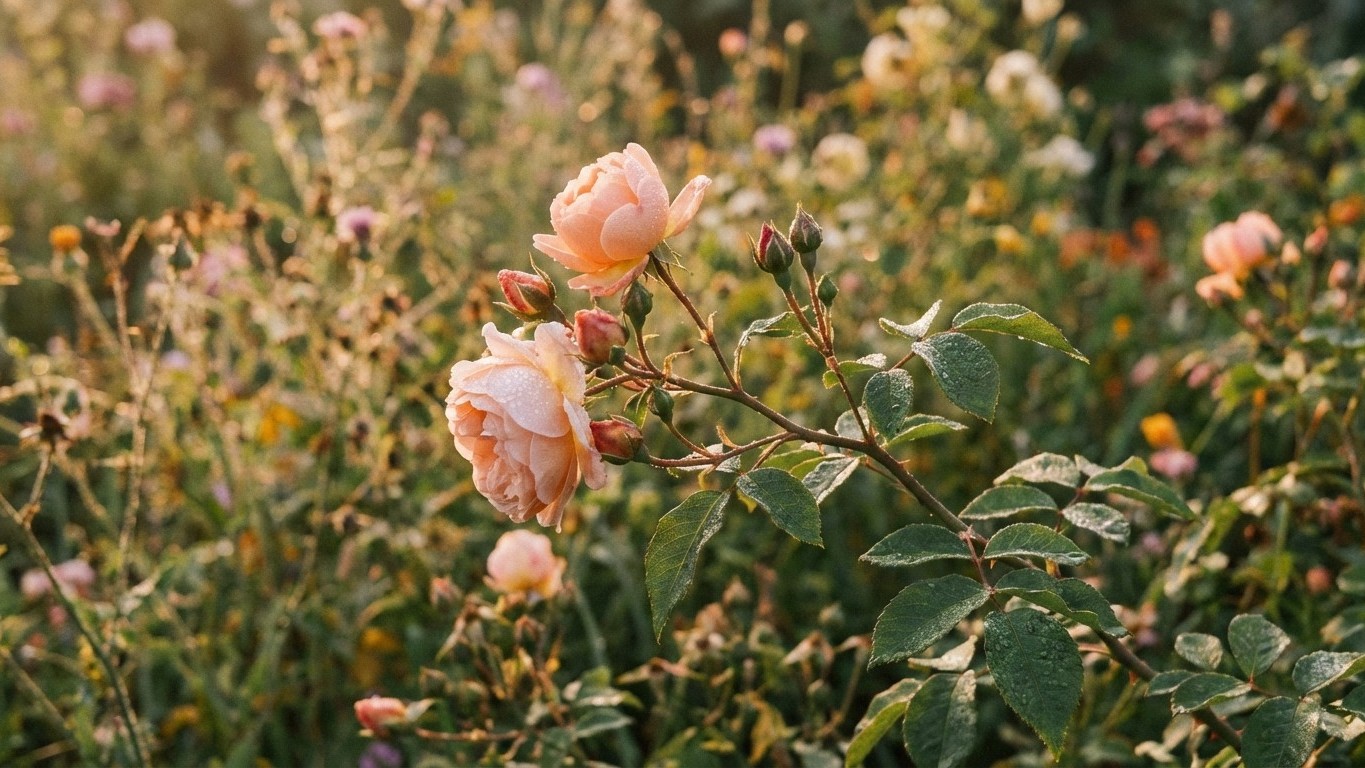

Charleston’s 32°F freeze odds put the last spring frost between April 9 and April 23, so container roses go in the ground from late April onward. Bare-root plants can go in earlier, and fall planting works if it is done by early September. Disease-resistant varieties matter more here than any fertilizer schedule. Japanese beetles and aphids arrive in June, so plan for them before the first bloom.
When to plant Roses in West Virginia

The dates above come from NOAA NCEI 1991-2020 Climate Normals, using the 30-70% probability band for a 32°F freeze at the Charleston station. Charleston sits in a river valley. Northern counties and anything at higher elevation run later in spring and freeze earlier in fall, sometimes by a couple of weeks. A garden on a ridge near Snowshoe does not share a calendar with one along the Kanawha. Treat the Charleston window as a starting point and adjust it for your own hollow or hilltop.
Spring planting: the count-back
Roses are not a seed-starting crop. Seeds from rose hips need months of cold stratification and rarely produce a plant that looks like its parent. Nearly every home gardener buys a plant, either bare-root (dormant canes, no soil) or in a container, so the count-back starts from the plant.
Bare-root roses go in as soon as the ground can be worked, which in the Charleston area usually means late March into April. Dormant plants tolerate a freeze better than leafed-out ones, and the root system gets several weeks to settle before summer heat. Soak the roots in a bucket of water for 8 to 12 hours before planting, no longer.
Container roses from a garden center are often grown in a greenhouse and already carrying tender leaves. Those need hardening off. Take April 23, the late end of the Charleston frost window, as your safe planting date. Count back 7 to 10 days and you land on April 13 to 16. That is when the plant starts living outdoors in a sheltered spot for a few hours, then a full day, then overnight. Skipping this step is how a pretty greenhouse rose ends up with scorched, bleached leaves in the first sunny week. If a hard freeze is forecast after planting, cover the plant overnight with a bucket or frost cloth.
Fall planting: counting back from the first frost
The same NOAA station puts the first fall freeze between October 18 and November 1. A container rose needs about six weeks of warm soil to put out roots before the ground cools. Count back six weeks from October 18 and you reach roughly September 6. Anything planted later is a gamble, especially at higher elevations where the freeze arrives sooner. Gardeners in the mountains should aim for spring planting and skip fall entirely.
Soil and site preparation
Roses want at least six hours of direct sun, and morning sun matters most because it dries dew off the leaves early. In West Virginia’s humid summers, wet foliage is an invitation to black spot. A spot with morning sun and a little afternoon shade beats a baking south wall with no air movement. Leave room around each plant for air to pass, and avoid planting snug against a solid fence on the windless side of the house.
Drainage decides more rose deaths than cold does. Many hillside gardens in the state have heavy clay or shallow, rocky soil, and a rose sitting in a bowl of standing water will decline within a season. Test it before you plant: dig a hole about a foot deep, fill it with water, let it drain, then fill it again. If the second fill is still sitting there after 24 hours, build a raised bed 10 to 12 inches high or choose another spot. Roses prefer soil that is slightly acidic, around pH 6.0 to 6.5.
Begin the work weeks ahead. A soil test through your county extension office tells you pH and nutrient levels, and if lime is needed, it takes months to move pH, so fall testing for spring planting is smart. Spread the lime, then fork in 2 to 3 inches of compost or aged manure across the whole bed rather than just the planting hole. Amending only the hole creates a pot in the ground, and roots circle inside it rather than reaching outward.
On planting day, dig a hole about 18 inches wide and as deep as the root mass needs. For grafted roses in the colder parts of the state, set the graft union (the knobby swelling at the base of the canes) about an inch below the soil line for protection. In the Charleston area, set it at ground level. Backfill, water in slowly, and mulch. Spacing depends on the type: roughly 3 feet between hybrid teas, 4 feet for most shrub roses, and 6 to 8 feet for climbers. Crowding is tempting when plants are small, and it is the main reason rose beds in this state end up with mildew.
Varieties that suit West Virginia
Start with the traits. Disease resistance comes first. Humid summers and frequent rain make black spot and powdery mildew the main limits on rose health, and a resistant variety means fewer sprays and fewer leafless canes by August. Winter hardiness is second, particularly in the higher counties where cold snaps hit harder than in the river valleys. Third is repeat bloom, which lets a plant flower through the long season rather than for three weeks in June. Own-root plants (grown from cuttings rather than grafted) also tend to regrow from the base if a hard winter kills the canes, which grafted plants may not do reliably.
Here is how several widely sold varieties compare:
| Variety or group | Type | What it is good for | Watch for |
|---|---|---|---|
| Knock Out series | Shrub | Low-maintenance repeat bloom, good black spot resistance | Rose rosette disease can still strike |
| Drift series | Groundcover, compact | Slopes, borders, containers, tidy habit | Smaller flowers, less fragrance |
| Iceberg | Floribunda | Steady white blooms, reliable in beds and hedges | Some mildew in crowded, humid sites |
| Fru Dagmar Hastrup | Rugosa | Cold tolerance, fragrance, hips for fall color | Spreads with age, thorny |
| New Dawn | Climber | Arbors, fences, vigorous growth, repeat flowers | Needs real support and annual training |
| Mister Lincoln | Hybrid tea | Classic red cut flowers with strong fragrance | Needs open air and attentive disease management |
For a first rose bed here, lean toward the shrub and groundcover group. Hybrid teas make beautiful cut flowers, but they demand the most in a wet climate. If you love one, give it the sunniest, airiest spot and mix it with tougher neighbors. Rugosas deserve more attention than they get, particularly for the high country and for anyone who wants a hedge that shrugs off cold.
Take any resistance rating as a tendency, not a guarantee, since plant tags are written for the whole country. Your county extension office can tell you what has held up locally.
What to plant alongside
Good companions do concrete jobs. Low plants that cover the soil around the rose canes shade the roots, suppress weeds, and cut the splash of soil spores onto lower leaves. Catmint and hardy geraniums do this well, and both draw pollinators. Alliums and garlic chives are often suggested for pest confusion, because their strong scent may mask the rose from aphids. The evidence is modest, so treat them as a low-risk bonus and not a defense.
Clematis is a classic partner for climbing roses, with the clematis roots shaded by the rose base. Plant the clematis 12 to 18 inches from the rose so the two are not fighting for the same root space, and train it up a separate stake or wire.
Some pairings fail quietly. Lavender looks lovely beside a rose, but it wants dry, lean, sharply drained soil while roses want consistent moisture and rich ground. In West Virginia’s rainy summers, the lavender usually rots first. Mint and other aggressive spreaders will invade the root zone and compete for water and nutrients. Dense hedges and big shrubs planted too close block airflow, which is the opposite of what roses need.
One caution is worth real attention: wild multiflora rose, a common invasive across the eastern United States, can carry rose rosette disease, so remove it from the edges of your property if you can.
Watering, feeding and support
A rose that gets a deep soak once or twice a week outperforms one that gets a daily sprinkle. Aim for about an inch of water per week, from rain and the hose combined, and put it at the base with a soaker hose or a slow trickle. Deep watering pushes roots down, where soil stays cooler in July. Water in the morning so any splash dries quickly. Overhead sprinklers soaking leaves at dusk are the quickest route to black spot. Newly planted roses need more attention for the first summer, so check the soil a few inches down before you decide to water.
Mulch holds moisture, keeps soil temperatures steadier, and blocks weeds. Spread 2 to 3 inches of shredded bark or similar material after the soil has warmed in spring, and keep it a few inches back from the canes so the crown does not stay damp. Refresh it each spring.
For feeding, begin when new growth is several inches long and the plant is clearly awake, usually in April or May depending on elevation. A balanced rose fertilizer or compost works, and a second round goes on after the first big flush of flowers fades. Stop feeding about six weeks before the first fall freeze. Using the NOAA station’s October 18 date, that means early September. Feeding later pushes soft growth that freezing weather will kill.
Pruning is mostly timing. Wait until buds begin to swell in early spring, about when forsythia blooms, then remove dead, damaged and crossing canes down to healthy green or white pith. Hybrid teas can be cut back by roughly a third to a half. Shrub roses need less. Climbers should be pruned lightly, and the long canes tied horizontally along their support because horizontal canes produce more flowering side shoots than vertical ones. Use soft ties that will not cut into the bark.
On grafted roses, watch for suckers, which come from below the graft union and look different from the rest of the plant (often seven leaflets rather than five, and thinner). Trace them back to the root and pull them off rather than snipping at ground level, which just triggers more regrowth. Deadhead through the season by cutting spent blooms back to the first leaf with five leaflets.
Common problems

Black spot is the one most West Virginia rose growers will meet. It shows up as round black spots with fringed edges on the upper leaf surface, followed by yellowing and leaf drop, usually starting on the lower canes. The fungus needs wet leaves to spread. Water at the soil, clear fallen leaves promptly (including in winter), prune for airflow, and use a fungicide labeled for roses if a susceptible variety keeps getting hit.
Powdery mildew looks like a white, dusty coating on young leaves and buds, often with curled or distorted new growth. It likes warm days, cool humid nights, and crowded plants. Better spacing and morning sun do more than sprays. Wash off early infections with a firm water spray in the morning, and remove the worst leaves.
Rose rosette disease has no cure. Signs include unusually red, thick, fast-growing shoots, a dense witches’-broom of tiny leaves, and extreme thorniness. Dig out and bag the whole plant, roots included, once you are confident of the symptoms. If you are unsure, take a photo to your county extension office for confirmation first, since herbicide drift can distort new growth in a similar way.
Poor bloom has a short list of causes: too little sun, overfeeding with nitrogen (lots of leaves, few flowers), pruning at the wrong time on once-blooming roses (which flower on old wood), or drought stress. Yellow leaves with green veins point to a nutrient or pH problem, and the soil test sorts that out. Canes that blacken or die back in spring are winter damage. Prune down to green tissue and wait, because many roses recover from lower on the plant.
Pests that actually show up in West Virginia
The list that WVU Extension highlights for home gardens is built mostly around vegetables and fruit. Colorado potato beetle, cucumber beetles, corn earworm, asparagus beetles, cabbage worms, harlequin bugs and tobacco hornworm go after other crops, so they are not a rose problem. The list is also not exhaustive, and pressure varies across the state, so confirm anything unfamiliar with your county office. These are the entries that matter for roses.
Japanese beetle
You see metallic copper-and-green beetles clustered on open blooms, and leaves chewed into see-through lace. Activity peaks in June according to the extension calendar. The control that works is hand-picking in the cool of early morning, when beetles are sluggish, and dropping them into a bucket of soapy water. Skip the scent traps, which tend to pull more beetles into your yard than they catch.
Aphids and whiteflies
Aphids gather in tight clusters on soft new shoots and flower buds, leaving sticky honeydew and curled growth. Whiteflies sit on leaf undersides and flutter up in a small cloud when you brush the plant. Both appear in the June window. A sharp blast of water from the hose knocks aphids off, and repeating it every few days usually keeps numbers down. Insecticidal soap handles stubborn colonies of either one. Heavy nitrogen feeding makes new growth that aphids love, which is one more reason to go easy on fertilizer.
Slugs and snails
These start early, in April, and show up as ragged holes in tender new leaves with silvery slime trails nearby. Young canes and fresh foliage in a damp spring take some hits. Go out at dusk with a flashlight and pick them off, or scatter an iron phosphate bait around the base. Pulling mulch back slightly from the canes also helps.
Harvest and end of season
Cut roses for the vase in the early morning, when stems are full of water. The best stage is a bud that has just started to open, with the sepals pulled back and the outer petal beginning to unfurl. Cut at a slant about a quarter inch above a leaf with five leaflets, and strip the lower leaves before the stem goes into water. Leaving at least two or three leaf sets on the plant keeps it growing. Refresh the water every couple of days and recut the stems.
Rugosa hips are the other harvest. Pick them in fall after they turn fully red and slightly soft, and use them for tea or jelly.
As autumn approaches, the Charleston-station window for the first freeze is October 18 to November 1. Mountain gardens should plan on earlier. Stop fertilizing in early September, keep deadheading until then, and then let the plants make hips and harden off. Clean up fallen leaves, especially black-spotted ones, which carry fungus over winter. Once the ground cools after a few hard freezes, mound 8 to 10 inches of soil or mulch over the base of grafted roses in colder areas. Save major pruning for spring, since cutting hard in fall can stimulate growth that will not survive the freeze.
Local help
County-level frost dates, soil tests and pest identification are free or low-cost through West Virginia University Extension, with an office serving every county. Bring a sample or a clear photo, and ask them what has performed well in your part of the state. More of our West Virginia guides cover related gardening topics.
Common questions
What is the best month to plant roses in West Virginia?
For container roses, late April to May, after the April 9 to April 23 last-frost window at the Charleston station. Bare-root roses go in earlier, from late March to April, while still dormant. Fall planting works if finished by early September. Higher elevations and northern counties run later in spring, so adjust accordingly.
Which roses are easiest for beginners here?
Shrub and groundcover roses such as the Knock Out and Drift series, plus rugosas like Fru Dagmar Hastrup, ask the least of you in a humid climate. They resist black spot better than most hybrid teas and bloom repeatedly. For fundamentals that apply everywhere, see How to Grow Roses: The Complete Guide.
How do I keep Japanese beetles off my roses?
Hand-pick them in the morning in June, when they peak, and drop them into soapy water. Avoid pheromone traps, which can draw more beetles to your yard. Expect to repeat the picking every day or two during the peak weeks.
Do I need to protect roses over winter?
It depends on elevation and the type. Hardy shrub roses and rugosas usually need nothing beyond mulch. Grafted hybrid teas in colder, higher counties benefit from mounding 8 to 10 inches of soil or mulch over the crown after the ground cools. Mound up after a few hard freezes, not before, and pull it back in spring as buds swell.
How does growing roses here differ from nearby states?
The humid summers are the common thread, so black spot and good airflow matter everywhere in the region. For a comparison, read Growing Roses in Kentucky: Planting Dates, Varieties and Local Pests and Growing Roses in Missouri: Planting Dates, Varieties and Local Pests. West Virginia’s biggest wildcard is terrain, because a rose on a ridge and one in a river valley can be weeks apart in their frost dates.