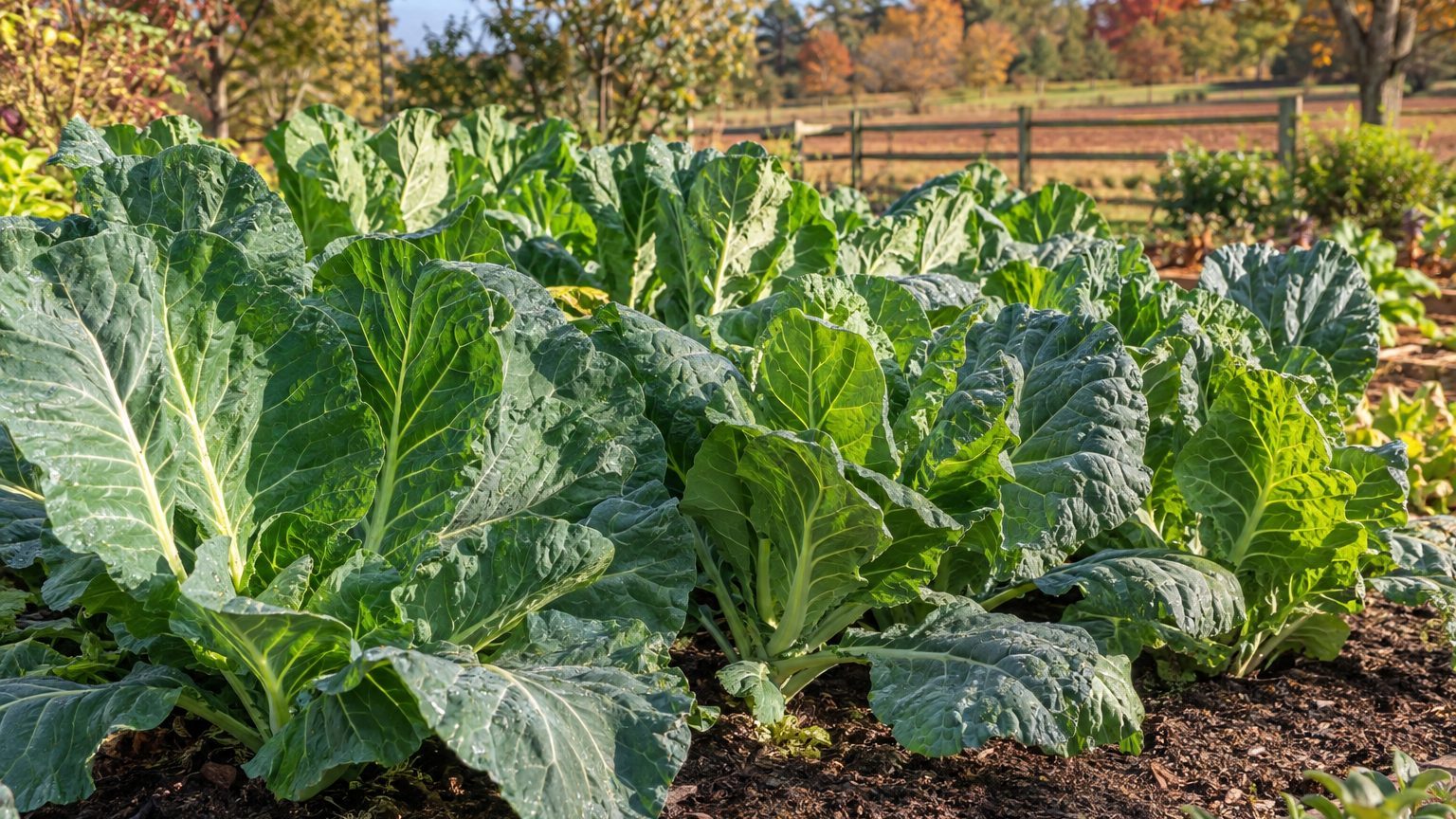

For New Hampshire, choose an early-maturing, cold-tolerant collard such as Vates or Champion, set it out as a transplant, and plan on a fall harvest that gets sweeter after frost. Slow, tall Southern types are a gamble in a season this short. Kale, mustard and other quick greens fill the gaps where collards run out of time. Where in the state the garden sits changes the details.
The short answer for New Hampshire
Start with the frost dates, because they set the clock. At the Manchester airport reference station, the last spring freeze (32°F) falls between April 16 and April 27. Those dates are a probability: they mark the stretch when the chance of another 32°F freeze still to come drops from 70 percent to 30 percent. The first fall freeze lands between October 13 and October 26, on the same 30 to 70 percent band. A garden outside the airport usually runs later in spring and earlier in fall, often by one to two weeks, and more at elevation.
Collards tolerate light frost, so the plants do not need to wait for the last freeze date to go out. A transplant hardened off and set in the ground a couple of weeks before the spring window closes will grow in cool weather, which suits the crop. What matters is how many weeks a plant gets before hard freezes arrive, and how big it must be by then. A variety that needs a long, warm run to fill out leaves little margin here.
Choosing by type
The decision comes down to speed and cold tolerance. This table sorts the main types by how they fit a New Hampshire season.
| Type | Examples | Fit for New Hampshire |
|---|---|---|
| Compact, early, cold-hardy open-pollinated | Vates, Champion | Best first choice, especially in the north and at elevation |
| Early hybrid | Flash | Reliable where the season is shortest, with uniform plants |
| Large, slow Southern standard | Georgia Southern | Workable only in the warmest, earliest southern gardens, started early |
| Cabbage-like heading types | Morris Heading | A novelty worth a few plants, not the main crop |
| Quick substitute greens | Kale, mustard, turnip greens | Dependable fillers that finish well before hard freezes |
Kale deserves special mention. It is a close relative of collards, handles New Hampshire cold even better, and grows well in the same bed on the same schedule. Many gardeners here treat collards as the Southern-style option and kale as the insurance policy. Plant both and you will always have a pot of greens.
What will not work here
Long-season plans fail first. A big, slow collard direct-seeded late in the season has to size up under shrinking days and then meet an October freeze with plants that are still adolescents. It will give you a few small leaves, not the dinner-plate foliage the seed packet photographs promise. Start seed indoors, move transplants out, and favor varieties bred to mature early.
Overwintering is the second thing to drop. The mean daily minimum of the coldest month at the reference station is 17.1°F, and that is an average of the nightly lows, not the extreme. Actual cold snaps run well below it, and the winter minimums are lower still in the northern hills. Collards that sail through winter in the Deep South usually do not make it through a New Hampshire January, even with a mulch, so do not count on a spring harvest from fall plants. Treat the crop as an annual that ends with the hard freezes, and consider a row cover or low tunnel if you want to stretch the harvest into November.
The third mistake is trusting the airport dates for your own yard. Those numbers describe a flat, open station in the southern part of the state. A valley bottom where cold air pools, a north-facing slope, or a lot at 1,500 feet can hold frost one to two weeks past the spring window and bring it back one to two weeks sooner in fall. Transplanting on April 20 because the table says so can mean setting out plants into a freeze, which cold-tolerant collards often survive but young, tender ones sometimes do not. Frost cloth is cheap insurance.
Finally, there is the old Southern habit of sowing for a summer crop and expecting heat to push growth. New Hampshire summers are milder, and that works in the collard’s favor for flavor, but it does not make up for a late start. Planting too late for a fall harvest leaves too little time before the first freeze window opens in mid-October. Brassica pests also love a crop that sits in the garden for months, so the gardener who gets plants in early, protects them with row cover, and harvests promptly is rewarded.
Dense spacing is a smaller but real problem. New Hampshire summers can be damp, and crowded collards stay wet longer, which invites disease and gives pests a hiding place. Give each plant room for air to move, even with a compact variety.
What changes across New Hampshire
The USDA Plant Hardiness Zone Map (2023 edition, based on 1991-2020 normals) places New Hampshire anywhere from zone 3b to zone 6a. That is a wide spread, and there is no single answer for the whole state. Zone ratings reflect only one variable, the average annual extreme minimum temperature, so they speak to winter survival, not to how many good growing weeks a collard gets. Still, the spread gives a sense of how differently a garden in the north country behaves from one near the coast.
In the north and in the mountains, the practical shift is toward the earliest, hardiest options. Choose Vates, Champion or an early hybrid, start seed indoors on a schedule that gets plants into the ground as soon as the soil can be worked, and expect the fall freeze to arrive on the early side of the airport range. Lean on kale for the bulk of the harvest and treat collards as a bonus crop. Use low tunnels or row cover on both ends of the season, and put the bed in the sunniest, best-drained spot you have.
In the southern tier and near the coast, the season stretches enough that a larger collard has a fair chance, particularly in a warm, sheltered garden with early planting. Even there, an early variety is the safer choice, and a second planting of faster greens in midsummer fills in for any slower plants. Altitude matters inside every zone, so a hilltop in the south may behave more like the lower north than like the town below it.
No one on this page can tell you which zone your garden sits in. The USDA map lets you search by ZIP code, and the result is a starting point, not a verdict. Pair it with your local frost observations, which are covered below.
Where to check this for your own county
The best next stop is University of New Hampshire Cooperative Extension. It is the state’s land-grant extension service, and its staff and Master Gardeners work with county-level conditions that no statewide summary can capture. Look there for two things in particular: a planting calendar that matches your area’s frost dates, and any variety trials or recommendations made for gardens in your county or a nearby one. If a collard has been trialed in conditions like yours, that result carries more weight than any general advice.
A county recommendation beats a state one, and what you are reading is the state one. It uses a single reference station and a hardiness range that covers everything from the coast to the northern hills. Extension offices know which towns sit in frost pockets, which soils warm early, and which pests show up in a particular valley. Ask them, too, about local sources for transplants, since a nursery that grows its own often selects for the region.
For deeper background on the crop itself, see Growing Collards in New Hampshire, which covers soil, feeding and harvest. For timing by date, When to Plant Collards in New Hampshire works through the sowing and transplant windows in more detail. Use both alongside whatever your county office recommends, and let the local advice settle any disagreement.
Checking this against your own garden
Your own observations outrank every date here. Three are worth tracking, and none needs equipment.
- Soil warmth by feel. Push your hand a few inches into the bed in spring. Soil that feels cold and clammy and clumps when squeezed is not ready, while soil that crumbles and feels neutral to the touch is. A bed that reaches that point earlier than a neighbor’s is a warm microclimate, which may let you plant a larger variety.
- The first true leaves. On seedlings, the first pair is the rounded seed leaves, and the true leaves come after. Seedlings that reach true leaves quickly under your lights or on your windowsill tell you your indoor setup is on schedule. Slow, leggy seedlings mean you should plan to start sooner or add light next year.
- Where frost shows up first. On the first cold mornings of fall and the last of spring, walk the yard at dawn. White on the grass in one corner and not another maps your frost pockets. Plant collards in the spot that stays clear longest and you gain days at both ends of the season.
Keep notes for a year or two. Over time, your own dates will be more accurate than any table, and they will tell you whether to trust the early end of the airport range or the late end.
Common questions
Can collards survive a New Hampshire winter?
Rarely. The coldest month averages a daily minimum of 17.1°F at the Manchester reference station, and real cold snaps go lower. Treat collards as a spring-to-fall crop. Row cover or a low tunnel can extend harvest into November, but not reliably through winter.
Should I sow collards directly or start them indoors?
Start them indoors and transplant. The season between the last spring freeze (April 16 to April 27 at the reference station) and the first fall freeze (October 13 to October 26) is too short for most collards sown directly, especially larger varieties. Transplants give the plants a head start.
Is kale a better choice than collards in New Hampshire?
Kale is more forgiving of short seasons and cold. Collards are worth growing for their sturdy leaves and mild flavor, but many gardeners here plant both and rely on kale as the safety net.
Do the frost dates apply to my garden?
They describe the Manchester airport reference station. Suburban and rural gardens often see the last spring frost one to two weeks later and the first fall frost one to two weeks earlier, and elevation adds more. Check with your county extension office and your own frost observations.