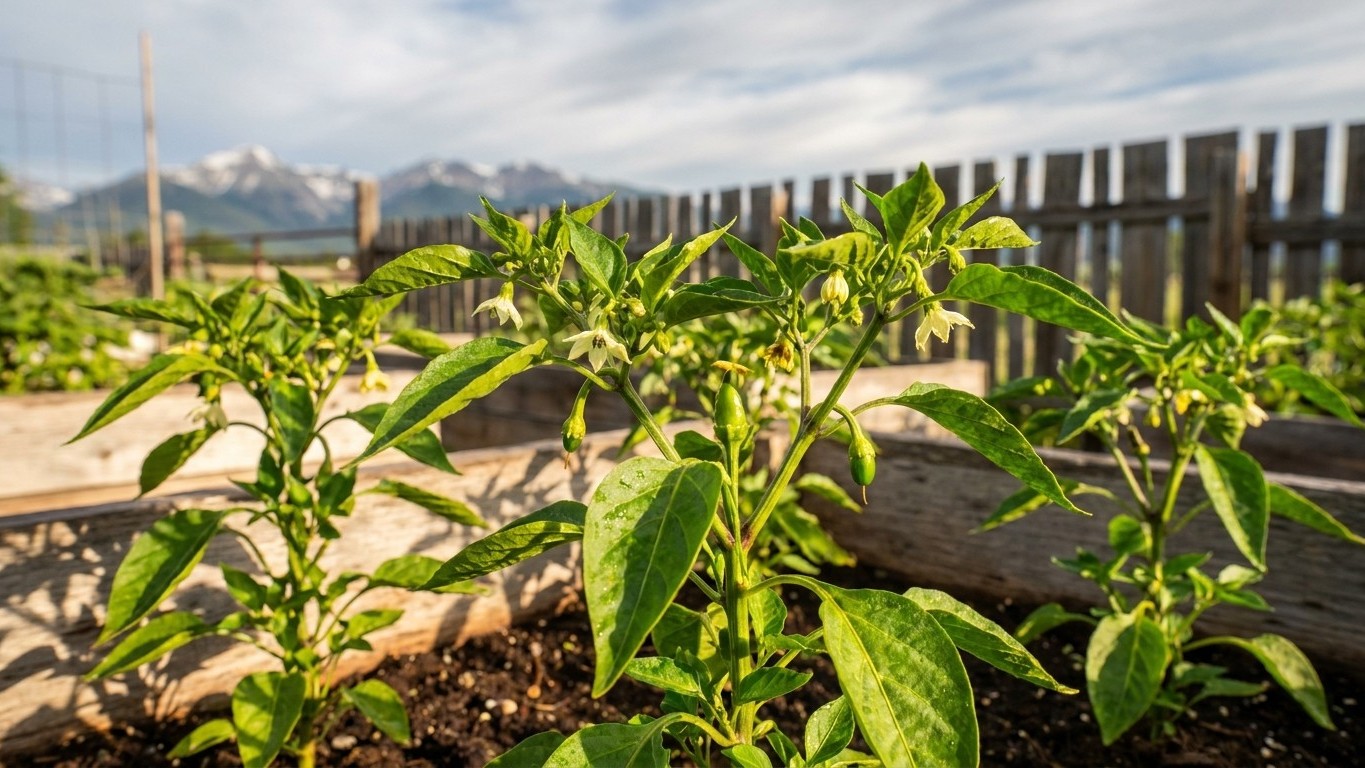

Pick peppers once they reach full size and feel firm, which comes about 70 to 85 days after transplanting, according to Clemson Cooperative Extension. Then keep them out of the refrigerator. Fridge air is colder than peppers tolerate, and below about 45°F the skins pit and go soft. A cool room in the 45 to 50°F range holds them far better, for two to three weeks at the very best.
Keeping them, and for how long
What temperature and humidity keep peppers the longest?
Clemson Cooperative Extension’s Home & Garden Information Center puts the target in one sentence: “The optimal conditions for storage are temperatures of 45 to 50 °F and 80- to 90-percent relative humidity for two to three weeks.” The number to write down is 45 to 50°F. The humidity half matters almost as much. Air drier than that range shrivels the skin, and air wetter than that leaves moisture sitting on the fruit, where mold starts.
Read “two to three weeks” as a ceiling. It describes sound fruit held in a spot that stays in range the whole time. A pepper with a crack, a bruise or a sunscald patch will go sooner, and so will any pepper stored where the temperature drifts. Treat the third week as a bonus and eat the blemished ones first.
Storage starts at the plant. Fruit picked at full size, firm and glossy, keeps better than fruit picked soft or wrinkled. Cut it with pruners and leave a short piece of stem attached. Pulling the pepper off by hand can snap a branch and tear the shoulder of the fruit, which gives rot an easy way in.
Why does the refrigerator ruin peppers?
The recommended range is warmer than a household refrigerator, and that gap is the mistake nearly everyone makes. Below about 45°F, peppers suffer chilling injury. The skin pits, the flesh softens, and the fruit loses the crunch you grew it for. Peppers are a warm-season crop. The same plant that stops setting fruit when nights fall under 55°F does not enjoy being chilled after harvest either.
Chilling injury is slow and easy to miss. The pits start as small sunken spots, and those dents often become entry points for decay. Because the damage can show up after the fruit warms back up, people blame the pepper’s age instead of the cold drawer.
If the refrigerator is your only option, keep the stay short and plan to use the peppers within a few days. Peppers you can’t use in time can be sliced and frozen, and that is a better outcome than weeks in the crisper drawer.
Where in the house that actually is
Which room comes closest to 45 to 50°F?
A heated living area is too warm. The kitchen counter sits well above the range, and peppers there soften and wrinkle in days instead of weeks. The garage fails in a different way. It is cool on a mild October afternoon, then swings with the weather, hot in a late-summer stretch and cold enough on a clear night to chill the fruit.
An unheated basement or cellar usually comes closest in Pennsylvania houses, since the ground keeps those rooms steadier than the rest of the house. A cool pantry, a mudroom, or a closet on a north wall can work too. In August the basement may still run warmer than 50°F. Storage gets easier as fall cools the house, so the late-season peppers are the ones most likely to hit the range.
Humidity tends to be the easier half in a basement and the harder half in a pantry. A damp cellar may land in the 80 to 90 percent band without help. A dry closet will pull moisture out of the fruit, so a loosely closed perforated bag or a lidded container with a few holes slows the drying without trapping water against the skin.
How do you check a spot before committing a harvest?
Guessing is how a basket of peppers goes soft. Leave a thermometer, ideally one that records highs and lows, in the spot for two days before you put the harvest there. Skipping that step risks the whole basket, because a corner that feels cool at noon may sit at 55°F by evening or fall under 45°F on a cold night. A small hygrometer, the kind sold for humidors and reptile tanks, covers the humidity side for a few dollars.
Once the peppers are in, spread them in a single layer or a shallow container and leave them unwashed. Water on the skin speeds mold. Check them every few days and pull out any with a soft spot, since one rotting pepper starts the next.
Common questions
How do I know a pepper is ready to pick?
Look for full size, firm walls and a glossy skin. Count from transplanting, not from sowing: Clemson puts first harvest at about 70 to 85 days after transplanting. A plant set out on May 15 would reach that window between July 24 and August 8. Green peppers can be cut as soon as they are full size. Leaving them on the plant to color takes longer, and the plant keeps carrying that fruit instead of making new flowers.
Will hot weather stop peppers from setting fruit?
It can. Fruit set fails at both ends, with nights below 55°F or days above 90°F, according to Utah State University Extension. The reference station in Philadelphia averages 24 days a year at 90°F or more, so a hot stretch is normal in the southeast corner of the state. The cool end is a separate matter. Summer night lows vary from one yard to the next, so watch your own nights with a thermometer. Our guide to why peppers fail to set fruit in Pennsylvania goes through the flower drop in detail.
When do transplants go out, and how does that set the picking date?
Utah State Extension says transplants need 8 to 10 weeks indoors and should go out when the soil reaches 60°F, after frost. NOAA’s climate normals put the last spring frost at Philadelphia between March 29 and April 6, and that is the mildest corner of the state. The northern tier and the Alleghenies run two to four weeks later. Soil warms more slowly than air, so the planting date follows the soil. Add 70 to 85 days to that date to find the first picking window. More on timing is in Growing Peppers in Pennsylvania.
Should I pick early to beat pests or frost?
When a frost is forecast, pick every pepper that has reached full size, because cold nights damage the fruit and the plant. Pests are a quieter reason to harvest on time, since fruit left hanging past ripeness gives insects more time to feed on it. The timing of the usual culprits is covered in What Eats Pepper in Pennsylvania, and When. A pepper that has already started to color will often finish coloring on a counter, while a fully green one mostly stays green. Keep any of them that finish indoors out of the fridge too.