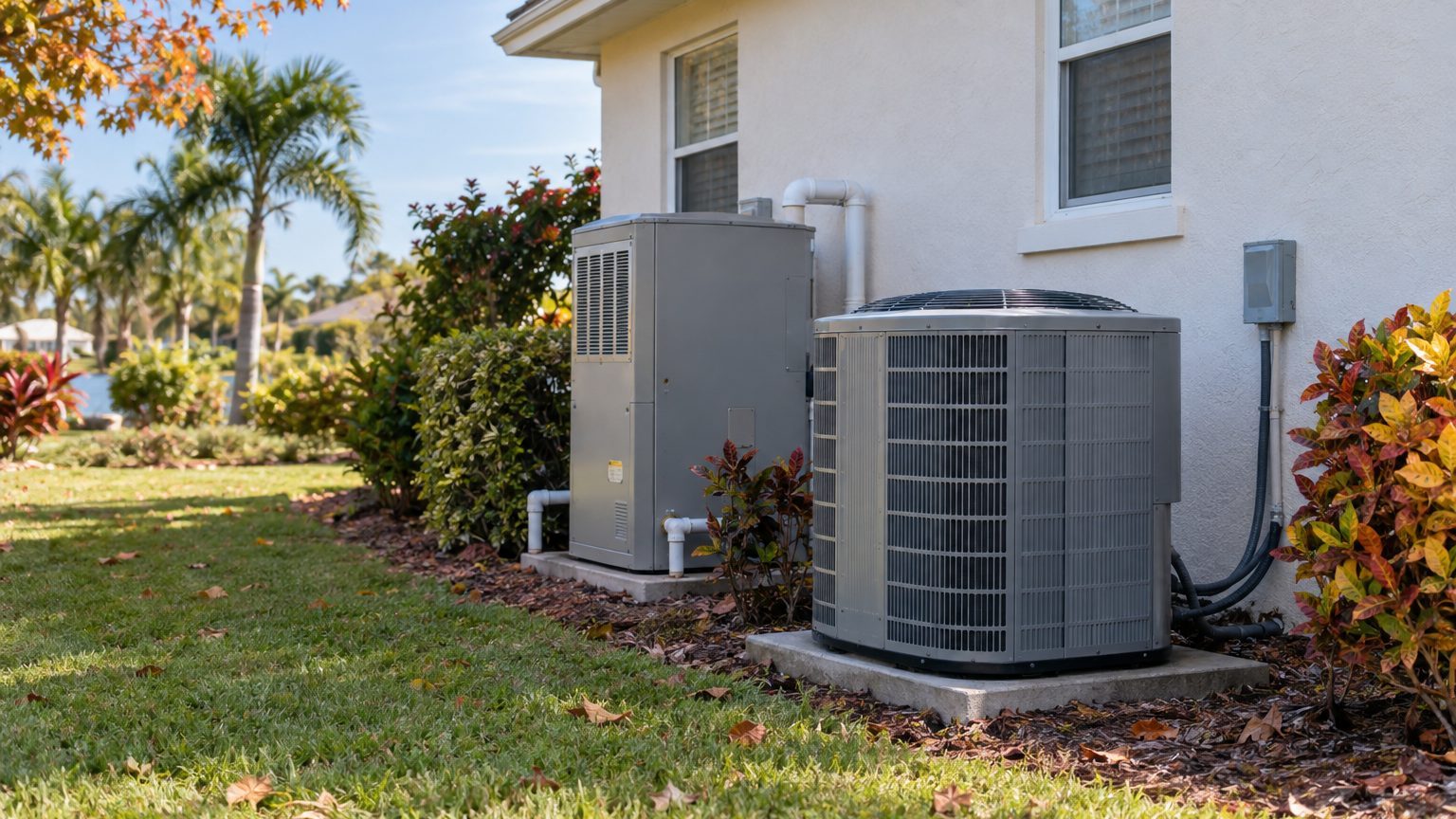

A natural gas furnace costs less to run in Pennsylvania. At average residential prices, a million Btu of heat costs $14.95 from a 97% AFUE gas furnace and $25.98 from a heat pump rated at 8.1 HSPF2. That gap is real, but it is a running-cost gap only. A missing gas line, a need for air conditioning, or an aging furnace can all change which system is the better buy.
The short answer for Pennsylvania
The cost of one million Btu of heat delivered to the house comes out as follows. Electric resistance (baseboard, 100% efficient) runs $61.66. A heat pump at 8.1 HSPF2, a seasonal COP of about 2.4, runs $25.98. A natural gas furnace at 97% AFUE runs $14.95. These numbers are computed from EIA residential prices for electricity and natural gas, ENERGY STAR efficiency levels, and EIA energy conversions. On that basis the gas furnace is $11.03 less per million Btu than the heat pump.
Read that as a comparison of fuels on the same unit of heat. It is not a yearly bill, because a bill depends on the size of the house, its insulation, the thermostat setting and the winter. It is also not the price of the equipment, which belongs in a separate calculation.
The heat pump figure uses the ENERGY STAR minimum for a ducted system, a seasonal average. A better-rated unit narrows the gap, though the furnace still starts well ahead on fuel cost. The heat pump’s real advantage over the furnace shows up elsewhere: it replaces electric baseboard at a fraction of the cost, and it cools in summer. With gas service at the street, the furnace is the cheaper system to run; without it, a heat pump beats baseboard by a wide margin.
What each option costs to run in Pennsylvania
| System | Efficiency used | Cost per million Btu delivered |
|---|---|---|
| Electric resistance (baseboard) | 100% | $61.66 |
| Heat pump | 8.1 HSPF2 (seasonal COP about 2.4) | $25.98 |
| Natural gas furnace | 97% AFUE | $14.95 |
Behind the table sits an average residential electricity price of 21.04 cents per kWh, year-to-date through July, from the U.S. Energy Information Administration’s Electric Power Monthly, Table 5.6.B. The gas side uses EIA’s average residential natural gas price for the state. EIA’s conversions turn both fuels into the same unit: 3,412 Btu per kWh of electricity and about 1,037 Btu per cubic foot of gas. These are statewide averages. Your utility and rate plan will differ, so check your own bill before you plan around them.
Why does efficiency matter as much as fuel price?
Electricity and gas are sold in different units, so comparing 21.04 cents per kWh with a gas price per cubic foot tells you little. What counts is how much heat reaches the rooms. Baseboard turns each kWh into 3,412 Btu and no more. A heat pump at a seasonal COP of about 2.4 moves more heat than the electricity it consumes, which is why it lands at $25.98 instead of $61.66. A 97% AFUE furnace turns nearly all of its gas into heat, and gas is the cheaper fuel per Btu in this state. Compare systems by cost per million Btu delivered, never by the price of a kWh against the price of a therm.
One more detail matters when you shop. ENERGY STAR asks for 8.5 HSPF2 from a non-ducted split system but only 8.1 from a ducted one. A ductless unit has no duct losses, so it must be better to earn the same label. What HSPF2 Measures, and Why Ductless Asks for More explains the difference. When you compare two units, check HSPF2 for heating. SEER2 measures cooling only.
How cold it gets, and what that does to a heat pump
At Philadelphia International Airport, the reference city for Pennsylvania figures, NOAA’s 1991-2020 normals count about 4,510 heating degree days a year (base 65°F). Heating degree days add up, across every day, how far the mean temperature sat below 65°F. Twice the degree days means roughly twice the fuel for the same house. A mountain county or a town in the northern tier can run far colder than this one station, so a house there needs more heat over a longer season.
The same normals put the mean daily minimum of the coldest month at 26.0°F. That is the average of the overnight lows in the coldest month, so many individual nights fall below it. Those nights are what a heating system is sized and judged on.
Does a heat pump keep up on the coldest nights?
It keeps up, but less efficiently. The $25.98 figure is a seasonal average. In deep cold a heat pump’s efficiency drops, and on the coldest nights a backup carries the load. That backup is usually electric resistance strips built into the air handler, or a furnace in a dual-fuel setup. Resistance strips cost $61.66 per million Btu to run, so the more hours they work, the more the heat pump’s savings shrink. How Cold Is Too Cold for a Heat Pump goes into how performance falls with the temperature.
Where winters are milder and shorter, the heat pump spends more of the season at its best. In the colder northern and mountain counties, price a heat pump with its backup heat included, not on the seasonal average alone.
What homes in Pennsylvania already heat with
EIA’s 2020 Residential Energy Consumption Survey shows how Pennsylvania homes heat. By equipment, 56% use a furnace, 19% a steam or hot-water boiler, and 7% a central heat pump. By fuel, natural gas leads at 52%, followed by electricity at 26%, fuel oil or kerosene at 13% and propane at 6%. These are statewide shares from a national survey, not a count for your county.
Those shares show what was installed, which tells you which fuel looked cheap when the houses were built. They are not a recommendation. A home on gas is comparing a $14.95 furnace with a $25.98 heat pump. A home heated with oil, propane or electricity faces a different comparison, and the delivered price of oil or propane comes from your supplier, not from a state average.
A boiler house is a different conversion again. Hot-water radiators have no ducts, so a ducted heat pump means building a duct system first. A ductless system avoids that, and Ductless or Central sorts out which suits which house. For the wider picture of fuels and equipment across the state, see Heating a Home in Pennsylvania. If there is no gas line at your street, compare the heat pump with the fuel you burn today, not with a gas furnace.
When the other choice wins
The furnace is cheaper to run, but several situations favor the heat pump anyway. The first is the simplest: no gas service. Then the real contest is the heat pump against baseboard at $61.66 or against delivered oil or propane, and the heat pump usually comes out ahead of electric resistance by a wide margin.
Do you need air conditioning too?
The Philadelphia station logs about 1,358 cooling degree days a year, so summers here do call for cooling. A heat pump heats and cools with one set of equipment. Ask what a furnace and a separate central air conditioner would cost together over their lives, not just what the furnace costs to run in January. If the air conditioner is near the end of its life, that timing can tip the choice. Check the SEER2 rating on the cooling side, with ENERGY STAR starting at 15.2.
Does a dual-fuel setup make sense?
It can. A heat pump handles the milder hours, and a gas furnace takes over when the cold deepens, so the furnace replaces resistance strips as the backup. That arrangement fits a house that already has gas and wants air conditioning at the same time. The cost is two systems to maintain.
The last case is a furnace with years of life left. Nothing about a lower fuel bill forces an early replacement, and a working furnace costs nothing to buy. Repairing a Furnace or Replacing It lays out how to weigh a repair against a new system. Keep a working furnace until repair costs or age push you toward replacement, and plan the heat pump for the day the air conditioner needs replacing too.
Common questions
Is a heat pump cheaper to run than a gas furnace in Pennsylvania?
No. At average residential prices, a gas furnace at 97% AFUE delivers a million Btu for $14.95, against $25.98 for a heat pump at 8.1 HSPF2. That compares fuel only, and equipment cost and your house’s heat load are separate.
Is a heat pump cheaper than electric baseboard?
Yes. Baseboard costs $61.66 per million Btu delivered, while the heat pump costs $25.98. If your home has no gas line and heats with electric resistance, the heat pump is the clear running-cost upgrade.
Will a heat pump need backup heat in Pennsylvania?
On the coldest nights, yes, often. The mean daily minimum of the coldest month is 26.0°F at the Philadelphia station, and colder places run lower. A heat pump’s efficiency drops in deep cold, and resistance strips or a furnace carry the load then. Ask an installer to size the backup for your house.
Does a ductless heat pump need a higher rating than a ducted one?
For the ENERGY STAR label, yes. A non-ducted split system needs 8.5 HSPF2, and a ducted one needs 8.1. Both need 15.2 SEER2. A ductless unit has no duct losses, so it must perform better to earn the same label.