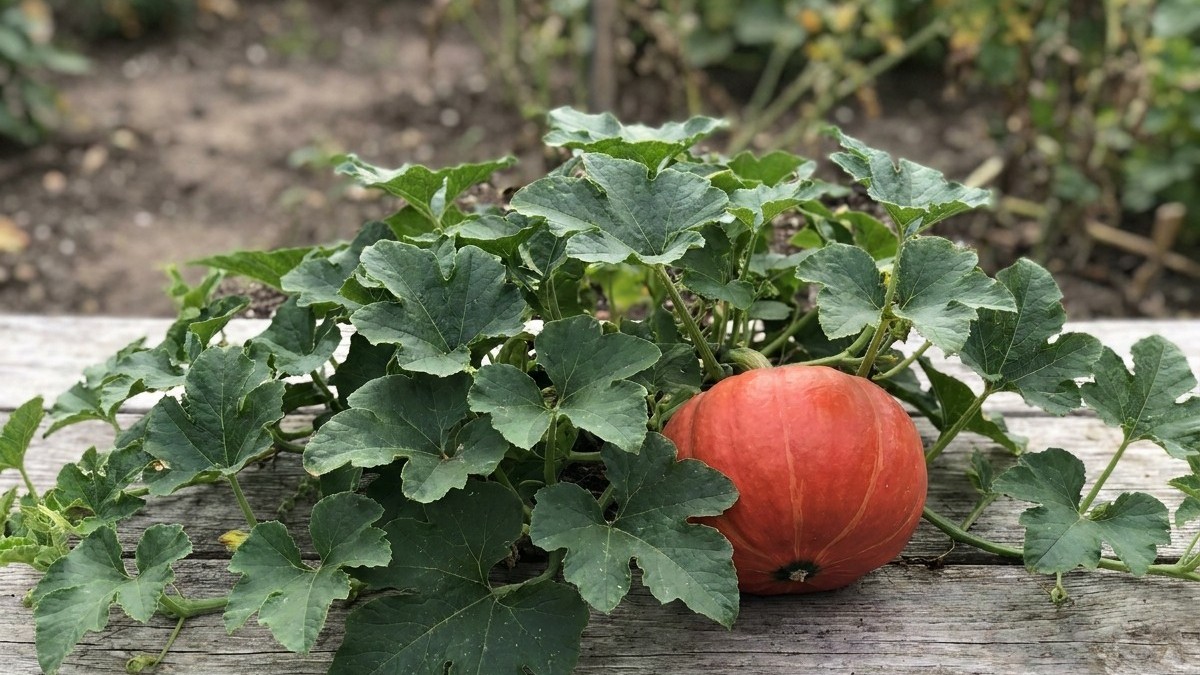

Cut a pumpkin when the rind is hard, the color is deep and even, and the stem has dried and turned woody. For Delaware gardens that usually means October, ahead of a first fall frost that the reference station puts between October 26 and November 7. Kept whole in a cool, dark spot at 45-50 F, a pumpkin can last three to six months. That is the best case, not a guarantee.
When pumpkins are ready in Delaware
A ripe pumpkin tells you before the calendar does. Press a thumbnail against the rind: if it resists, the fruit is mature. The color should be uniform, the stem should be dry and corky, and the vine usually looks tired, with leaves yellowing and browning back toward the center. Those signs travel from one garden to the next. A date on a calendar does not.
The clock behind those signs is simple. Utah State University Extension says pumpkins take 45 to 55 days after flowering to mature. That count starts when the female flower opens, not when the seed goes in the ground and not when the transplant is set out. Flowering comes well after sowing, so a packet that says “100 days” and a garden journal that says “flowers opened early August” are measuring different things.
Sowing has its own trigger. The same source says to sow when the soil reaches 65 F. That is not the last frost date. Soil lags the air by weeks, so a garden can be past its last frost and still have soil too cool for pumpkin seed. The reference station’s last spring frost falls between April 3 and April 14, and the soil usually reaches 65 F well after that.
Now cross the clock with the fall calendar. The reference station’s first fall frost falls between October 26 and November 7, which is the middle stretch of the odds for a 32 F freeze in NOAA NCEI’s most recent climate normals. Count back 45 to 55 days from those dates and the last flowers that can still ripen open somewhere between the start and the later part of September. A flower that opens after that tends to produce a fruit that is still green when frost arrives. Pumpkins already full-size and green at that point are a different problem, covered in Will Pumpkins Ripen Before Frost in Delaware?
One caution on those dates. They come from an airport weather station, and airports hold heat. Suburban and rural gardens usually get their first fall frost one to two weeks earlier, and more than that at higher elevations. Treat the frost range as a reference-city figure and ask your county extension office what is typical where you garden. If your yard sits in a low spot where cold air pools, plan for the early end.
When the signs line up, cut the fruit and leave the stem on, as Utah State recommends, and do it before frost. Use pruning shears or a sharp knife and carry the pumpkin by its body, never by the stem, which can snap off. A pumpkin without its stem is more likely to rot at the open scar. Vines that were chewed by squash bugs or cucumber beetles late in the season often produce fruit that is smaller or less mature. What Eats Pumpkin in Delaware, and When covers those insects, and Growing Pumpkins in Delaware covers planting and the season as a whole.
Keeping them, and for how long
University of Illinois Extension, in its guide Choosing a Pumpkin, says a whole pumpkin keeps for three to six months in a cool, dark location between 45-50 F. That is the longest it is likely to last when everything goes right. A pumpkin with a bruise, a missing stem or a soft spot will not reach the upper end, and a warm spot cuts the time further.
The same source adds a second instruction that most people never hear. Store pumpkins away from any ripening fruit or vegetables, and it names apples, potatoes and tomatoes. Ripening produce gives off a gas that ages the pumpkin faster. That makes the porch next to the apple crate one of the worst places to put a pumpkin, and the basement shelf beside a bin of potatoes is not much better.
What does the extension guidance say about freezing?
Utah State University Extension asks only that pumpkins be kept where they will not freeze. It does not give a storage temperature or a keeping time, so the 45-50 F range and the three-to-six-month limit come from Illinois, and freezing is the shared dividing line. A pumpkin that freezes will turn soft and watery once it thaws, even if the rind looks fine at first. Some fall nights in Delaware dip below freezing before the first fall frost arrives in the reference-station window, which is another reason not to leave fruit outdoors for the whole month.
Does a carved pumpkin follow the same rules?
No. The 45-50 F range is for a whole pumpkin with an intact rind. Once it is cut open, the flesh is exposed and the pumpkin starts breaking down. A carved jack-o’-lantern is a short-term decoration, and you will not get months out of it, whatever the temperature. If you want a pumpkin on the porch for a holiday, carve it close to the date and keep the uncarved ones in storage.
A few habits help a whole pumpkin reach the longer end of its range. Handle it gently so the rind does not bruise. Keep it dry and out of direct sun. Set it on a shelf or a piece of cardboard rather than directly on a damp floor. Check it every week or two and use any pumpkin that develops a soft spot first, since one bad fruit can spoil its neighbors.
Where in the house that actually is
The target of 45-50 F is cooler than most living space and warmer than most refrigerators. A refrigerator runs well below that range, and it is also too small for a whole pumpkin. A heated room runs too warm, which shortens storage. A garage swings with the weather, mild in October and below freezing on a cold night in winter, and freezing is exactly what has to be avoided.
For most Delaware homes, the closest match is an unheated interior space that stays cool without going cold. An unfinished basement corner away from the furnace and water heater is the usual candidate. A spare bedroom with the vent closed, a cool pantry, or an enclosed porch that stays above freezing can also work. Look for dark, dry, steady and cool, and keep the spot away from the fruit bowl, the potato bin and the tomatoes ripening on the counter.
Do not trust your hand to judge the temperature. Put a thermometer where the pumpkin will sit and read it for a few days before you move the fruit in, ideally a min/max model that records the daily low and high. A basement that feels cool at noon can sit at 60 F near the furnace duct, and a garage that reads 48 F on a mild afternoon can drop to freezing overnight. Skip the check and you may find out which it was only when the pumpkins go soft in January.
If the spot runs a few degrees warmer than 45-50 F, the pumpkins will still keep, only for less time. Plan to use them earlier, and check them more often. If it runs colder and approaches freezing, move them. A shelf off the floor helps, since concrete is often the coldest surface in the room.
Common questions
Can I cut a pumpkin before it turns fully orange?
You can, but color is only one of the signs. A pumpkin that is already coloring up and has a hard rind may finish on a shelf. One that is fully green with a rind you can dent easily is unlikely to improve. Check the rind and stem before you cut, and read Will Pumpkins Ripen Before Frost in Delaware? for what to do with late fruit.
What if frost is forecast and my pumpkins are not ready?
Cut the ones with hard rinds and stems attached before the frost arrives. Fruit that is still green and soft will not store well. Even so, bring in the best ones and use them first, since a cut pumpkin has a better chance indoors than one left out in a freeze.
How long will a pumpkin last on the porch?
Well short of the three-to-six-month maximum. That figure applies to a cool, dark place at 45-50 F, and a porch is bright and swings with the weather. A freeze will ruin a pumpkin, and an apple crate nearby will age it faster. Use the porch for display and move the fruit you want to keep indoors.
When should I sow pumpkins to hit the harvest window?
Sow when the soil reaches 65 F, not on the last frost date. The reference station’s last spring frost falls between April 3 and April 14, and the soil usually warms weeks after that. Then work backward: flowers need to open early enough that 45 to 55 days later still falls before your local first fall frost. Your county extension office can tell you the typical frost dates for your area.