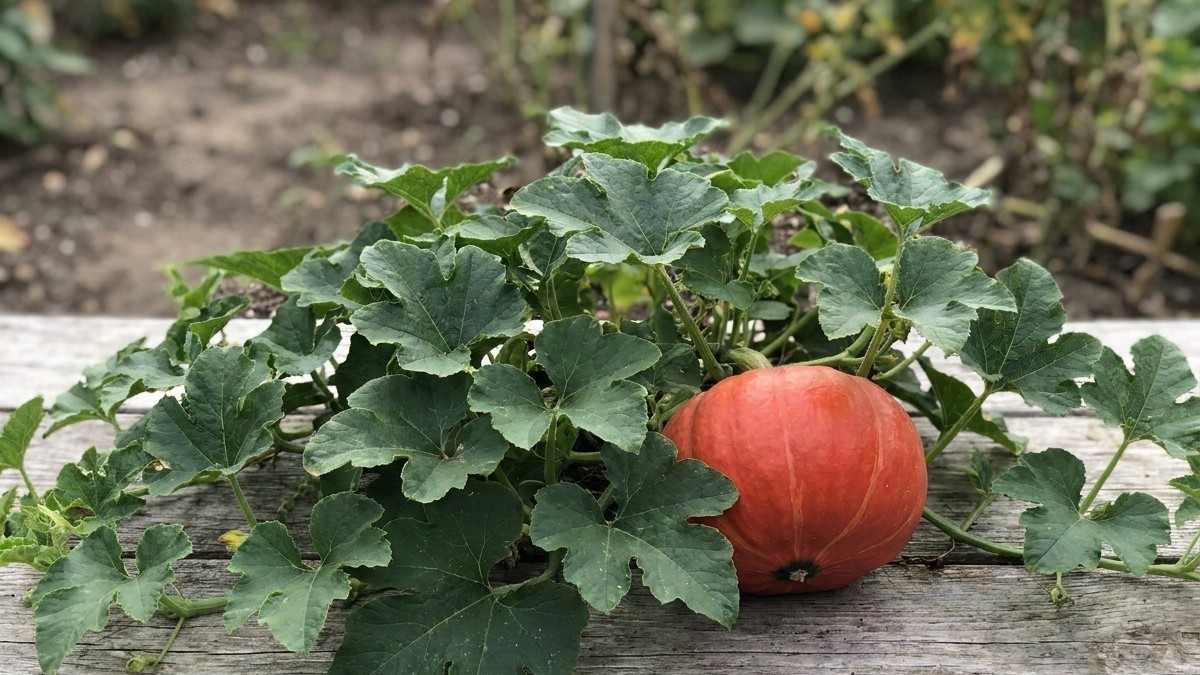

Cut a pumpkin when the rind has taken its full color and resists a fingernail, and always before the first freeze. A whole pumpkin then keeps for up to three to six months, if it sits somewhere cool, dark, and away from ripening fruit. A carved one is another story. Below are the count, the cold, and the right spot in your house.
When pumpkins are ready in New Jersey
A pumpkin is ready when the rind is fully colored, a fingernail can’t dent it, and the stem has turned dry and corky. In New Jersey that usually falls ahead of a first fall freeze that arrives in early to mid-November at the reference station.
How do you know a pumpkin is ripe?
Start with color. A pumpkin meant to be orange should be orange all over, including the underside where it touches the ground. Next, press a thumbnail into the rind. If it dents or punctures easily, the fruit needs more time. A hard shell means the pumpkin has finished growing, and it is the best test you can run in the field.
The stem and vine give the last clues. A green, soft stem means the pumpkin is still taking in sugars from the plant, while a dry, woody one signals it has finished. The vine often browns and dies back around the same time. Cut the fruit with the stem attached, as Utah State University Extension advises, and carry the pumpkin by its body. A broken stem leaves an open wound, and rot gets in there first.
Squash bugs and cucumber beetles can strip leaves late in the season and scar the fruit. If you see damage, What Eats Pumpkin in New Jersey, and When covers who is responsible and what they do.
How do you count back from the first freeze?
Utah State University Extension says pumpkins take 45-55 days after flowering to mature. The clock starts when the flower opens, not at seeding or transplanting. The same source says to sow once the soil reaches 65 F. That is a soil reading, and it is not the last frost date. Soil lags the air by weeks, so a garden can be past its last frost and still have ground too cold for seed.
For the frost side, NOAA’s NCEI U.S. Climate Normals (station data here) put the first fall 32 F freeze between November 4 and November 16, in the 30-70% probability band. The last spring freeze falls between March 29 and April 6. Those numbers come from an airport weather station. Suburban and rural gardens usually freeze later in spring and earlier in fall, often by one to two weeks, and more at elevation. Check your own county before you trust them.
Count back 45 to 55 days from that November window and you land between about September 10 and early October at the station. Take off the extra week or two for a cooler garden, and a flower that opens much past mid-September is a gamble. A fruit set that late stays green. If you have green pumpkins and a cold forecast, Will Pumpkins Ripen Before Frost in New Jersey? explains what to expect. The full calendar from seed to harvest is in Growing Pumpkins in New Jersey.
Keeping them, and for how long
University of Illinois Extension says a whole pumpkin keeps for three to six months in a cool, dark location between 45-50 F. Treat that as the ceiling, reached only when everything goes right. A pumpkin that was bruised, cut, nipped by frost, or picked without its stem will fall short of it, sometimes by a lot.
How long does a whole pumpkin last?
Three months is a reasonable goal for a sound pumpkin in a good spot. Six months is the far end of the range, and most households won’t see it. The range matters mostly for planning. A whole pumpkin cut in early October for decoration will still look right through Thanksgiving in a cool spot, and may still be usable for cooking into winter. Check it every week or two and pull any pumpkin that develops a soft patch before it affects its neighbors.
Utah State University Extension is less specific. It says only to store pumpkins where they will not freeze. That is the floor under everything else. A frozen pumpkin turns to mush once it thaws, no matter how good the rind looked going in.
What should you keep a pumpkin away from?
The Illinois guidance includes a second rule that few people know. Store pumpkins away from any ripening fruit or vegetables, and it names apples, potatoes, and tomatoes. Ripening produce gives off a gas that ages the pumpkin faster. This is why a porch that sits beside the apple crate is a poor place for it, even on a chilly day. Give the pumpkins their own shelf, or their own corner of the cellar.
Those numbers belong to a whole pumpkin. They don’t apply to one that has been carved. Once the flesh is open to the air, it begins to dry, mold, and slump. A carved pumpkin lasts a small fraction of the whole fruit’s time, and warm weather cuts it shorter still. Carve close to the day you plan to display it, and toss it when it softens.
Where in the house that actually is
The target is 45-50 F, dark, and above freezing. Most rooms in a house miss that target in one direction or the other, so it helps to match each space to what it does.
Which room in a New Jersey house comes closest?
A kitchen refrigerator runs well below that range, and cold like that can damage a pumpkin’s flesh over time. Besides, a whole pumpkin rarely fits. Any heated living space is too warm, and a pumpkin there will shrivel and soften well ahead of schedule. A garage tracks the weather. It may suit October, then drop below freezing in January, which is exactly what the Utah State advice warns against.
The best candidate is usually an unheated but sheltered space. That might be a basement room away from the furnace, a cool closet against an inside wall, or a root cellar if you have one. A basement corner often comes closest, since the ground keeps it from swinging as much as a garage does. It also tends to be dark. Keep the pumpkins on a shelf or a plank, and don’t stack them directly on bare concrete.
How do you check a spot with a thermometer?
Rooms vary more than people expect, even from one end of a basement to the other. Put a thermometer on the shelf where the pumpkins will sit and read it for several days before moving them in. A min-max model is better, because it records the overnight low and the afternoon high. Skipping this step is how a spot that felt cool ends up running warmer, and the pumpkins pay for it in weeks.
Read it again once the furnace starts cycling and again after the first cold snap. If the spot reads in the 45-50 F range, and never drops to 32 F, it works. If it creeps above that range, move the pumpkins to a cooler corner or plan to use them sooner. Also check the shelf for neighbors. If a bin of apples, potatoes, or tomatoes is nearby, move one or the other.
Common questions
Can I cut pumpkins before they turn fully orange?
You can, but a pumpkin cut well short of full color won’t keep as long as one that finished on the vine. If a freeze is coming and the fruit is only partly colored, cut it with the stem on and look at the ripening guide linked above. A rind that still dents easily is a sign the fruit isn’t ready.
Should I leave the stem on?
Yes. Utah State University Extension says to harvest with the stem attached. The stem seals the fruit, and a pumpkin without one tends to rot from the top. Don’t use the stem as a handle, since it can snap off.
Is a covered porch good enough for storage?
It works for a few weeks of display in October, as long as nights stay above freezing. For storage over months, it is too variable, and it fails the moment the temperature drops to 32 F. It is also a poor choice if apples or other ripening produce sit nearby.
How long will a carved pumpkin last?
A carved pumpkin lasts only a small portion of the time a whole one does, and the 45-50 F storage range doesn’t apply to it. Warm days speed up the decay, so keep it out of direct sun. Carve it shortly before you want to display it, and discard it as soon as it turns soft or moldy.