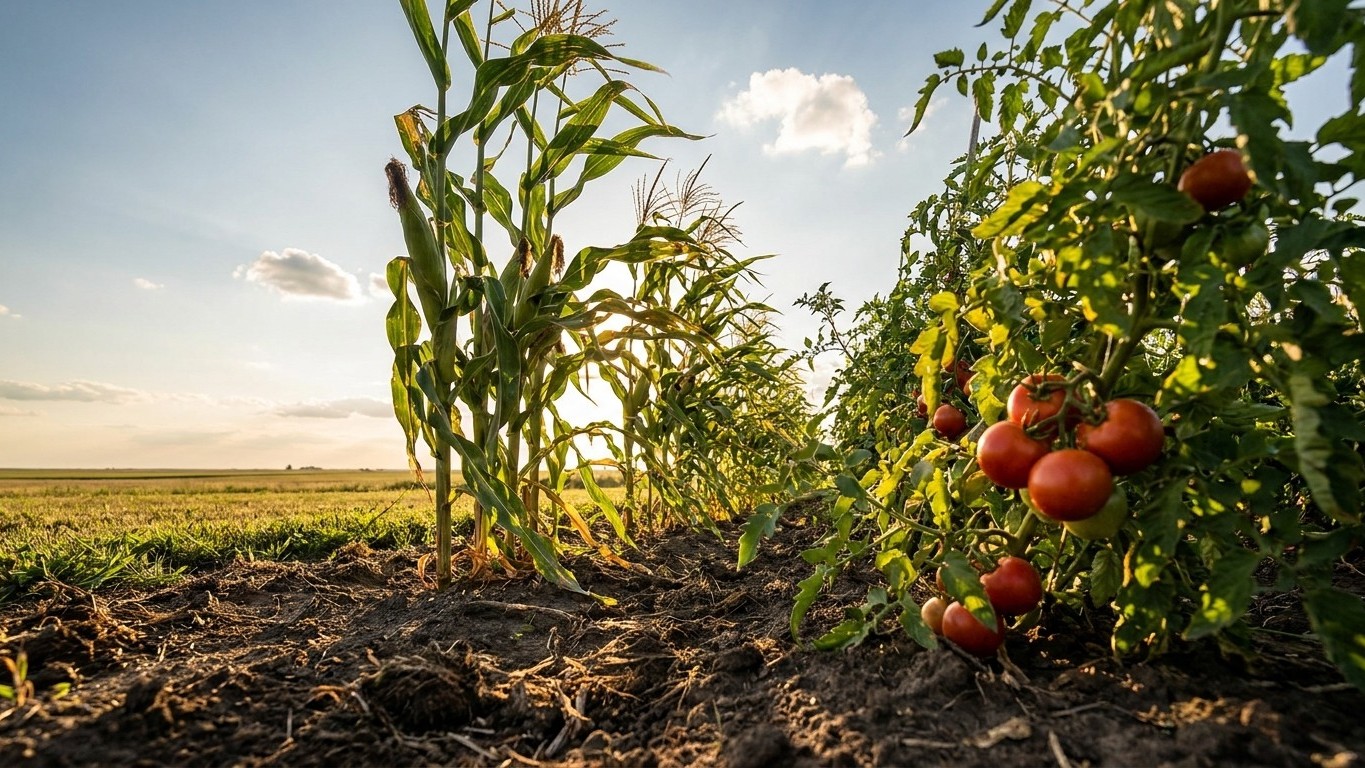

What eats sweet corn in Wyoming depends on the growth stage. Seed and seedlings come first, then leaves and silks in midsummer, and finally the ripe ears. Cool soil and a short season shape all of it. Because a crop planted late has to finish before fall frost, the timing of planting, pollination and picking does more than any spray. Naming the culprit matters less than noticing which plant part is hurt and when.
Which pests attack corn in Wyoming
University of Wyoming Extension is the service that documents which insects and animals feed on crops in the state, and its county offices are where a name gets attached to a symptom. Its guidance, not a general national list, should decide what a gardener calls a pest here. The groups below are sorted by what they do to the plant, which is how you will meet them in the row.
- Seed and seedling feeders: things that dig up sown kernels or cut young shoots at the soil line.
- Leaf chewers: insects that eat ragged holes in the leaves or work down into the whorl, the tight cone of new leaves at the top.
- Silk and ear feeders: insects that clip silks or tunnel into the ear tip.
- Ear thieves: birds and mammals that strip or knock down ears as the kernels fill.
When each one shows up, and what it does first
The calendar starts with the frost-free window, not with a month. The NOAA NCEI Climate Normals for the Cheyenne reference station put the mean last spring frost between May 7 and May 18, and the mean first fall frost between September 24 and October 5. That works out to roughly 130 frost-free days at 6,000 feet, and frost is possible in any month at higher elevations.
Soil warmth sets the first pest window. Clemson Cooperative Extension says not to plant before the soil temperature at the 4-inch depth is at least 50 ºF, and to wait until soil reaches 65 °F for extra-sweet varieties. Soil reaches those readings well after the last frost, not on the same day. Seed sitting in cold ground takes longer to sprout, which gives anything that digs more time to find it. The first sign is gaps in the row: a stand that comes up patchy, with a few kernels dug out of their holes.
In the first weeks after seedlings emerge, the sign is a young plant lying on the soil, cut cleanly near the base, or a seedling wilting with no visible reason. Next comes the leaf stage, in the weeks before tassels form. The first sign is a row of small holes across unrolled leaves, or ragged edges and sawdust-like droppings in the whorl.
At silking, watch the silks themselves. Clipped, shortened or tangled silks mean something is feeding there, and kernels that never fill often follow. Later, the ear tip is where damage shows first: a tunnel, a brown cluster of droppings, or a few missing kernels under the husk.
The last window is ripening. Sweet corn needs 60 to 90 days from planting to reach harvest, so a late variety planted after the soil warms may only just beat the first fall frost. If you are weighing that choice, Will Sweet Corn Ripen in Wyoming? works through the fit, and When to Sow Sweet Corn in Wyoming covers the sowing window. Birds and mammals tend to show up when the ears fill, so torn husks and flattened stalks at that stage point to the larger visitors.
Telling the damage apart from everything else
Many corn problems look like insect damage and are not. Getting the diagnosis wrong costs a season of spraying the wrong thing. The table gives the sign that separates each look-alike, and the county office can confirm it from a photo.
| What you see | Other likely causes | What settles it |
|---|---|---|
| Ears with scattered missing kernels, no tunnel or droppings | Poor pollination | Each gap is a smooth, empty spot with no chewing. The planting was a single row, or types tasseled at different times. |
| Leaves rolled and gray in the afternoon | Water stress and heat | The leaves flatten again by morning. Cheyenne averages 10.4 days a year at 90 F or more, and corn in dry, windy ground shows stress on those days. |
| Yellowing from the leaf tip down the center rib | Nutrient shortage | The yellowing is uniform across plants, with no holes and no insects, and the lowest leaves go first. |
| Leaves torn in parallel strips across the whole patch | Hail or wind | The tearing follows the leaf veins and affects every plant on the same side, with no droppings or bite marks. |
| Purplish seedlings that stall | Cold soil | The plants are healthy underneath and recover as the soil warms. The cause is in the ground, not on the leaf. |
| Spots with defined edges, spreading on the leaf | Disease | Lesions have a pattern and no chewing. The county office can match them against known leaf diseases. |
Poor pollination deserves special mention because it is the most common false alarm. Utah State University Extension says sweet corn should be planted in blocks of three or more rows, since the pollen falls from tassels onto silks nearby. A single long row leaves many silks unfertilized, and the ear fills in patches.
The same source warns that sweetness is lost if su, se and sh2 types tassel at the same time. That is a flavor problem, not an insect one, but it also shows up at harvest as odd-tasting kernels. Keep the types from tasseling together by staggering plantings or separating them.
When none of these fits, take a photo and a sample of the damage to the county extension office and let the agent decide.
What actually works here, and what is a waste of time
On a short season, a physical barrier placed at the right moment beats any treatment applied after the damage appears. Lightweight row cover over seedlings keeps out many early feeders, but it has to come off before tassels and silks need pollinators and wind. Fencing or netting around the patch is the only reliable answer to larger animals, and it needs to be up before the ears fill, not after the first one is gone.
Calendar choices come next. Sowing only once soil at the 4-inch depth reaches the right reading gets seedlings up fast and past the vulnerable stage sooner. Planting in a block of three or more rows improves fill and removes one false diagnosis. And picking on time matters: ripe corn left on the stalk is what draws animals to it. Use three signs together, never one alone: silks dry and brown, husks still moist and green, and milky juice when you puncture a kernel.
Speed after picking also protects the crop. Clemson Cooperative Extension states: “Sweet corn loses sugar from the kernel rapidly at high temperatures… Sweet corn can be stored under optimal conditions for about five days, but will lose sweetness with each day of storage.” Types differ here, since su loses sugar fastest, se holds it longer, and sh2 longest. Choose by how soon you can get ears from the stalk to the kitchen.
What does not work is just as clear. Spraying after the damage is already inside the husk reaches nothing, because the feeder is protected. Spraying on a schedule with no diagnosis treats the wrong thing half the time. Planting early in cold soil gives seed-eaters a longer head start. Scare devices that never move lose their effect quickly. And which products are legal to use on sweet corn changes by state and by crop, so University of Wyoming Extension is the only place to ask what is currently approved, and for what.
Where to check this for your own county
University of Wyoming Extension runs county offices across the state, and the one nearest you can match a photo or a sample to a local pest, a look-alike problem or a weather effect. Contact it before treating anything.
Pest presence varies inside the state, not just from year to year. Elevation changes the frost-free window, since frost is possible in any month at higher elevations. Irrigated ground, windbreaks, nearby fields and open range all change what visits a garden. What is documented for the state tells you what can occur, not what is in your rows, so local confirmation matters.
For the season side of the question, Growing Sweet Corn in Wyoming covers the full growing picture, and the county office can say how the dates above shift for your elevation.
Common questions
What eats sweet corn seedlings in Wyoming?
Seedlings are hit by feeders that cut stems at the soil line and by seed-diggers that pull up sown kernels. Cold soil makes this worse because seed and seedlings stay vulnerable longer. Check the base of the stem and ask University of Wyoming Extension to identify what you find.
Is a half-filled ear always an insect problem?
No. Poor pollination is a common cause, especially from single rows. Utah State University Extension recommends blocks of three or more rows. Insect damage leaves tunnels, droppings or chewed kernels, while pollination gaps are smooth and empty.
Can heat damage look like pest damage?
Yes. The Cheyenne reference station averages 10.4 days a year at 90 F or more, and dry heat can curl and gray the leaves. If the leaves flatten again by morning and show no holes, water stress is more likely than feeding.
Which spray should I use for corn pests?
That decision belongs to University of Wyoming Extension, since only it knows what is currently approved in the state. Get a diagnosis first, because spraying the wrong cause wastes the season.