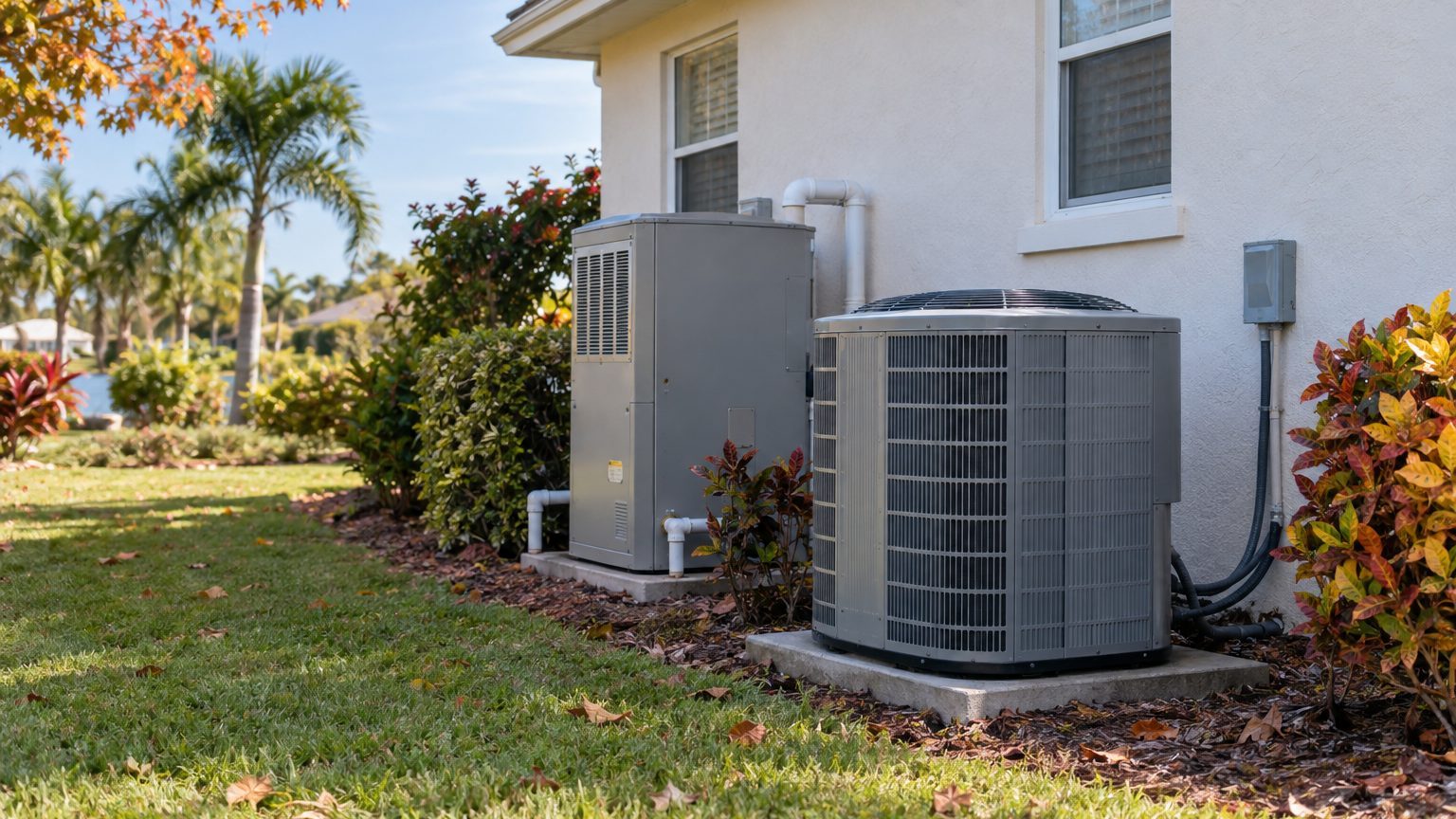

Natural gas is the cheaper fuel to run in Mississippi, but only by a small margin. A 95% AFUE gas furnace delivers a million Btu of heat for $16.89, and a heat pump at 8.1 HSPF2 delivers it for $18.75. Electric baseboard costs $44.52. The gap between gas and heat pump is small enough that gas access, cooling needs and the age of your current system can change the decision.
The short answer for Mississippi
On running cost alone, the gas furnace wins. Using average residential prices from the U.S. Energy Information Administration and ENERGY STAR efficiency levels, the gas furnace comes out $1.86 less per million Btu than the heat pump. A heat pump that beats the ENERGY STAR minimum would shrink that lead further.
These numbers compare the same unit of heat delivered to the house. They are not a yearly bill, which depends on house size, insulation and thermostat settings, and they leave out equipment and installation costs. Gas rates vary by utility, so ask your gas company for its current residential rate.
Two things tilt the call. The first is whether a gas line already runs to the house, since adding one is a separate project. The second is whether you need a new air conditioner anyway, because a heat pump heats and cools with one machine. If gas is already piped to your house and your cooling is in good shape, the furnace is the cheaper system to run; if there is no gas line, choose the heat pump. The broader picture for the state is in Heating a Home in Mississippi.
What each option costs to run in Mississippi
Here is the cost of one million Btu of heat delivered to the house, at average residential prices for the state.
| System | Efficiency used | Cost per million Btu delivered |
|---|---|---|
| Natural gas furnace | 95% AFUE | $16.89 |
| Heat pump | 8.1 HSPF2 (seasonal COP about 2.4) | $18.75 |
| Electric resistance (baseboard) | 100% efficient | $44.52 |
Electricity averages 15.19 cents per kWh for residential customers in the state, a year-to-date figure through July from the EIA’s Electric Power Monthly, Table 5.6.B. The gas figure comes from the EIA’s average residential natural gas price, converted at about 1,037 Btu per cubic foot, with electricity converted at 3,412 Btu per kWh. Both are statewide averages. Your utility and rate plan can land above or below them.
Why does efficiency matter as much as fuel price?
Electricity costs more per Btu than gas at the meter, so a system that simply turns it into heat loses badly. Baseboard converts every kWh into one kWh of heat. A heat pump moves heat from outdoor air into the house, and at a seasonal COP of about 2.4 it delivers roughly 2.4 units of heat for each unit of electricity it uses. That multiplier is what cuts the baseboard cost to $18.75.
The 8.1 HSPF2 used here is the ENERGY STAR minimum for ducted and single-package systems. ENERGY STAR asks 8.5 HSPF2 of a non-ducted (ductless) system, because it loses no heat in ductwork and has to prove more to earn the badge. If you compare two units, compare the same letters: HSPF2 rates heating and SEER2 rates cooling. The reasoning behind the rating is laid out in What HSPF2 Measures, and Why Ductless Asks for More. A heat pump at the ENERGY STAR minimum lands within $1.86 per million Btu of gas, while baseboard at $44.52 is far behind both.
How cold it gets, and what that does to a heat pump
Winter here is short and mild. Jackson, the reference city, averages about 2,222 heating degree days a year (base 65°F), a measure that adds up how far each day’s mean temperature sat below 65°F. The mean daily minimum of the coldest month is 36.6°F, above freezing.
Does a heat pump handle a Mississippi winter?
For most of the heating season, yes. The 2.4 seasonal COP in the cost table is an average over the whole winter, and in a climate where the typical cold-month night stays above freezing, the unit spends most of its hours in the range where it works efficiently.
Cold snaps still happen, though. A monthly average minimum hides the individual nights that fall well below it. On those nights a heat pump’s efficiency drops, and a backup carries the load: resistance strips built into the air handler, or a furnace in a dual-fuel setup. The strips use electricity at 100% efficiency, which is the $44.52 line in the table, so a handful of nights costs little but a system that leans on them all winter does not. The limits of air-source units in the cold are covered in How Cold Is Too Cold for a Heat Pump.
The other half of the climate matters as much. Jackson has about 2,402 cooling degree days a year, more than its heating degree days. In this state, air conditioning is the bigger seasonal job, which shapes the choice more than the heating bill does. Sealing air leaks and adding attic insulation lowers the load on either system; the state’s heating season in Mississippi is short enough that the envelope often pays back faster than a fuel switch. Because winter is brief and mild, a heat pump sized for cooling will usually carry the heating too, with strips or a furnace covering only the coldest nights.
What homes in Mississippi already heat with
The U.S. Energy Information Administration’s 2020 Residential Energy Consumption Survey gives the state’s mix. By fuel, electricity heats 56% of homes, natural gas 32% and propane 10%. By equipment, furnaces serve 54% and central heat pumps 28%. These are state shares from a national survey, not a count for your county, and they show what was installed, which reflects what fuel was cheap or available when homes were built.
Boilers and fuel oil appear in the survey without a usable estimate, because the figures were suppressed as unreliable. Some homes surely use them, but too few to measure well. A boiler home has no ducts, so a heat pump would need new ductwork or ductless heads in each room.
With gas in under a third of homes and electricity in more than half, a lot of Mississippi houses have no gas line and are not choosing between the two systems at all. Their real comparison is heat pump versus baseboard or an electric furnace, where the heat pump’s lead is large. A propane household is a third case: propane is delivered and priced differently from piped gas, so the table’s gas figure does not describe it. If you have no piped gas, compare a heat pump against your current electric heat.
When the other choice wins
Gas runs cheaper here, yet there are plenty of houses where the heat pump is the better call. The first is any home without gas service. Running a new line or installing a propane tank adds a cost and a delivery arrangement, and the heat pump beats resistance heat by a wide margin without either.
When does a heat pump beat a cheaper-to-run furnace?
Cooling is the strongest reason. With about 2,402 cooling degree days a year at Jackson, most households run air conditioning for longer than they run heat. If the air conditioner is near the end of its life, one heat pump replaces both the air conditioner and the furnace, and the $1.86 per million Btu gap to gas is small next to buying two systems. A ductless unit can also serve a house with no ducts or one room that never keeps up. Ductless or Central walks through that choice.
A dual-fuel setup is the middle road: a heat pump handles most of the season and a gas furnace takes over on the coldest nights. It only makes sense where gas service already exists.
When does keeping the furnace win?
An older furnace with years of service left usually should stay. A system that still heats evenly and passes inspection costs nothing to buy, and the running-cost gap alone will not repay a replacement. When a repair quote arrives, Repairing a Furnace or Replacing It covers how to weigh it. Before any swap, check the envelope: a house with leaky ducts and thin attic insulation wastes heat under either system, and a gas furnace paired with sound insulation is cheaper to run than either choice in a drafty house. Replace a working furnace with a heat pump when the air conditioner also needs replacing, and keep the furnace when it still runs well and gas is piped in.
Common questions
Is a heat pump cheaper than a gas furnace in Mississippi?
Not on running cost. At average residential prices a gas furnace at 95% AFUE costs $16.89 per million Btu delivered and a heat pump at 8.1 HSPF2 costs $18.75, a difference of $1.86. A more efficient heat pump or a lower electric rate narrows it further.
Is a heat pump cheaper than electric baseboard?
Yes, by a wide margin. Electric resistance heat costs $44.52 per million Btu delivered, against $18.75 for the heat pump, because the heat pump moves heat instead of making it from electricity alone.
Will a heat pump keep my house warm on the coldest nights?
With backup, yes. Jackson’s coldest month averages a nightly low of 36.6°F, but individual nights run colder. Resistance strips or a furnace in a dual-fuel setup carry those nights, so ask the installer how the backup is wired and sized.
Does the cost table tell me my yearly heating bill?
No. It compares fuels per million Btu of delivered heat. Use the table to rank the options and your utility’s rate schedule to estimate a bill.