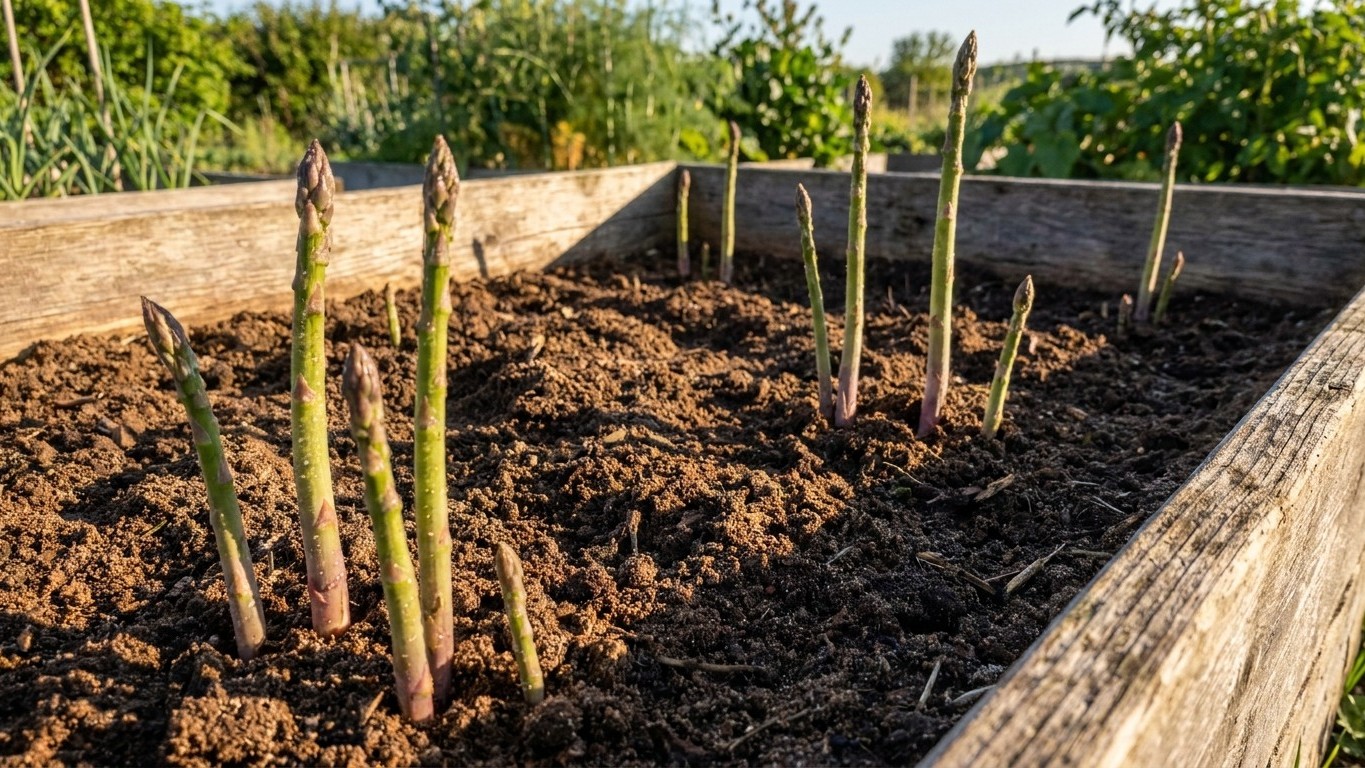

Asparagus gets eaten in two waves. Spears take the first hit in spring, as soon as they push through the soil, and the ferns take the second through summer. Deer and rabbits join in at both stages. Most South Dakota gardeners see the damage long before they see the culprit, so the useful skill is reading the damage and knowing who names the insect. South Dakota State University Extension is that service, and its county staff know what is active near you.
Which pests attack asparagus in South Dakota
Asparagus feeders fall into three groups: insects that chew the spears, insects that chew the ferns, and insects that suck sap from the ferns. South Dakota State University Extension is the service to ask for the species names in your county. A fourth group has four legs, mostly deer and rabbits. Each group leaves a different mark, and the mark is what you will actually see in the bed.
The spear chewers work early and hit the part you want to eat. The fern chewers work later and hit the part the crown depends on, because the ferns are what feed the roots for next spring. Sap feeders are the quietest of the three. They rarely take a bite you can see, but the foliage goes pale and speckled.
Asparagus is planted as crowns in 8-inch furrows in early spring and is not harvested until year 3. Nothing comes off the bed for the first two seasons, so in those years every bit of fern an insect eats is energy the crown never stores. A nibbled spear in a first-year bed is a bigger loss than the same spear in a mature one.
Which insects on a state pest list can you ignore?
Extension pest lists cover the whole state, and most of what they describe has nothing to do with asparagus. Tree borers live in wood, and asparagus has none. Insects of small-grain fields feed on wheat and oats, and lawn grubs eat turf roots. A gardener who spots one of those names and starts hunting for it in the bed wastes a weekend.
The same goes for insects that belong to other vegetables. A caterpillar that eats cabbage and happens to be sitting on a fern is a visitor, not a resident. If it is on the plant but the plant shows no bite marks, leave it alone. Pesticide choices belong with extension, which knows what is registered in the state.
When each one shows up, and what it does first
Crowns go in during early spring, and at the reference station the last spring frost falls between April 29 and May 9. Suburban and rural gardens typically see it one to two weeks later, and more at elevation. Spear season starts after the soil warms and runs until the ferns open. Fern season follows and lasts until the first fall frost browns the foliage.
What do you see first on spears, then on ferns?
On spears, the first sign is cosmetic. Tips look scraped, scarred or chewed, and some spears bend or grow crooked after a bite near the base. It shows up within days of the spears emerging, because that is when the feeders find them. In a harvest year, a spear can go from fine to scarred between two cuttings, which is why a bed needs a look every few days while spears are up.
Fern chewers appear after the ferns open out. The first sign is ragged edges or a thinned patch on one branch, often on only a few plants in the row. Those patches spread slowly through summer, so a bed that looked fine in early summer can look stripped by late summer. Sap feeders show a different first sign: foliage turns pale or speckled, sometimes with a sticky film on the ferns or on leaves below.
Deer and rabbits follow the spears. The first sign is a missing spear, often overnight, with a clean slanted cut or a stub left behind. Deer browse higher on the ferns. Rabbits stay low.
July is the driest summer month at the reference station, at 3.25 inches, against 4.23 in June and 3.34 in August. A dry stretch makes ferns look stressed, so a pale July fern is not automatically an insect problem. The next section covers how to tell the two apart.
Telling the damage apart from everything else
Many things that look like insect damage are not. Water stress, disease, wind and tools all leave marks that fool a gardener into spraying the wrong thing. Insect damage usually starts on a few plants and spreads outward, while drought and drainage damage shows up along the whole row at once. Look at the pattern across the bed before you look at any single fern.
How do you tell insect damage from drought, disease or a hoe?
| What you see | Probable cause | What settles it |
|---|---|---|
| Ragged holes or stripped patches on a few ferns | Chewing insect | Find the feeder or its droppings at dawn or dusk; photograph it for extension |
| Pale or speckled foliage, sometimes sticky | Sap-feeding insect | Look under the foliage with a hand lens for tiny insects |
| Yellowing across the whole row, ferns drooping | Water stress or poor drainage | Dig a few inches down: bone dry or soggy points to water, not insects |
| Orange-brown powder that rubs off on a finger | Plant disease | No insect present; bring a sample to the county office |
| Spears scraped on one side, snapped or bent along the path | Mechanical damage | Tool marks, damage lining up with where you walk or hoe |
| Spears gone overnight, clean slanted cut | Deer or rabbits | Droppings or tracks, and the height of the damage |
| Thin spears in a young bed | A crown still building strength | Compare against bed age, since thin spears are normal in the early years |
The state soil, Houdek, is a well-drained loam to silt, so ground like it sheds water and a dry spell shows in the ferns quickly. Your own bed may behave differently. River bottoms, hill country and scraped or filled ground can differ completely, and a drainage check before you plant says more about water stress than any regional average. A rain gauge on your own plot beats a weather station miles away.
When the table does not settle it, take the sample to the county office. A diagnosis from a photo and a leaf in hand beats a guess from a search engine.
What actually works here, and what is a waste of time
Physical barriers placed at the right time beat any treatment. A fence goes up before the first spears emerge, because a deer that finds the bed in early spring will keep coming back. A loose cover over young spears keeps insects off in the weeks they are most exposed. Short season, short window: the calendar does more than any product.
What should you do on a short growing season?
Check the bed every few days while spears are up, and cut every spear in harvest years. A spear left too long is a spear insects keep feeding on. Stop when most spears are thinner than a pencil, and let the ferns grow. They are what refill the crown after cutting, and a crown that gets to refill tolerates some chewing.
Water the bed through dry stretches. A stressed fern is easier prey. Fill the furrow in gradually as the plant establishes, so the crown settles at depth. Strong plants shrug off damage that would hurt a weak one, and a bed planted at the right time in spring starts the season ahead. Once the ferns have browned in fall, cut them down and clear them away. Dead fern left standing is shelter for whatever is waiting out winter.
What is a waste of time?
Spraying before you know what you are spraying for wastes money and misses the target. Many holes and spots are not insect damage at all. Every product has a label with a waiting period before harvest, and a bed in a harvest year has to respect it. Your local extension office can tell you what is registered in the state, and this site leaves product choices to them.
Homemade mixes are guesswork until the insect is named. Cutting ferns green in summer to get rid of insects starves the crown, which costs next spring’s spears. And hand-picking only works once you know what you are picking.
Where to check this for your own county
South Dakota State University Extension has a county office near you. Staff there know which insects are active in your part of the state this season. A pest that is common in one county can be rare in the next, and what is documented statewide says little about what is in your bed. River bottoms, hill country and sheltered suburban yards all differ.
The frost dates matter here too. The April 29 to May 9 window for the last spring frost comes from an airport station, and your own yard will run later. That shifts when spears emerge and when feeders turn up. Use the dates as a starting point and watch your own bed.
For the full picture of planting and care, see Growing Asparagus in South Dakota. Take the photo this week, while the damage is fresh, and bring it to the county office.
Common questions
Can I eat spears that insects have nibbled?
In a harvest year (year 3 and later), trim off the scarred part and wash the rest. In the first two years nothing comes off the bed at all, so a damaged spear stays and becomes fern.
Do I need to spray my asparagus ferns in summer?
Not until you know what is eating them. Barriers, regular cutting and steady watering come first. If extension names an insect and advises treatment, follow the label, including the waiting period before harvest.
Why are my ferns turning yellow in July?
July is the driest summer month at the reference station, so water stress is a common cause. Dig a few inches down to check moisture. If the whole row is yellow at once, suspect water. If only a few plants are affected, look for insects or take a sample to the county office.
When does pest season end?
When the first fall frost browns the ferns. Cut them down once they have gone brown and clear the debris, which removes shelter for winter.