
Texas tomato patches see a fairly consistent lineup: aphids and spider mites early, hornworms and fruitworms through the heart of summer, then stink bugs, leaffooted bugs and whiteflies building as fruit ripens and the season runs long toward the December frost. Around Houston, NOAA’s 1991-2020 climate normals at station IAH put the last spring freeze between February 4 and March 1 and the first fall freeze between December 1 and December 19, which means a nine-month-plus window for these insects to cycle through multiple generations. Check the undersides of leaves and the surface of green fruit weekly once transplants are established, since that’s where most of this damage starts and where it’s cheapest to catch.
What this comes down to in Texas

Aphids show up first, almost every time, the moment transplants push out that first flush of tender new growth. That’s the mechanism behind the whole lineup here — it’s plant stage, not the date on the calendar, that decides which pest arrives next, which is why a cool spring can push everything back by weeks. Once you see it that way, the order stops looking random and starts looking predictable.
Here’s the order they tend to show up in, roughly matched to plant stage rather than a calendar date, since the actual timing shifts with how warm or cool the spring runs.
Aphids

Aphids hit first, usually as soon as transplants put on tender new growth. They cluster on stem tips and leaf undersides, sucking sap and leaving curled, yellowing foliage and a sticky honeydew that grows black sooty mold. A light infestation rarely needs treatment, since lady beetles and lacewings usually catch up within a couple of weeks. Heavy clusters can be knocked down with a strong water spray or insecticidal soap applied to the undersides of leaves.
Twospotted Spider Mite

These show up as the weather turns hot and dry, favoring plants under drought stress. You’ll rarely see the mite itself without a hand lens, but the fine webbing on leaf undersides and the stippled, bronzed look of the foliage are unmistakable. Keeping plants evenly watered does more to prevent an outbreak than any spray, and a forceful hose-down of the leaf undersides disrupts colonies before they explode.
Tomato Hornworm

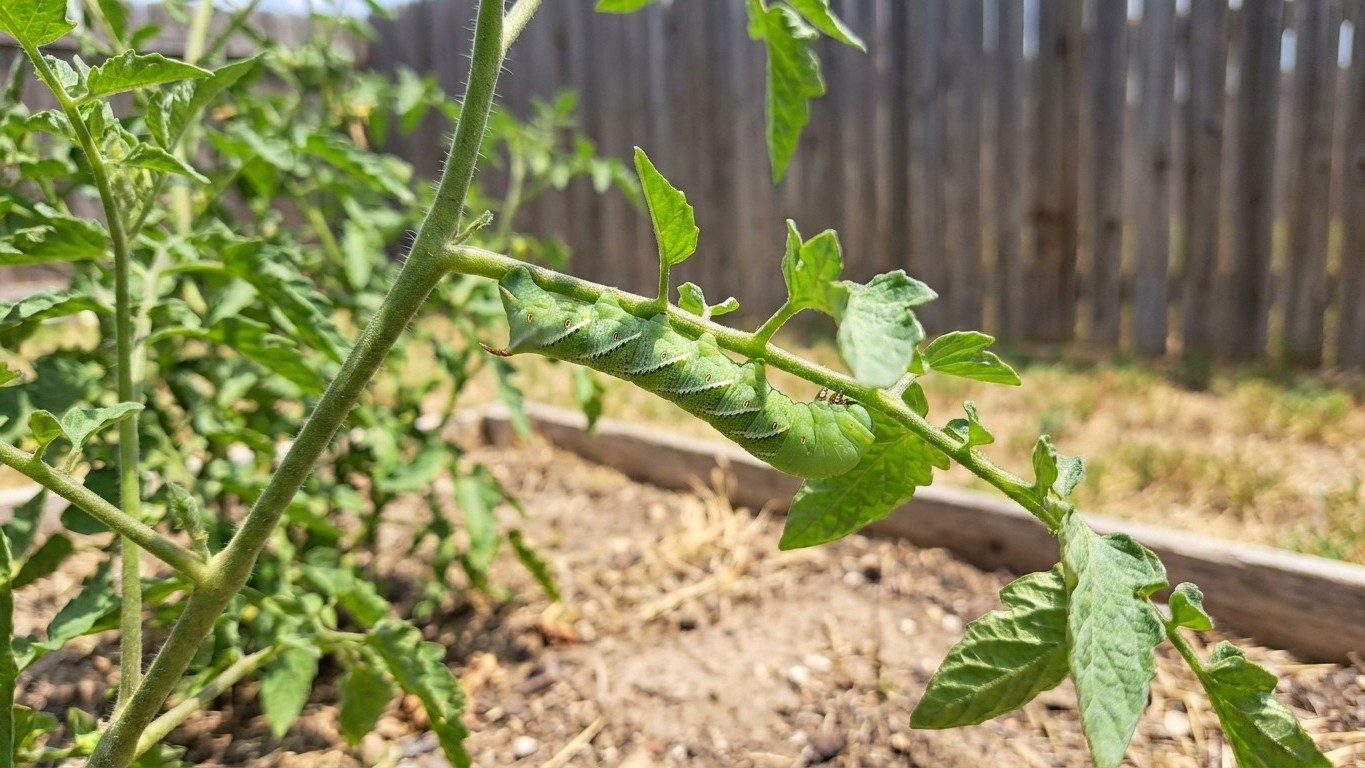
This is the caterpillar that strips a plant of leaves almost overnight. Despite its size, it’s shockingly well camouflaged against the foliage, and most gardeners find the black droppings on the leaves below before they spot the worm itself. Hand-picking works fine on a home scale; Bacillus thuringiensis (Bt) sprays handle it if the population is heavier than you want to pick by hand.
Tomato Fruitworm

Also called the corn earworm, this caterpillar bores directly into green or ripening fruit, leaving a small, clean entry hole with dark frass just inside. Once it’s in the fruit, spraying does nothing, so timing matters: watch for the moth activity and small entry holes on the shoulders of green fruit, and treat with Bt or spinosad before the worms tunnel in rather than after.
Stink Bugs

Stink bugs feed by piercing the fruit and leave pale, cloudy spots underneath the skin, sometimes with a corky patch when you slice into it. They show up as fruit starts to set and stick around through the rest of fruiting. Because they’re mobile and quick to fly off, scouting in the cool of the morning and hand-removing adults and egg clusters works better than most sprays.
Leaffooted Bug

Closely related in habit to stink bugs, leaffooted bugs cause similar cloudy, pithy damage to fruit and tend to arrive later in the season, often in visible clusters on stems and fruit clusters. They’re easiest to control while still in the nymph stage, before they’ve grown the wings that let adults scatter the moment you approach.
Whiteflies
Whiteflies build through the hottest part of the season and can be dense enough that shaking a plant sends up a small white cloud. Beyond the direct sap-sucking damage, they’re a concern for the viruses they can spread. Yellow sticky traps help with monitoring, and insecticidal soap or horticultural oil applied to leaf undersides knocks back active populations without hammering the beneficial insects that keep aphids and mites in check.
Working it out for your own garden
Identifying which pest you’re dealing with comes down to three questions: where on the plant is the damage, what stage of growth is the plant in, and how far into the season are you. A tomato plant losing leaves fast with black droppings on the foliage below points to hornworm. Cloudy, pithy spots under intact fruit skin point to stink bugs or leaffooted bugs, not fruitworm, which leaves an actual entry hole. Stippled, dusty-looking leaves with fine webbing underneath are spider mites, almost always showing up during a hot, dry stretch rather than right after transplanting.
Matching damage to season
Season timing helps narrow it down further. If you’re within a few weeks of your transplant date, which for most of the state falls somewhere inside the frost window covered on Tomato Planting Dates in Texas: Counting Back From Your Frost Window, aphids are the likely early culprit on new growth. Once fruit is set and the weather has turned reliably hot, fruitworm and stink bug damage on the fruit itself becomes far more likely than anything chewing the leaves. As the season stretches on toward the long Gulf Coast fall, whiteflies and leaffooted bugs tend to be what’s left standing, especially on plants that are still producing into the later part of the frost-free window.
If you’re still unsure, a hand lens and a flashlight beat guessing. Turn leaves over, check the calyx end of a few fruit, and look for frass, webbing or cast skins rather than just the insect itself, since several of these pests are more active at night or fly off the moment you get close.
What changes across the state
Texas covers USDA hardiness zones 6a through 10a, according to the USDA’s Plant Hardiness Zone Map, and that spread changes pest pressure as much as it changes planting dates. A longer, milder growing season toward the Gulf Coast and South Texas supports more generations per year of fast-breeding pests like aphids and whiteflies, simply because there are more warm months for them to cycle through. Further north and inland, a shorter effective season compresses that pest activity into fewer months, which can mean lower overall pressure even if the peak intensity in midsummer looks similar.
Humidity plays its own role. Areas closer to the coast tend to run more humid, which favors whitefly and aphid buildup and can also push fungal disease pressure higher, a separate issue from the insects covered here but one that often shows up on the same weakened plants. Drier, hotter inland conditions in much of Central and West Texas instead favor spider mites, which thrive when plants are under water stress and there’s less humidity to knock populations back naturally.
Elevation and local microclimate matter too, particularly in the Hill Country, where cooler nights at higher elevation can slow both plant growth and insect development compared to the Gulf Coast lowlands. None of this changes which pests are possible in your garden, since the same insects range across most of the state, but it does shift how early they show up and how many generations you’ll fight before frost. The reference figures in this article come from Houston’s IAH station. A garden in the Panhandle or the Hill Country should expect a shorter effective season and should confirm local timing with growing tomatoes in Texas and their own county’s extension office rather than assuming the Gulf Coast numbers apply.
The mistakes this state punishes

The biggest one is waiting to scout until damage is obvious. Because the frost-free window here runs so long, a pest population that starts small in April can run through several generations before September, and by the time leaf damage or fruit spotting is visible to the naked eye, you’re often dealing with the second or third generation rather than the first. A weekly five-minute check of leaf undersides and green fruit costs almost nothing and catches aphids, mites and fruitworm eggs before they compound.
The second is reaching for a broad-spectrum insecticide at the first sign of any insect. Many of the pests covered here, aphids and spider mites especially, are kept in check by lady beetles, lacewings, and predatory mites that a broad spray kills right along with the pest. Spot-treating only the affected stems, and choosing a targeted option like Bt for caterpillars or insecticidal soap for soft-bodied insects, keeps those predators working for the rest of the season instead of forcing you to spray again every few weeks.
The third is pairing a long-season cultivar with a garden that’s already fighting heavy midsummer pest pressure. A plant that’s still setting fruit deep into the hot, humid stretch when whiteflies and stink bugs peak is exposed to that pressure for months longer than a shorter-season variety would be. If pest pressure has been a recurring problem in your garden, it’s worth weighing that against the maturity dates on Tomato Varieties That Ripen in Time in Texas rather than picking on flavor and size alone.
Checking this against your county
Everything above is a starting point built on Houston’s IAH climate data, not a rule for the whole state. Before you plan a spray schedule or decide a pest isn’t worth worrying about, check with your county extension office through TAMU AgriLife Extension, which tracks local pest pressure and timing county by county. Their statewide tomato resources, available at agrilifeextension.tamu.edu, are the right place to confirm what’s actually active in your area this season rather than relying on a single reference city’s numbers.
Common questions
Is that a tomato hornworm or a tobacco hornworm?
Both show up on Texas tomatoes and look almost identical at a glance. The tomato hornworm has a black horn and pale V-shaped markings along its sides, while the tobacco hornworm has a red horn and straight diagonal stripes. Control is the same for both, so the distinction matters more for curiosity than for treatment.
Do I need to spray for aphids every time I see them?
No. A handful of aphids on a few leaves usually gets cleaned up by lady beetles and lacewings within a week or two without any intervention. Reach for insecticidal soap or a strong water spray only when clusters are dense enough to be curling and yellowing the new growth.
What’s leaving perfectly round holes in my ripening tomatoes?
A small, clean entry hole with dark frass just inside points to tomato fruitworm, which bores in and feeds from within. Cloudy, pithy spots under intact skin instead point to stink bugs or leaffooted bugs, which pierce and feed without leaving an open hole.
Can I use the same treatment for whiteflies and spider mites?
Insecticidal soap and horticultural oil work on both if applied directly to the insects on the leaf undersides, since both pests are killed by smothering rather than by a systemic poison. Coverage matters more than product choice here. A spray that doesn’t actually reach the underside of the leaf won’t touch either pest.