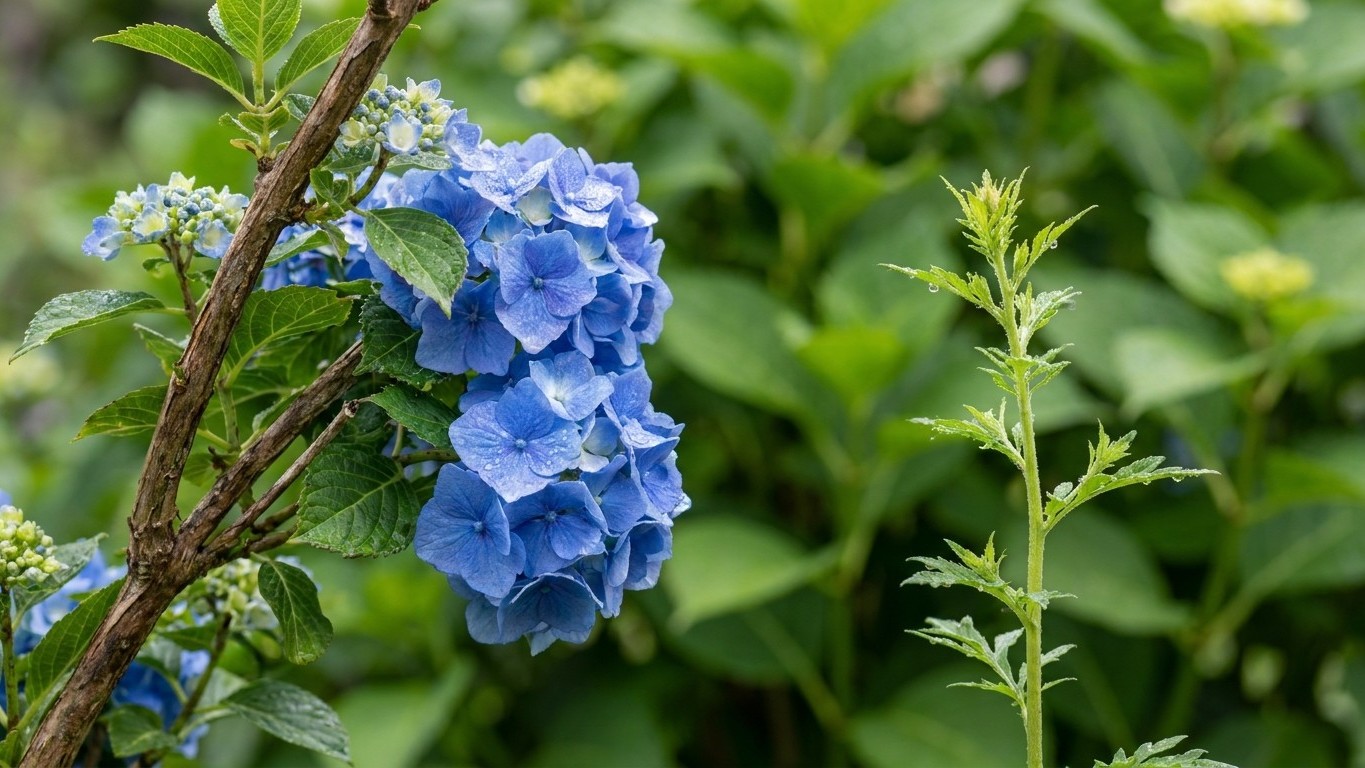

Prune hydrangeas by how they bloom. Smooth and panicle types flower on new growth, so cut them in late winter, before buds swell. Bigleaf, oakleaf, and mountain types carry next year’s flowers on stems that grew the year before, so shape them right after the blooms fade. Dead wood comes out of every type in spring, once leaves show what survived. Fall pruning is the one move to skip across the board.
What this comes down to in Kentucky

In Louisville, the reference city for Kentucky’s frost window, the last spring freeze normally falls between March 24 and April 4, and the first fall freeze between November 2 and November 12. Pruning fits between those two bookends: new-wood hydrangeas get cut a few weeks before the spring window opens, old-wood hydrangeas get cut in summer, and nothing gets cut hard as the fall window approaches. Those dates come from NOAA’s 30-year climate normals for the Louisville station, using the 32 F freeze probabilities. The National Weather Service in Louisville warns that this urban station runs warmer than the rural parts of Jefferson County around it, so a country garden should expect a tighter window.
Which hydrangeas bloom on old wood and which on new wood?
Old-wood bloomers set their flower buds in late summer and fall. Those buds sit on the stem tips and upper stems all winter, so a February haircut removes the flowers before they open. New-wood bloomers start from nothing each spring and build flowers on the shoots they grow that season, so a hard cut costs them very little. Which group a shrub belongs to also tells you how much old wood is likely to be alive after a hard winter, a point covered in Which Hydrangeas Survive a Kentucky Winter.
| Type | Flowers form on | When to prune | How hard |
|---|---|---|---|
| Smooth (such as Annabelle) | New wood | Late winter, before buds swell | Down to a low framework, or to the ground |
| Panicle | New wood | Late winter, before buds swell | Remove about a third of last season’s growth |
| Bigleaf | Old wood | Right after bloom, by the end of July | Light shaping, plus dead stems in spring |
| Mountain | Old wood | Right after bloom | Light shaping |
| Oakleaf | Old wood | Right after bloom | Little beyond dead wood and crossing stems |
| Reblooming bigleaf | Old and new wood | Spring for dead wood, after the first flush for shaping | Light |
How does the frost window shape the pruning calendar?
Cutting a shrub tells it to grow. If a warm spell in February or early March pushes new shoots and the freeze window then opens, the soft growth can blacken. That is why new-wood types are pruned late in winter and not in the fall, when a cut would invite tender shoots just ahead of the first freeze between November 2 and November 12. Hardiness matters too. The USDA Plant Hardiness Zone Map runs from 6a to 7a across the state, and that system rests on a single number, the average annual extreme minimum temperature. It says how cold the worst night gets, not when spring turns safe.
Working it out for your own garden
A calendar date works for one yard in one year. A method works after a move, or after an odd winter. It takes three steps: identify the type, sort it into old wood or new wood, then count back from the frost window.
How do you tell which type of hydrangea you have?
Look at the flower and the leaf. Round, snowball-shaped heads on a shrub with glossy, thick leaves are usually bigleaf. Flat lacy clusters with small fertile flowers in the middle point to mountain hydrangea. Cone-shaped blooms that open white and age to pink belong to panicle types. Big white globes on thin, floppy stems are smooth hydrangea. Leaves shaped like an oak leaf, with peeling cinnamon bark, mean oakleaf. If a shrub came without a tag, the bloom shape in June and July settles it.
How do you set pruning dates from the frost window?
For new-wood types, start at the last-freeze window of March 24 to April 4 and count back from there. That lands between late February and mid March. Cut then, before buds swell and while the shrub is still asleep. A rural garden, where the last freeze runs a little later, can lean toward the later end of that range.
For old-wood types, count forward from bloom instead. Bigleaf flowers fade in June into July, and the pruning window runs from the last good flowers until about the end of July. That stops well before the first fall freeze window opens, which leaves time for next year’s buds to form and for stems to harden. Cut after that and you are trimming off the flowers you wanted.
Dead wood follows a different clock. After a cold winter, a bigleaf can look like a bundle of gray sticks well into April. Wait until leaves appear on some stems, then scratch the bark of a doubtful stem with a thumbnail. Green underneath means alive. Tan or brown and dry means dead. Cut dead stems back to the first pair of healthy buds, or to the ground if the whole stem is dead.
What changes across the state
A single set of dates does not fit every yard from the Mississippi River to the Cumberland Plateau. The Louisville window is a starting point, and the weather of your own spot moves it earlier or later.
How do north, south, and elevation shift the timing?
The state spans the USDA zone range of 6a to 7a, and the colder end sits in the north and in the higher ground of the east. Northern Kentucky and the eastern mountains generally see spring arrive later and fall freezes come sooner than the Louisville reference. Southern and western Kentucky run milder, so buds wake up earlier there. Earlier waking is a mixed gift for old-wood bloomers, since swollen buds are the ones a late freeze catches.
Elevation and terrain matter inside a single county. Cold air drains downhill on still nights and pools in valleys and low corners of a lot, so a shrub at the bottom of a slope can see a freeze that skips the ridge above. Cities add the opposite effect, because pavement and buildings hold heat. A garden on open farmland sits in the tighter window the National Weather Service describes for rural Jefferson County.
The plant itself gives a better signal than the map. For new-wood types, finish pruning before buds swell and leaf tips show green. For old-wood types, look for first leaves before judging what is dead. In a cool, late spring, shift every spring task later and watch the stems. Summer pruning after bloom follows the flowers, which open later in cooler, higher gardens and earlier in warmer ones.
The mistakes this state punishes

The most common error is the spring tidy-up. Gardeners see bare stems in March, assume the shrub needs a cleanup, and cut a bigleaf to knee height. Flower buds on those stems are gone, and the shrub will leaf out nicely and bloom little or not at all. If the type is uncertain, hold off until the plant shows its first leaves.
Why did my hydrangea leaf out but never bloom?
Pruning at the wrong time is the first suspect. Cuts made in fall, winter, or early spring on a bigleaf, mountain, or oakleaf hydrangea take off buds formed the summer before. A late freeze after a warm stretch, which this state sees often enough, can also kill buds that were not pruned at all. In that case the stems stay green and leaf out, but flowers never appear. Color is a separate question, and it depends on soil, as covered in Why Hydrangeas Are Pink in Kentucky, and How to Turn Them Blue.
Pruning late in summer or in autumn causes a second kind of damage. A shrub cut in September can push new growth that has no time to harden before the freeze window of November 2 to November 12. Leave it alone and let the stems and spent flower heads stand through winter. The dry heads also protect the buds below them a little.
The third error is taking everything down every year. Smooth hydrangeas tolerate it. Bigleaf, oakleaf, and mountain types do not. For an overgrown old-wood shrub, remove the oldest stems at the ground right after bloom over a few seasons, and the plant renews itself without losing a whole year of flowers.
Checking this against your county
The Louisville dates are a starting point for the state, and a county can sit weeks off from them. Your county office of the University of Kentucky Cooperative Extension can tell you how local frost dates run and which hydrangea problems show up in your area. For the broader picture of selection and care, the state guide to growing hydrangeas in Kentucky covers what sits outside the pruning calendar.
Common questions
Can I prune hydrangeas in the fall in Kentucky?
It is best to skip it. Pruning a bigleaf, mountain, or oakleaf hydrangea in fall takes off next year’s flower buds. Pruning any type before the first freeze window of November 2 to November 12 can also trigger tender growth that freezes. Cut only dead or broken stems if you must, and save the rest for the right season.
How far back do I cut a panicle hydrangea?
Remove some of last season’s growth in late winter, cutting above a pair of buds. Take out dead stems and any that cross and rub. A panicle hydrangea cut lower will bloom later and on longer stems, and one cut lighter will have more flowers on a bigger frame.
Should I deadhead hydrangeas?
You can. On bigleaf types, snip faded flowers back to the first pair of healthy leaves soon after they fade, within the window that ends around the end of July. On smooth and panicle types, deadheading is optional, since the dried heads stand through winter and add interest. Cut them in late winter with the rest of the shrub.
What if I don’t know which kind of hydrangea I have?
Do nothing until the shrub flowers. Watch when and how it blooms, and compare the flower and leaf shape against the table above. Until then, remove only stems that are clearly dead after the first leaves appear in spring. A year of patience costs far less than a year of lost blooms.