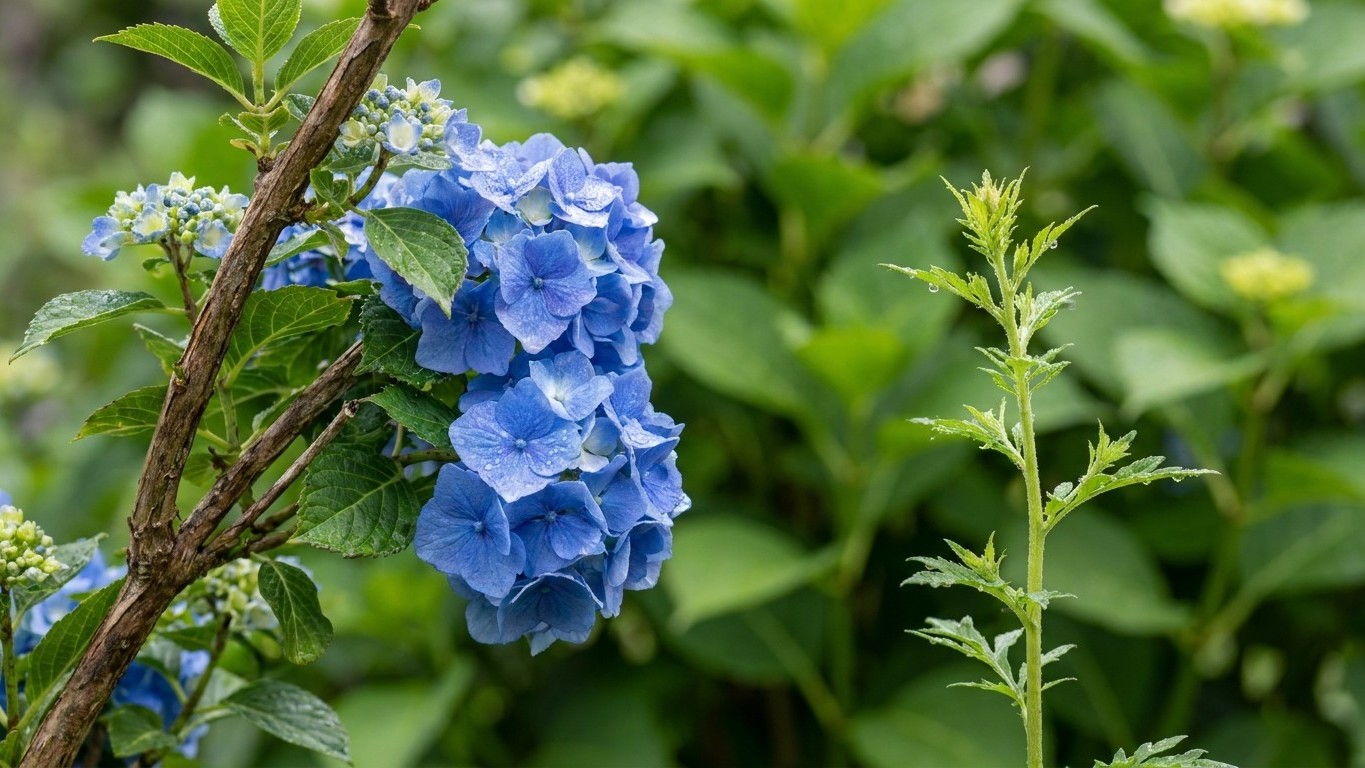

Hydrangeas come up pink in much of Kentucky because the soil is near neutral or alkaline, and in that soil the roots can’t take up aluminum. Aluminum is what shifts the pigment in the flower sepals from pink toward blue. To get blue, you lower the soil pH so aluminum dissolves, then wait a season or two for new growth to show it. The method only works on bigleaf and mountain hydrangeas. Other types ignore it, and white ones stay white.
What this comes down to in Kentucky

Roots restart when the soil warms, and at Louisville, the reference city for these dates, the last spring frost falls between March 24 and April 4. Color follows the soil more than the weather, and across a big share of Kentucky the soil sits at or above neutral, especially over limestone. The result is pink.
The frost window comes from the NOAA NCEI 1991-2020 Climate Normals. The first fall frost at the same station falls between November 2 and November 12. Between those two windows lies the growing season. General care for growing hydrangeas in Kentucky sets the stage, but color comes down to what the roots can absorb.
Why does soil pH change hydrangea color?
The pigment in a hydrangea’s showy sepals (the petal-like parts) is the same in every bloom. What changes it is aluminum. When the pigment binds with aluminum inside the plant, the sepals turn blue. Without aluminum, they stay pink or red.
Most Kentucky soils hold plenty of aluminum. The question is whether it can dissolve. In acidic soil it does, and roots carry it upward. In neutral or alkaline soil it locks onto soil particles, and the plant gets almost none. Phosphorus makes this worse, because it ties up aluminum even in soil that is acidic enough. That is why a fertilizer high in phosphorus, the middle number on the bag, pushes blooms toward pink.
| Soil pH (approximate) | Typical bloom color | What it tells you |
|---|---|---|
| Around 5.5 or lower | Blue | Aluminum is available to the roots |
| Between about 5.5 and 6.5 | Purple, or a mix of blue and pink on one plant | Partial uptake |
| Around 6.5 and higher | Pink to red | Aluminum is locked in the soil |
Which hydrangeas can change color?
Only bigleaf hydrangeas (Hydrangea macrophylla) and mountain hydrangeas (Hydrangea serrata) respond to soil chemistry. Panicle, smooth and oakleaf hydrangeas keep their white, cream or green-to-pink tones whatever you do to the soil. White bigleaf cultivars lack the pigment altogether, so no amount of sulfur will turn them blue.
If your plant has mophead or lacecap flowers and they are pink or purple now, you have a candidate. Check the plant tag or look at the leaf shape before you spend money on amendments.
Working it out for your own garden
A method outlasts a single recipe, because soil and water differ from one yard to the next. The sequence is simple: test, decide whether blue is realistic, amend, then wait.
How do you find out your soil pH?
Start with a test. A home kit gives a rough reading. A lab test through your county extension office is more reliable and usually comes with specific recommendations. Take samples from around the plant’s drip line and mix them before testing. Soil right against a concrete foundation reads higher than soil a few feet out, because lime leaches from the concrete.
How do you lower pH enough for blue flowers?
You have two main tools. Aluminum sulfate acidifies the soil and supplies aluminum at the same time, so it works fast. Used heavily, it can burn roots, so follow the label and split the total into two or three lighter applications through spring. Elemental sulfur is gentler and lasts longer, but soil microbes have to convert it. Many gardeners use sulfur for the long game and aluminum sulfate for a quick nudge.
Timing follows the plant. Start when buds swell and the first leaves open, which at Louisville falls close to the March 24 to April 4 last-frost window. Water the soil first, apply, then water again. A pine bark mulch helps a little, but it will not overcome limestone soil on its own.
Here is how the arithmetic plays out. Say a test over limestone-based soil reads close to neutral. Pushing it below about 5.5 means repeated treatment across more than one year, and the limestone and hard water keep pulling the pH back up. A test reading only slightly above 6 on an acidic ridge soil needs far less work, perhaps one spring of sulfur. If the first number looks like the first example, a container with an acidic potting mix or a raised bed filled with acidic soil will give you reliable blue with less effort.
Give any change a full growing season. Blooms that have already opened will not change color, and a plant that bloomed pink this summer may produce a mix of pink and purple next year, and mostly blue the year after.
What changes across the state
Kentucky holds several soil regions, and that is the main reason hydrangea color varies so much between towns. Central Kentucky, around the Bluegrass, sits over limestone, and soils there tend toward neutral or alkaline. Pink is the default, and keeping blue takes steady upkeep. Water drawn from limestone country is often hard, which nudges potted plants upward in pH over time.
Eastern Kentucky, with its sandstone and shale ridges, has soils that tend to be more acidic. Plants there often turn blue with no help, and some gardeners have to add lime to keep any pink. Western Kentucky falls in between, with a mix of loess and other soils that varies from one field to the next. Test before assuming.
Frost timing shifts too. The USDA Plant Hardiness Zone Map (the system built on average annual extreme minimum temperature) places the state in zones 6a to 7a, so the colder north and higher ground differ from the milder south. Louisville is the reference point for the frost dates above, and its official station sits in the city. The station runs later in spring and earlier in fall than the surrounding rural parts of Jefferson County, so rural gardens should expect a tighter window. Higher ground in the east warms later in spring, which pushes the start of your treatment later as well. Watch the plant’s buds rather than the calendar.
The mistakes this state punishes

The most common error is treating without testing. Gardeners dump aluminum sulfate around a pink plant, and the soil underneath is either already acidic (in which case the pink has another cause, such as high phosphorus) or so heavily limed by nature that nothing sticks. A soil test saves a season.
The second is starting too early. A warm spell in March can wake the shrubs, and the last frost window runs through early April at Louisville and later in colder parts of the state. New growth that opens early can be nipped by frost, which costs you flower buds regardless of color. Hold off on pruning and heavy feeding until the danger passes. The timing questions are covered in When to Prune Hydrangeas in Kentucky, and bud losses from winter cold, which gardeners sometimes mistake for a color failure, are covered in Protecting Hydrangeas Through a Kentucky Winter.
Third, using a high-phosphorus fertilizer. Many all-purpose bloom boosters lock up aluminum and undo your work. Choose a fertilizer with a low middle number.
Fourth, ignoring the surroundings. Lime from a concrete walkway or foundation, a lawn limed every year, and hard irrigation water all raise pH around the roots. If blue fades after a promising start, look for one of these.
Finally, expecting a quick fix. Plan on two seasons, and retest each spring to see whether the number is moving.
Checking this against your county
A frost window and a pH range are starting points. Your yard may sit on different soil from the next county over, and the reading from your own test matters more than any state-wide statement. Your county office of the University of Kentucky Cooperative Extension can run a soil test, tell you what is typical for your area, and suggest an amendment plan. The university’s hydrangea publications cover the rest, including varieties suited to your part of the state.
Common questions
How long does it take to turn a hydrangea blue?
Plan on a full growing season, and sometimes two. Aluminum sulfate acts faster than sulfur, but blooms that have already opened will not change color. The first sign is usually a purple tint on new flowers.
Can I turn blue hydrangeas back to pink?
Yes. Raise the soil pH with garden lime, following soil test recommendations, and use a fertilizer higher in phosphorus. In acidic soils the plant will drift back toward blue, so expect to repeat the lime each year.
Do coffee grounds or pine needles turn hydrangeas blue?
They have a small effect at best. Used grounds are close to neutral, and pine needles break down too slowly to shift pH much. Sulfur or aluminum sulfate, guided by a soil test, does the real work.
Can I make a white hydrangea blue?
No. White bigleaf cultivars lack the pigment that responds to aluminum, and panicle, smooth and oakleaf hydrangeas do not respond either. Only pink, red, purple or blue bigleaf and mountain types will change.