
Garlic gets fewer insect problems than most vegetables, but Saskatchewan beds are not pest-free. Trouble arrives at four moments: right after autumn planting, when spring shoots emerge, in the weeks before the following summer’s lifting, and in storage. Most yellow tips turn out to be weather, not bugs. The reliable way to put a name on a pest is a photo and a plant sample taken to provincial agriculture staff.
Which pests attack garlic in Saskatchewan
The Government of Saskatchewan’s agriculture services for farmers and ranchers are the provincial source for identifying a crop pest. Their material leans toward field crops, livestock and commercial horticulture, so a backyard garlic bed rarely gets its own entry. A species list borrowed from another province would only be a guess. It is more useful to sort the trouble by the part of the plant it hits, because that is how it shows up in a bed.
- Leaf feeders: insects that chew or scrape the green blades.
- Stem and neck borers: larvae that tunnel into the base of the plant.
- Root-zone feeders: small organisms in the soil that damage roots and the bulb’s base.
- Storage pests and rots: trouble that appears after curing, in the cloves.
- Diggers: animals that scratch up freshly planted cloves.
Some pests common in the province have no business in a garlic bed. Insects that strip cereal crops and the borers that go after orchard and shelterbelt trees feed on plants garlic doesn’t resemble, so a bulletin about them tells a garlic grower nothing. If a neighbor’s field is under pressure, that is worth knowing, but it does not mean your cloves are on the menu.
The first rule is simple. Get the problem identified before you treat anything. Garlic grown from fall planting to summer lifting sits in the ground for roughly ten months, and a wrong guess in May can cost a whole crop. For the broader picture of the crop itself, see Growing Garlic in Saskatchewan.
When each one shows up, and what it does first
The calendar hangs on the first fall frost. At the Saskatoon SRC station, Environment and Climate Change Canada’s 1981-2010 normals put the average first fall frost on September 18. That is a mean date. In one year out of two the first frost arrives earlier. Northern and upland districts run weeks behind the Saskatoon station, and these Canadian normals cover 1981-2010. Cloves go in so they can root before the ground locks up, and When to Plant Garlic in Saskatchewan: Counting Back From the First Frost works through that timing. Gardeners in the Deep South follow a very different clock, laid out in When to Plant Garlic in South Carolina: Counting Back From the First Frost.
From planting through the first spring
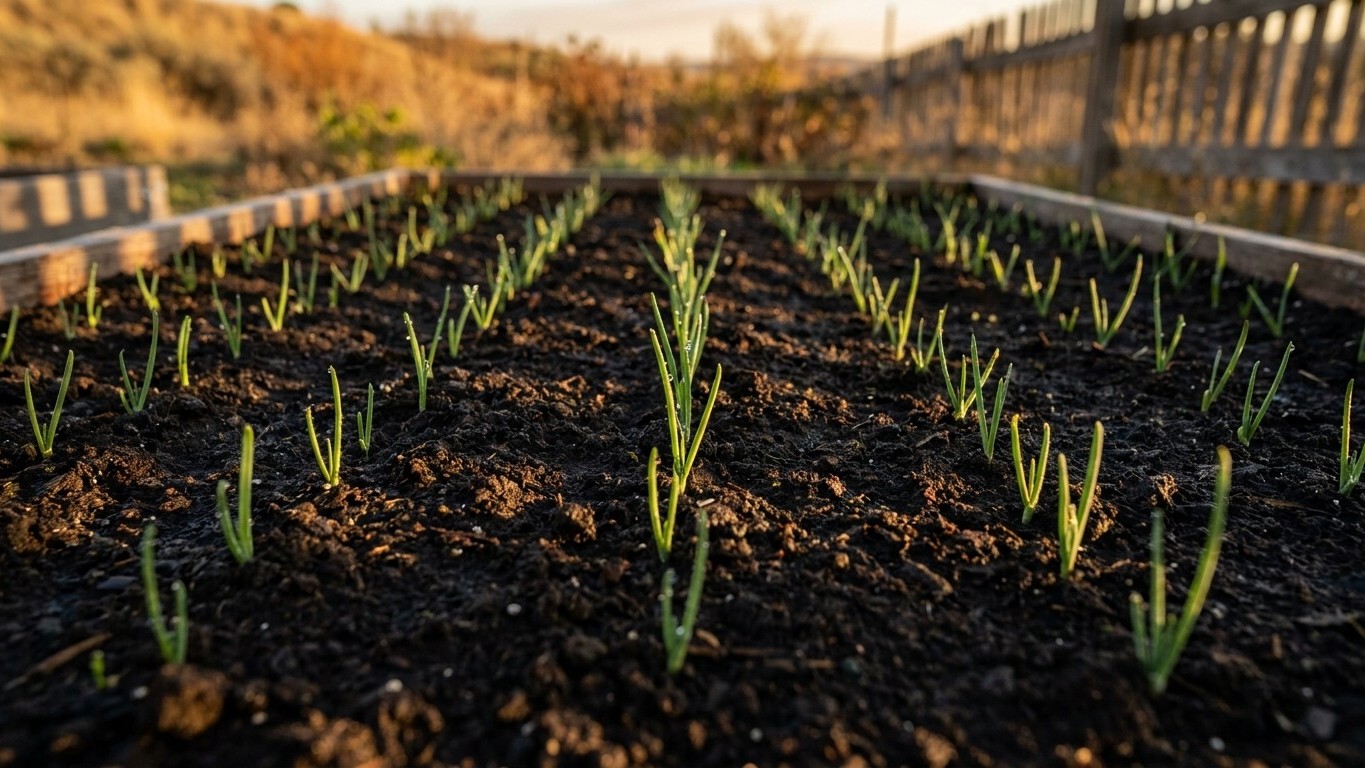
In the days after planting, the first thing you notice is not a bug but a hole. Loose soil, a missing clove or a scattered patch of mulch points to an animal digging. Once the ground thaws and shoots clear the soil, look for ragged edges, small bites or pale flecks on the leaves. These marks appear on a few plants first, usually at the bed’s edge.
From early summer to the cellar
As warm weather settles in, the signal to watch for is a single plant that yellows and flops while its neighbors stay upright. Pinch the base. If it is soft, hollow or tunneled, the damage is happening below the leaves. A cluster of stunted plants with few roots suggests the problem is in the soil.
In the weeks before lifting, undersized bulbs and a soft or discolored basal plate are the early signs. After curing, check the stored bulbs every few weeks. Cloves that feel light, hollow or dusty need to be pulled out of the batch before they affect the rest.
Telling the damage apart from everything else
Garlic yellows for many reasons, and most have nothing to do with insects. Prairie weather alone can mimic a pest: dry spells, cold wet springs, late frosts and wind all leave marks. The table lists common look-alikes and the clue that separates them.
| What you see | Possible cause | What settles it |
|---|---|---|
| Tips yellow or brown across the whole bed | Dry soil, or frost damage on young shoots | Soil dry a few inches down, or damage limited to the upper leaf after a cold night |
| Plants pale and slow all over | Cold wet soil or low nitrogen | Whole bed affected evenly, roots white and firm |
| One plant wilts, base soft | Borer or rot in the neck | A cut through the base shows tunnels or watery, discolored tissue |
| Orange or rust-colored spots on leaves | Fungal disease | Spots rub off as powder and spread leaf to leaf |
| Torn, bent or broken blades | Hail or wind | Damage lines up in one direction across the bed |
| Cloves pushed up out of the ground in spring | Frost heaving | Roots intact, no chewing, whole rows lifted |
The mistake that costs the most is reading only the leaves. Look at the base and the roots before you decide it is an insect. A fungal rot and a larva can leave the same wilted blade, yet they call for opposite responses.
Whatever the check shows, take it to your provincial agriculture office rather than guessing. They can say whether the cause is biological or environmental.
What actually works here, and what is a waste of time
A short season rewards timing over treatment. Garlic spends the cold months dormant, so the pests have the most room to work at planting and in the warm weeks of early summer. A physical barrier placed at the right moment beats a spray applied after the damage appears. Cover the bed with floating row cover before the pest arrives, not after the damage shows. Because spring comes late, put the cover on as shoots emerge and keep the edges buried so nothing crawls under.
Several other steps help. Rotate the bed so garlic and its onion relatives do not return to the same soil for a few years, because soil-dwelling pests build up where their host keeps growing. Plant cloves from firm, whole, healthy bulbs and throw out anything soft or shriveled, a choice that starts with variety, covered in Garlic Varieties That Suit Saskatchewan Winters. Gardeners in warmer states face different variety choices, as in Garlic Varieties That Suit South Carolina Winters. Wire mesh over freshly planted cloves stops diggers, and a thick layer of mulch applied after the ground freezes keeps the soil steady.
Plenty of popular fixes waste time. Spraying at the first yellow tip treats weather and disease as if they were insects. Buying garlic at the grocery store for seed risks bringing in disease. Heavy late feeding pushes soft growth that invites rot, and any treatment applied after bulbs are fully sized comes too late to protect the crop.
Which products are registered for garlic in Saskatchewan is a question only provincial agriculture staff can answer, and that list changes. Ask them before you buy anything.
Where to check this for your own county
Start at the Government of Saskatchewan’s agriculture services for farmers and ranchers. Saskatchewan has no counties, so the nearest regional agriculture office is the closest thing to a county extension desk. Staff there know what is moving through your district this season.
A pest recorded somewhere in the province does not tell you what is in your yard. The Saskatoon SRC station gives an average first fall frost of September 18, but one station is not the whole province. Northern and upland districts run weeks behind it, and in one year out of two the frost lands earlier than that mean. A pest’s timing shifts with the same local climate, so a neighbor’s report counts for more than a provincial summary.
Before you call or visit, gather your planting date, the bed’s recent history, and photos of both a healthy and an affected plant. This fall, write down the day you plant, mark the bed, and take a photo once the shoots show in spring. A dated record makes next season’s diagnosis far easier.
Common questions
Is garlic usually bothered by insects in Saskatchewan?
Less than many vegetables, but problems do occur. Weather, soil moisture and disease cause many of the symptoms that get blamed on insects, so check the base and roots before deciding.
When should I start watching for damage?
Look for digging right after planting, chewing once spring shoots emerge, wilting plants in early summer, and soft cloves in storage. Tie your checks to growth stages, not to calendar dates.
Can I treat garlic pests myself?
Physical barriers, clean seed stock and crop rotation are safe to start with. For anything beyond that, ask the Government of Saskatchewan’s agriculture office what is registered for garlic.
Does the first frost date tell me when pests stop?
No. September 18 at the Saskatoon SRC station is only the average first fall frost, and in one year out of two it comes earlier. Frost mainly guides planting time. Storage problems can continue well after the garden has frozen.