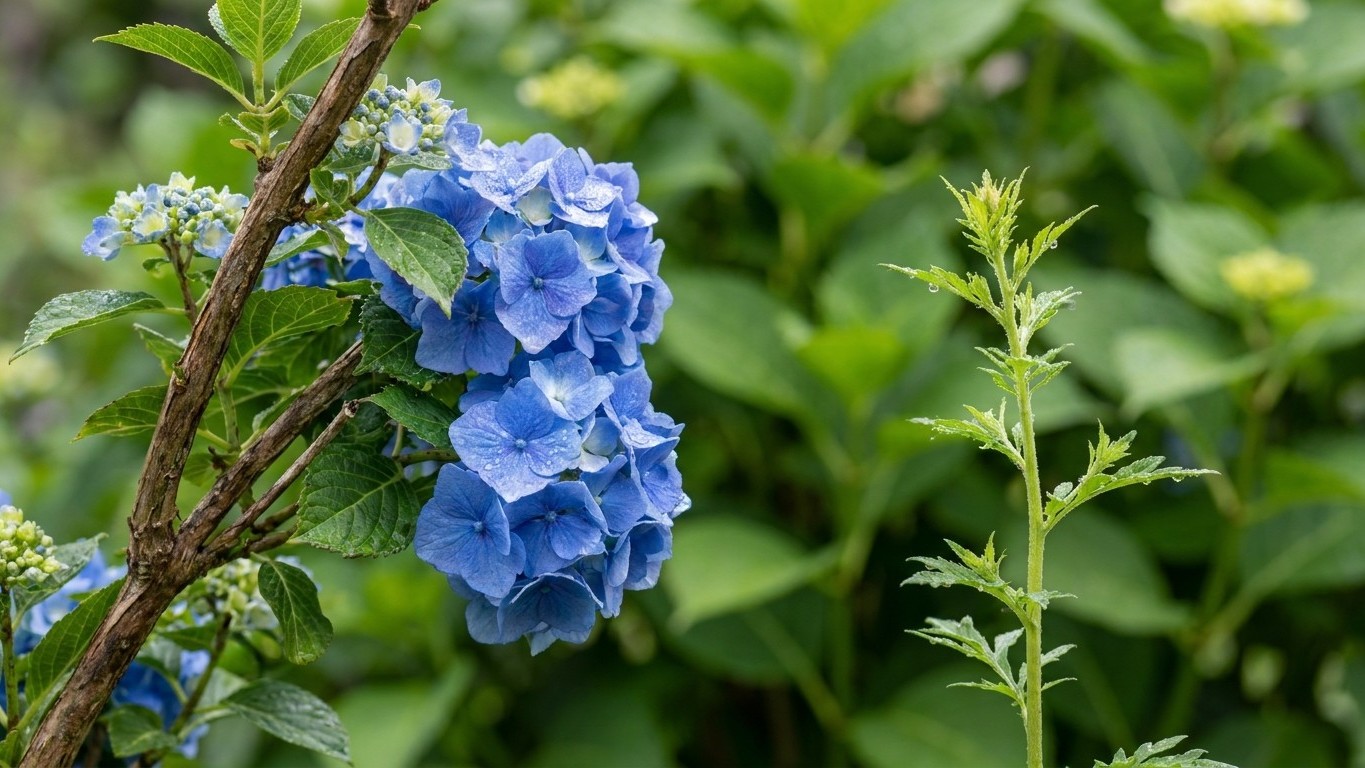

Smooth hydrangeas (Annabelle and its relatives) and panicle hydrangeas (Limelight and kin) are the safest bets, and they flower after a hard Kentucky winter even when the stems freeze back. Oakleaf hydrangeas come through well in most of the state. Bigleaf types live through winter just as reliably, but they often lose their flower buds to cold or a late freeze. The difference comes down to where each kind sets its buds.
What this comes down to in Kentucky

At Louisville, the reference city for the state’s frost numbers, the last spring freeze falls between March 24 and April 4, and the first fall freeze between November 2 and November 12. USDA hardiness zones across the state run from 6a to 7a (USDA system, built on the average annual extreme minimum temperature). Almost every hydrangea sold in garden centers will live through those winter lows. What varies is whether the flowers survive with the plant.
Hydrangeas that bloom on new wood form their buds in spring, after the danger has mostly passed. Those that bloom on old wood carry next summer’s buds through the whole winter and the spring freeze window. That is why the cultivars below are listed from most dependable bloom to least.
Annabelle
A smooth hydrangea with big, round white flower heads that bloom on new wood. A hard winter can kill the stems to the ground and it will still flower the next summer. The stems are slender and tend to flop after a heavy rain.
Incrediball
Another smooth hydrangea with the same new-wood reliability as Annabelle. It was bred for stiffer stems, so the large white blooms stay upright. Its winter performance in Kentucky is the same: cut it back or let the cold do it, and it flowers anyway.
Limelight
A panicle hydrangea that blooms on new wood, with cone-shaped flowers that open lime green, turn white, and blush pink as fall comes on. Panicle types are among the hardiest hydrangeas grown in the United States, so Kentucky winters are well within their range. Bloom is rarely lost to cold or spring frost.
Little Lime
A compact panicle in the Limelight style, useful for foundation beds and smaller yards. It has the same new-wood flowering habit and the same dependable winter record, so a freeze in March or April does not threaten its blooms.
Snow Queen
An oakleaf hydrangea with white, cone-shaped flowers, deeply lobed leaves, and good red fall color. It blooms on old wood, but its buds are tougher than a bigleaf’s and usually make it through Kentucky winters. It does best in a spot sheltered from the harshest winter wind.
Endless Summer
A bigleaf hydrangea that blooms on both old and new wood. If winter or a spring freeze kills the old-wood buds, it still flowers later in summer on new stems. In a mild year it produces the full early show plus later repeat bloom.
Nikko Blue
A classic bigleaf that blooms on old wood only. When a hard winter or a late freeze kills the buds, the plant leafs out normally and produces no flowers that year. It is worth growing in a sheltered spot, but expect some skipped summers.
Working it out for your own garden
You can predict how any hydrangea will behave by asking two questions: where does it form its buds, and what weather will those buds face before they open? The table sorts the four common groups.
| Hydrangea group | Where flowers form | After a hard winter or late freeze |
|---|---|---|
| Smooth (Annabelle, Incrediball) | New spring growth | Flowers normally |
| Panicle (Limelight, Little Lime) | New spring growth | Flowers normally |
| Oakleaf (Snow Queen) | Old wood | Usually flowers, with some risk in the coldest spots |
| Bigleaf (Nikko Blue) | Old wood | Buds often lost, so few or no flowers |
| Reblooming bigleaf (Endless Summer) | Old and new wood | Late flowers if early buds are lost |
How do you check whether a cultivar’s buds will make it?
Take Nikko Blue, an old-wood bigleaf. Its buds form in late summer, so they have to live through the first fall freeze (November 2 to November 12 at Louisville), the full winter, and then the spring freeze window (March 24 to April 4). The buds begin swelling in the warm days of early spring, which is when a freeze does the most harm. That is three separate chances to lose the flowers.
Now take Limelight. Its flowers do not exist yet in March, so a freeze in the window cannot touch them. The plant only needs to be alive when the weather warms, and a panicle hydrangea nearly always is. The same reasoning works for any variety you meet at a nursery: find out if it blooms on old or new wood, and you know how much risk the freeze window carries.
Rural gardens sit outside the city’s heat. Louisville’s station runs later in spring and earlier in fall than the surrounding rural area, so a country garden has a tighter window and should plan for a spring freeze to arrive a little earlier than the dates above.
How can you tell if a hydrangea is dead or just slow?
Do not judge by bare stems in early spring. Scratch a small patch of bark with a thumbnail. Green underneath means the stem is alive, and brown and dry means it is dead. Old-wood hydrangeas often leaf out late, sometimes well into May, so wait until new leaves show before cutting anything. The timing of cuts is covered in When to Prune Hydrangeas in Kentucky, and the mulch and wrap methods are in Protecting Hydrangeas Through a Kentucky Winter.
What changes across the state
Louisville is one reference point, and Kentucky is long, hilly, and cut by a big river. The state’s hardiness range from 6a to 7a reflects that spread. Gardens in the north, along and above the Ohio River, tend to be colder in winter and see freezes linger later in spring. Gardens in the south and west of the state run milder, so bigleaf buds survive more often there.
Elevation matters in the east. The Appalachian foothills and the mountains are noticeably colder than the Bluegrass or the Louisville area, with later springs and earlier falls. In those spots, favor panicle and smooth hydrangeas, and treat bigleaf as a bonus when the buds come through.
Local setting can shift things as much as the region. Low ground collects cold air on still nights, and a garden at the bottom of a slope can freeze when a hilltop a few hundred yards away does not. A wall facing south or east gives a bigleaf a few extra degrees. Big cities hold heat, which is why Louisville’s own numbers run milder than the country around it.
The mistakes this state punishes

The most common error is trusting a warm spell. Kentucky regularly has stretches in February or March that coax bigleaf buds open, followed by a freeze. Pulling winter mulch or wraps during the first warm week leaves the swelling buds exposed. Wait until the spring freeze window has passed, and in a country garden give it a little extra time.
Next is planting a bigleaf in a wide-open, windy spot and expecting a full flush of flowers. If you want the show every year, put the old-wood types on the sheltered side of the house and use panicle or smooth hydrangeas in open ground.
Late-season feeding causes trouble too. Nitrogen applied in late summer pushes soft new growth that has no time to harden before the first fall freeze, which arrives as early as November 2. Stop feeding by midsummer and let the plant slow down on its own.
Pruning at the wrong time cuts off flowers you could have had. Trimming old-wood hydrangeas in fall or early spring removes the buds along with the stems. Smooth and panicle types can be pruned in late winter without losing flowers.
Finally, avoid planting late in fall. A shrub that goes in just before the ground freezes has little root growth to hold it through winter heaving. Plant early enough that the roots can establish, and mulch after the ground starts to cool. More on the basics is in growing hydrangeas in Kentucky.
Checking this against your county
The Louisville dates are a starting point. Your own garden may freeze earlier or later depending on the county, the elevation, and the slope. Call or visit your county office of the University of Kentucky Cooperative Extension Service, where agents can tell you the local freeze pattern and which hydrangeas have done well nearby. For the broader picture of site, soil, and care, start with the state’s hydrangea guide above.
Common questions
Do bigleaf hydrangeas survive winter in Kentucky?
The plants do, in most of the state. What they often lose is the flower buds, because bigleaf types set next year’s buds on old wood. A reblooming type like Endless Summer is the safer choice, since it can flower again on new growth.
Which hydrangea is the hardiest for Kentucky?
Smooth hydrangeas such as Annabelle and Incrediball, and panicle hydrangeas such as Limelight and Little Lime. They flower on new wood, so freezing back in winter does not cost you the blooms.
Why did my hydrangea leaf out but not bloom?
Almost always the flower buds were killed by winter cold or a spring freeze after the buds had started to swell. It is most common with old-wood bigleaf types. The plant itself is fine and can bloom the following year if the weather cooperates.
When is it safe to take off winter protection?
After the spring freeze window. At Louisville that runs from March 24 to April 4, and rural gardens may see the last freeze a bit later. Uncover gradually, and keep a sheet or blanket handy if a cold night is forecast after the buds swell.