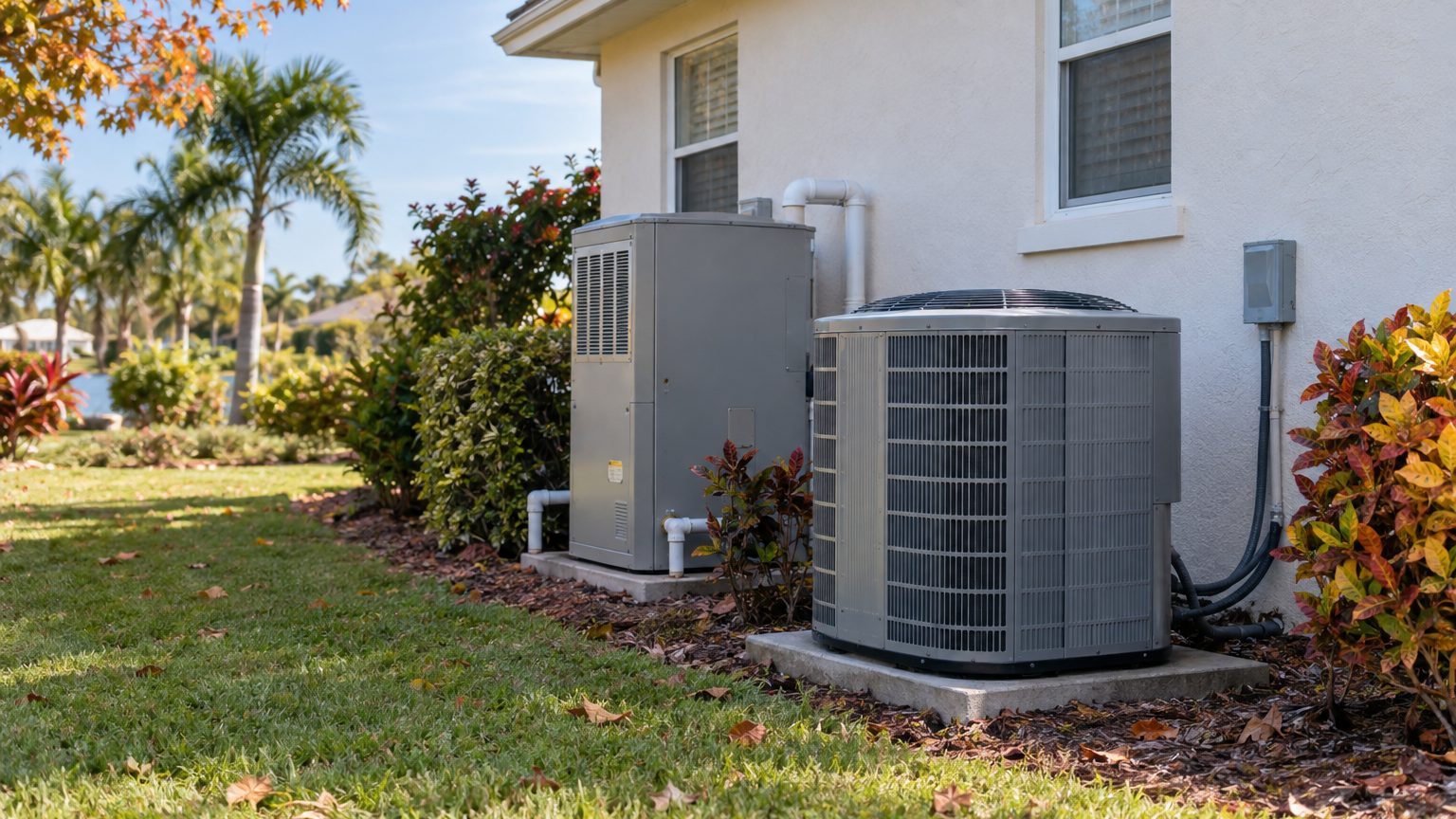

A natural gas furnace costs slightly less to run in Washington than a heat pump, but the gap is small: $0.26 per million Btu in the furnace’s favor. Electric baseboard heat is the clear loser. The choice turns on gas service, air conditioning and how cold your location gets.
The short answer for Washington
To compare fuels fairly, ask what one million Btu of heat costs once it reaches the house. At Washington’s average residential prices, a heat pump at 8.1 HSPF2 (a seasonal COP of about 2.4) delivers it for $17.78. A natural gas furnace at 97% AFUE does it for $17.52. Electric resistance, meaning baseboard or a plain electric furnace, costs $42.20. These costs are computed from U.S. Energy Information Administration (EIA) residential prices for electricity and natural gas, ENERGY STAR efficiency levels and EIA energy conversions.
That makes the gas furnace the cheapest to run here, by $0.26 per million Btu. Against a base of more than seventeen dollars, that is a thin margin. A small move in either utility’s rates could reverse the order, and rates differ from one utility and rate plan to the next. The heat pump closes the gap because it moves heat rather than making it, so each kilowatt-hour of electricity brings in more heat than it burns.
For most Washington households, treat running cost as a tie between a heat pump and a gas furnace, and let gas availability, cooling needs and installed cost make the call. If you are weighing electric baseboard against either one, the decision is easy: baseboard costs more than twice as much to run.
What each option costs to run in Washington
| System | Efficiency used | Cost per million Btu delivered |
|---|---|---|
| Natural gas furnace | 97% AFUE | $17.52 |
| Heat pump | 8.1 HSPF2 (seasonal COP about 2.4) | $17.78 |
| Electric resistance (baseboard) | 100% efficient | $42.20 |
Behind the table are two price inputs. Electricity averages 14.40 cents per kWh for residential customers, a year-to-date average through July from the EIA’s Electric Power Monthly (Table 5.6.B). The natural gas side uses the EIA’s average residential gas price for the state, converted at about 1,037 Btu per cubic foot. Both are statewide averages. Your utility’s rate sheet gives the numbers that actually apply at your address, and it is worth plugging them in before you sign a contract.
Why does efficiency matter as much as the fuel price?
One kilowatt-hour of electricity contains 3,412 Btu. Run through a baseboard heater, you get 3,412 Btu of heat, no more. Run through a heat pump with a seasonal COP of about 2.4, the same kilowatt-hour delivers roughly two and a half times that, because the machine pulls heat from outdoor air. A gas furnace at 97% AFUE sends nearly all of the fuel’s energy into the house. A cheap fuel burned in an inefficient machine can lose to a pricier fuel used well, which is why comparing cost per million Btu delivered beats comparing price per kWh to price per cubic foot.
The heat pump figure uses the ENERGY STAR minimum for a ducted system. That minimum is a seasonal average, and what HSPF2 measures explains the rating in detail. ENERGY STAR sets the bar at 8.5 HSPF2 for non-ducted (ductless) split systems and 8.1 for ducted ones. The ductless unit has no duct losses to start with, so it must perform better to earn the same label. When you compare two units, compare the same letters: HSPF2 rates heating, SEER2 rates cooling.
How cold it gets, and what that does to a heat pump
Seattle-Tacoma International Airport, the reference station, averages about 4,376 heating degree days a year (base 65°F) in NOAA’s 1991-2020 climate normals. Each degree day counts how far a day’s mean temperature sat below 65°F, so the total measures how much heating a house needs over a year. Twice the degree days means roughly twice the fuel for the same house. The coldest month’s mean daily low there is 37.1°F, above freezing. That describes a long, mild heating season, not a short, brutal one.
The mild lows matter because the 2.4 COP behind the heat pump’s $17.78 is a seasonal average, and efficiency falls as outdoor air gets colder. In a climate where the typical coldest-month night stays above 32°F, the heat pump spends most of the winter near its efficient range, and the average holds up well. Cooling adds about 265 cooling degree days a year, a short and light summer load.
What about the colder parts of the state?
That reference city is one station. Mountain counties in the same state can run far colder, with more heating degree days and many nights well below the Seattle-area lows. There the seasonal efficiency figure is optimistic. In deep cold a heat pump’s output and efficiency drop, and a backup carries the coldest nights, either electric resistance strips or a furnace. Every hour on strip heat costs closer to the $42.20 figure than the $17.78 one. How cold is too cold for a heat pump covers how that falloff works and how installers size around it.
Near the reference city you can shop heat pumps without worrying much about low temperatures. If you live in a mountain county, get a quote that spells out the backup heat source and how often it is likely to run before comparing running costs.
What homes in Washington already heat with
The U.S. Energy Information Administration’s 2020 Residential Energy Consumption Survey shows how Washington homes are heated today. By equipment, 47% of homes use a furnace and 9% use a central heat pump. By fuel, 55% heat with electricity and 37% with natural gas. Steam or hot-water boilers, fuel oil or kerosene, and propane are not reported: the survey suppressed those estimates as unreliable, so it does not publish a figure, which is not the same as none. These are statewide shares from a national survey, not a count for your county or street.
The electricity category mixes baseboard, electric furnaces and heat pumps. For a home with electric baseboard or an electric furnace, the swap to a heat pump brings the biggest running-cost drop in the comparison: $42.20 down to $17.78 per million Btu.
Your own utility closet changes the question more than the state average does. A house without a gas line has no furnace-versus-heat-pump contest, because the real comparison is a heat pump against resistance heat. A house with a boiler and radiators faces a different conversion, since there are no ducts for forced air, and a ductless system is often the route in. Ductless or central walks through that choice, and heating a home in Washington covers how local conditions shape every option. Check what is already in the house, whether a gas line, ducts or a boiler, before you compare anything else.
When the other choice wins
Gas takes the narrow running-cost edge, but several situations tip the decision toward a heat pump. The first is the plainest: no gas service. Extending a line to a house can be costly or impossible, and a heat pump at $17.78 per million Btu is far cheaper to run than the resistance heat it would replace.
Air conditioning is the second. A heat pump heats and cools with one outdoor unit, while a furnace needs a separate air conditioner for summer. Cooling demand at the reference station is modest, about 265 cooling degree days a year, but a household that would otherwise buy both machines should count that second purchase.
Age matters too. A furnace with years left is usually worth keeping over a swap chosen to save a few cents per million Btu. A tie in running cost gives no reason to replace working equipment early, and repairing a furnace or replacing it lays out how to judge that call. Keep a working gas furnace until it fails or needs a major repair, then price a heat pump against a new furnace, since by then the running cost is nearly the same and installed cost and cooling become the deciding factors.
Common questions
Is a heat pump cheaper than a gas furnace in Washington?
Not by running cost. At average residential prices a gas furnace at 97% AFUE costs $17.52 per million Btu, against $17.78 for a heat pump at 8.1 HSPF2, so gas is $0.26 cheaper. Your own utility rates and the price of equipment may reverse the result.
How much more does electric baseboard cost to run?
Electric resistance costs $42.20 per million Btu delivered, compared with $17.78 for a heat pump. Replacing baseboard with a heat pump is where Washington homeowners see the largest drop in running cost.
Why does ENERGY STAR ask more of ductless heat pumps?
The label requires at least 8.5 HSPF2 for non-ducted split systems and 8.1 for ducted ones. A ductless system has no duct losses, so it starts with an advantage and must perform better to earn the same label.
Will a heat pump keep up in the coldest month?
Near the reference station, the coldest month’s mean daily low is 37.1°F, so a heat pump stays near its efficient range through most of the winter. In colder mountain counties, expect a backup heat source to carry the coldest nights.