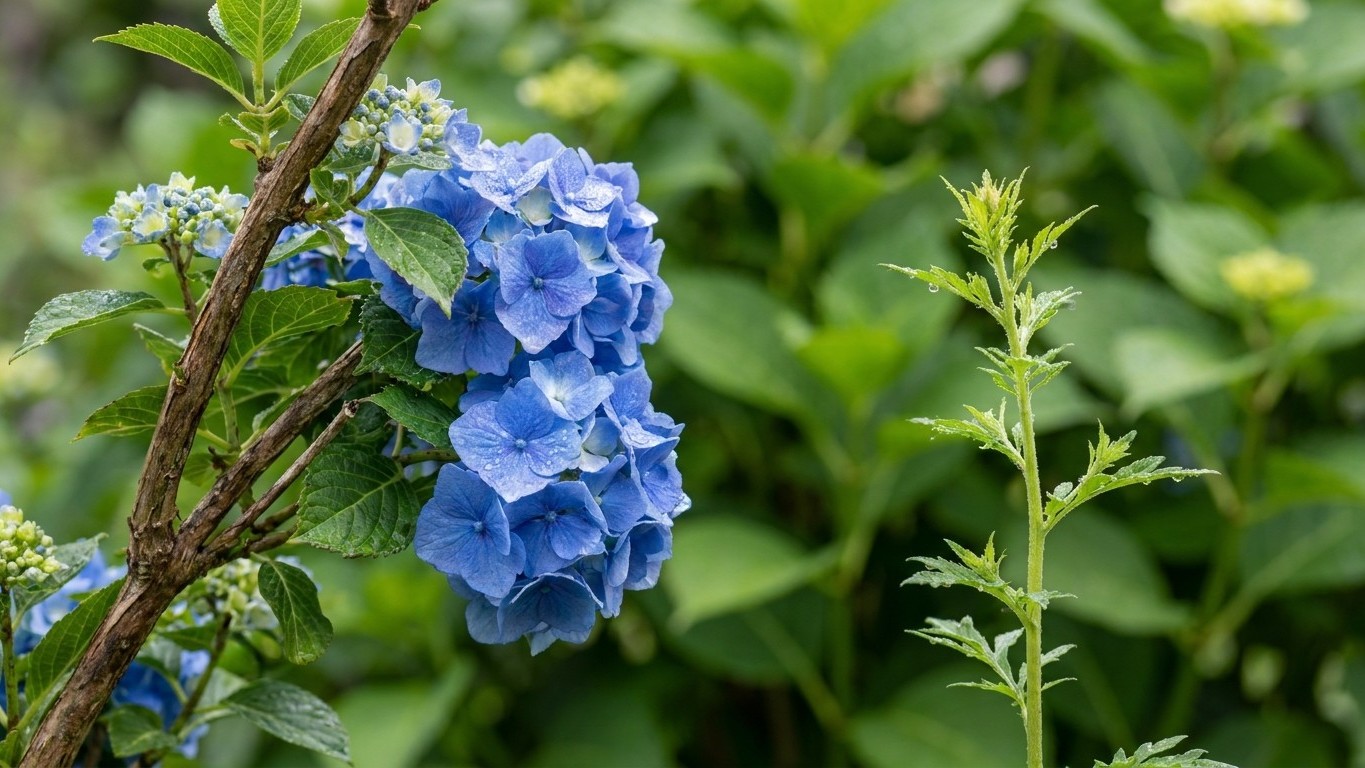

Protecting hydrangeas in Montana comes down to timing and insulation. Pile mulch over the crown once the ground begins to freeze, cage or wrap the stems of types that bloom on old wood, and keep the covering on until the spring frost window has closed. Panicle and smooth hydrangeas often need little more than mulch. Bigleaf and oakleaf types need the full treatment, and in the colder valleys even that may not save every flower bud.
What this comes down to in Montana

At Billings, the reference city for these dates, the last spring freeze falls between April 29 and May 10, and the first fall freeze falls between October 1 and October 14. Those dates are approximate figures based on NOAA NCEI Climate Normals for a 32°F freeze. They are not a guarantee, and in some years a freeze still arrives after the later date. Cover your hydrangeas after the fall window has passed and the plants are dormant, and uncover them only after the spring window has closed.
Billings is one of the milder valleys, and mountain valleys elsewhere in the state can frost in any month. The USDA Plant Hardiness Zone Map spans 3a to 6b across Montana. That system rests on one number, the average annual extreme minimum temperature, so it says how cold the worst night gets and nothing about how often the temperature swings. For hydrangeas the swings matter just as much.
What actually kills hydrangea stems and buds in winter?
Three things do the damage. The first is a sudden hard freeze in fall, before the shrub has hardened off and while it is still pushing soft growth. The second is a deep cold snap with no snow on the ground, which exposes stems and shallow roots to the full drop. The third is a warm spell in late winter or early spring that wakes the buds, followed by a freeze that kills them. Dry wind adds to all three by pulling moisture out of stems that cannot replace it from frozen soil.
Bud location decides how much a hard winter costs you. Types that bloom on old wood form next summer’s flower buds the previous year, so a stem frozen to the ground means no flowers. Types that bloom on new wood can lose every stem above the snow line and still flower the same summer.
Which hydrangeas need the most protection?
The table sorts the common types by how they bloom and how much help they need. For a fuller look at what survives in each part of the state, see Which Hydrangeas Survive a Montana Winter.
| Type | Blooms on | Winter protection |
|---|---|---|
| Panicle | New wood | Mulch at the base, mostly for young plants |
| Smooth | New wood | Mulch at the base; stems may die back and regrow |
| Bigleaf | Old wood on most types | Mulch plus a stem cage or wrap; flower buds often lost anyway |
| Oakleaf | Old wood | Mulch plus a cage, and a sheltered spot |
Bigleaf plants are popular for their pink or blue flowers (the soil chemistry behind that is covered in Why Hydrangeas Are Pink in Montana, and How to Turn Them Blue). They are also the ones that cost the most work to carry through a Montana winter.
Working it out for your own garden
A fixed calendar date will fail you in a cold year or after a move to another valley. A method built on your local frost window and on what the plant is doing will not. It has three parts: when to cover, how to build the cover, and when to take it off.
When should you cover hydrangeas in fall?
Start from the first fall frost window, October 1 to October 14 at Billings. Add two to three weeks to give the plant time to go fully dormant. That puts the work between roughly October 15 and November 4. A range plus a few weeks gives another range, and you should treat it that way.
Two checks on the ground tell you more than the calendar. The leaves should have browned and dropped on their own, and the top inch of soil should be turning stiff in the morning. Covering sooner traps warmth around the stems and invites rot and mice. Covering after the soil is frozen solid is fine, so long as you can still pull in leaves or straw.
Two jobs come earlier. Stop feeding by midsummer, because late nitrogen pushes soft growth that freezes first. Water deeply a few times in the weeks before the ground locks up, since a dry root zone makes winter desiccation worse.
How do you build a winter cage for hydrangeas?
For bigleaf and oakleaf types, set a ring of hardware cloth or chicken wire around the shrub, a few inches wider than the plant on all sides. Fill it loosely with shredded leaves, straw or pine needles to cover the stems. Wet, matted leaves hold water and freeze into a block, so shake them in dry. Keep the top open or covered with something that breathes. For panicle and smooth types, a foot or so of mulch over the crown is plenty.
When do you uncover hydrangeas in spring?
Work backwards from the other end of the calendar. The last spring frost window runs April 29 to May 10 at Billings. Pull the top layer back in stages beginning late April, on mild days, and keep the cage and extra material nearby until the window has closed and the forecast stays above freezing.
Then test the stems before you cut. Scratch a small patch of bark with a fingernail. Green underneath means the stem is alive. Brown and brittle means it is dead. Wait until leaves start to open on the live wood, because bigleaf shrubs leaf out late and a stem that looks dead in early May is sometimes just slow.
What changes across the state
Montana’s USDA zones run from 3a to 6b, and the gap between those ends is large for a shrub. Elevation can move your numbers a lot. Every step uphill shortens the season and brings frost earlier in fall and later in spring, so a garden a few hundred feet above a valley floor can run noticeably colder than the reference city.
Valley position matters too. Cold air drains downhill and pools in low spots, so a hydrangea planted at the bottom of a slope can take hard frost that the same plant halfway up the hillside misses. Mountain valleys in the western part of the state can frost in any month, which makes late-spring uncovering a bigger gamble there.
East of the Continental Divide, Arctic air can pour across the plains with nothing to stop it, and chinook winds can then warm the air quickly in winter. That swing between deep cold and sudden thaw is hard on dormant buds, and it is a good reason to hold winter covers in place through the warm spells rather than strip them off.
North versus south counts too. The northern edge of the state sees colder winters and a shorter season than the southern tier, though elevation often outweighs latitude. Snow cover is the last variable. A steady snowpack insulates roots and low stems, while a winter of wind-scoured bare ground leaves them exposed. In a low-snow spot, add more mulch and a windbreak on the west or northwest side.
The mistakes this state punishes

A common and costly error is covering too early. A warm October afternoon tempts gardeners to tuck everything in, but warm, damp material around unfrozen stems encourages rot and gives mice and voles a sheltered place to nest and chew bark. Wait for the leaves to drop and the soil surface to stiffen.
Plastic is the next one. Wrapping a shrub in plastic sheeting or a tarp traps moisture and heats up on sunny winter days, which can wake the buds right before a freeze. Use burlap, breathable fabric or a leaf-filled cage instead.
Uncovering on the first warm spell is just as costly. A string of sixty-degree days in April can feel like spring, yet the frost window may not close until about May 10 or later. Buds that swell under a pulled-back cover are the first to die in the next freeze.
Planting is where the climate also bites. A warm stretch in April can make soil feel ready, but the ground stays cold for weeks and a new shrub sits there without growing roots. Hold off until the last frost window has passed and the soil has warmed. Fall planting works only if it happens early enough for roots to settle before the ground freezes, so late-fall purchases are better heeled into a protected spot until spring.
Finally, choosing a tender type and hoping for the best costs gardeners flowers year after year. If a bigleaf hydrangea has never bloomed for you, the problem is often that its buds froze, and the fix is a hardier type or a more sheltered site. Pruning bigleaf plants in fall removes next year’s buds before winter even starts, so leave the cutting until spring.
Checking this against your county
A frost window quoted for Billings is a starting point for your yard, not an instruction. Your county’s elevation, slope and wind exposure can shift it by weeks. Your local office at Montana State University Extension can tell you what your area’s frost dates and winter lows look like and which hydrangeas have held up nearby. For the rest of the growing picture, return to growing hydrangeas in Montana.
Common questions
Should I wrap hydrangeas in burlap for winter?
Burlap works as a windbreak and as a wrapper around a leaf-filled cage. Wrapping alone, without filling the space around the stems, adds little insulation. Skip it for panicle hydrangeas, which regrow from the base anyway.
Do panicle hydrangeas need protection in Montana?
Young plants benefit from mulch over the crown in their first couple of winters. Established panicle and smooth types bloom on new wood and bounce back from dieback, so they rarely need more than that.
Is snow good or bad for hydrangeas in winter?
Snow helps. It insulates roots and low stems from the worst cold and from drying wind. Brush off heavy, wet snow that bends stems, but leave a steady snowpack at the base.
Can potted hydrangeas stay outside through winter?
Roots in a pot freeze far harder than roots in the ground, so a container left on a patio is exposed to the full cold. Move the pot into an unheated garage or shed once the plant is dormant, water it lightly now and then so the soil does not dry out completely, and bring it back out after the spring frost window closes.