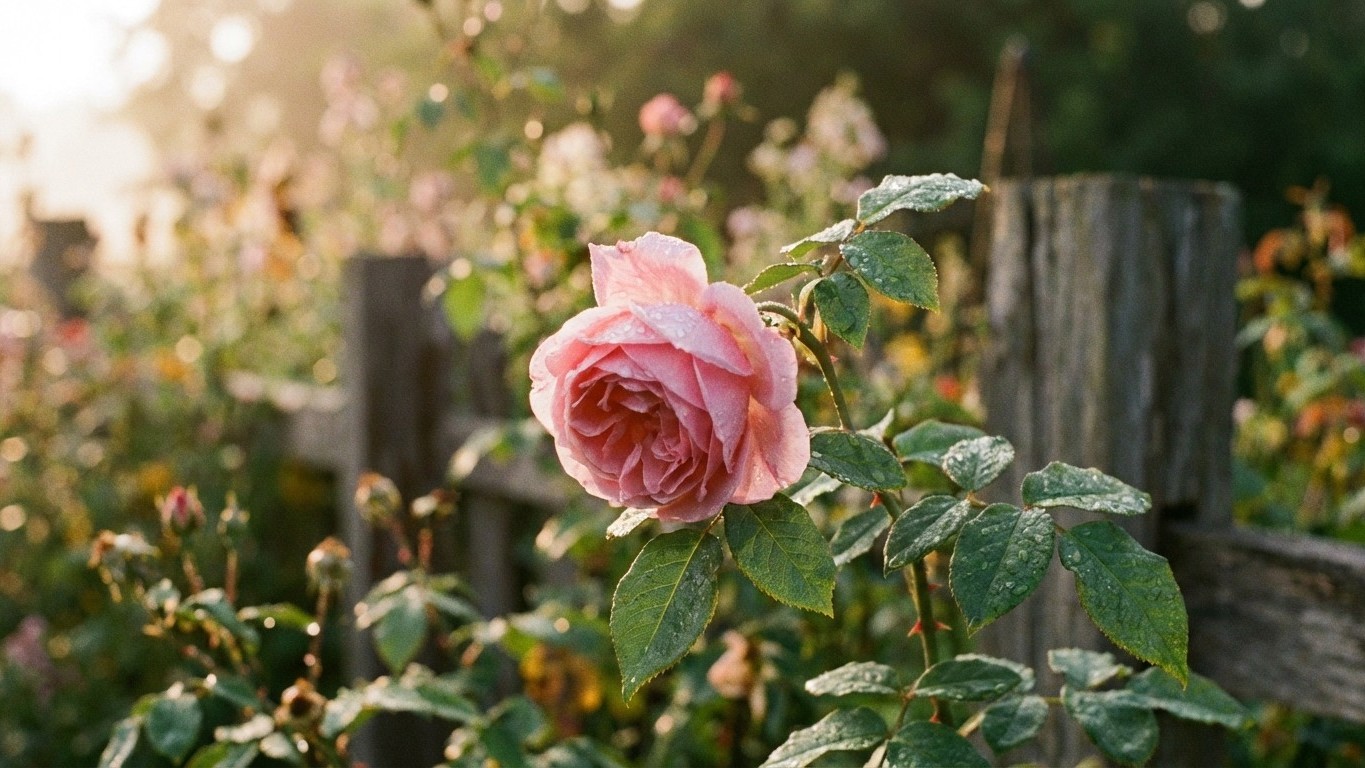

Prune hybrid tea, floribunda, grandiflora and most shrub roses in Nebraska during the first three weeks of April, once the buds swell and the worst freezes are behind you. Roses that bloom only once a year, including ramblers and once-blooming old garden roses, wait until right after flowering in June or early July. Cutting those in spring removes flowers they have already set. Cutting any rose too early invites a freeze to kill the new growth.
When to prune roses in Nebraska
For the Omaha area, the working window is the first three weeks of April. That comes from the last spring frost at the Omaha airport weather station, where the NOAA NCEI U.S. Climate Normals put the last 32°F freeze between April 12 and April 23, depending on how much risk you accept. Those dates describe the airport, not every yard. Many gardens differ from the airport, and rural or low-lying sites can see their last frost later, so a farmstead outside town may not be safe until the end of April or early May.
Zone matters too. The USDA Plant Hardiness Zone Map, which is built on the average annual extreme minimum temperature, runs from 4b to 6a across the state on the 2023 map. Gardens in the colder zones lose more cane to winter and warm up later, so they prune later and cut deeper.
What are roses doing in early April?
They are waking up. The canes have been dormant since fall, and by early April the buds along them swell and turn reddish or green. Pruning at this point makes the plant send that energy into the buds you leave behind. Prune in February or early March and you cut into canes you cannot yet judge, because the buds are still tight and live wood looks much like dead wood.
How do you know the time has come?
Watch the plant instead of the calendar. Start when the buds near the tips of the canes have visibly swollen and the long-range forecast shows no hard freeze coming. Many gardeners in eastern Nebraska use the bloom of forsythia as a cue, since it opens on roughly the same schedule.
If you mounded soil or mulch over the canes for winter, pull it back in stages as the weather settles, then prune once the canes are exposed and you can see what survived. The Protecting Roses Through a Nebraska Winter guide covers when to build and remove those mounds.
The date is not the same for every type of rose
The April window works for roses that flower on new wood, meaning stems that grow this spring. It fails for roses that flower on old wood, meaning canes that grew last year. A once-blooming rose pruned in April loses the buds that would have become its only flush of flowers. That one mistake is a common reason for reports of a healthy old rose that “never bloomed.”
Which roses bloom on old wood?
Ramblers and once-blooming old garden roses (gallicas, albas, damasks and centifolias) set their flower buds the summer before. Leave them alone in April except to remove canes that are clearly dead. Do the real pruning right after the last flower fades, usually in June or early July, so the plant has the rest of the summer to grow the canes that will carry next year’s flowers. Prune them right after they finish blooming and you keep the flower buds that will open next year.
Which roses bloom on new wood?
Hybrid teas, floribundas and grandifloras bloom on new canes and shoots that grow after pruning, so a hard April cut does not cost them flowers. The same goes for repeat-blooming shrub roses, including the Knock Out type. Climbers sit in between. Their flowers form on short side shoots that grow from the main canes, so you keep the long structural canes and shorten the side shoots back to a few buds each spring. Climbers that bloom only once belong with the old-wood group and wait until after flowering.
| Type of rose | Blooms on | When to prune |
|---|---|---|
| Hybrid teas, floribundas, grandifloras | New wood | First three weeks of April, as buds swell |
| Repeat-blooming shrub roses (Knock Out type) | New wood | First three weeks of April, as buds swell |
| Repeat-blooming climbers | Side shoots on canes | April for side shoots; keep main canes |
| Ramblers, once-blooming climbers | Old wood | Right after flowering, June or early July |
| Once-blooming old garden roses | Old wood | Right after flowering, June or early July |
If you are not sure what you have, watch it bloom for one season. A rose that flowers once in early summer and then stays green belongs in the old-wood group. One that keeps producing flowers into fall belongs in the new-wood group.
How far back to cut here
Cold changes the answer. In a mild climate you might trim hybrid teas by a third. In Nebraska, winter kills canes back by different amounts from year to year, and you remove that dead wood first. The cut goes below the dieback, so the final height depends on how much of the plant survived, and a rose that suffered a harsh winter can end up much shorter than one that did not.
For Knock Out roses and similar shrub types, cut the whole plant back hard. Hybrid teas and floribundas usually end up shorter when winter has taken more. Climbers are the exception, since their main canes stay and only the side shoots get shortened.
How do you tell where to cut?
Check the pith, the soft center of the cane. Cut a stem and look at the cross-section. White or cream pith means live wood. Brown or hollow pith means the cane is dead, so cut again a bit lower until the center looks clean. Brown canes can run surprisingly far down, sometimes to the base on a rose that was not protected.
Make each cut above an outward-facing bud, at a slant that sheds water away from the bud. Pointing the bud outward opens up the center of the plant so air moves through it. Remove any thin cane, anything crossing the middle, and anything that looks gray, black or sunken. Dead and cankered wood can harbor disease, so bag it and put it in the trash rather than the compost pile. The Rose Diseases in Nebraska: What the Climate Here Actually Brings guide explains what to look for on those canes.
If the whole plant dies back to the ground, a grafted rose may regrow from below the graft as a different rose than the one you bought. That is a separate problem from timing, and the growing roses in Nebraska guide covers what to do about it.
What pruning too early costs in Nebraska
Pruning tells the plant to wake up. Cut in March, and the buds below the cuts swell and push out soft new shoots. A hard freeze in April then hits tissue that has very little cold tolerance. The airport station’s last 32°F freeze falls between April 12 and April 23, and gardens outside the city can see it later, so a March cut is exposed to several weeks of possible freezes.
The damage is easy to recognize. The new red or green shoots go limp, then turn dark brown or black and shrivel at the tips. Young leaves look water-soaked, then crisp. Leaf buds that had only begun to swell may stay green and then fail to open.
The plant itself usually survives, because the crown and lower canes still hold reserves. Wait until the freeze danger has passed, then cut off the blackened growth back to firm green tissue, just above a healthy bud. The rose will push again, but the first flush of flowers comes late, and a second setback weakens the plant.
If buds have already broken and a freeze is forecast, cover the plants overnight with a bucket, a cardboard box or frost cloth, and take it off in the morning. Skip fertilizer until you see healthy regrowth.
Fall pruning carries the same risk in reverse. Heavy cuts before the first fall frost, which falls between October 15 and October 26 at the reference station, trigger tender growth that has no time to harden. In fall, remove only dead or damaged wood and any long canes that whip in the wind.
Checking this against your own county
The dates above are for the Omaha area. Elevation and distance from water move them within the state. The Panhandle sits much higher than the Missouri River valley, so spring warms later there, while gardens in cities and other sheltered spots often warm earlier. Your own site matters as well, since a low spot where cold air settles stays frost-prone long after a hillside has cleared.
For your county’s frost dates and the pruning date that fits them, call or visit your local office of University of Nebraska–Lincoln Extension. Start with its date, then let the swelling buds on your canes confirm it.
Common questions
Can I prune roses in fall in Nebraska?
Only lightly. Remove dead or broken canes and shorten very tall canes that wind could whip or loosen at the base. Leave the real shaping for spring, after you can see how much wood survived winter.
Is it too late to prune if the leaves have already come out?
No. Hybrid teas, floribundas and shrub roses can still be cut back once they are leafing out, and you will see exactly which canes are dead. The plant loses some of the energy it spent on early leaves, but it recovers. Waiting past the end of April is better than cutting in March.
When should I prune a rose that blooms once in early summer?
Right after the flowers finish, in June or early July. Pruning it in April removes the buds that would have opened. In spring, take out only canes that are plainly dead.
Should I prune a rose that suffered heavy winter dieback differently?
Cut each dead cane back until the pith is white, even if that leaves only a few inches. Once the rose resprouts, leave the new shoots alone and let them grow. A rose that lost most of its canes can still bloom the same summer if it was on new-wood growth, though it may be later than usual.