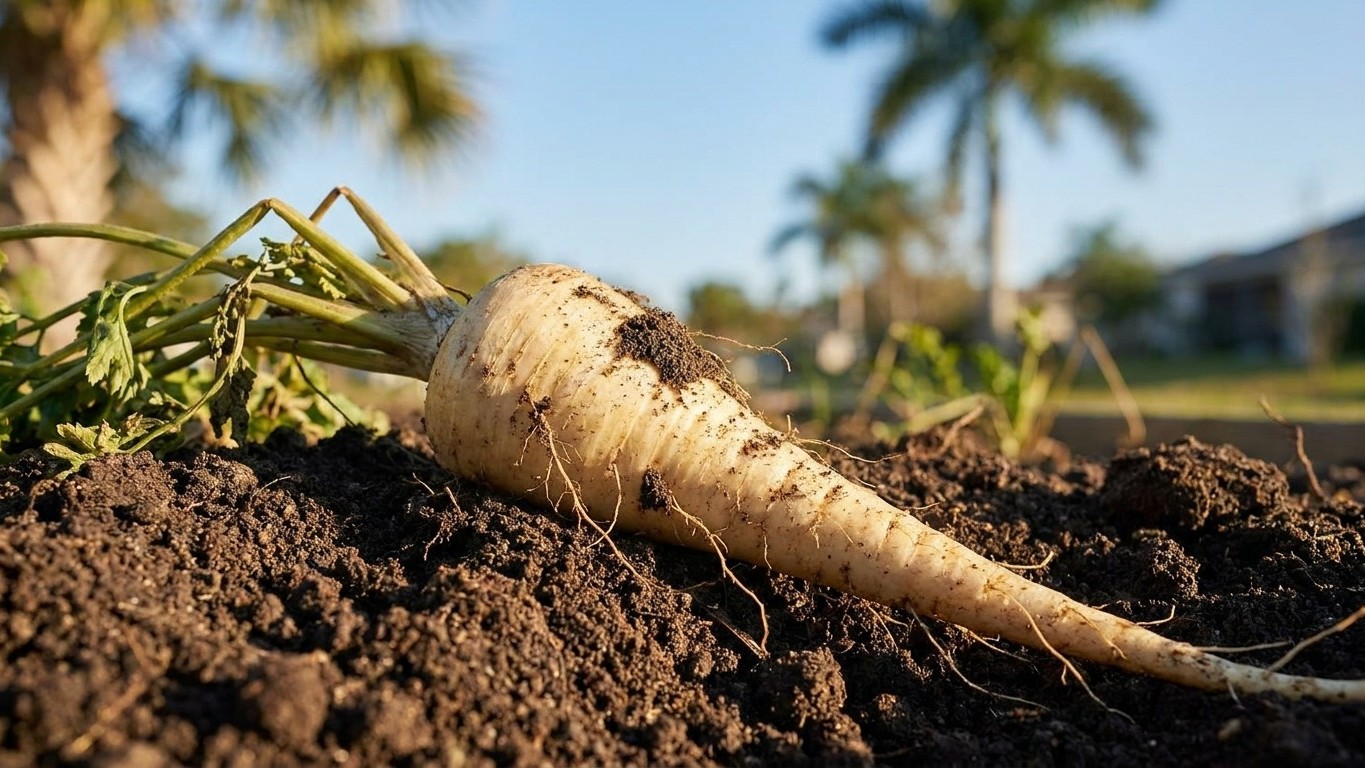

Lift parsnips after the roots have sat through several weeks of frost. Near Omaha that means late November at the earliest, and you can keep digging through winter whenever the ground is workable. Cold turns the starch in the root to sugar, so waiting pays off. Once lifted, parsnips keep four to six months at 32 to 34°F and 98% humidity, but only if they stay away from apples and other ripening fruit. The timing and storage details follow.
The short answer
Does Nebraska deliver several frosty weeks? It does, with room to spare. At the Omaha reference station, the mean daily minimum of the coldest month is 15.2°F, according to NOAA NCEI Climate Normals. The first fall frost typically arrives between October 15 and October 26, and the last spring frost falls between April 12 and April 23. Those are airport numbers. Suburban and rural gardens usually freeze later in spring and earlier in fall, often by one to two weeks, so ask your county extension office what your own ground does.
A parsnip grown here will sweeten, not just grow. Utah State University Extension notes that parsnips taste best after several weeks of cool, frosty weather, which converts stored starch to sugar. The full mechanism is laid out in Will Parsnips Sweeten in Nebraska?, but the practical rule is simple. Start digging once the roots have had several weeks of frost after that first fall freeze, which for most gardens means late November or later. Taste one before you commit the whole row.
After that, you can lift as needed. A thick layer of straw or leaves over the row keeps the soil from freezing solid, so a January dinner doesn’t require a pickaxe. Dig the last roots before new green growth starts in spring, because a plant that is regrowing is spending the root’s reserves, and the texture suffers.
How long do parsnips keep after you lift them?
Four to six months is a long keeper by any standard. That figure comes from USDA Agricultural Handbook 66, and it assumes 32 to 34°F at 98% relative humidity held steady. Almost no house does that. A refrigerator crisper or a cold, damp cellar gets you closer than a kitchen counter. Parsnips are not chilling sensitive, so cold itself won’t hurt them.
Ethylene will. Parsnips make very little of it themselves, but the handbook reports that even low levels in cold storage cause bitterness, likely from a buildup of a compound called xanthotoxin. Roots stored near apples, pears, or any ripening fruit can turn bitter even at the right temperature. Give them their own drawer, or their own room. Cut the tops off after harvest, but don’t trim into the crown.
Does the season fit?
It fits comfortably. Parsnips are sown in place and need 100 to 120 days counted from seeding, with the sowing going in 2 to 3 weeks before the last spring frost. Here is how that plays out at the reference station.
- Sow in late March or early April. Two to three weeks ahead of the April 12 to April 23 last-frost range lands between about March 22 and April 9. Gardens outside the city run a week or two later, so early to mid April is common once the soil is workable.
- Wait for seedlings to emerge. Parsnip seed is slow, and a row can look bare for a while. Keep the seedbed evenly moist and resist digging it up to re-sow.
- Count 100 to 120 days from the day you seeded. A sowing between March 22 and April 9 produces full-size roots from early July to about August 7. Even a sowing that slips to the first days of May is finished by the end of August.
- Let the roots wait. They are mature long before the first fall frost (October 15 to October 26 at the reference station), and nothing is gained by pulling them in summer. They just sit and size up while the weather cools.
- Start the frost clock at the first freeze. Several weeks of frosty weather after that date puts the first reasonable digging in late November. A rural garden that freezes a week or two earlier can start a bit sooner, but the weeks still have to be real frosty weeks.
Notice where the margin is. The growing season has plenty of slack, and the thing that can actually run short is the delay between a late sowing and a weak, small root in fall. If you want to understand what else is competing for that crop between seeding and lifting, What Eats Parsnip in Nebraska, and When covers it, and the basics of the crop sit in Growing Parsnips in Nebraska.
What goes wrong here
Most failures trace back to the ground, the water, or the calendar. Soil across the state ranges from sandy ground in the Sandhills to heavy clay in the east, and a county extension office can tell you which one you have.
- Forked roots in heavy or stony ground. Parsnips want deep, sandy soil, and a root that meets clay or a stone splits around it. Double dig heavy soil before sowing, pull out every stone you find, and rake the bed fine.
- Forked roots from overwatering. This is a separate cause and can happen in good soil. A constantly soggy bed pushes roots to branch. Keep the seedbed moist until the plants are up, then water deeply and let the surface dry between waterings.
- A season that runs out. Roots sown late, or seed that was slow to sprout, may be small by fall. Sow in place as soon as the soil can be worked and keep the bed evenly moist so germination isn’t delayed.
- A winter too mild to sweeten. With a mean coldest-month minimum of 15.2°F, this is uncommon here, but a warm fall can push the first freeze late and shorten the cold stretch. If your roots taste starchy in late November, leave them in the ground and wait for more frost.
- Bitter roots after storage. The cause is nearly always ethylene from nearby fruit. Move the parsnips to a separate drawer or room, and check the fruit bowl before you blame the variety.
- Chewed or tunneled roots. Damaged roots store poorly, so cook those first. The pest guide linked above explains what is feeding on them and when.
Common questions
Can parsnips stay in the ground all winter?
Yes. They tolerate hard freezes, and the cold is what sweetens them. Mulch heavily so you can dig in midwinter, and lift everything before spring growth begins.
How soon after the first frost can I dig them?
Wait for several weeks of frosty weather, not just one cold night. With a first frost around mid to late October, late November is a sensible starting point. A taste test settles it.
Where should I keep lifted parsnips without a root cellar?
A refrigerator crisper is the closest match to 32 to 34°F and high humidity. Keep them apart from apples and other fruit, and top them without cutting into the crown.
How do I know a parsnip has sweetened?
Pull one root and taste a piece, raw or roasted. A sweet, nutty flavor means the starch has converted. A bland, starchy taste means the roots need more cold weeks, and a bitter one points to storage near ripening fruit.