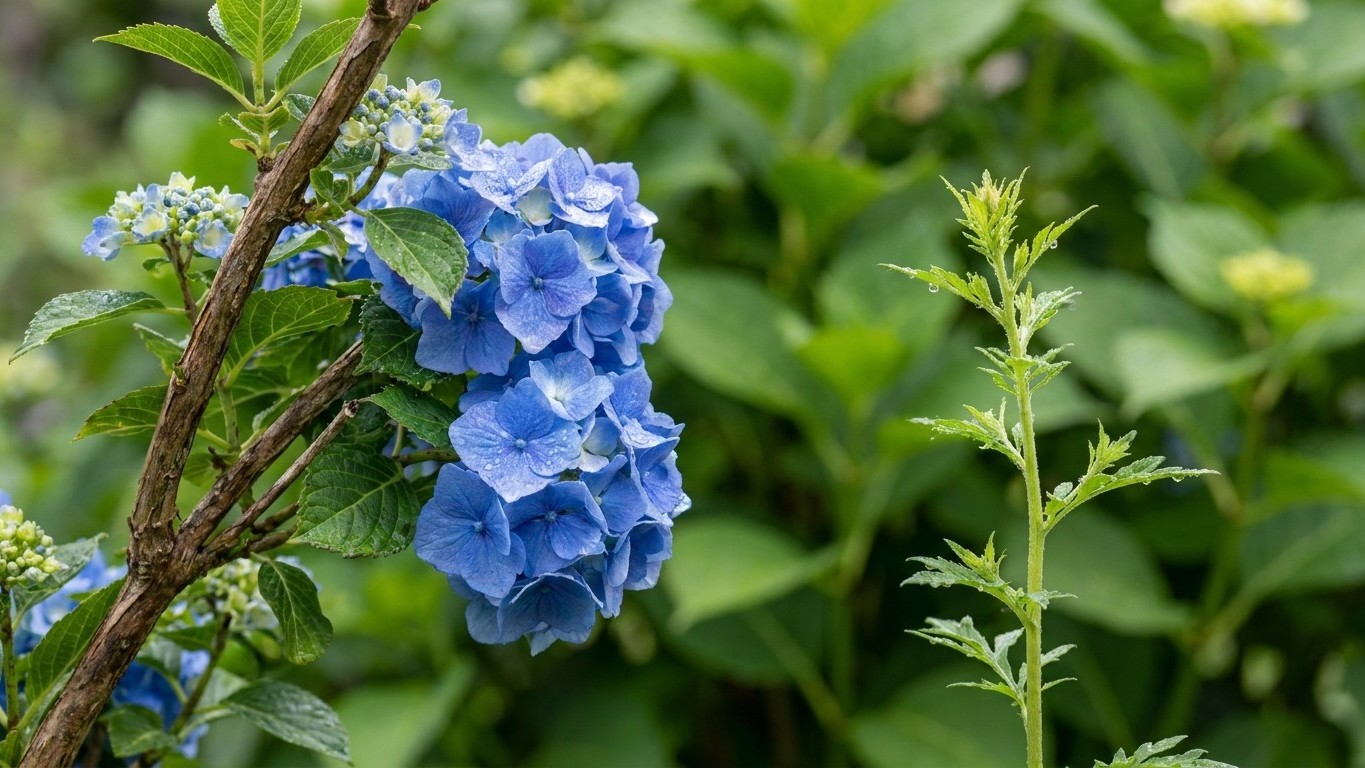

The date depends on which hydrangea you own. Smooth and panicle types bloom on stems grown this season, so they get cut in early spring. Bigleaf types often carry flower buds on last year’s stems, so they get a light touch after bloom, or none at all. North Dakota winters add one rule: leave the stems standing through fall, because they hold snow around the crown.
What this comes down to in North Dakota

At Fargo, the reference city for these dates, the last spring frost falls between May 4 and May 15. Cut smooth and panicle hydrangeas in late winter or early spring, before the buds break, and hold off on bigleaf types until new leaves show you which stems are alive. The first fall frost at Fargo arrives between September 25 and October 5, so the season for pruning, and for the regrowth that follows, is short. Both ranges come from the 32F freeze probabilities in the NOAA NCEI U.S. Climate Normals. Suburban and rural gardens often see the last spring frost one to two weeks later than the airport station does, and the first fall frost earlier.
A hydrangea sets flower buds in one of two ways. Some types form buds on stems grown the previous year, which is called old wood. Others form buds on stems that grow this spring, which is called new wood. A cut at the wrong time on an old-wood plant removes the flowers before they open. Winter matters too. The USDA Plant Hardiness Zone Map, which rates a place by its average annual extreme minimum temperature, puts North Dakota in zones 3a to 4b. At those lows, the tops of many hydrangeas die back partly or all the way to the ground, so the old-wood versus new-wood question decides whether you get flowers at all.
Which hydrangeas get pruned when?
| Type | Blooms on | When to prune | How much |
|---|---|---|---|
| Smooth (Annabelle type) | New wood | Late winter to early spring, before buds break | Down to 6 to 12 inches, or lighter for a taller shrub |
| Panicle (Limelight type) | New wood | Late winter to early spring, before buds break | Up to one-third of the height, plus dead or crossing stems |
| Bigleaf (mophead, lacecap) | Mostly old wood | After the last spring frost, once leaves show live wood | Dead stems only; trim spent flowers by late July |
| Reblooming bigleaf | Old and new wood | Same as bigleaf | Dead stems only; deadhead lightly |
Should you prune hydrangeas in fall?
No. A fall cut on a bigleaf removes next summer’s buds. On smooth and panicle types, the standing stems catch drifting snow, and that snow cover insulates the crown through the coldest weeks. Fall in North Dakota is also brief, with frost possible by late September, so late growth has little time to firm up. Take out only stems that are clearly broken. Leave the rest until spring.
Working it out for your own garden
A calendar date written for another state will not fit here. Use a method that follows the plant and the local frost, and it will still work after a move or in a cold year.
How do you tell which type you have?
Start with the flower. Big, round white heads on a shrub that dies back each winter point to a smooth hydrangea. Cone-shaped clusters that open white and age to pink or bronze point to a panicle. Round heads in blue, pink or purple, or flat lacecaps with a ring of showy florets around a center of tiny ones, point to a bigleaf. If the tag is long gone, watch one spring. Stems that leaf out from the base only, after a hard winter, are acting like new-wood bloomers. Stems that leaf out along their length carry old wood and deserve a careful hand.
How do you set the date?
For new-wood types, aim for the stretch after the deepest cold and before the buds swell, often late March through mid April once the snow has pulled back. If a warm spell has already pushed buds open, cut anyway. A frost may nip the new growth, but these plants regrow from lower buds, and the cost is mostly a later bloom. For old-wood types, start from the frost window instead. At Fargo the last spring frost runs from May 4 to May 15, and a garden one to two weeks behind the airport should plan on a later start. Wait until after your own window, then clip back to the first set of live buds. For the end of the season, work backward from the first fall frost, September 25 to October 5 at the reference city. Finish shaping and deadheading old-wood types by late July so the buds that form in late summer are left alone.
Which cultivars hold up under this timing?
Take Annabelle, a smooth hydrangea that blooms on new wood. Cut it to 6 to 12 inches in early spring, and the new stems grow and flower by midsummer. Even a winter that kills the tops costs it little. Limelight, a panicle, works the same way. Remove up to a third of the height in early spring and the flowers come from this season’s growth.
A reblooming bigleaf such as Endless Summer sits on the other side of the line. In a zone 3 garden, or after a winter with little snow, the stems that carried old buds die back. Flowers then come only from new wood, late in the season, and the first fall frost may arrive soon after the first color. Prune its stems in fall or early spring and you remove the few buds that would have opened early. In zone 4b gardens with good snow cover, it fares better, but it still asks for a patient pruner.
What changes across the state
North Dakota is large and mostly open, and the pruning calendar shifts with where you garden. The Red River Valley in the east is flat and low, and Fargo sits there. Gardens in the north, close to the Canadian border, are colder, and spring arrives later. The south and the river corridors along the Missouri tend to be milder. The west and the north-central hills rise higher, and elevation pushes the last spring frost later and the first fall frost earlier. The shift between the airport and your garden is often a week or two, and more on high ground. This is why the zone range runs from 3a to 4b.
Wind and snow matter too. On open prairie, wind strips snow off the ground and leaves hydrangea stems exposed to cold and drying. A shrub tucked against a house, a windbreak or a tight row of trees keeps its snow, and its stems come through in better shape. A garden in town is also warmer than a farmstead a few miles away, because buildings and pavement hold heat. Large reservoirs on the Missouri River soften nearby temperatures slightly.
The practical effect is that your buds should set the date, and the Fargo window is a starting point. In a colder or higher spot, wait longer before judging which stems are dead. In a sheltered town yard, you can cut new-wood types earlier and expect leaves sooner.
The mistakes this state punishes

One costly mistake is cutting a bigleaf to the ground in fall or early spring. In a mild climate that only delays bloom. Here, where cold already kills much of the top, it can erase every old bud that survived. Leave the stems until leaves show you which are alive, and cut only what stays brown. Careless cutting in a late-May cleanup can do similar damage, so use clean, sharp pruners and cut at a pair of buds.
The second is pruning on the first warm weekend. A string of mild days in March can look like spring, but a hard freeze often follows, and pruning wakes the buds. Wait until the snow has gone and the worst cold has passed, and take a quick look at the forecast before you cut. If new growth opens early, a frost can burn it back, so keep a sheet or bucket handy for covering the shrub overnight.
The third is trimming old-wood types in August or September to tidy them up. Those late-summer weeks are when the plant sets next year’s buds, and a cut then removes the bloom you wanted. Finish deadheading by late July.
The last is following advice written for the South. Guides that say to prune in February assume a mild spring. In North Dakota, where the first fall frost can come in late September, a hydrangea has less room to recover from a bad cut. Use bud swell and the local frost window instead of a fixed date.
Checking this against your county
The Fargo numbers are a reference point, and your county may run a week or two off, more at higher elevation. Your county office at NDSU Extension can tell you what frost dates and winter conditions to expect locally, and which hydrangeas have done well nearby. For planting, soil and winter care, see growing hydrangeas in North Dakota.
Common questions
Can I cut all my hydrangeas to the ground in spring?
Smooth hydrangeas take it well, since they bloom on new wood. Panicle types do better with a cut of up to a third of the height, which keeps a sturdy frame. Bigleaf types should not be cut to the ground, because that removes the buds from last season’s stems.
When should I deadhead hydrangeas in North Dakota?
Deadhead bigleaf types soon after flowers fade, and finish by late July. On smooth and panicle types, deadheading is optional. Many gardeners leave the dried heads for winter interest and cut them off in early spring with the main pruning.
How can I tell if a stem is dead or just late to leaf out?
Wait until after your last spring frost, then scratch a stem with a thumbnail. Green tissue underneath means it is alive. A brittle stem that snaps cleanly and is dry and tan inside is dead. Bigleaf types may not leaf out until late spring, so patience pays off.
Why did my hydrangea leaf out but never bloom?
An old-wood bigleaf that died back to the ground makes leaves but no flowers, because its flower buds were on the stems that froze. Pruning at the wrong time can cause the same result. Protect the stems with a deep snow cover or a loose wrap of burlap, and prune only after you see live wood.