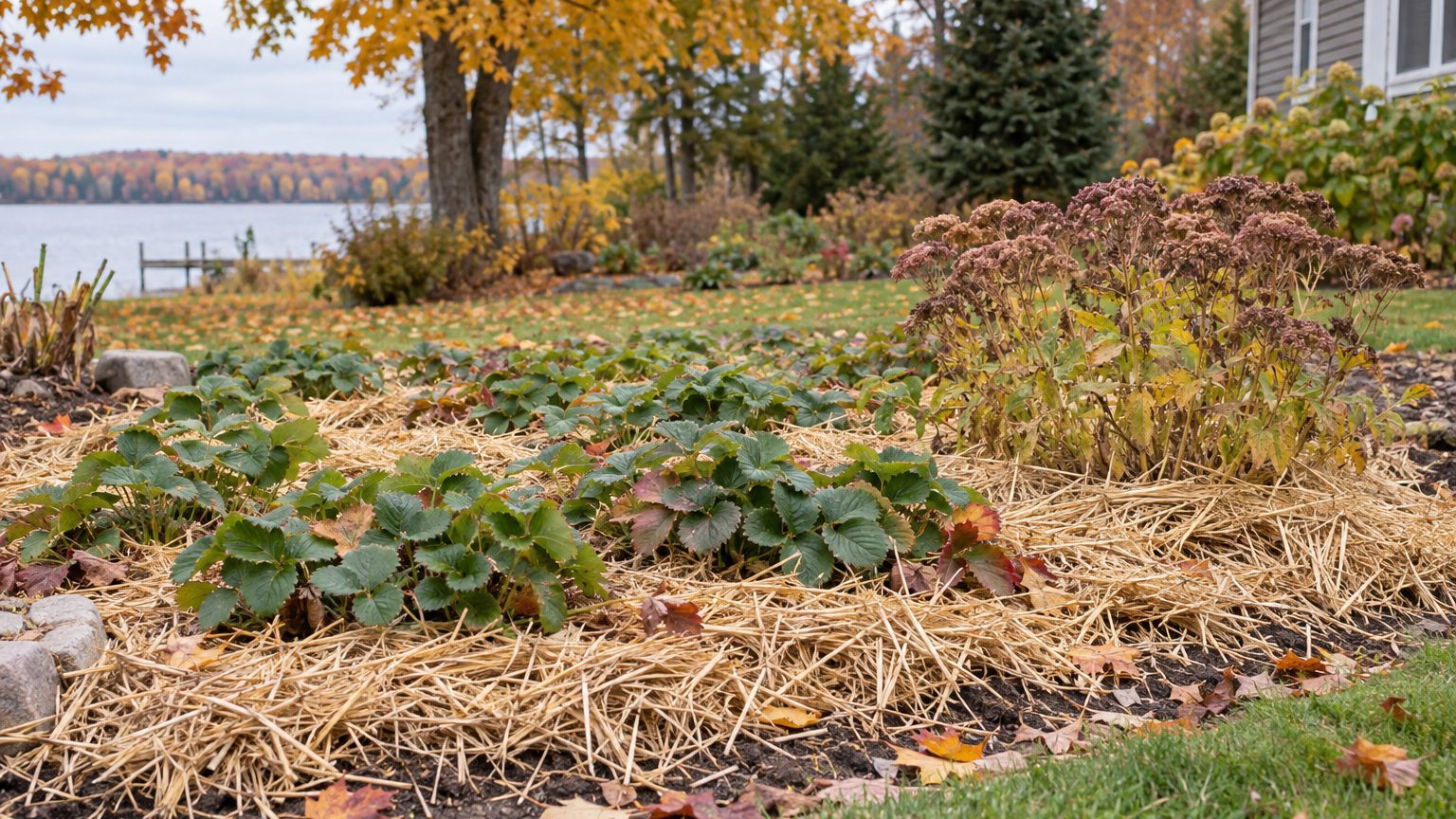

Winter mulch goes on after the soil starts to freeze, not before. In northern and high-elevation Nevada, that means well after the first fall frost, once plants are dormant and the ground stays stiff in the morning. Where winter nights mostly stay above freezing, as in the Las Vegas valley, mulch is a moisture, weed and frost-night tool instead. In both places the target depth is 2 to 3 inches.
When to put winter mulch down in Nevada
The timing rule runs against instinct. Winter mulch is not a blanket that keeps plants warm. Its job is to keep the soil frozen once it freezes, so the ground doesn’t thaw on a sunny afternoon and refreeze at night. Those repeated swings are what push shallow crowns up out of the soil and snap fine roots. Mulch laid in October, while the soil still holds summer heat, does the opposite. It keeps the ground warm and damp, so crowns stay soft and wet. It also gives mice and voles a cozy place to settle in before the cold arrives.
Where does the ground freeze in Nevada?
Nevada runs from 4a to 10a on the USDA Plant Hardiness Zone Map 2023, a system built on a single number: the average annual extreme minimum temperature. That spread is why no one date works statewide. Reno, Carson City and any garden at elevation see their first fall frost months earlier than Las Vegas, and their ground really does freeze and thaw through winter.
For those colder gardens, wait for several hard frosts in a row. Then mulch when the top inch or so of soil is frozen on cold mornings and perennials have died back or stopped growing. Mulch after the ground first freezes, well past the first fall frost, never while the soil is still warm. Your local first-frost range is on the First and Last Frost Dates in Nevada page, and your county extension office can tell you how soon the ground typically locks up at your elevation.
What is winter mulch for in the Las Vegas valley?
NOAA’s 1991-2020 Climate Normals for the Las Vegas reference station show a mean daily minimum of 39.6°F in the coldest month. That is above freezing. Frost-date tables built on the 1991-2020 normals put the first 32°F freeze of the season in December, though the exact date varies by station and year. Those numbers describe a desert city with a strong heat-island effect. They are an extreme for Nevada, so don’t carry them to Reno, Carson City or anywhere higher.
In the valley, the ground does not freeze for weeks, so heaving and rodent nests are not the concern. Winter mulch there does three other jobs: it slows evaporation from soil that dries fast even in January, it holds down winter weeds, and it can be pulled over plants on the occasional night when a freeze is forecast. Whether you need it at all depends on the plant. Established, well-adapted perennials usually get through without it. A thin layer is optional, and many gardeners skip it until a cold snap is in the forecast.
| Where | What the ground does | What winter mulch is for | When it goes on |
|---|---|---|---|
| Las Vegas valley | Coldest-month mean minimum of 39.6°F; ground does not stay frozen | Moisture, weeds, cover on frost nights | Any time in winter; optional |
| Reno, Carson City, higher elevations | First frost months earlier; soil freezes and thaws | Keeping soil frozen, protecting crowns from heaving | After the ground starts to freeze, well past first fall frost |
Strawberries
A strawberry plant keeps its growing point at the crown, right at soil level. Bare cold and drying wind hit that spot first. In the colder parts of Nevada, a winter of freezing and thawing can lift the crown out of the ground, leave roots hanging in the air and expose the plant to the next hard night. Plants that get through winter on bare, frozen ground often come back thin or not at all. A layer of mulch evens out the swings and shades the soil from the winter sun.
What should you use to mulch strawberries?
Clean straw is the standard choice. It’s light, it stays fluffy when it gets wet and it lets some air through. Hay is a poor substitute because it carries seed, and you will pull the resulting weeds out of the berry bed for months. Shredded leaves can work, but they mat down in wet weather and hold water against the crowns. If you are building or renewing a bed, the Growing Strawberries guide covers planting and spacing.
How deep should straw be over strawberry plants?
Aim for 2 to 3 inches. NC State Extension’s Gardener Handbook says: “A 2-inch to 3-inch layer of mulch suppresses most annual weed seeds and makes it easy to hand-pull any that do germinate.” That figure is NC State’s advice for weed control around ornamentals, not for strawberry winter cover. It is a sensible starting depth for crowns, and your county extension office can tell you whether colder sites need a bit more. Spread the straw loosely and let it settle on its own. Packing it down defeats the point, and going much deeper can hold moisture against the crowns and invite rot.
Lay it over the crowns and between the plants, but only after the ground has begun to freeze and the plants have gone dormant. Where it’s still mild, wait. The plants will tell you: leaves that have stopped growing and turned dull or reddish are ready.
When do you pull strawberry mulch back in spring?
Straw left on too long smothers new growth. Rake the straw off the crowns as the plants start to green up in late winter or early spring, and leave it loose in the aisles. Growth that comes up pale yellow under the straw is a sign you are late. Keep the pulled-back straw close by, because a late freeze after bloom can still damage flowers. You can pull it back over the plants for a night and take it off again the next morning. Your last-frost range in the Nevada frost-date guide tells you how long to stay ready.
In the Las Vegas valley, strawberries are not under heaving pressure, so a permanent winter cover is not needed. A loose straw layer can still help with moisture and weed control, but it is optional. On the few nights when a freeze is forecast, tuck extra straw or a breathable cloth over the plants and remove it the next morning.
Perennials and borderline plants
Most established perennials that are rated for your zone need little help. The ones that gain from winter mulch fall into a few groups: plants set out this fall or last spring whose roots haven’t spread yet, shallow-rooted clumpers that sit close to the surface, and anything rated at the edge of the zone where you garden. Check the rating against the USDA Plant Hardiness Zone Map 2023, and remember that Nevada’s range is wide, so a plant that is fine in one valley may be borderline a few hundred feet higher. A south-facing wall or a sheltered corner counts for something, too.
The shape of the mulch matters as much as the depth. Build a ring around the plant and leave a gap of an inch or two next to the crown, instead of piling material on top of it. Mulch heaped against crowns and stems stays wet, which invites rot and gives rodents cover right where they want to chew. The same NC State guidance, written for trees, says: “Provide a 3-inch layer of mulch to reduce water loss and maintain uniform soil moisture and temperature around roots.” That is the same order of depth as the weed advice, and it is a good ceiling for most perennial beds as well. Make the ring no more than 3 inches deep, with open ground at the crown.
Timing follows the same logic as for strawberries. In the colder parts of the state, wait until the ground has started to freeze, then put the ring down. Shredded bark, straw and chopped leaves all work. Heavy, wet material that packs down is the one to avoid. Our guide to Mulching Without Killing the Plant goes into material choices and how to avoid piling it against stems.
Herbs deserve special mention. Many Mediterranean herbs dislike wet feet in winter more than they dislike cold, and a deep, damp mulch can finish them off. A light ring of coarse material, kept clear of the stems, is safer. The details for woody and soft-stemmed herbs are in Getting Perennial Herbs Through the Winter.
In the Las Vegas valley, where the coldest month averages a minimum of 39.6°F at the reference station, perennial mulch is about moisture. A ring 2 to 3 inches deep keeps roots from drying out in winter sun and wind. Tender plants can get a frost cover on the rare cold night, such as a sheet or frost cloth draped over a frame and removed once the temperature climbs the next morning.
What goes wrong
Mulching too early
Mulch laid on warm soil keeps it warm and damp. Strawberry crowns and perennial stems stay wet instead of hardening off for the cold. The tell is soft, darkened tissue at the crown or a sour smell when you lift the mulch. Prevention is simple: wait until the ground has begun to freeze and the plants are dormant. In colder parts of Nevada, that is well past the first fall frost. If you are tempted in October, spread the material near the beds and leave it in a pile until the soil is ready.
Mulch that mats and rots
Whole leaves, wet grass clippings and fine compost press into a dense sheet. Water sits on top, air can’t get in, and the plant underneath stays soggy. You will find a gray or white film, a slimy layer or crowns that are mushy in spring. Use clean straw or coarse chopped material, keep the layer to 2 to 3 inches, and fluff it with a rake after heavy snow or rain.
Voles and mice nesting in the mulch
In the colder parts of the state, where the ground does freeze, a thick layer of mulch is an inviting nest. Damage shows up in spring as gnawed crowns, chewed bark on young shrubs and small runways in the grass beside the bed. Keep the layer thin, leave a gap at the crown or trunk, and wait to mulch until the weather has turned cold, so rodents have already settled elsewhere. Don’t use it where it would be piled against stems.
Forgetting to uncover in spring
Plants that come up pale, thin and stretched under straw are telling you the mulch stayed too long. Check the beds as soon as the soil thaws and the first new growth appears, and pull covers off the crowns right away. Gardeners often forget because the weather turns pleasant and the job slips. Put a reminder on your calendar for the first warm spell, and keep the pulled-back material at the edge of the bed in case of a late freeze.
Common questions
Can I mulch strawberries in Las Vegas for winter?
You can, but the reasons are different from northern Nevada. The ground doesn’t freeze there for long, and the NOAA coldest-month mean minimum at the reference station is 39.6°F, so heaving isn’t a worry. A loose straw layer holds moisture and suppresses weeds, and extra straw or cloth covers the plants on a freeze night.
Is the first frost the signal to mulch?
No. The first frost only tells you the season has turned. Wait until the ground begins to freeze, the plants have stopped growing and the surface stays stiff on cold mornings. Putting mulch down at the first frost can trap soil warmth and moisture around the crowns.
What is the best mulch for strawberries and perennials?
Clean straw is the usual choice for strawberries. For perennials, straw, shredded bark or coarse chopped leaves all work, as long as the layer stays at 2 to 3 inches and leaves open space around the crown. Avoid hay with seed in it and anything that packs into a wet mat.
How do I find the right date for my own garden?
Start with your first and last frost ranges and watch the soil, because it matters more than the calendar. The frost-date page and the other Nevada guides help you locate your zone, and your county extension office can tell you when the ground typically freezes at your elevation.
Sources: ncei.noaa.gov | content.ces.ncsu.edu