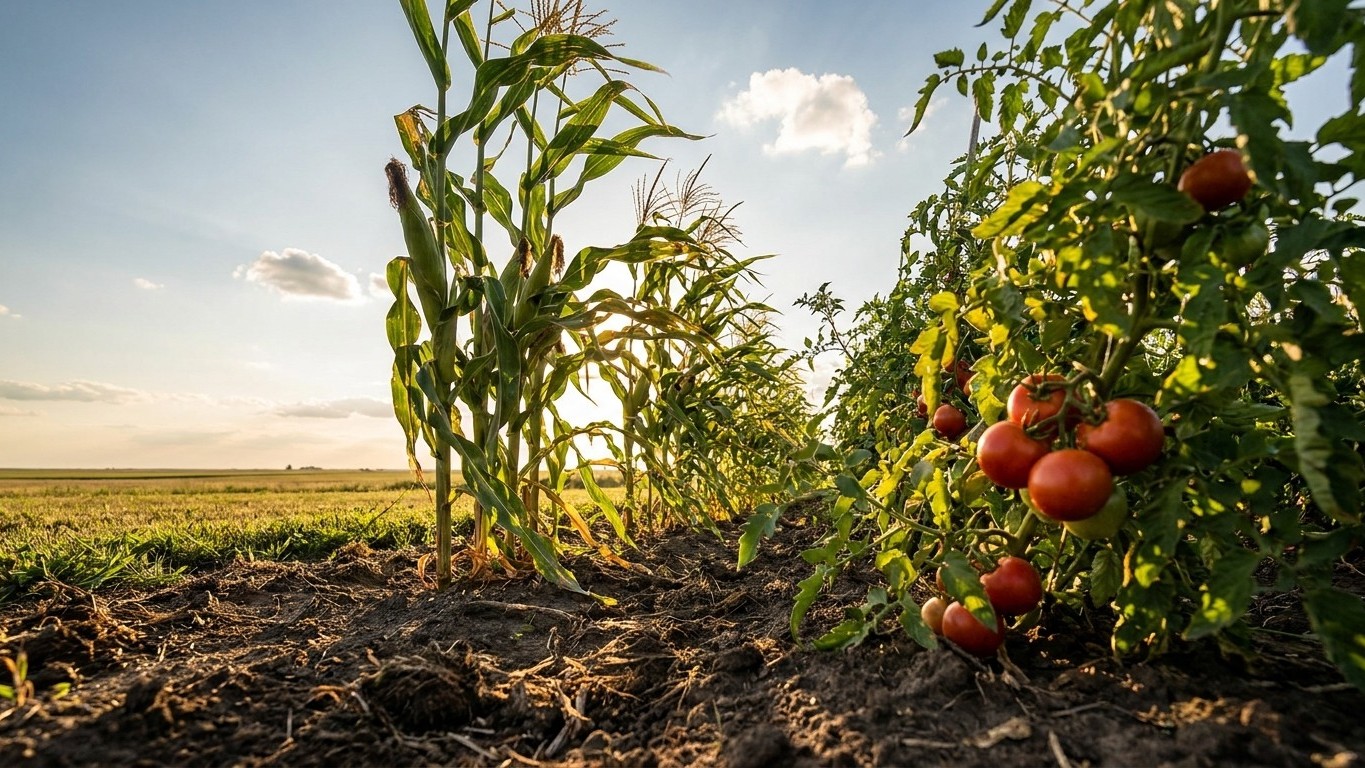

Corn in Alabama gardens draws a short list of true pests, out of the many insects the state’s extension service tracks across vegetable gardens in general. Which ones actually feed on corn, and at what stage of the plant’s life, decides how much damage shows up by harvest. The short answer: a handful of insects go after it, some as soon as the seedling breaks ground, others only once the ear itself has formed.
Which pests attack corn in Alabama

The Alabama Cooperative Extension System documents ten pests for home vegetable gardens in the state: Aphids, Corn earworm (tomato fruitworm), Cowpea curculio, Imported cabbageworm, Leaffooted bug, Mexican bean beetle, Spider mites, Spotted cucumber beetle, Squash vine borer, and Stink bugs. That’s the full list for this territory, and this article won’t pad it with anything the service doesn’t already track.
Half that list has nothing to do with corn. Cowpea curculio goes after cowpea and southern pea pods, not corn ears. Imported cabbageworm works cabbage, broccoli and other brassicas. Mexican bean beetle, true to its name, feeds on bean foliage. Squash vine borer tunnels into squash and other cucurbit vines, and a solid corn stalk gives it nothing to bore into. Leaffooted bug favors soft fruiting vegetables like tomatoes and beans, where it can pierce the fruit easily; a husk-wrapped corn ear is a tougher target and rarely its first pick.
Five pests on that list do feed on corn here. Corn earworm, called tomato fruitworm on other crops, goes straight for the ear tip and is the one most gardeners eventually meet. Aphids cluster on tassels and leaf undersides, feeding on sap. Spider mites feed the same way but stay on the foliage rather than the ear. Spotted cucumber beetle chews seedling leaves and silks above ground while its larvae work corn roots below, so it can show up twice in one season looking like two different problems. Stink bugs pierce through the husk to feed on kernels still soft enough to damage.
A pest documented for one crop isn’t automatically a corn pest — the extension service tracks each insect by the plant it actually damages, and corn only shows up on five of the ten files. Anyone growing tomatoes, beans, squash or cabbage near their corn should expect a different insect on each crop, not one general bug problem moving between them.
When each one shows up, and what it does first
Corn goes into Alabama ground once the soil itself has warmed past 60°F, which comes some time after the last spring frost — the reference window for that last frost runs March 19 to April 3 at the station NOAA uses for the area’s climate normals, and soil lags well behind the air. From that planting date, sweet corn needs 60 to 90 days, and that window has to close before the first fall frost, timed here at November 2 to November 16.
Aphids are usually the earliest sign of trouble: clusters on tassels or on the underside of young leaves, sometimes on a stalk that isn’t even knee-high yet. They don’t wait for heat or for an ear to form.
Spotted cucumber beetle follows close behind, chewing seedling leaves and the base of young silks as soon as they appear. Because its larvae work the roots underground, a garden can show root damage and beetle-feeding on the same plant weeks apart, which reads like two separate problems instead of one insect’s two stages.
Spider mites tend to wait for heat. Alabama averages 58.5 days a year at 90°F or hotter, and that stretch of dry, high heat is exactly when mite populations build fastest, the first visible sign is usually a stippled, dusty look on the underside of leaves, not a visible insect.
Corn earworm and stink bugs both wait for the ear. Earworm moths lay eggs on fresh silk, and the larva rides the silk channel down into the tip before anyone notices, chewed silk or a small hole at the tip is the first sign, not the caterpillar. Stink bugs arrive around the same stage, piercing the husk to feed on kernels while they’re still soft, which can leave the outside of the ear looking fine while the inside is already damaged.
Telling the damage apart from Everything else
Not every damaged-looking ear or dusty leaf means an insect got there first. Alabama’s heat load, averaging 58.5 days a year above 90°F, stresses corn on its own, and drought, a nutrient gap, or even normal ripening can look enough like insect feeding to fool a quick glance.
| What you see | Could be insect feeding | Could also be | What tells them apart |
|---|---|---|---|
| Pale, stippled, dusty leaves | Spider mites | Drought stress or a nitrogen gap | Mites leave fine webbing underneath the leaf; drought rolls the leaf but leaves no webbing |
| Chewed silk or a hole at the ear tip | Corn earworm | Normal silk drying as the ear ripens | Insect damage comes with a hole and visible frass; ripening silk is uniformly brown and dry with no boring underneath |
| Sunken, discolored spots on kernels under an intact husk | Stink bugs | Poor pollination leaving blank kernels | Insect feeding leaves a puncture mark with discoloration around it; a pollination gap is just smooth, undeveloped kernel with no mark |
| Small round chew marks on seedling leaves | Spotted cucumber beetle | Wind scarring or transplant shock | Beetle feeding leaves clean, rounded holes; mechanical damage tears or bruises the tissue instead |
| Clusters on tassels, with a sticky residue nearby | Aphids | Dust or pollen buildup | Aphids move when touched and leave sticky honeydew; dust wipes off dry and doesn’t return within a day |
No single sign on this list confirms anything by itself — the ripeness check itself relies on three signs together, not one: dry brown silks, husks still moist and green, and milky juice from a punctured kernel. A stippled leaf or a spotted kernel deserves the same caution: check for the distinguishing sign, and if it’s still unclear, that’s exactly the kind of question a county extension office answers for free.
What actually works here, and what is a waste of time
On a season this short, timing beats any product. Sweet corn needs its 60 to 90 days to run between a planting made after the soil clears 60°F and a first fall frost arriving, in this area’s reference window, between November 2 and November 16. Getting ears formed and picked before the worst of corn earworm pressure sets in matters more than any treatment applied after the fact — once the larva is inside the ear, nothing reaches it from outside.
A physical barrier placed over the silk channel right as silks emerge does more against corn earworm than most people expect, because the larva has to get past it before it ever reaches the kernel. Applying anything once that larva is already inside is the single most common wasted trip to the garden.
Row layout matters more for taste than for pest control, but it gets confused with pest management often enough to state plainly: sweet corn planted in blocks of three or more rows pollinates properly, and keeping su, se and sh2 types from tasseling at the same time nearby protects sweetness, that’s a scheduling and layout decision, not a treatment.
Spider mites build fastest on stressed, dry corn, so steady watering through the hottest stretch of summer does more against them than anything sprayed on later. Beyond timing, barriers and watering, any specific product, its active ingredient, or its rate isn’t something to guess at here, what’s labeled for corn in Alabama is a question for the county extension office, not a garden website.
Where to check this for your own county
Everything above comes from state-level documentation by the Alabama Cooperative Extension System, and state-level means exactly that, it doesn’t say which of these five pests is active in one specific backyard this season. Pressure shifts from one county to the next, and even across a county, depending on what’s growing nearby and what went into that same soil last year.
The county extension office is the next step for matching a symptom from the table above to an actual cause. Staff there know the local pressure, can often look at a sample or a photo, and can say what’s labeled for use in Alabama if better timing and a barrier haven’t been enough on their own.
Checking before planting, not after damage shows up, is the habit that saves a season — a call about corn earworm pressure in early spring is worth more than the same call once ears are already full of frass. A garden two counties over can face a completely different mix of pests at a completely different point in the season.
Start with the county office attached to the property, not a statewide line, local staff carry the local numbers and the local answer to whether a given pest is even worth watching for this year.
Common questions
Is corn earworm the same insect as tomato fruitworm?
Yes. It’s the same species, feeding on corn ears in one garden and tomato fruit in another. The Alabama Cooperative Extension System documents it under both names depending on the crop it’s damaging.
What’s the earliest sign that a corn planting has a pest problem?
Aphid clusters on the tassels or the underside of young leaves, often before the stalk is even knee-high. They arrive well before earworm or stink bugs, which wait for the ear to form.
Can more than one type of sweet corn go into the same garden?
It can, as long as su, se and sh2 types don’t tassel at the same time nearby, that’s the condition Utah State University Extension publishes for keeping sweetness intact. No isolation distance is published alongside it; the timing is what matters.
Does Alabama’s summer heat make pest problems worse?
For spider mites, yes. The area averages 58.5 days a year at 90°F or hotter, and that stretch of dry heat is when mite populations build fastest. Other pests on this list, like aphids and cucumber beetles, aren’t tied to heat the same way.