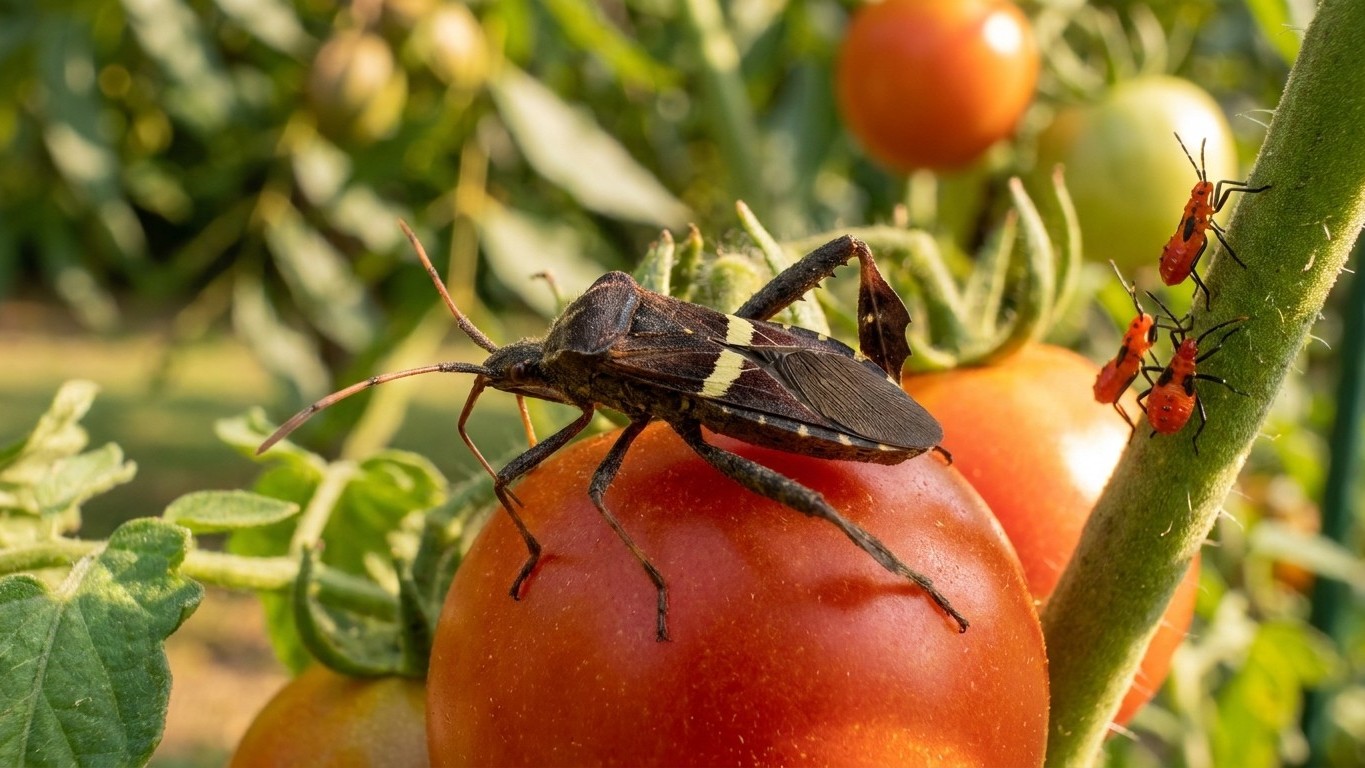

Leaffooted bugs turn up in Louisiana gardens most heavily from late summer into early fall, right as tomatoes and peppers are loading up with fruit. Because the state’s growing season runs so long, small numbers can persist nearly year-round in a mild yard. Row covers timed to the plant’s early weeks, followed by regular hand removal once fruit sets, do more than most late-season sprays.
The weeks to watch

Late summer and early fall is when Louisiana State University’s own extension guidance flags the heaviest numbers on tomatoes and peppers. That’s the window worth marking on a calendar, not a single date but a stretch that runs roughly from July through October depending on how the season plays out. LSU AgCenter’s publications on vegetable and home garden insect management specifically call out this stretch for leaf-footed bugs, distinct from the guidance given for pickleworm and squash vine borer, which peak even later in the season.
Late summer and early fall surge
This is the stretch where population pressure builds fastest. Adults move in from surrounding vegetation and weedy edges, drawn to ripening fruit, and numbers climb as the season progresses toward fall. Anyone growing a fall tomato crop in Louisiana, which is common practice given the long season, should expect this pest pressure to be at its worst right when that second crop is setting fruit.
Off-season presence
Outside that peak, Louisiana’s long growing season means the insect doesn’t disappear the way it might further north. LSU AgCenter notes plainly that the same mild conditions supporting year-round gardening also let insect populations reproduce and persist across most of the calendar. Low-level activity in spring and early summer is normal; it’s just not the crush that shows up later.
Reading the calendar from your last frost

Leaffooted bugs answer to temperature and food availability, not to a printed calendar date, so the timing above shifts a little depending on how early or late spring arrives. NOAA’s 1991-2020 climate normals put the last spring freeze for this part of Louisiana somewhere between January 18 and February 8, and that’s worth treating as a normal range rather than a promise. In roughly one year out of seven, this station records no freeze at all, which tells you the bigger constraint on a Louisiana garden calendar is summer heat, not frost.
- Start from the local last-frost window (January 18 to February 8) as the earliest safe point for warm-season Transplants like tomatoes and peppers.
- Count forward roughly two to three months to the point where those plants begin fruiting heavily. That’s generally when leaf-footed bug feeding starts showing up, since the insect targets developing fruit rather than young seedlings.
Run that arithmetic with your own frost date and you get a rough window for when row covers matter most, and when they need to come off so pollinators can reach the flowers.
What it attacks, and what the damage looks like

Most gardeners spot the damage well before they spot the bug itself. Tomatoes develop hard, discolored dimples or cloudy white patches beneath the skin where the insect has pierced the fruit to feed. Peppers show similar pitting and can drop fruit early. On beans and peas, pods often look deformed or shriveled at the feeding site. The damage comes from both nymphs and adults, since leaf-footed bugs use the same needle-like, piercing-sucking mouthparts at every stage past the egg. That matters for treatment: there’s no single vulnerable life stage to target, which is part of why chemical control tends to underperform once populations are already established on fruiting plants.
Crops most commonly affected in Louisiana home gardens include:
- Tomatoes
- Peppers
- Beans and peas
- Okra
- Pecans, where nut drop and kernel damage can follow feeding late in the season
How Louisiana sits in this pest’s range
Leaf-footed bugs are a widespread pest across the Gulf South and much of the warmer eastern United States, and Louisiana’s specific extension guidance doesn’t rank the state’s pressure against its neighbors or claim any unusual severity here. What changes from one southern state to another is mostly timing, driven by how long the growing season runs and how mild the winters are, not whether the insect shows up at all. Louisiana’s long, humid growing season, the same one that lets gardeners plant and harvest nearly year-round, gives this pest more months of the year to stay active at low levels between its late-summer peaks. That’s a function of climate, not a documented difference in how severe infestations get compared to other states in its range.
What actually works against it

- Time planting to dodge the peak. Getting a spring tomato crop fruiting before the late-summer surge means less overlap between vulnerable fruit and the heaviest bug numbers.
- Use row covers early, then remove them at flowering. Covers physically block adults from reaching young plants. They have to come off once flowers open, or pollinators get shut out along with the pests.
- Hand-pick adults and egg clusters. Leaf-footed bugs are large, slow, and easy to spot on stems and leaf undersides. Dropping them into soapy water is tedious but has no downside and works right up through fruiting.
- Clear garden debris and weedy borders after harvest. Adults overwinter in plant litter and nearby brush, so removing that habitat cuts down on the population that emerges the following year.
- Rotate crops where space allows. This helps less than it does against soil-dwelling pests, since adult leaf-footed bugs fly in from outside the garden regardless of what grew there last season, but it still limits buildup of overwintering nymphs on-site.
Once feeding damage already shows on fruit, none of these measures reverse it. They stop new damage from piling up, which on a plant that’s still setting fruit through a long Louisiana season is usually enough to matter.
Common questions
Do leaf-footed bugs bite people or pets?
No. They feed exclusively on plant tissue with piercing mouthparts built for fruit and stems, not for animals.
Will one bad season mean worse pressure the following year?
Not necessarily. Because Louisiana’s climate lets the insect persist at low levels year-round rather than dying back completely, clearing debris and overwintering sites after harvest matters more for next year’s numbers than how bad the current season was.
Are copper tape or ultrasonic repellents worth trying?
Neither is documented as effective against leaf-footed bugs specifically in Louisiana extension guidance. Those remedies are more commonly discussed for slugs and rodents, and even there, trials on their effectiveness don’t reach firm conclusions.