
In most of Arizona, the answer depends less on the calendar than on elevation. In the low desert around Phoenix, winters rarely deliver enough chill for classic apple varieties, and the ones that do fruit here ripen well before the worst summer heat arrives. In the state’s higher country, cooler winters change the entire timeline, though no daily station data for that region is included here. Storage life splits just as sharply: some varieties hold for months under refrigeration, others turn soft within a few weeks.
When apples are ready to pick in Arizona
What the mild winter minimum means for bloom
At the Phoenix reference station, the mean daily minimum temperature of the coldest month sits at 45.3°F, based on NOAA NCEI Climate Normals for 1991-2020. That number matters more than any monthly average, because it’s close to the threshold most chill-hour models use to count winter cold accumulation for fruit trees. A winter that barely dips below the mid-40s most nights simply doesn’t bank many chill hours, which means standard high-chill apple varieties, the ones bred for Michigan or upstate New York, will flower erratically or not at all in the low desert.
Here’s the trade-off that comes with picking a low-chill variety instead: they break dormancy on less accumulated cold, so they bloom early. In most climates, early bloom is a gamble against a late freeze. But in the Phoenix area, that gamble barely exists. NOAA records for the reference station show 32°F was reached in only 6 of 30 spring seasons, and NOAA lists the frost-free season there at 365 days. That changes the calculation entirely: the early-flowering habit that would be a liability in a colder state is close to a non-issue here, because there’s rarely a frost left to damage the blossoms. For the low desert, choosing a low-chill variety is the right call, not a risk you’re forced to accept.
Reading ripeness stage by stage
Because bloom starts unusually early in a climate this warm, the whole fruiting cycle shifts earlier too, and harvest for low-chill selections in the low desert typically finishes well ahead of the punishing heat that follows. Rather than circle a date on a calendar, watch the fruit itself:
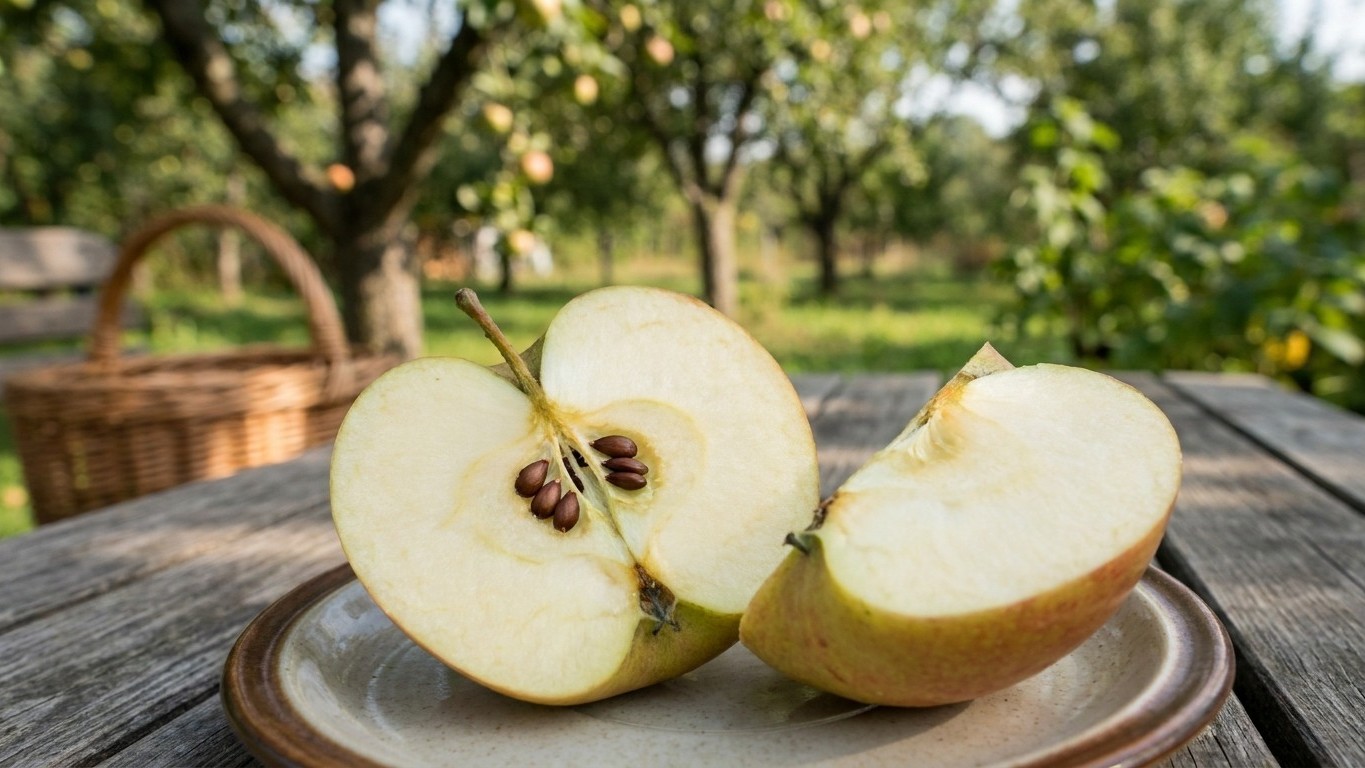
- Background (ground) color shifting from green toward cream or yellow, even on red varieties
- Seeds turning from white to brown when you cut a sample fruit open
- Flesh losing its starchy bite and tasting noticeably sweeter
- Fruit separating from the spur with a gentle upward twist, rather than tearing
That’s the same set of cues an apple grower anywhere would use, but in Phoenix they show up on a compressed timeline driven by the early, mild winter. If you’re gardening in Arizona’s higher country, elevations like Flagstaff run on a completely different climate, with real winter cold and a much later bloom. No station-level frost or harvest data for those areas is included in this reference set, so check timing against what the Arizona Cooperative Extension publishes for your specific county before relying on a low-desert schedule.
Which ones keep, and which must be eaten
Low-chill varieties suited to the low desert
Growers in warm-winter regions have long leaned on a short list of low-chill apple selections bred or selected specifically for climates that can’t deliver classic Northern winters. In Arizona’s low desert, the names that come up most often in warm-climate growing guides include:
- Anna
- Dorsett Golden
- Ein Shemer
These were developed precisely because they’ll flower and set fruit on the kind of mild winter the Phoenix station data describes, where a 45.3°F mean minimum leaves little cold to spare.
What separates a keeper from a fresh-eating apple
Low-chill varieties tend to be soft-fleshed and were bred with fresh eating in mind, not long-term storage. Anna and Dorsett Golden, for instance, are known for ripening early and softening quickly once picked, which makes them poor candidates for holding through winter. Denser, thicker-skinned apples, the type more common among later-season, high-chill cultivars grown in cooler states, generally hold up far longer in cold storage because their cell structure resists moisture loss and bruising.
That’s a real constraint for Arizona growers: the varieties that actually thrive in the low desert’s winter climate aren’t the same ones known for keeping well in a refrigerator. If long storage matters to you, plan to eat your low-chill harvest within a reasonably short window after picking, and treat any surplus as a candidate for drying, sauce, or freezing rather than months of cold storage.
Storing them through a Arizona winter
Why a garage or shed doesn’t work here
In colder states, an unheated garage or root cellar does a lot of the work of apple storage for free, holding fruit in the 30s through the winter months. That trick doesn’t translate to Arizona. With a mean daily minimum of just 45.3°F even in the coldest month at the Phoenix reference station, an unheated storage space in the low desert simply never gets cold enough to slow an apple’s ripening the way a true cellar would. Fruit left in a garage through a Phoenix winter will continue softening and losing flavor at a pace closer to room-temperature storage than refrigerated storage.
Making refrigerator storage work
For low-desert growers, the refrigerator is doing the job the outdoor climate can’t. A few habits make a real difference:
- Store apples in a perforated plastic bag to hold humidity without trapping excess moisture
- Keep them in the crisper drawer, away from onions or other strong-smelling produce that can taint flavor
- Check the batch weekly and pull any fruit that’s gone soft, since one spoiling apple speeds up decay in the rest
- Keep apples away from ethylene-sensitive vegetables like potatoes, since ripening apples release gas that shortens the shelf life of neighbors in the same drawer
Growers at higher elevation, where genuine winter cold exists, may have more options for extended unheated storage, but no station-level winter data for those areas appears in this reference set. Local Cooperative Extension offices are the right place to ask about storage conditions specific to a given county.
What goes wrong here
Heat and chill failures
The most common failure in Arizona’s low desert isn’t frost, it’s heat. Summer temperatures in the Phoenix area run hot enough, for long enough, to stop fruit set entirely for months at a time, which is the defining limit on apple growing in this climate rather than any spring freeze. A second, quieter failure shows up when a grower plants a high-chill variety out of habit or nostalgia: with only 45.3°F as the mean minimum of the coldest month, those trees may leaf out fine but flower sparsely or unevenly, leading to disappointing fruit set year after year.
Storage and pest problems
On the storage side, the most frequent mistake is treating a garage or covered patio like a cold cellar. Given how mild the coldest month runs here, fruit stored that way softens and spoils far faster than growers coming from colder states expect. Sun exposure is another factor worth watching: apples on the west or south side of a low-desert tree are prone to sunburn and bitter pit from intense, direct light, which shows up as discolored patches on the skin and pithy spots inside the flesh. Because a hard freeze essentially never occurs at the reference station, some overwintering pests also survive winter more easily than they would in a climate with a reliable freeze, though no local pest-survival study is cited here.
| Region | Winter cold (reference data) | Spring frost frequency | Suitable apple type |
|---|---|---|---|
| Phoenix / low desert (NOAA reference station) | Mean daily min of coldest month: 45.3°F | 32°F reached in only 6 of 30 springs; 365-day frost-free season | Low-chill varieties |
| Higher elevation Arizona (e.g., high country) | Not published in this data set | Not published in this data set | Not documented here; consult Arizona Cooperative Extension |
Common questions
Can you grow apples in Phoenix at all?
Yes, but only with varieties bred for low winter chill, such as Anna, Dorsett Golden, or Ein Shemer. Standard high-chill varieties from cooler states won’t flower reliably where the coldest month’s mean minimum is only 45.3°F.
Do Arizona apple trees need frost protection?
Rarely, in the low desert. NOAA data for the Phoenix reference station shows 32°F occurred in just 6 of 30 spring seasons, with a 365-day frost-free season on average. Higher elevation areas are a different story entirely, but no station data for those regions appears here.
How long do Arizona-grown apples keep?
It depends heavily on variety. Low-chill types common in the low desert tend to be soft-fleshed and best eaten within a fairly short window after picking. Denser, later-season varieties, more typical of colder-climate orchards, generally hold longer under refrigeration.
Why do apples spoil faster in Arizona storage compared to colder states?
Because the climate itself doesn’t provide the cold. With a mean daily minimum of just 45.3°F even in the coldest month, an Arizona garage or shed never reaches the temperatures that make an unheated cellar work in colder regions, so refrigerated storage becomes necessary rather than optional.