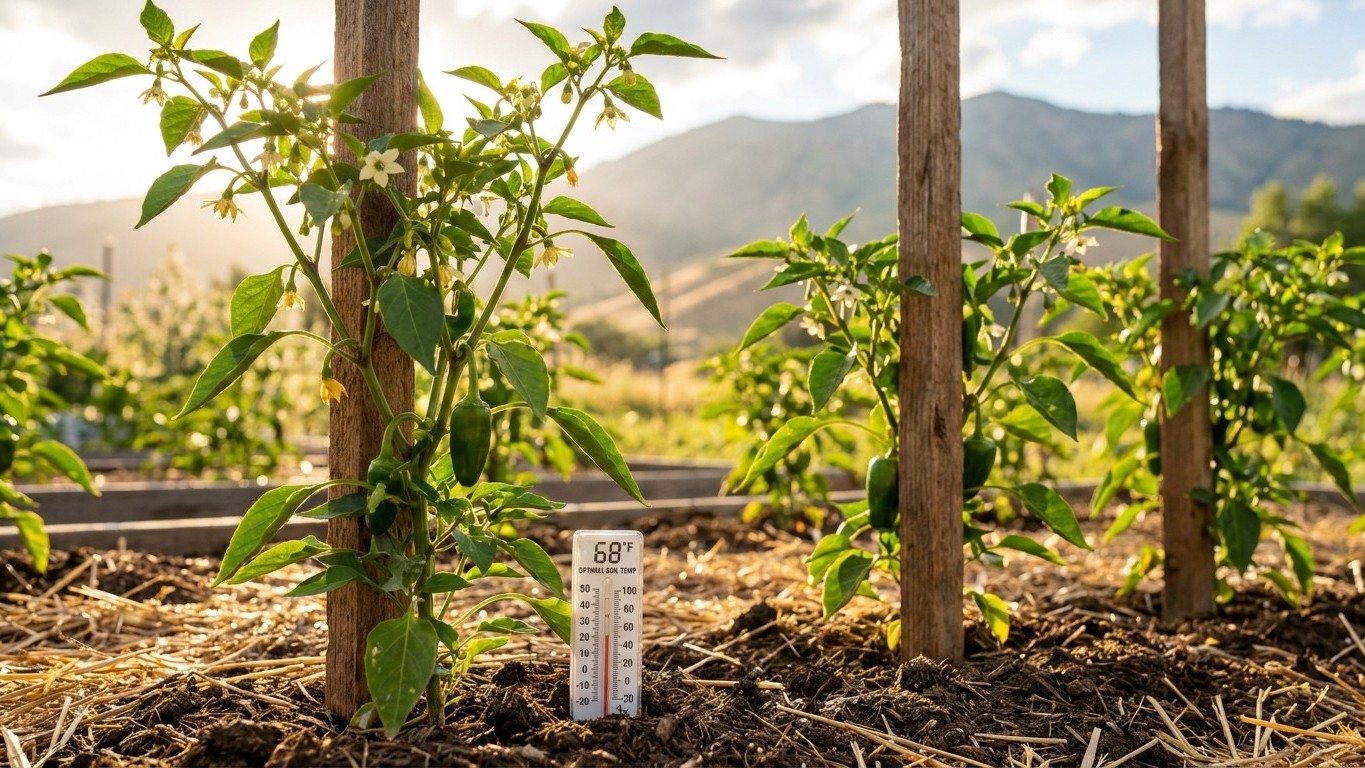

In most of Arizona’s low desert, pepper timing has almost nothing to do with frost and almost everything to do with heat. Transplant once soil hits 60 F, expect fruit set to stall through the hottest stretch of summer, and plan on two harvest windows instead of one: an early-summer crop and a fall rebound once nights cool back down.
The short answer

Phoenix averages 168.9 days a year at or above 90 F, according to NOAA NCEI Climate Normals for 1991-2020. That’s not a measure of how hot an average summer day feels. It’s a count of how many days the thermometer crosses a threshold that matters specifically for fruiting crops, because it tracks water demand, heat stress on foliage, and the point where cool-season plants simply give up. For peppers, that count matters directly: Utah State University Extension notes that pepper fruit set fails once daytime temperatures push past 90 F, alongside the opposite failure point of nights below 55 F.
That’s the part growers in hot climates tend to forget. Peppers don’t just struggle in cold weather. They also stop setting fruit in heat, because pollen becomes unreliable and blossoms drop before they ever form a pepper. With close to 169 days a year crossing that 90 F line, a huge chunk of an Arizona low-desert summer sits inside the window where fruit set simply pauses. The plant doesn’t die. It just stops producing until conditions shift back into range.
The cool end of that equation is where things get trickier to plan around. Nights below 55 F also shut down fruit set, and that threshold usually shows up at the edges of the growing season rather than in the middle of it. This is where a grower has to do their own homework: this site tracks daytime heat data (the 168.9 days above 90 F figure) but does not carry summer night minimum temperatures for Arizona locations. There’s no shortcut here, and guessing based on latitude or on how cold the coldest month of the year gets is a bad substitute for actually watching your own nighttime lows during the shoulder seasons. A backyard min-max thermometer left outside for a few weeks in spring and again in early fall will tell you more than any regional average.
Put together, the practical picture looks like this: pepper plants set fruit in a narrow window before summer heat arrives, sit largely dormant in terms of new fruit through the hottest months, then get a second chance once nights start dropping but before they fall under that 55 F mark. Missing either window, or not tracking your own local nights closely enough, is usually the difference between a modest harvest and a disappointing one.
When to start seed here
Working backward from transplant date is more useful here than working from a frost calendar, because frost barely factors into low desert Arizona timing at all. NOAA’s 1991-2020 records for the Phoenix reference station (USW00023183) show a freeze at 32 F in only 6 of 30 spring seasons, and NOAA lists the frost-free season there at 365 days. That’s not a typo. In practical terms, the limiting factor for pepper timing in this climate isn’t frost risk, it’s the arrival of sustained heat above 90 F, which is why the arithmetic below starts from soil temperature and heat timing rather than a frost date.
- Start with the heat window, not the frost date. Since a freeze happens in barely a fifth of low-desert springs, don’t build a planting calendar around waiting out frost risk. Build it around getting transplants in early enough to flower and set fruit before daytime highs are consistently crossing into the 90s.
- Watch soil temperature directly. Utah State University Extension recommends transplanting peppers once soil reaches 60 F, after frost risk has passed. In a climate where frost is rare to begin with, the 60 F soil reading becomes the real trigger. A basic soil thermometer pushed a few inches into the bed, checked over several mornings, will tell you more than any regional date on a chart.
- Count back 8 to 10 weeks for indoor seed starting. Once you have a target transplant date built around soil temperature, subtract 8 to 10 weeks (the range Extension gives for indoor pepper starts) to find your seed-starting date. If soil is likely to hit 60 F in early spring in your county, that’s the number to count backward from, not the average last frost date.
- Reserve 35 to 45 days after flowering for the fruit itself. That window runs from flowering, not from sowing or transplanting, so once blossoms appear, count forward from there to estimate harvest timing rather than from the date you put plants in the ground.
- Plan a second transplant or succession round for fall. Given that fruit set shuts down above 90 F for a large share of the year, many low-desert growers set out a second round of transplants (or hold plants through summer) so a fresh flowering cycle lines up with cooling nights, again watching those local night lows rather than assuming a date.
Redo this arithmetic with your own county’s soil temperature readings and your own recorded night lows rather than borrowing someone else’s calendar. Even within Arizona, low-desert valleys and higher elevations run on completely different clocks.
What goes wrong here
- Blossom drop during a hot spell. When daytime highs push past 90 F, and with 168.9 such days a year on average at the Phoenix reference station, blossoms can form and then drop without ever becoming fruit. There’s no way to force fruit set through this stretch. The workaround is timing, not intervention: get an early planting far enough along to flower before the heat arrives, and hold a second round of plants for a fall flowering cycle once temperatures ease back down.
- Blossom drop from a cool night. The same failure shows up at the opposite extreme, when nights fall below 55 F. Since this site doesn’t track summer night minimums for Arizona, the fix starts with simply knowing your own numbers: keep a min-max thermometer outside through the shoulder seasons so you can see when nights are dipping into that range, rather than guessing from a monthly average or the calendar date.
- Sunscald on exposed fruit. Arizona’s sun intensity is part of what drives that high count of 90 F-plus days, and it can scald pepper skin directly, especially on plants that have lost leaf cover to heat stress or pruning. Keeping foliage full enough to shade developing fruit, and avoiding heavy pruning during the hottest stretch of the season, reduces exposed fruit surface without sacrificing the plant’s overall canopy.
- Blossom-end rot. This shows up as a dark, sunken patch on the bottom of the fruit and is tied to inconsistent water delivery to developing peppers, which gets harder to manage in a climate already pushing plants toward heat stress for a large share of the growing season. Even, regular watering through root zones, rather than occasional deep soaks followed by dry stretches, is the standard remedy, and it matters more in a climate where heat is already straining the plant’s other systems.
Common questions
Does low-desert Arizona really not need a frost-based planting calendar?
That’s right. NOAA’s 1991-2020 records for the Phoenix reference station show a freeze at 32 F in only 6 of 30 spring seasons, with a listed frost-free season of 365 days. Heat, not frost, is the factor that shapes pepper timing in this climate.
Will peppers stop producing completely during the hottest months?
Fruit set pauses once daytime highs push consistently above 90 F, and the Phoenix reference station averages 168.9 such days a year. Plants generally survive the stretch; they just don’t set new fruit until conditions shift back into range, which is why many growers plan on a fall rebound.
How do I know when nights are cool enough to hurt fruit set?
There’s no published figure here for summer night minimums in Arizona, so the only reliable answer is to track it yourself. A min-max thermometer left outside through spring and early fall will show you when nights are dropping under 55 F, the threshold where fruit set fails on the cool end.
Does variety choice matter more than timing in this climate?
Utah State University Extension names several pepper varieties suited to home gardens but doesn’t publish heat ratings, days-to-harvest figures, or size data for any of them. Without that published data, timing around soil temperature, the 8 to 10 week indoor start, and your own local night readings does more to determine success than variety selection alone.