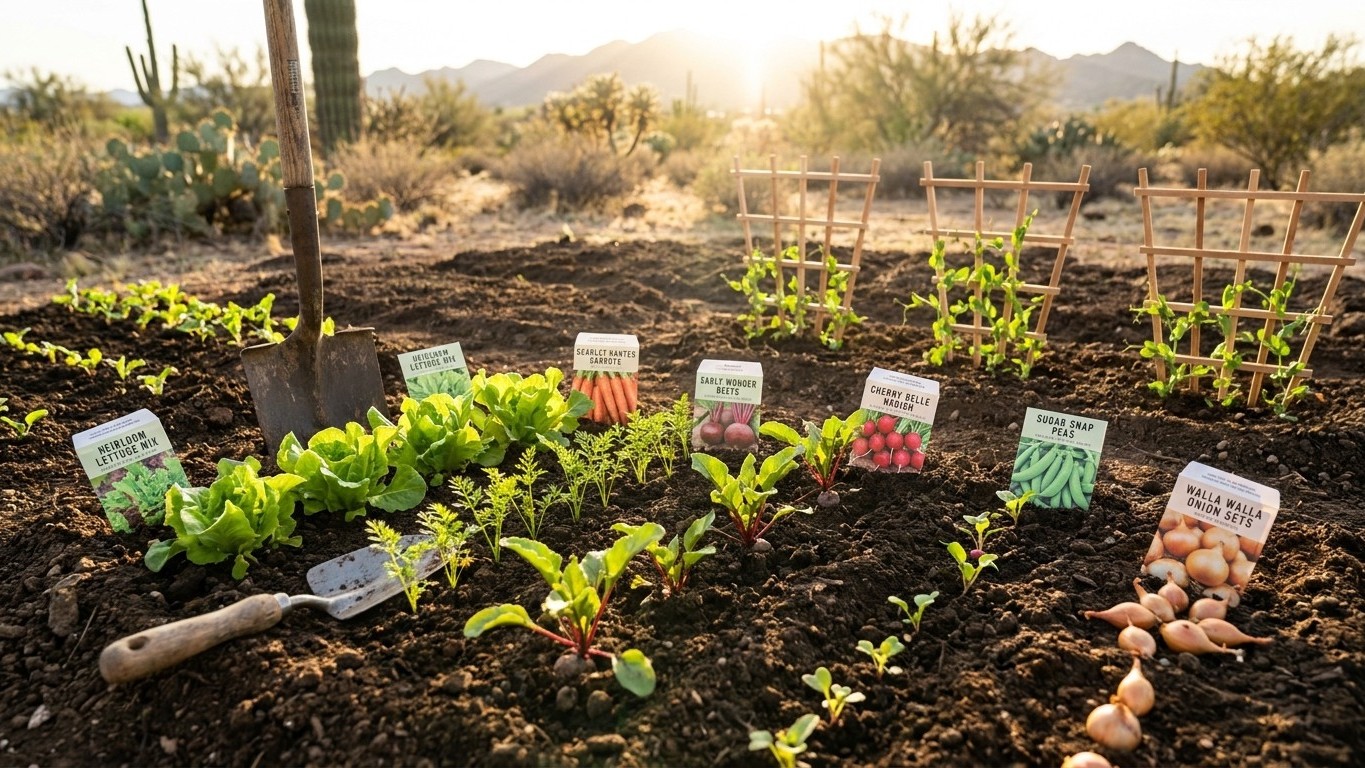

In Phoenix, Tucson and the rest of the low desert, February is one of the best planting months on the calendar, cool-season vegetables go straight into open ground and warm-season transplants get started so they can beat the heat. Up in Flagstaff, Prescott and the high country, the ground is still locked in real winter, and February is a month for pruning, seed orders and planning rather than seeds in soil.
What goes in the ground in February

The calendar says winter everywhere else in the country, but Arizona doesn’t play by that rulebook. NOAA’s climate records for station USW00023183, which sits in the Phoenix area, show that a freeze at 32°F only showed up in 6 of the last 30 springs, and any cold snap that does occur tends to land between late December and mid-January, not February. By the time February arrives, the frost risk in the low desert has already come and gone in most years. The thing that actually limits what you can plant here isn’t cold. It’s heat, arriving as early as May and shutting down fruit set on tender crops for months.
Low desert: Phoenix and Tucson
This is a direct-sow window, not a gamble. Root crops like carrots, beets and radishes go in fine, along with leafy greens, peas, and members of the onion family. Potatoes can go into the ground early in the month. Toward the back half of February, gardeners in the warmest low-desert pockets often start hardening off tomato and pepper transplants for an early move outdoors, since summer heat will end the tomato season by early summer regardless of when it starts.
High country: Flagstaff and the Rim
Nothing tender belongs outside here yet. The ground is often still frozen or waterlogged from snowmelt, and USDA’s Plant Hardiness Zone Map, which is built on the average annual extreme minimum temperature, places this part of the state at the coldest end of Arizona’s 4b–10b range. What does work: bare-root and dormant plantings of fruit trees and canes while they’re still asleep, garlic and shallots where the soil is workable, cold frames or low tunnels for the earliest greens, and forcing rhubarb or chicory indoors for a fresh harvest while the garden itself waits.
What to start under cover
Because the low desert has no reliable spring frost date to count backward from, the arithmetic here runs off heat instead. Tomatoes, peppers and eggplant typically need 6 to 8 weeks indoors before they’re ready to face the ground, and since transplants ideally go outside in the low desert before the heat locks in, that pushes indoor sowing into deep winter for anyone using this month as the transplant target. Wait too long and the plants meet 100-degree days before they’ve set a single fruit.
Low desert timing
Starting warm-season crops under cover this month is often the last comfortable window before outdoor soil temperatures climb fast. The two ways this goes wrong are familiar to any gardener: start too early indoors without enough light and the seedlings turn leggy and rootbound before they can go out; start too late and there isn’t enough runway left before the heat arrives to get a real harvest.
High country timing
In the mountains and on the plateau, this is closer to the start of the indoor season rather than its end. Cool-season crops like lettuce, brassicas and onions started under lights now give transplants a head start for whenever the ground finally opens up, which in this part of the state runs well behind the low desert.
What is ready to pick
The low desert garden is still working in February, which sets Arizona apart from most of the country at this point in the year.
Low desert harvest
Leafy greens, brassicas and root vegetables planted in fall are typically ready to pull now, along with citrus that’s been hanging on the tree since earlier in the season, a simple taste test tells you when it’s ready, since citrus doesn’t ripen further once picked. Peas started earlier in winter may be starting to flower or set early pods.
High country: living off storage
For gardeners at elevation, there’s little coming out of open ground this month. What’s on the table instead comes from cold frames holding hardy greens, sprouts and microgreens grown indoors, and the root cellar or pantry. This is the month to walk through stored squash, potatoes and onions and pull anything showing soft spots or sprouting before it spreads to the rest of the bin.
The jobs that matter this month
Whether the garden is producing or resting, February carries real deadlines.
Pruning and planning
Dormant fruit trees and cane fruits should get their structural pruning done before buds break, and that window is closing fastest in the low desert, where warmth arrives earlier than anywhere else in the state. This is also the month to finish seed orders before the popular varieties sell out, and to sketch next season’s crop rotation while last year’s results are still fresh in memory.
Soil, water and pests
Testing and amending soil now, ahead of the low desert’s spring planting push, pays off more than doing it after crops are already in the ground. Turning compost keeps it breaking down through the cooler weather instead of stalling out. Irrigation lines and drip emitters are worth checking and repairing before the heat makes daily watering non-negotiable. Tools benefit from a cleaning and sharpening pass before the busiest planting stretch of the year hits. And a walk through the garden looking for early aphids on winter greens catches an infestation while it’s still small enough to handle by hand.
What not to do in February
The classic mistake in the low desert is treating a warm afternoon as permission to move tender warm-season crops straight into the ground. Air temperature isn’t soil temperature, and cold soil rots seeds and stunts transplants even when the sky feels like spring. The fix is patience: keep warm-season starts under cover a little longer and let the soil, not the thermometer on the porch, make the call.
The high-country mistake
At elevation, the equivalent error is uncovering cold frames or pulling back mulch after a few mild days, only to have the next cold snap hit exposed plants directly. Keep protection in place until the pattern, not a single warm afternoon, has actually shifted.
Across both regions, nitrogen timing trips people up. Feeding a heavy dose of nitrogen to root crops or crops you want to flower and fruit pushes leafy growth at the expense of the harvest you actually want. Save the nitrogen for leafy greens and brassicas, and hold off on root vegetables, peas and anything about to flower.
Checking this against your own county
A statewide month is a starting point, not an instruction, and nowhere is that more true than in Arizona. Elevation alone moves these windows by weeks or months between the low desert and the high country, and the difference between the far south of the state and the Colorado Plateau in the north can be just as wide. Before committing seed to ground, check your planting window against the University of Arizona Cooperative Extension, which publishes county-level guidance built for these exact elevation differences.
Common questions
Can you plant tomatoes outdoors in Arizona in February?
In the low desert, transplants often go out toward the back half of the month once they’re hardened off, since the goal is beating summer heat rather than avoiding frost. In the high country, it’s too early; the ground hasn’t warmed enough yet.
Does Arizona get frost in February?
In the low desert, rarely. NOAA’s records for the Phoenix-area station show a spring freeze occurred in only 6 of 30 years, and when it happens it typically falls between late December and mid-January. Higher elevations are a different story and can still see hard freezes this month.
What vegetables can I direct-sow in the desert in February?
Carrots, beets, radishes, leafy greens, peas, onions and potatoes all do well going straight into low-desert soil this month.
Why doesn’t Arizona use a typical frost-date planting calendar?
Because in the low desert, cold isn’t the limiting factor. Summer heat, which can shut down fruit set for months, sets the real planting deadlines here, while frost-based calendars still apply to the state’s higher elevations.