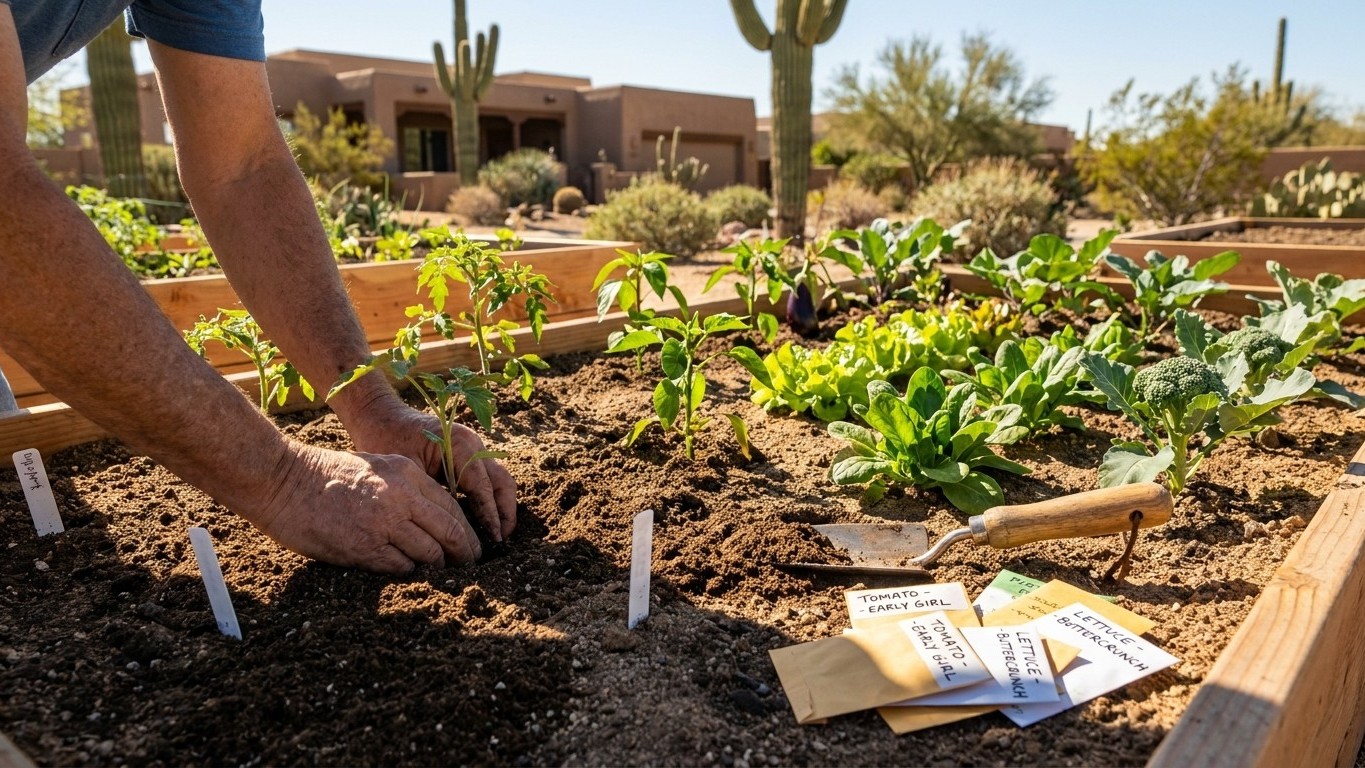

March is one of the most productive planting windows of the year across the low deserts of Arizona, since the region rarely sees frost and warm-season crops need to go in before summer heat arrives. In the high country around Flagstaff and the White Mountains, March is still a cold-soil month reserved for indoor starts and dormant-season work.
What goes in the ground in March

The decision here isn’t the calendar, it’s soil temperature and how much frost risk actually exists where you garden. NOAA’s 1991-2020 climate normals for the Phoenix station (USW00023183) list a frost-free season of 365 days, and over that 30-year record a 32F reading in spring only showed up in 6 of the 30 years. That’s not a typical risk gardeners plan around, it’s an occasional outlier. So for most of the low desert, the limiting factor isn’t frost at all, it’s the summer heat still months away that will eventually stop fruit set on tomatoes and peppers.
That makes March a genuine dual-season month in the desert. Cool-season crops still have room to finish: lettuce, spinach, peas, carrots, beets, and brassicas like broccoli and cabbage can still be direct-sown or transplanted, especially early in the month. At the same time, soil has usually warmed enough to set out warm-season transplants: tomatoes, peppers, eggplant, and to direct-sow beans, squash, cucumbers, and melons. Basil and other tender herbs can go in too once nights stay reliably mild. The practical trick is watching soil temperature rather than the thermometer at noon; warm-season seeds germinate poorly in cold ground even on a sunny week.
Higher elevations are a different story entirely. Flagstaff and similar mountain zones sit in a much colder USDA hardiness band, and hard freezes are still a real possibility this time of year. The published frost data here is specific to the Phoenix station and does not apply to those elevations. If you garden above roughly 5,000 feet, treat March as a month for hardy transplants under cover and for direct-sowing only truly cold-tolerant crops like spinach and peas once soil is workable, not as an open invitation to plant tender vegetables outdoors.
Arizona’s USDA Plant Hardiness Zone range runs from 4b up in the high country to 10b in the low desert floor, which is one of the widest spans of any state. Any “what to plant” answer has to name which end of that range it’s describing, because a Phoenix backyard and a Flagstaff backyard are effectively different climates sharing a state line.
What to start under cover
In the low desert, starting seeds indoors matters less in March than in most states, since the ground is already warm enough for direct sowing of most warm-season crops. Where indoor starts still pay off is with slower growers like eggplant, peppers, and some melon varieties, which benefit from a head start of several weeks before setting them outside once daytime highs settle into the 70s.
Work the timing backward from when you actually plan to transplant rather than from a fixed date. Peppers and eggplant typically need 6 to 8 weeks indoors before they’re ready to go in the ground; count back from your intended transplant week and that tells you when to sow. Start too early and you end up with rootbound, leggy seedlings sitting in small pots waiting for warm nights. Start too late and the transplants go out just as the accelerating spring heat starts stressing young roots before they’ve established.
In the high country, under-cover starting is the main activity this month for nearly everything tender. Tomatoes, peppers, and squash started indoors now give plants enough size to go out once the ground has warmed and freeze risk has passed later in spring. Because a specific last-frost date for those higher elevations isn’t part of the verified data here, the safer approach is to track your own local extension office’s guidance rather than guess at a date, and to hold transplants under cover a little longer than you think necessary rather than risk a late cold snap.
What is ready to pick
March is a genuine harvest month in the low desert, not just a planting one. Cool-season crops sown in fall and winter are hitting maturity: lettuce and spinach are ready to cut, broccoli heads are tightening before they flower, and peas planted earlier in winter are filling out pods. Check broccoli daily once heads form; a loose, beady appearance means it’s about to bolt in the warming days ahead, and the same urgency applies to lettuce, which turns bitter fast once temperatures climb.
This is also peak season for Arizona citrus in the low desert. Oranges, grapefruit, and lemons planted in home orchards are typically still coming off the tree, and taste, not color, is the real test of ripeness since desert citrus can hold color well before it’s sweet. Sample a piece before stripping a tree.
In the high country, there’s little coming out of the ground outdoors this early in the season. Anything still available is coming from storage: check onions, potatoes, and winter squash kept over from the fall harvest, and pull anything showing soft spots or sprouting before it spreads to the rest of the batch. Cold-frame greens, if you’ve kept any running through winter, are worth checking too since a few extra weeks of protected growth can still yield a useful cutting.
The jobs that matter this month
In the low desert
March is a working month before the heat takes over. Citrus trees benefit from a light feeding as new growth pushes, but timing matters: feed too early relative to bloom and you risk pushing leaf growth instead of fruit set. Mulch beds now to slow the soil moisture loss that accelerates fast once afternoons warm up, and get drip irrigation systems checked and running before the season’s heat makes any leak or clog costly. Pest scouting matters too; aphids and whiteflies build populations quickly on tender new growth this time of year, and catching them early is far easier than fighting an established infestation in May.
In the high country
This is prime dormant-season work. Fruit trees and cane berries should get their pruning done now while they’re still dormant, since pruning after buds break costs the plant stored energy it needs for the growing season. Order seed now for anything you plan to start indoors, since popular varieties sell out before the ground even thaws. Test and amend soil while beds are still accessible, turn any compost that’s been sitting over winter, and use the slower pace to sharpen and repair tools before the season’s real workload begins. Check stored crops for rot weekly; one soft potato left in a bin will spread faster than most gardeners expect.
What not to do in March
The most common mistake in the low desert is misreading a warm afternoon as a green light for everything. Soil temperature lags air temperature by days, and tender seeds pushed into cold ground rot before they germinate rather than waiting patiently for warmth. Another is waiting too long to plant warm-season crops; because desert summer heat shuts down fruit set within a few months, a late start in March can mean tomatoes and peppers never get the head start they need before conditions turn hostile.
In the high country, the classic error is removing frost protection after a mild stretch, only to lose tender transplants to a cold snap days later. Because no specific hard-freeze date for these elevations is part of the verified data here, don’t substitute a guessed date of your own; keep protection in place longer than feels necessary rather than gamble on a mild week holding.
Across both climates, overfeeding nitrogen at the wrong moment is a recurring problem. Citrus and fruiting vegetables pushed with heavy nitrogen too early respond with leafy growth at the expense of flowers and fruit. Feed according to the plant’s stage, not on a fixed monthly habit.
Checking this against your own county
A statewide answer is a starting point, not a substitute for what’s happening in your own yard. Elevation alone moves planting windows by weeks across Arizona, and the difference between the low desert floor and the high country is closer to a difference in climate than in degree. Local microclimates, wind exposure, and even how close you are to a canyon or wash can shift things further. For guidance calibrated to your county, the University of Arizona Cooperative Extension is the reliable next step, with staff and publications tuned to local conditions rather than a single statewide average.
Common questions
Does Arizona get a real last frost date in spring?
In the low desert, not reliably. NOAA’s Phoenix station recorded a 32F reading in only 6 of the past 30 springs, and the area’s frost-free season is listed as 365 days. Higher elevations do see real spring freezes, but a specific date for those areas isn’t part of the verified data used here.
Can I plant tomatoes in the low desert in March?
Yes, once soil has warmed, which is typically the case by March in most low-desert areas. The bigger risk isn’t cold, it’s planting too late and losing fruit set once summer heat arrives.
Why does Arizona have such a wide hardiness zone range?
The USDA Plant Hardiness Zone Map places Arizona between 4b and 10b, reflecting the state’s dramatic elevation swings from the low desert floor to mountain zones near Flagstaff. A single statewide zone number would misrepresent either end of that range.
What should high-country gardeners be doing in March if it’s still too cold to plant?
Dormant pruning of fruit trees and berry canes, seed ordering, soil testing, and starting tender vegetables indoors are the real work this month, not waiting idle for warmer weather.