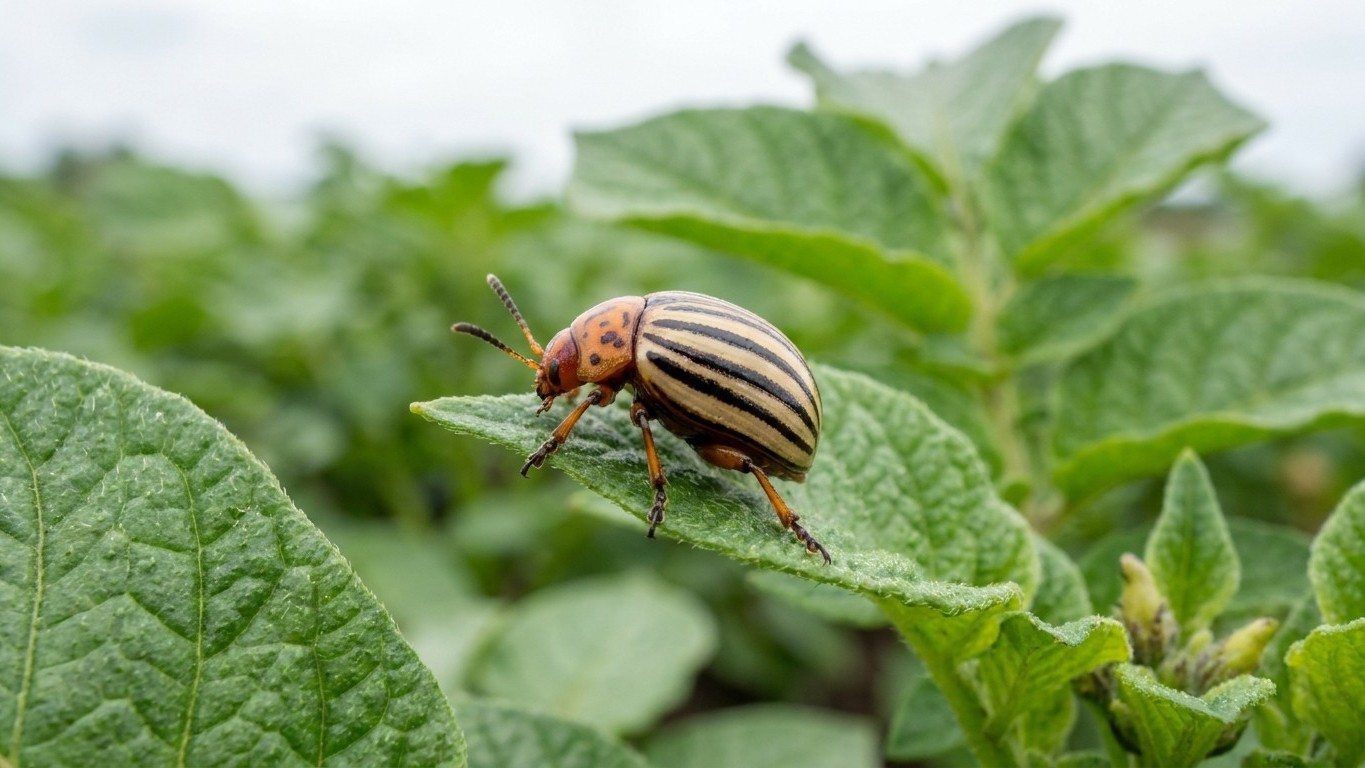

The University of Arizona Cooperative Extension documents eight potato-relevant pests active in the state: aphids, beet leafhopper, false chinch bug, grasshoppers, spider mites, thrips, tomato hornworm, and whiteflies. Two more insects show up on the same extension pages but target other crops entirely. Knowing which is which, and what growth stage each pest favors, matters more here than in most states because the growing window itself runs on a different clock.
Which pests attack potato in Arizona

The University of Arizona Cooperative Extension lists ten insects tied to garden crops across the state, but only eight of them have any real business on a potato plant. Aphids cluster on the underside of leaves and stems, feeding on sap and spreading viruses between plants as they move. Beet leafhopper matters less for the damage it does directly and more for what it carries: this insect is the documented vector of curly top virus, a disease that can stunt or kill potato plants outright. False chinch bug is a generalist sap feeder that moves onto vegetable crops in large numbers when its preferred weedy hosts dry out. Grasshoppers chew foliage indiscriminately and will strip young potato leaves along with everything else in a garden bed. Spider mites thrive in hot, dry conditions and stipple leaves as they feed, which is exactly the climate this state provides for much of the year. Thrips rasp at leaf and stem tissue, leaving silvery scarring. Tomato hornworm feeds on any plant in the nightshade family, and potato belongs to that family right alongside tomato and eggplant. Whiteflies round out the list, feeding on sap and, like aphids, transmitting plant viruses as they disperse.
Two names on the extension’s broader list don’t belong on a potato page. Green fruit beetle targets ripening soft fruit like figs and tree fruit, not the foliage or below-ground tubers of a potato plant, so it has no documented role here. Squash bug is a cucurbit specialist that feeds on squash, pumpkin, and related vines, and there’s no documentation tying it to potato. A gardener who spots either of these insects on a potato bed is looking at something passing through, not something settling in to feed.
The list is short by design. The University of Arizona Cooperative Extension documents these eight for this crop in this state, and padding the list with pests that show up on other crop pages would misrepresent what’s actually been recorded here.
When each one shows up, and what it does first
Arizona’s low desert doesn’t run on a frost calendar the way most of the country does. NOAA’s 1991-2020 climate normals for the Phoenix reference station put the frost-free season at 365 days, and a hard freeze reached that station in only 6 of the last 30 springs, usually as a brief cold snap between late December and mid January. The factor that actually limits a potato planting here is summer heat, not frost, so timing pest activity against named months is less useful than timing it against the plant’s own growth stage. Flagstaff and the high country freeze hard every winter and run on an entirely different clock; nothing below applies there.
In the weeks right after planting, while the plant is putting out its first true leaves, false chinch bugs and grasshoppers are the ones most likely to show up first, since both move onto tender new growth from surrounding weeds and field edges as those dry out. A gardener who sees ragged chew marks or scattered small insects at this stage is usually looking at one of these two.
As the plant fills out its canopy, aphids, whiteflies, and thrips tend to appear, typically clustering on the undersides of leaves rather than out in the open. The first sign is often not the insect itself but the plant’s reaction: curled leaf edges, a sticky residue on foliage (a byproduct of aphid and whitefly feeding), or a fine silvery scarring where thrips have been rasping.
Once the canopy is dense and temperatures climb toward peak summer heat, spider mites become the dominant concern, since hot and dry conditions favor their reproduction. Tomato hornworm and beet leafhopper can appear across a wider window, since hornworms track the presence of any nightshade-family host and leafhoppers move in from surrounding vegetation whenever conditions suit them. Curly top symptoms, when they appear, tend to show up as sudden stunting or yellowing well after the leafhopper itself has already fed and moved on.
Telling the damage apart from everything else
Not every ragged leaf or yellow patch on a potato plant is an insect at work. Heat stress, uneven watering, and nutrient shortages produce symptoms that look similar enough to send a gardener chasing the wrong problem. The detail that usually settles it is whether the damage is uniform across the plant or concentrated in specific spots.
| Symptom | Likely insect cause | Likely non-insect cause | What distinguishes them |
|---|---|---|---|
| Stippled, bronzed leaves | Spider mites | Heat or water stress | Check leaf undersides for fine webbing; mite damage starts patchy, stress is more uniform across the plant |
| Sticky residue on leaves | Aphids or whiteflies | None common | Sticky residue with visible small insects clustered nearby points to sap feeders |
| Ragged, chewed leaf edges | Grasshoppers or tomato hornworm | Wind or hail damage | Insect chewing leaves irregular notches; mechanical damage tends to follow a wind direction or shred uniformly |
| Sudden stunting, yellowing | Curly top virus (via beet leafhopper) | Nutrient deficiency or root damage | Virus symptoms appear abruptly and spread unevenly through a row; deficiency develops gradually and evenly |
| Silvery scarring on leaves | Thrips | Sun scald | Thrips scarring follows leaf veins in streaks; sun scald appears on the most exposed leaf surface only |
None of this is a substitute for a direct look. A county extension office can confirm what’s actually on a plant far more reliably than a symptom table, and that step matters most when a virus like curly top is suspected, since by the time yellowing appears the insect that caused it is usually long gone.
What actually works here, and what is a waste of time
A short, heat-limited growing window rewards timing over intervention. Getting a physical barrier or row cover in place before pests establish beats any treatment applied after damage is already visible. Floating row covers placed at planting keep grasshoppers and false chinch bugs off young foliage during the exact stretch when they’re most likely to move in from field edges, and they can come off once the canopy is established enough to tolerate some feeding without losing yield.
Watching for aphid and whitefly clusters on leaf undersides early, before populations build, makes a bigger difference than trying to knock down a heavy infestation later. The same goes for spider mites: consistent watering during peak heat keeps plants under less stress, and stressed plants are what mite populations tend to exploit fastest.
What tends to waste effort is spraying on a fixed schedule regardless of what’s actually present. Treating for an insect that hasn’t shown up yet, or continuing treatment after a pest has already moved on, burns time without protecting the crop. Curly top virus is a clear example of where prevention beats reaction entirely: once a plant shows symptoms, there’s no treatment that reverses the damage, since the harm was already done when the beet leafhopper fed. The only leverage is keeping leafhoppers off plants beforehand, which is a physical-barrier and timing question, not a spray question.
This site does not recommend specific products, active ingredients, or application rates. What’s legally labeled for use on potato changes, and only a state extension service tracks that in real time. Anyone deciding to treat a confirmed infestation should get that specific guidance from their local office rather than from a general gardening reference.
Where to check this for your own county
The University of Arizona Cooperative Extension maintains county-level offices across the state, and that’s the right first call for anything beyond general identification. What’s documented at the state level is not the same as what’s present in a specific yard, and pest pressure inside Arizona varies enormously between the low desert around Phoenix, the higher elevations near Flagstaff, and everywhere in between.
A county office can confirm an identification from an actual sample, something no article can do, and can speak to what’s currently active in that specific area rather than what’s possible statewide. This matters most for a pest like beet leafhopper, where the presence of curly top virus in a given season can shift year to year based on conditions well outside a single garden.
The next useful step for anyone dealing with visible damage on a potato plant is contacting that county extension office directly, ideally with a photo or a physical sample, rather than trying to match symptoms to a general list alone.
Common questions
Does frost affect potato pests in Arizona?
In the low desert, rarely. NOAA’s climate normals for the Phoenix reference station show a frost-free season of 365 days, with a freeze reaching that station in only 6 of the last 30 springs. Pest activity there tracks the plant’s growth stage and summer heat far more than any frost date. Flagstaff and the high country are a different climate and freeze hard every winter.
Which Arizona potato pest is the most serious?
Beet leafhopper carries the most consequence, not because of direct feeding damage but because it’s the documented vector of curly top virus, which has no treatment once symptoms appear.
Are green fruit beetle and squash bug a threat to potato in Arizona?
No. Green fruit beetle targets ripening soft fruit, and squash bug is a cucurbit specialist. Neither is documented as a potato pest by the University of Arizona Cooperative Extension.
Can spider mites really be a summer problem on potato here?
Yes. Spider mites favor hot, dry conditions, which describes much of an Arizona growing season, and they tend to build once the plant’s canopy is dense and heat peaks.