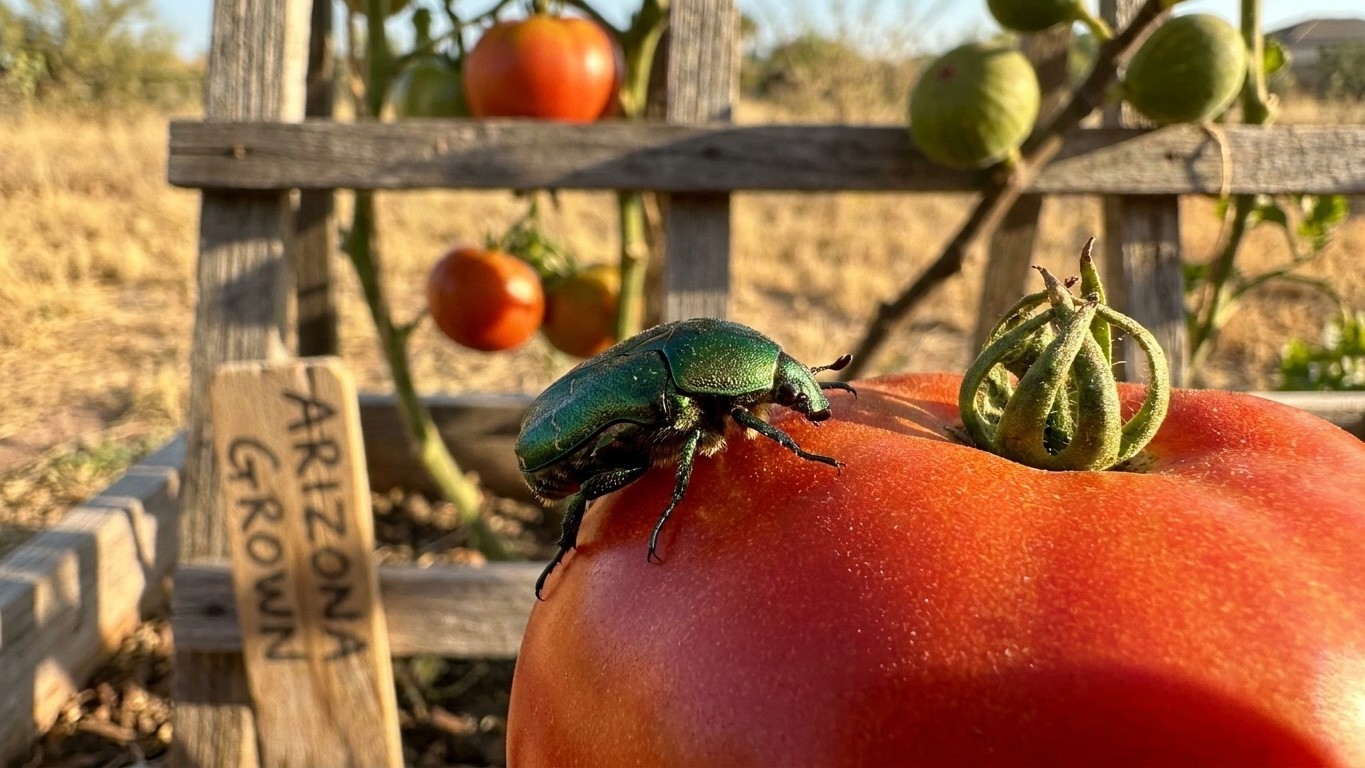

Green fruit beetle adults turn up in Arizona in summer, according to University of Arizona Cooperative Extension, and that broad window is really the whole answer: this pest doesn’t follow a frost calendar the way spring insects do. Stopping it comes down to protecting ripening fruit before the beetles arrive, since almost nothing applied after the fact does much good once a fig or tomato is already chewed open.
The weeks to watch

University of Arizona Cooperative Extension lists green fruit beetle adults as emerging in summer, and that’s the only window this source publishes for the species. No narrower date range exists in the extension’s guidance, so “summer” is the actual operative answer here, not a placeholder for something more precise.
Summer emergence, no finer window
Arizona’s summer stretches long, often from May through September depending on elevation, so treating the whole stretch as active is the honest reading of what the extension service publishes. Gardeners looking for a tighter date, like a specific week in July, won’t find one in the documented source, and inventing one would be guessing.
How it contrasts with the spring pests in the same guide
The same extension document tracks other garden pests on a different clock. Thrips and false chinch bugs peak in spring and fade once June heat pushes past the 90s. Grasshoppers hatch in spring. Squash bugs lay eggs from early spring through midsummer. Green fruit beetle activity picks up right as that spring lineup declines, which means the transition from spring pests to summer beetles tracks the same heat threshold, not a separate calendar of its own.
Reading the calendar from your last frost

Frost isn’t much of a planning tool in most of Arizona’s low desert. NOAA’s climate data for the region shows no freeze at all in most years, with a rare cold snap dipping to 32°F sometime between late December and mid-January in only about a fifth of recorded springs. NOAA even lists the frost-free season there as running the full 365 days. That makes “count forward from last frost” a weak cue for this pest, because for most gardeners there’s effectively no frost to count from.
The real pivot point is heat, not chill. The same extension guidance that places green fruit beetle emergence in summer also marks early June, when temperatures push through the 90s, as the moment spring pests fade and summer species take over. That threshold is a more honest planning marker for low-desert gardeners than any frost date.
- Note whether your area had a freeze at all this year. In most low-desert springs it won’t have, and even where it did, the snap likely fell between late December and mid-January.
- Count forward to early June instead, watching for daytime highs settling into the 90s. That’s the transition window worth marking on your own calendar, since it lines up with when green fruit beetle activity picks up as spring pests decline.
Gardeners up in Flagstaff and the high country are working with an entirely different climate, one that does freeze hard each winter, so this heat-based arithmetic applies to the low desert specifically, not the whole state.
What it attacks, and what the damage looks like

The giveaway usually isn’t the beetle itself. It’s a piece of fruit that looks partly eaten, slimy, or sunken, sometimes with more than one beetle clustered on the same spot feeding side by side. Adults go after soft, ripe, or already-damaged fruit, which is why the first sign a gardener notices is often a fig or tomato that’s gone from perfect to ruined within a day or two, well before anyone spots the insect responsible.
It’s the adult stage doing that damage, chewing into fruit that’s already soft or split. The grub stage lives underground in soil and compost, feeding on decaying organic matter rather than living plant tissue, so treatments aimed at protecting fruit on the vine don’t need to worry about what’s happening below ground, and vice versa.
Crops most commonly affected include:
- Figs
- Tomatoes
- Peaches and other soft-skinned stone fruit
- Any overripe or damaged fruit left on the plant or ground
- Compost piles and rotting organic debris (grub stage only, non-damaging to plants)
How Arizona sits in this pest’s range

On this site, the green fruit beetle is currently documented for one territory: Arizona. That single count doesn’t mean the species stops at the state line, Cotinis mutabilis ranges more broadly across the desert Southwest, but it does mean there’s no comparative timing data here from a neighboring state to weigh against Arizona’s own summer emergence window.
With only one territory covered, there’s nothing to compare in terms of earlier or later activity elsewhere, and nothing in the sourced material supports ranking Arizona’s pressure from this beetle as worse or milder than anywhere else. The honest statement is simpler: Arizona’s documented window is summer, tied to the same heat threshold that also shifts the state’s spring pests out of season, and that’s the extent of what the record shows.
What actually works against it

Cheapest measures come first, and they work best applied before fruit ripens rather than after beetles are already established.
- Harvest ripe fruit promptly. Adults are drawn to fruit that’s already soft, split, or overripe, so picking figs, tomatoes, and peaches as soon as they ripen removes the bait before beetles find it.
- Cover developing fruit with mesh or netting. Physical exclusion works on the simple principle that a beetle can’t chew what it can’t reach; it has to go on before fruit starts ripening and can come off once harvest is done.
- Hand-pick adults in early morning. Beetles are sluggish in cooler morning temperatures, making them easy to knock into a bucket of soapy water. This only works on the adult stage above ground, not on grubs already in the soil.
- Clean up fallen and overripe fruit regularly. Removing the food source discourages adults from lingering in the area, and it also limits how much rotting material feeds the next generation of grubs in the soil.
- Manage compost actively. Grubs feeding in compost are decomposers and don’t damage living plants, so this step isn’t about eliminating them so much as keeping compost turned and hot, which speeds up decomposition and makes the pile less inviting as a long-term nursery site.
Fermenting-fruit traps show up often in garden supply stores, and plenty of gardeners use them. But results are inconsistent. Similar traps used against other fruit-feeding beetles sometimes draw in more insects from the surrounding area than they actually catch, so treat any trap as an experiment rather than a guaranteed fix. Once grubs are established in the soil, nothing aimed at adult fruit damage reaches them, and the reverse is true too: soil-focused sanitation won’t stop an adult already feeding on a ripe fig.
Common questions
Are green fruit beetles harmful to people or pets? No. They don’t bite or sting in any meaningful way, and their bulky, loud flight pattern tends to alarm people more than the insect itself warrants.
How is this different from a Japanese beetle? They’re unrelated species. The green fruit beetle (Cotinis mutabilis) is native to the desert Southwest and targets ripe or damaged fruit, while Japanese beetles skeletonize leaves and aren’t established in most of Arizona.
Do I need to treat the grubs living in my compost? Generally no. At the larval stage they’re feeding on decaying organic matter, not living plants, and are often considered a normal part of a working compost pile rather than a pest to eliminate.