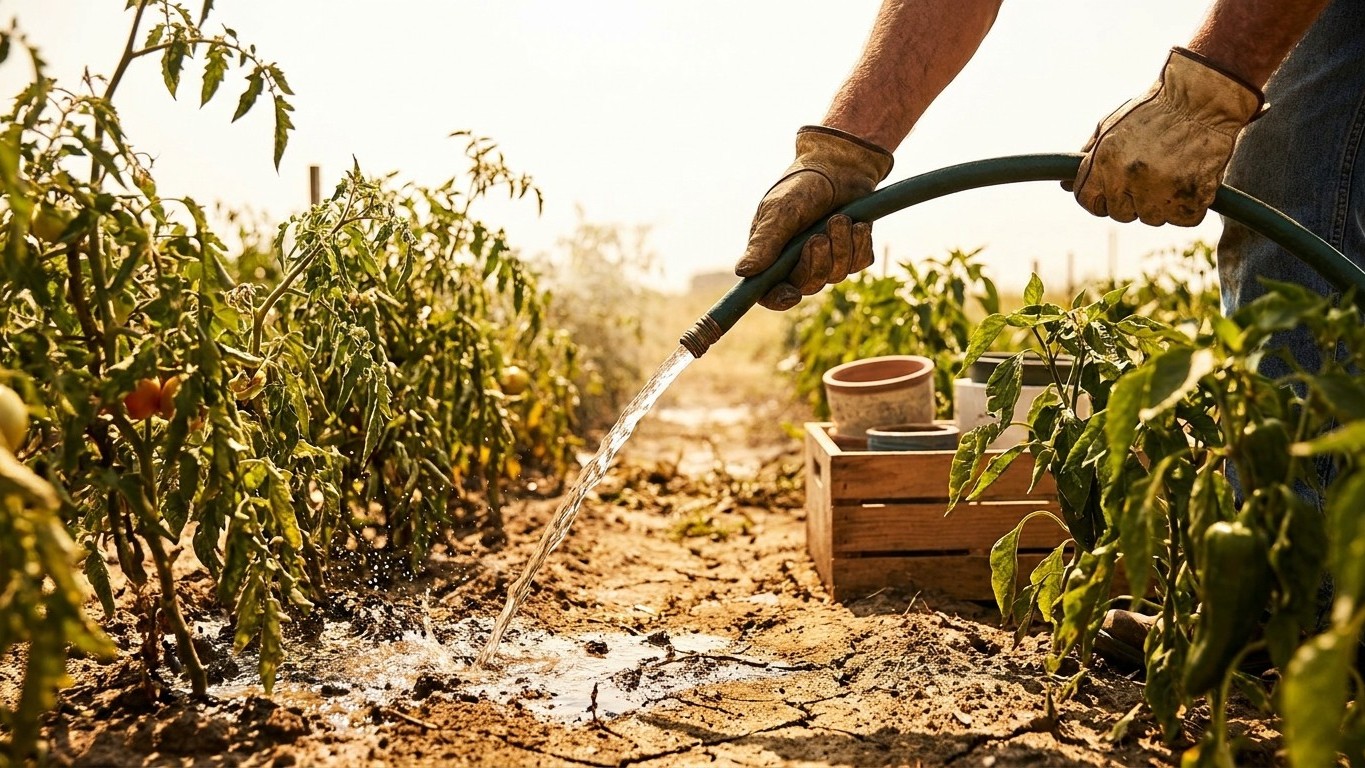

Arkansas summers deliver about 3.16 inches of rain in August, the driest month of the growing season, while the state averages 69.2 days a year at or above 90F. Put those two numbers side by side and the message is clear: the sky won’t carry a garden through August on its own, and the heat pulls moisture back out of the soil almost as fast as it falls. The gardener has to make up the difference.
What changes here

A vegetable bed or a young shrub wants roughly an inch of water a week to keep growing without stress. In August, Arkansas’s driest summer month, the sky delivers about 3.16 inches over the whole month. Spread that across four and a third weeks and it works out to roughly 0.7 inches a week falling naturally. That leaves about 0.3 inches a week that has to come from a hose or a sprinkler if the bed is going to reach that one-inch target. It sounds like a small gap on paper, but multiply it by a summer that also brings 69.2 days a year at or above 90F, and that gap is exactly where a garden starts to wilt.
Heat and rainfall don’t act separately, they compound. A day at 90F or higher pulls moisture out of leaves and soil far faster than a mild June morning does, so the 0.7 inches that fell last week may already be gone from the top few inches of soil by the time the next watering is due. This is also why a single August thunderstorm, even a hard one, often doesn’t solve the problem: rain that arrives all at once in an hour tends to run off a dry, sun-baked surface rather than soak down to where roots are working, especially on ground that’s already crusted from weeks of heat.
Soil texture decides how far that water actually travels once it lands. Sandy ground drains fast, so an inch applied today may be out of reach of the roots by tomorrow, which argues for smaller, more frequent applications. Heavy clay holds water far longer, sometimes close to a week, so the same inch that disappears quickly in sand can sit in clay long enough to starve roots of oxygen if it’s applied too soon after the last watering. Knowing which kind of ground is under a given bed changes the whole watering calendar, not just the amount used.
How to water when it matters
The method that works in Arkansas’s dry stretches isn’t complicated, but it has to be deliberate. Deep, infrequent watering at the base of the plant, done in the morning, beats a light daily sprinkle every time here, because of what it does underground and what it avoids overhead.
Watering deeply pushes moisture several inches down, which encourages roots to grow downward chasing it. Roots that go deep are insulated from the surface heat that a 90-plus-degree day throws down, and they’re the roots that keep a plant alive when the top two inches of soil turn to dust. Watering at the base instead of overhead keeps leaves dry, and morning watering gives any incidental moisture on foliage time to dry off before evening, when damp leaves overnight become an open invitation to fungal disease.
Checking the soil before watering matters more than watching the sky. A finger pushed two inches into the ground, or a trowel turned over near the root zone, tells the real story: if it’s dry at that depth, it’s time to water, regardless of what the surface looks like or what fell from a passing cloud.
A sequence to start from
- Check the soil two inches down with a finger or trowel before assuming it needs water at all.
- On sandy ground, water in shorter, more frequent sessions, roughly every two to three days during a hot, dry stretch, since sand won’t hold much moisture between waterings.
- On heavy clay, water less often but more deeply, roughly once a week, and let the soil dry partway between sessions so roots don’t sit in waterlogged ground.
- Apply water at the base of the plant, slowly enough to soak in rather than run off, aiming for close to an inch total between rainfall and hand-watering in a given week.
- Water in the early morning so the soil has all day to absorb it and any wet foliage dries before nightfall.
Treat that once-a-week clay guideline and that every-two-to-three-day sand guideline as a starting point, not a rule. The only way to know for certain is to check the actual soil under a given bed, since drainage, slope, and mulch cover all shift the timing.
What goes wrong
Watering a little every day
A quick daily sprinkle feels responsible, but it only wets the top inch or so of soil. Roots follow the water, so they stay shallow, right where a 90-degree afternoon bakes the ground hardest. When a truly dry week hits, those shallow roots have nowhere to go for moisture, and the plant collapses fast.
Watering the leaves at night
Running a sprinkler in the evening feels convenient after a hot day, but wet foliage that sits through a warm, humid Arkansas night is exactly the condition fungal diseases need to take hold. Mildew and leaf spot spread fastest on leaves that stay damp for hours in the dark.
Trusting the rain that just fell
A summer thunderstorm can look like it solved the problem, but a hard, fast rain often wets only the top half-inch of soil before running off, especially on ground already dried by weeks near or above 90F. The only way to know is the same finger test used before any hand-watering: two inches down, dry or not.
Skipping the mulch
Bare soil left exposed through an Arkansas summer gives back moisture almost as fast as it’s applied. A few inches of mulch over the root zone slow that evaporation and buy the plant real time between waterings, which matters most in a state averaging close to 70 days a year at or above 90F.
Local help
The University of Arkansas System Division of Agriculture Cooperative Extension Service offers county-level guidance on soil, planting schedules and watering for Arkansas conditions. Watering restrictions during dry spells vary by city and water district and change from year to year, so check current rules directly with the local water utility before setting a summer watering schedule.
Common questions
How much should I water an Arkansas garden in August?
Aim for close to an inch total between rainfall and hand-watering each week. Since August rainfall averages only about 3.16 inches for the whole month, roughly 0.7 inches a week, most gardens need to make up the remaining amount by hand.
Is it better to water in the morning or evening?
Morning is better. Watering early lets the soil absorb moisture before the day’s heat drives evaporation, and it gives any wet foliage time to dry before nightfall, lowering the risk of fungal disease overnight.
How do I know if a rain shower was enough?
Don’t trust it by eye. Push a finger or trowel two inches into the soil after the rain; if it’s still dry at that depth, the shower didn’t reach the roots and hand-watering is still needed.
Does soil type really change how often I should water?
Yes. Sandy soil drains quickly and needs shorter, more frequent watering, while heavy clay holds moisture close to a week and can drown roots if watered again before it has dried out.